
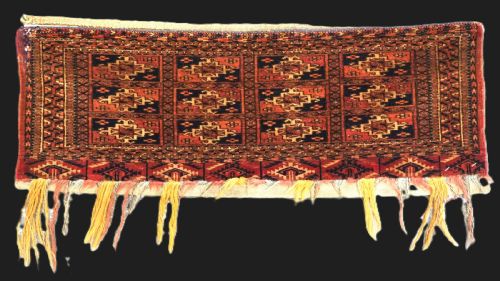


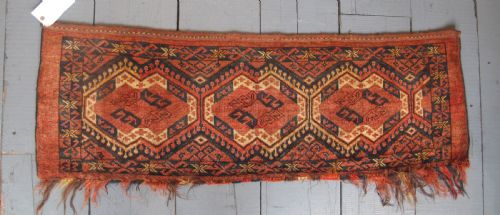
Terracotta Woven Torba
These terracotta woven torba examples are tribal storage bags created by Central Asian nomads, bringing rich historic woolwork into modern interiors.
Terracotta Woven Torba
A terracotta woven torba is a traditional tribal storage bag produced by Central Asian nomads across the nineteenth century. These pieces function as utilitarian hangings or storage containers within nomadic households, often associated with dowry weaving.
The selection on this page centres on tribal textiles attributed to groups such as the Tekke, Yomut, Saryk, Ersari, and Chodor Turkmen. Buyers frequently encounter bag faces preserved individually or complete bags retaining original backs and tassels.
Dating spans from the mid nineteenth century through to the early twentieth century, encompassing various gul motifs and flatweave structures. Each piece represents specific tribal traditions of Central Asian weaving.
Assessing Quality and Fineness
Fineness of weave sets superior examples apart, particularly in pieces displaying dense knotting and intricate tribal gul arrangements. The preservation of original backs, tassels, and structural completeness elevates the standing of an individual bag.
Clarity of natural dye colours and precision within geometric designs reflect the skill of the original weaver. Smaller dimensions combined with exceptionally tight construction distinguish the most refined dowry pieces from standard utility items.
Listings feature Turkmen tribal weaving traditions spanning from 1850 to 1910, utilising wool and natural dyes.
The Terracotta Woven Torba Glossary
- Torba
- A traditional Turkmen storage bag used in nomadic households for holding household goods or personal items. These pieces are frequently encountered as surviving bag faces.
- Gul
- A primary medallion or repeating floral-derived motif characteristic of Turkmen carpet and bag design. Different tribal groups utilise distinct gul patterns for identification.
- Mafrash
- A large rectangular storage bag or container produced by nomadic weavers, often grouped alongside torbas in textile collections.
- Flatweave
- A textile constructed without pile by interlacing warp and weft threads directly. This technique appears in banded designs and specific utilitarian bag faces.
Terracotta Woven Torba: Frequently Asked Questions
What is a torba used for?
A torba served as a practical storage container within nomadic Central Asian tents, often hung against lattice walls. Families utilised them to store smaller personal possessions or textiles.
Over time, these durable bags became significant elements of dowry weaving and tribal heritage. Today, collectors display them as wall hangings or decorative interior textiles.
How do I date a Turkmen torba?
Dating relies upon analysing structural characteristics, wool quality, and the specific natural dyes employed in the weave. Pieces on this page span from the mid nineteenth century to the early twentieth century.
Earlier examples often display finer knot density and distinct tribal gul proportions. Comparing the design geometry to documented nineteenth-century weaving traditions helps narrow the period of origin.
What is a bag face?
A bag face is the decorated front panel of a tribal storage container that survived after the plain utility back wore away. Many historical pieces entered collections separated from their original backing materials.
Some surviving examples retain their complete backs and tassels, representing the entire original construction. Both individual faces and complete bags provide insight into nomadic textile traditions.
Which tribes made these bags?
Nomadic and settled groups across Central Asia produced these textiles, including the Tekke, Yomut, Saryk, Ersari, and Chodor Turkmen tribes. Each group developed recognizable design vocabularies and structural techniques.
Design motifs such as the kepse gul, ertmen gul, or kedjebe pattern help identify the probable tribal origin of a specific piece.