

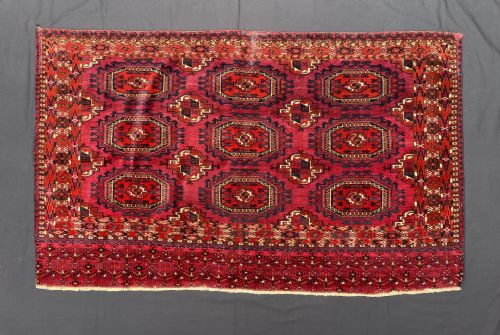


Crimson Turkmen Carpet Bag
When buyers seek a crimson turkmen carpet bag, they are looking for woven tribal storage vessels created by nomadic weavers across Central Asia.
Crimson Turkmen Carpet Bag
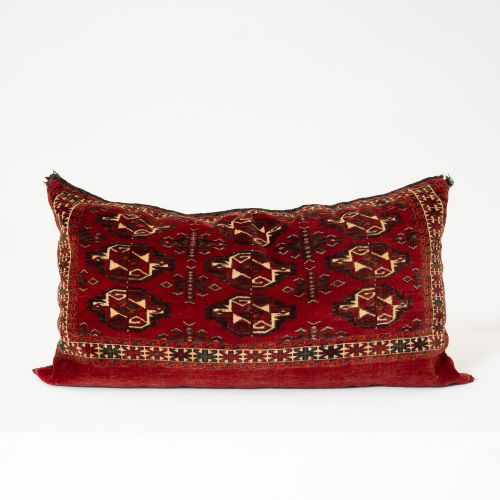
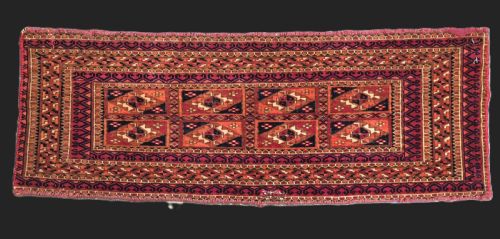
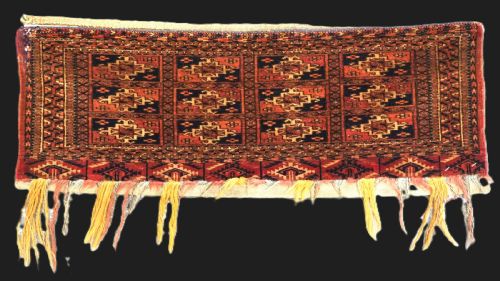
A crimson turkmen carpet bag typically takes the form of a chuval, torba, kap, or mafrash face originating from tribes such as the Tekke, Yomut, Saryk, and Ersari. These woven pieces served practical functions within nomadic tents as storage sacks for bedding, household goods, and personal possessions before entering the collector market. The pieces found on this page span periods from the eighteenth century through to the early twentieth century, reflecting traditional Central Asian nomadic and tribal aesthetics.
Most examples encountered here are bag faces or complete storage bags featuring distinctive medallion layouts and deep red colour palettes. The inventory includes specialised formats like Kizil chuvals, Ak chuvals, and Torbas decorated with recurring guls, salor motifs, and detailed elem panels. These textiles demonstrate the distinct regional weaving traditions of the Trans-Caspian steppes, Akhal oasis, and Merv oasis.
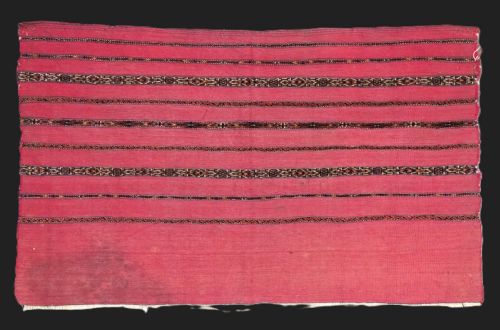
Makers utilised traditional formats designed to hang against tent walls or stack inside nomadic dwellings. While many listings preserve only the decorative front face, others retain their original plain weave backs or complete construction. The structural variety spans from large storage sacks down to smaller pillow formats.
Materials and Construction Techniques
Weavers constructed these textiles primarily using hand-spun wool, paired with natural dyes that produced rich crimson and red ground colours. Structural elements frequently incorporate cotton, linen, and occasionally silk for highlights or detailing within the pile and foundation. This combination of materials provided the dense, durable structure required for daily nomadic use.
The production technique relies on precise knotting and fine weaving to establish complex geometric patterns and repeating gul motifs. Artisans achieved varied surface textures by alternating knot densities, creating the distinction between standard weaves and exceptionally fine examples. Natural dye recipes ensured deep colour saturation that developed distinct patinas over the decades.
The inventory records pieces attributed to Tekke, Yomut, Saryk, and Ersari tribal groups from nineteenth-century oasis regions.
Distinctions in Quality and Execution
Quality in these woven pieces depends heavily on the density of the weave and the precision of the drawing. Superior examples exhibit exceptionally fine knotting that allows intricate gul designs and border details to render with absolute clarity.
Colour saturation and the harmonious balance of natural dye variations dictate the visual impact at the upper end of the range. Furthermore, the survival of complete structures with original backs intact elevates an example above detached or fragmented bag faces.
The Crimson Turkmen Carpet Bag Glossary
- Chuval
- A large tent storage bag used by nomadic tribes for holding bedding and household possessions. These pieces form a major category of the woven bag faces available.
- Torba
- A smaller horizontal storage bag traditionally hung on the interior walls of a yurt. They display intricate medallion designs analogous to larger carpet formats.
- Gul
- The primary repeating medallion motif characteristic of Turkmen carpet weaving. Each tribal group utilised specific gul variations to signal lineage and origin.
- Elem
- The decorative lower panel situated beneath the main field of a Turkmen bag or rug. These panels frequently incorporate distinct floral, animal, or geometric border designs.
- Mafrash
- A rectangular storage container or trapan side panel used for transporting goods by camel or horse. Surviving faces display compact nomadic iconography.
Crimson Turkmen Carpet Bag: Frequently Asked Questions
What is a chuval used for?
Nomadic families utilised chuvals as large storage sacks inside their tents to hold heavy woollen bedding, blankets, and clothing. Their sturdy construction protected contents from dust and dampness on the steppe.
Over time, collectors removed many of these functional bags from active service to display them as decorative wall hangings or textiles.
Why do some listings show only a bag face?
Nomadic storage bags endured heavy wear along their lower edges and backs during daily transport and use. When the structure deteriorated, owners or later traders often separated the decorative front face to preserve the intact pile work.
Many surviving pieces on the market represent these preserved bag faces rather than complete, multi-sided storage sacks.
What is a torba?
A torba is a smaller, rectangular storage bag designed to hang flat against the interior lattice walls of a yurt. They served to store smaller personal items, utensils, or ceremonial objects.
Their proportions are wider than they are tall, accommodating specific wall spaces inside nomadic tents.