



Antique Mafrash Bag
An antique mafrash bag is a nomadic storage container woven to carry household belongings, prized for its robust tribal patterns and rich coloration.
Antique Mafrash Bag
An antique mafrash bag functions primarily as a storage container or cargo bag, traditionally woven by nomadic and tribal groups across Central Asia and the Caucasus. These woven receptacles often appear as complete boxes with flatweave backs, or as individual faces and side panels removed from their original structural frames.
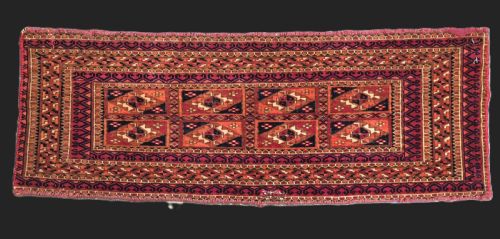
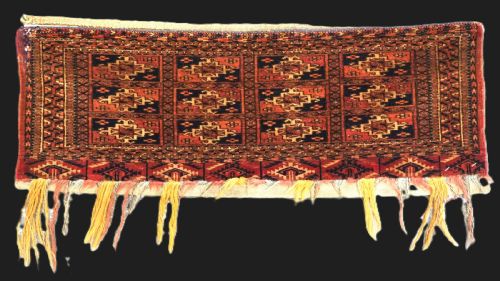
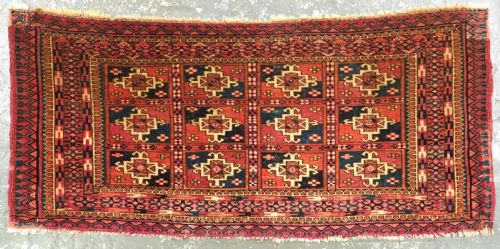
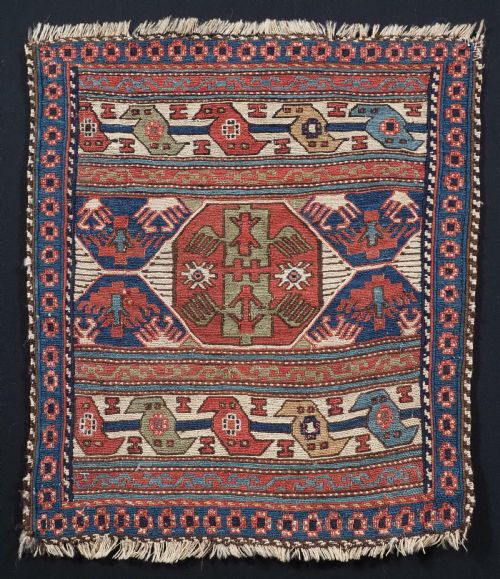
The selections encountered here span tribal traditions including Tekke, Yomut and Ersari Turkmen, alongside Shahsavan, South Caucasian, Qashqa'i and Kurdish groups. Examples range from complete storage bags to individual torba faces, flatweave panels and Soumak bag faces dating from the eighteenth century through to the early twentieth century.
Makers utilised distinct regional motifs, producing pieces defined by banded flatweave designs, Aina gul patterns, and bird or dragon imagery. Surviving pieces demonstrate the utilitarian origins of these textiles, which served families living nomadic lifestyles.
Materials and construction methods
Weavers constructed these textiles primarily using hand-spun wool, cotton and linen, combining pile weaving with flatweave and Soumak techniques. Natural and vegetable dyes provided the palette for the geometric and pictorial patterns seen across the panels.
Structural integrity depended on durable plain weave backs and sturdy side panels designed to withstand the rigours of transport on animal backs. Soumak work added surface texture and durability to the face panels of Shahsavan and Caucasian storage bags.
Listings feature pieces from the eighteenth, nineteenth and early twentieth centuries, incorporating wool, cotton, linen, natural dyes and vegetable dyes.
Assessing craftsmanship and condition
Quality rests upon the fineness of the weave, the clarity of the natural dyes, and the completeness of the piece. Complete examples retaining their original flatweave backs and side panels command particular interest compared to isolated fragments.
Technical execution in Soumak work or pile knotting dictates visual depth, while the survival of original vegetable dye colours determines the vibrancy of the design.
The Antique Mafrash Bag Glossary
- Mafrash
- A large, rectangular storage bag or cargo bag used by nomadic tribes for bedding and household goods. These containers formed pairs loaded onto pack animals during migrations.
- Torba
- A smaller storage bag, often wider than it is deep, used within the tent for household possessions. Turkmen weavers produced these with distinct primary guls.
- Soumak
- A wrap-weft technical method that produces a durable, textured surface resembling embroidery on the face of the textile. This technique appears frequently on Shahsavan panels.
- Flatweave
- A textile constructed without pile by interlacing warp and weft threads directly. Yomut and Shahsavan pieces often employ this method in banded designs.
- Gul
- A primary medallion or repeating motif characteristic of Turkmen carpet and bag design. These geometric forms identify specific tribal groups.
Antique Mafrash Bag: Frequently Asked Questions
What was an antique mafrash bag used for?
Nomadic families utilised these large containers to transport and store bedding, clothing, and household possessions during seasonal migrations. They functioned as heavy-duty cargo bags lashed to pack animals.
Over time, many of these storage pieces separated into individual panels or bag faces, preserving the decorative weaving for domestic display rather than transit.
How do I distinguish between Turkmen and Shahsavan pieces?
Turkmen pieces, such as those from Tekke or Yomut groups, typically feature repeating gul medallions and rich red palettes in pile or flatweave. Shahsavan examples often display Soumak technique with intricate bird and dragon motifs.
Structure also aids identification, as Shahsavan pieces frequently present as panels intended for rectangular storage boxes, while Turkmen items often include torba formats.
Are complete mafrash bags common?
Complete examples featuring both original faces and flatweave backs appear less frequently than isolated panels or bag faces. Many surviving items entered collections as single sides detached from the main cargo container.
When a piece retains its structural backing, it offers a complete view of how nomadic weavers assembled utilitarian storage items.
How should I care for a textile bag panel?
Protect antique textiles from direct sunlight to prevent natural dye fading, and mount wall-hung panels securely to distribute weight evenly. Gentle vacuuming through a mesh screen helps remove dust without damaging fragile hand-spun wool.
Avoid excessive folding or bending, particularly on pieces featuring stiff Soumak work or dense pile knotting.