


Terracotta Confit Jar
These terracotta confit jar examples are heavy utilitarian vessels from French provincial kitchens, prized for their earthy glazes and rustic forms.
Terracotta Confit Jar
When you search for a terracotta confit jar, you are looking at robust storage vessels originating from rural France during the eighteenth and nineteenth centuries. These pots were designed primarily for preserving food and holding household oils rather than for display. They bring an honest, rustic character to contemporary interiors through their weathered surfaces and simple silhouettes.
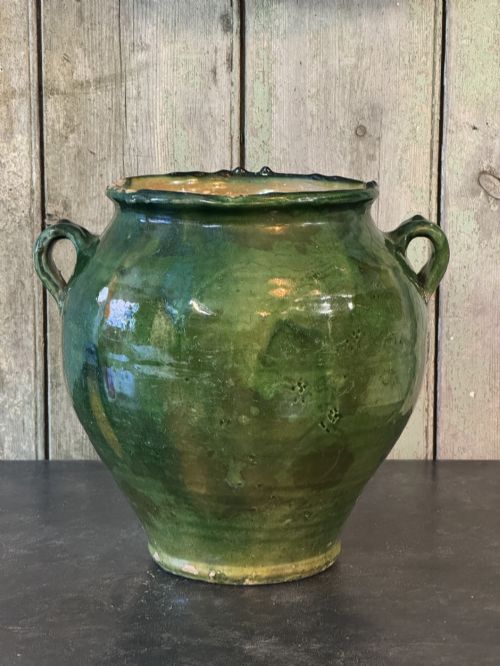
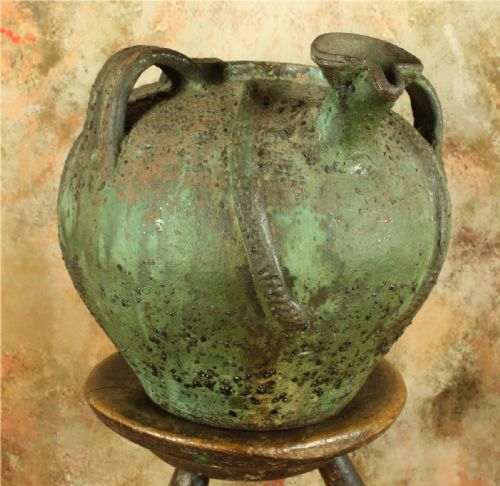
The versions you are most likely to meet on this page span the nineteenth century, alongside earlier eighteenth-century examples and mid-twentieth-century provincial planters. Many retain elements of their original green or dribble glazes, applied to the upper portions to keep contents sealed. Forms vary from single-handled storage jars to large three-handled olive jugs and wide planters.
Makers fashioned these utilitarian containers from local clay, shaping them by hand for daily domestic labour in French country kitchens. Over generations of use, the terracotta absorbs oils and moisture, developing the characteristic aged patina that collectors value today. Finding examples from this specific lineage connects your home directly to the practical history of southern French agriculture.
How they were made
Potters shaped these vessels from regional terracotta and earthenware clay using traditional wheel-throwing and hand-building techniques. The dense clay body provided the necessary structural strength for heavy storage duties in provincial workshops.
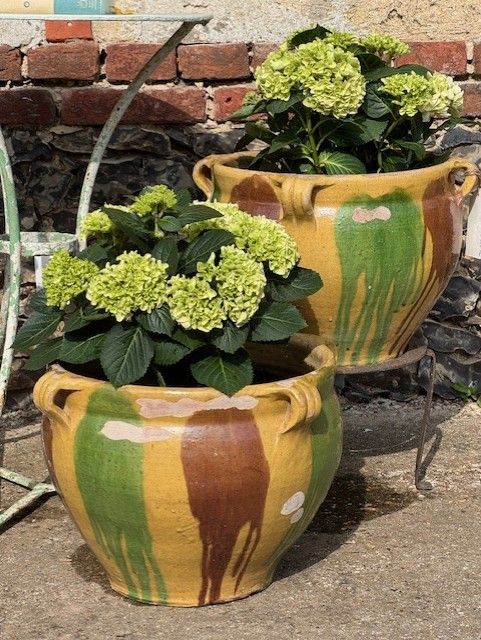
Makers applied lead-based glazes by hand, frequently dipping the upper portion or letting the liquid run in characteristic dribbles down the exterior. This partial glazing sealed the porous earthenware against moisture while leaving the raw terracotta body exposed at the base.
Forms on offer include traditional French provincial confit pots, three-handled olive jugs, and dribble-glazed planters.
What varies in quality
Quality in a terracotta confit jar depends upon the balance of the thrown form and the richness of the surviving glaze. Pots with deep green coloration and dramatic, fluid dribbles present a stronger visual impact than those with dry, uniform surfaces.
The depth of the aged patina and the integrity of the earthenware body distinguish superior examples. Pieces that display the natural scars of heavy kitchen use without structural compromise carry a more authentic presence.
The Terracotta Confit Jar Glossary
- Confit pot
- A traditional French earthenware vessel used originally for cooking and preserving meat under fat. These jars usually feature handles and a partially glazed surface.
- Biot jar
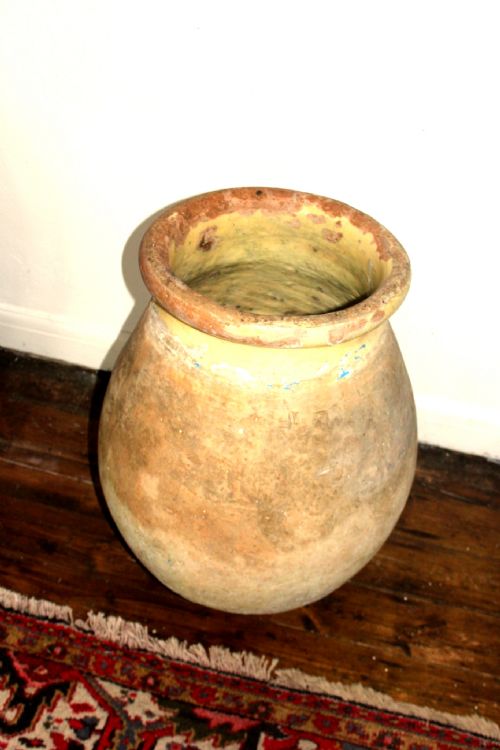
- A large terracotta storage vessel originating from the Provençal town of Biot. These heavy jars were traditionally utilised for storing olive oil and grain.
- Earthenware
- Porous pottery fired at relatively low temperatures. It requires a glaze to become completely watertight.
- Patina
- The surface alteration and mellowing acquired by terracotta and glaze through age and handling. This develops naturally from decades of domestic use.
Terracotta Confit Jar: Frequently Asked Questions
What were confit jars used for?
These vessels were utilised in French country kitchens for preserving duck, pork, and other meats under a layer of fat. The sealed earthenware kept provisions edible through the winter months.
Beyond food storage, similar jars held walnut oil, olive oil, and grain. Their thick walls helped maintain a stable internal temperature for perishable goods.
How do I style a confit jar at home?
Place large examples on the floor in an entryway or empty corner to anchor a room with their rustic texture. Their sculptural forms require no decoration to stand out.
Smaller pots work well on sideboards or kitchen counters, either empty or holding dried botanicals. The earthy tones complement both modern minimalist spaces and traditional interiors.
How can I tell the age of a jar?
Age is read through the handling marks on the clay, the irregularity of the thrown form, and the depth of the glaze. Eighteenth-century examples often display heavier wear and distinct tool marks from manual production.
Nineteenth-century pieces show similar provincial manufacturing traits, while mid-century items feature more controlled dribble glazes. Examining the base helps reveal the natural absorption of oils over time.
Are these pots waterproof?
Terracotta is inherently porous, and these historic jars were not engineered to hold water indefinitely. The interior glazes offer some resistance, but moisture can seep through unglazed areas.
If you plan to use them for fresh flowers, place a glass or plastic liner inside the vessel. This protects the historic clay body from water damage.