


Terracotta Storage Pot
These terracotta storage pot examples bring rustic warmth into a modern home, offering both practical utility and earthy charm.
Terracotta Storage Pot
A terracotta storage pot serves as a traditional vessel for holding oils, walnuts, or preserves, shaped by utilitarian needs in Mediterranean and French provincial kitchens. Most items encountered on this page date from the nineteenth century, reflecting agrarian history from regions such as France and Portugal.
Forms vary from narrow confit pots to bulbous olive jars and walnut oil jugs, often accompanied by wrought iron stands or mounted as garden planters and decorative urns. These pieces bridge the gap between heavy-duty agricultural storage and interior decoration.
How they were made
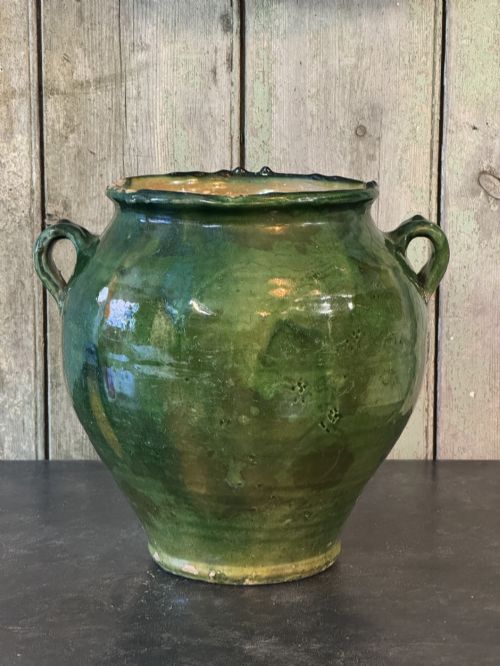
Makers shaped local clay by hand, firing the earthenware at moderate temperatures to achieve a porous body suited for agrarian use. Many vessels received partial or full glazes in green tones to seal the interior, while others retained a dry, painted finish.
Iron components, such as handles or stands, were hand-forged to support the heavy ceramic bodies. Surface wear and aged patina accrued naturally through decades of use in French country settings.
The listings feature earthenware and terracotta forms spanning the eighteenth, nineteenth, and early twentieth centuries, originating mainly from French and Portuguese makers.
What varies in quality
Quality rests in the harmony of the thrown form, the depth of the natural patina, and the preservation of any original green glaze. Vessels retaining intact painted surfaces or authentic iron fittings command greater visual interest.
The distinction between a humble garden pot and a refined confit jar lies in the crispness of the rim profile and the deliberate balance of the clay body. Pieces showing honest agrarian wear without intrusive structural repairs stand out.
The Terracotta Storage Pot Glossary
- Confit pot
- A traditional French earthenware jar with one or two handles, originally used for cooking and preserving meats in fat. They are heavily collected for their rich green lead glazes.
- Olive jar
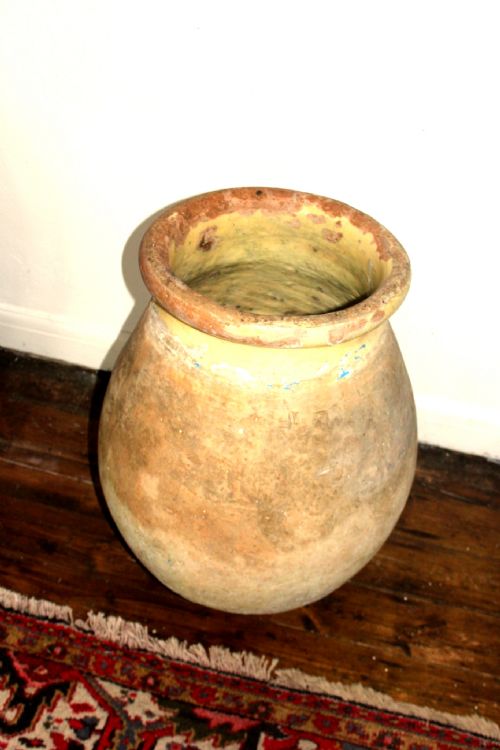
- A large, sturdy terracotta vessel designed for transporting and storing olive oil. They frequently feature deep bodies and wide mouths.
- Earthenware
- Porous pottery fired at lower temperatures than stoneware or porcelain. It forms the primary material for nearly all traditional rustic storage vessels.
- Patina
- The surface texture and coloration developed through age, handling, and environmental exposure. A genuine aged patina signals decades of practical agrarian service.
Terracotta Storage Pot: Frequently Asked Questions
What were terracotta storage pots used for?
These vessels held essential kitchen commodities such as olive oil, walnuts, confit meats, and grain across French and Mediterranean farmhouses. Their thick clay walls helped maintain stable internal temperatures for perishable goods.
Over time, many of these utilitarian containers transitioned from pantries to courtyards and living spaces as decorative elements or garden planters.
How do I care for an antique terracotta pot?
Keep the unglazed clay dry and dust it gently with a soft brush to preserve the historic surface and patina. Avoid harsh chemical cleaners that can strip the porous material.
If used for plants indoors, place a protective saucer underneath, as moisture can seep through the historical earthenware body.
Are these pots waterproof?
Fully glazed pieces, such as green confit jars, often hold water effectively due to the vitreous coating on their interior surfaces. Unfired or unglazed terracotta remains porous and will slowly allow moisture to pass through.
Check the interior glazing before filling any vessel with water for floral displays.
How can I tell the age of a storage pot?
Age is indicated by hand-thrown potting irregularities, tool marks from the maker, and the specific composition of the local clay body. Historical styles, such as nineteenth-century French confit forms, carry distinct rim profiles and glaze behaviours.
An authentic aged patina shows gradual wear patterns that modern reproductions cannot replicate.