


Antique Confit Jar
An antique confit jar brings earthy French provincial utility straight into a modern kitchen, offering weathered rustic charm that holds its own.
Antique Confit Jar
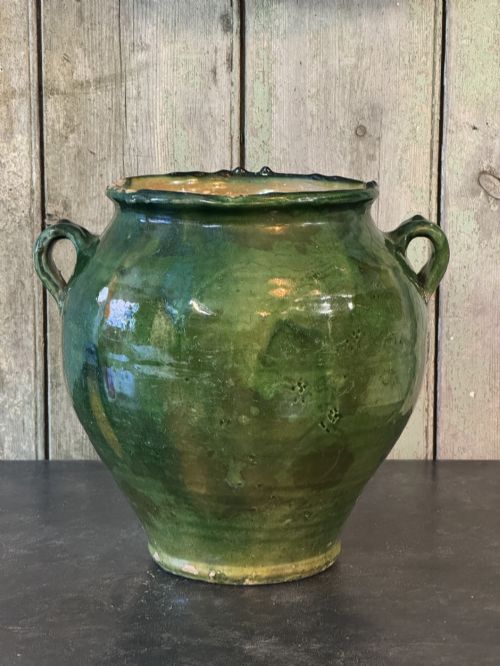
An antique confit jar is a utilitarian vessel originating from French provincial kitchens, traditionally utilised for preserving meats and storing provisions like oil or olives. These robust containers typically present as terracotta or earthenware pots, often finished with a distinctive glaze that covers the upper portion while leaving the lower body bare.
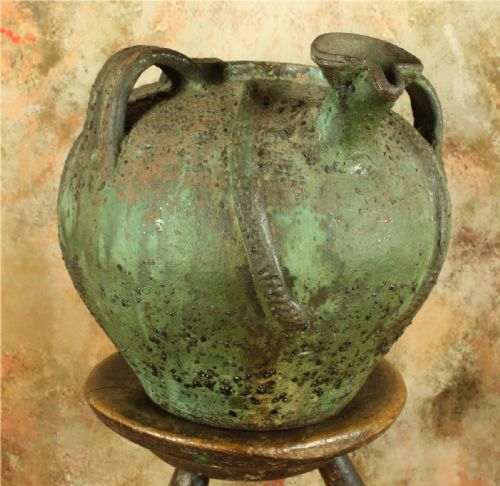
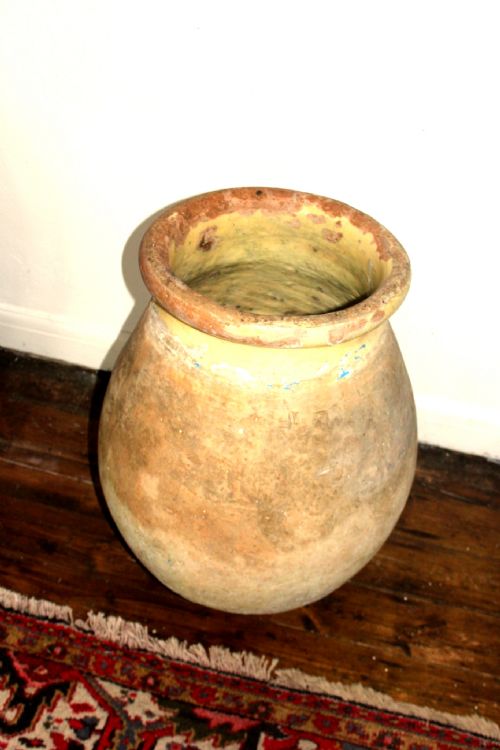
Buyers browsing this selection will most frequently encounter nineteenth-century pieces alongside eighteenth-century examples, all displaying the classic forms associated with French country workshops. Alongside standard single-handled pots, the inventory occasionally includes olive jugs fitted with multiple handles and taller storage urns from regions such as Castelnaudary or Biot.
The aesthetic appeal lies entirely in the combination of utilitarian design and honest, aged surfaces shaped by decades of agricultural use. Whether positioned empty on a shelf or repurposed as a planter, each piece carries the distinct hallmarks of regional French earthenware production.
Materials and construction methods
Potters shaped these vessels from local terracotta and earthenware clay, turning them by hand to produce thick walls capable of withstanding heavy domestic labour. The resulting body remained porous unless treated, which prompted makers to apply functional lead-based glazes to the interior and upper exterior surfaces.
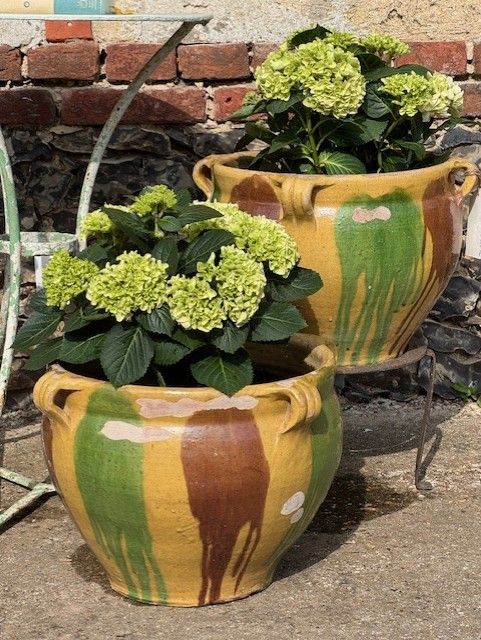
The glazing technique often produced drips and pools of colour, notably rich greens and earthy tones that run down the side of the pot. Firing in traditional kilns created natural variations in the clay surface, ensuring no two jars emerged with identical patination.
Regional French styles represented include provincial, country, and rustic forms originating from areas like Biot and Castelnaudary.
Assessing quality in provincial earthenware
Quality in an antique confit jar rests in the harmony between its original utilitarian purpose and the character of its aged surface. Pieces that retain an intact, richly pooled glaze on the upper section command attention for their visual depth.
The balance of the thrown form and the honesty of the wear patterns distinguish finer examples from standard workshop output. Subtle irregularities in the clay and the natural accumulation of patina across the unglazed terracotta speak directly to the authenticity of the piece.
The Antique Confit Jar Glossary
- Confit jar
- A traditional French earthenware vessel with handles, originally designed for storing preserved duck or pork confit in fat. These pots are defined by their partially glazed bodies and robust proportions.
- Terracotta
- Fired unglazed clay of a brownish-red colour, widely utilised across provincial France for storage vessels and planters. Its porous nature requires interior glazing for liquid containment.
- Glaze
- A vitreous layer fused to a ceramic body through firing, which renders earthenware watertight. On these pots, the glaze was typically applied only to the upper portion.
- Provincial
- Pertaining to the regions of France outside Paris, where utilitarian objects were made using local materials for local agricultural life. This style values function over ornate decoration.
- Patina
- The surface appearance altered by age, use, and handling, manifested in worn edges and softened clay. Collectors prize genuine patination as a record of the object's history.
Antique Confit Jar: Frequently Asked Questions
What were antique confit jars used for?
These vessels served rural French households primarily as storage containers for preserving meats, particularly duck or pork cooked in its own fat. Once filled, the jars were sealed to keep provisions edible through the winter months.
Beyond food preservation, similar jars held essential kitchen liquids such as walnut oil and olives. Their thick earthenware walls helped maintain a stable internal temperature for stored goods.
How do I clean an antique confit jar?
Gentle dusting with a dry or slightly damp cloth is sufficient to maintain the exterior surface without disturbing the aged patina. Harsh detergents or abrasive scouring pads should be avoided entirely on antique earthenware.
If the interior requires washing due to active use as a planter or vase, warm water and mild soap applied with a soft brush work best. Ensure the porous clay dries thoroughly afterwards.
Can I use them as planters?
Many buyers repurpose these sturdy vessels as indoor or outdoor planters for small shrubs and house plants. The porous terracotta breathes well, which suits the root systems of various botanical specimens.
When planting directly inside the jar, placing a layer of gravel at the base assists with drainage. Placing a saucer underneath protects delicate indoor surfaces from moisture seepage through the unglazed clay.
How do I date an antique confit jar?
Dating relies heavily on observing the weight of the clay, the throwing marks left by the potter's hands, and the characteristics of the glaze. Eighteenth-century examples often display heavier, more irregular hand-thrown profiles compared to later nineteenth-century production.
Makers' marks are rarely present, so collectors look to regional variations in shape and glaze colour to determine approximate age. Blown glass pickling jars from the same eras follow entirely different production timelines based on pontil marks and glass tint.