
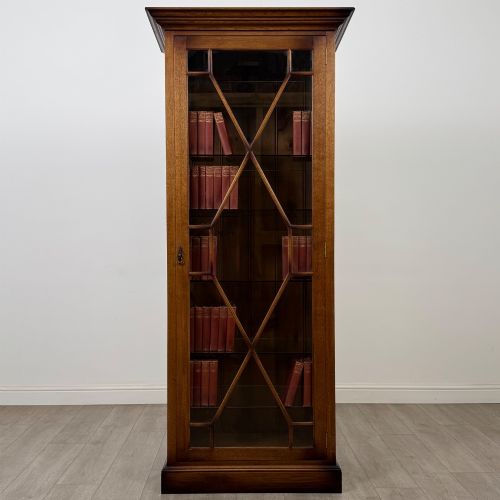
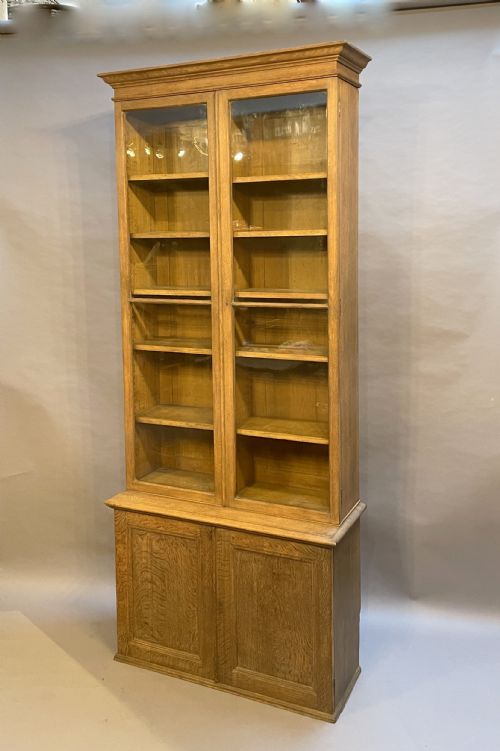


Tall Oak Display Cupboard
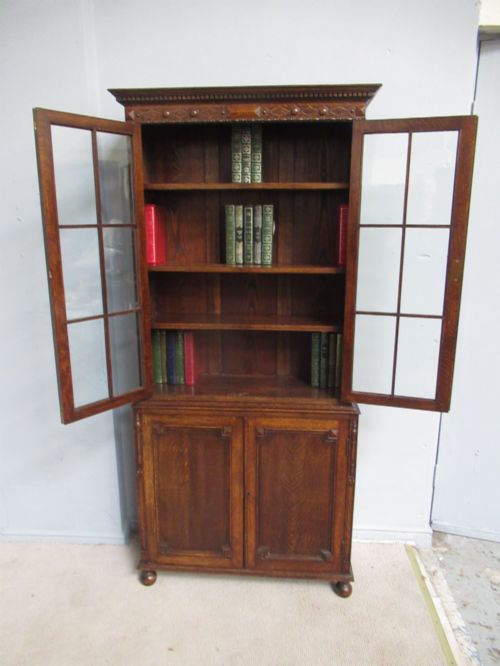
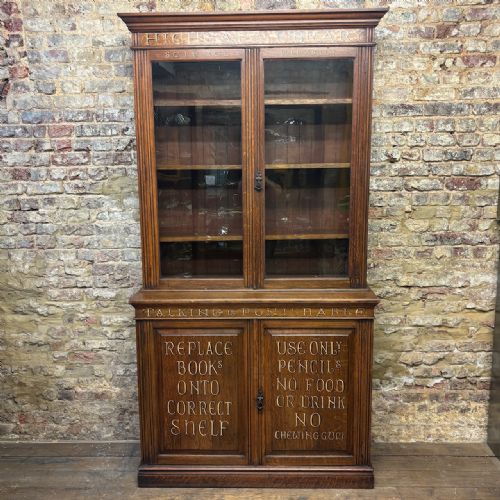
A tall oak display cupboard brings vertical presence and practical timber storage to a room, housing books and collections behind glass.
Tall Oak Display Cupboard
A tall oak display cupboard combines height with functional shelving and glazed doors, serving as both bookcase and cabinet. When searching for a tall oak display cupboard, buyers encounter substantial pieces designed to showcase books and objects while keeping contents protected behind glass.
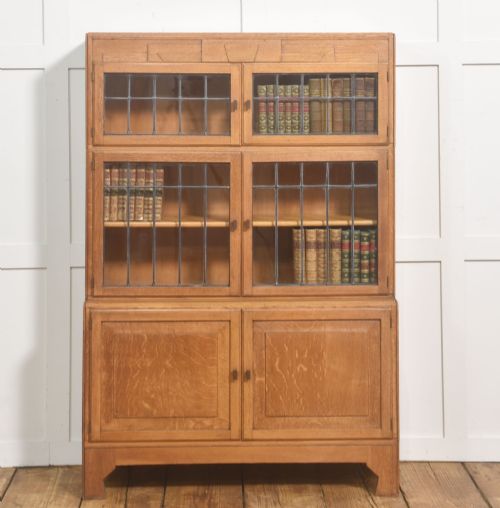
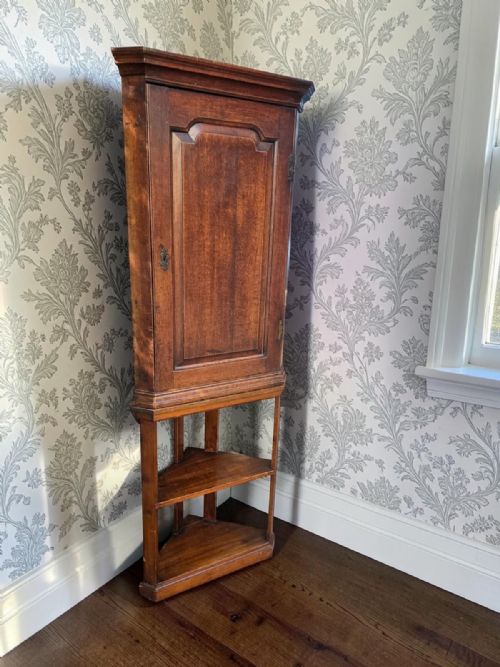
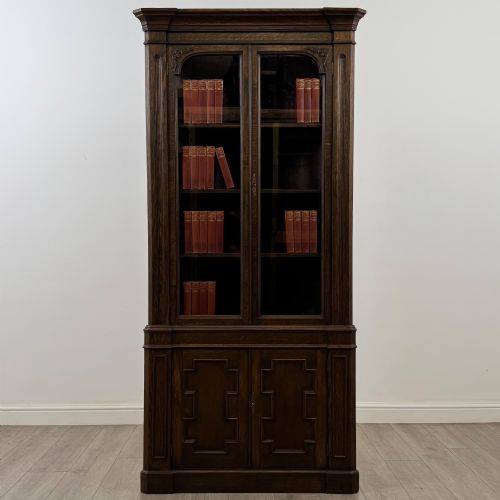
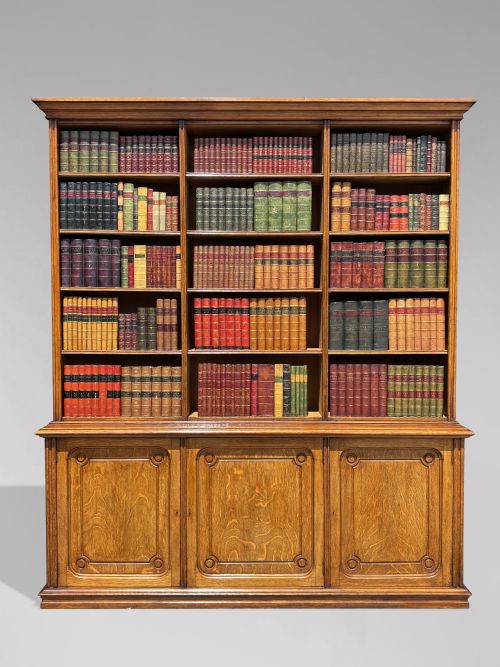
The pieces span several centuries and stylistic revivals, ranging from formal Victorian and Gothic Revival examples to early twentieth-century designs. Formats vary from corner cabinets and open bookcases to two-part cupboards with lower drawers and tall glazed upper sections.
Origins stretch across English workshops, Welsh traditions, French provincial makers, and North European joinery. These variations provide distinct regional mouldings, carving depths, and timber selections within the same overarching furniture category.
How They Were Made
Construction relies primarily on solid oak and pollard oak timber frames, complemented by glass panels fitted with lead or iron cames. Backboards and internal shelving utilise matching timber planks assembled through traditional joinery methods.
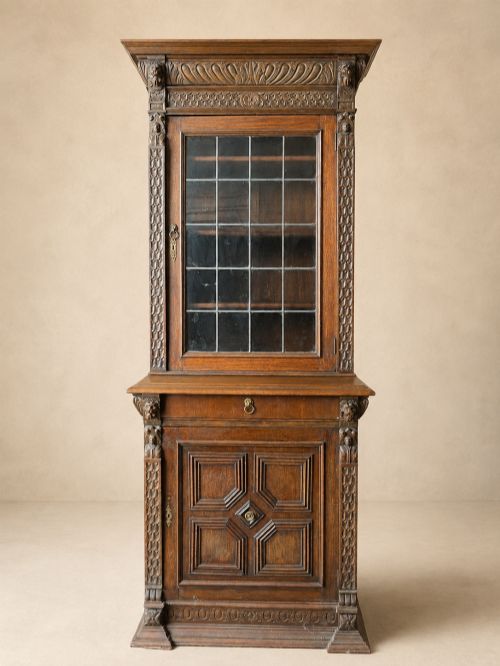
Hardware details such as brass handles, hinges, and escutcheons punctuate the heavy timber doors. Specialised decorative touches include carved relief panels, beaded edges, and applied architectural mouldings reflecting Victorian, Gothic, and Jacobean styles.
Look closely for carved green man motifs hiding among the foliage and strapwork on nineteenth-century panels.
What Varies in Quality
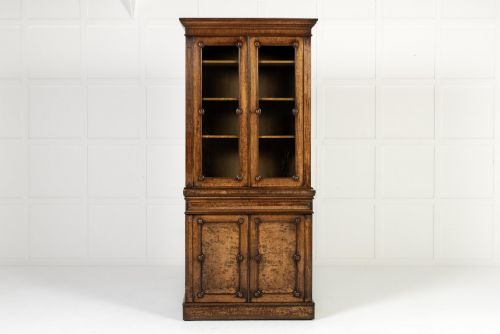
Quality rests in the selection of timber figures, such as the distinctive mottled grain of pollard oak, and the crispness of hand-carved details. Superior examples exhibit balanced proportions across tall two-part structures, where heavy cornices and lower drawer banks align harmoniously.
Joinery execution distinguishes everyday utility furniture from exceptional cabinet work, seen in tight-fitting door frames and substantial internal bracing. The integration of specialised glass, whether leaded panels or clear plate glass, further separates standard production pieces from high-workshop commissions.
Howard And Sons·A Blain And Son Liverpool
The Tall Oak Display Cupboard Glossary
- Pollard Oak
- Timber taken from trees that have been pollarded, producing a dense, highly figured grain pattern prized for decorative cabinet fronts. This distinctive figuring adds rich visual texture to formal nineteenth-century pieces.
- Leaded Glass
- Small panes of glass held together within a network of flexible lead cames to form geometric or decorative window patterns. This glazing technique appears frequently in early twentieth-century and Gothic Revival display furniture.
- Jacobean Revival
- A nineteenth-century stylistic movement mimicking seventeenth-century English furniture through heavy geometric mouldings, strapwork, and deep panel carving. Pieces in this style emphasise sturdy construction and dark timber finishes.
- Gothic Revival
- An architectural and decorative style utilising pointed arches, trefoils, and ecclesiastical motifs adapted for domestic storage furniture. This aesthetic produces dramatic vertical lines and solemn timber detailing.
- Corner Cabinet
- A specialised storage piece engineered with angled sides to fit flush into a room corner, maximising spatial efficiency. These cabinets often feature tall glazed doors above enclosed lower cupboards.
Tall Oak Display Cupboard: Frequently Asked Questions
How do I date a tall oak display cupboard?
Dating relies on examining construction methods, hardware types, and stylistic indicators such as Gothic arches or Jacobean strapwork. Secondary wood choices and joinery marks inside lower drawers also help pinpoint the manufacturing era.
Changes in glass production techniques and hinge styles provide further clues for distinguishing eighteenth-century origins from Victorian revivals.
Are these cupboards suitable for modern rooms?
Their vertical orientation makes them efficient for rooms with high ceilings, providing substantial storage without occupying excessive floor space. The neutral tones of natural oak blend easily with various interior colour palettes.
Glass doors keep contents visible while protecting collections from dust, suiting living rooms, studies, and dining spaces alike.
What is the difference between a bookcase and a display cabinet?
Bookcases typically feature open shelving or wooden doors designed primarily for holding volumes, though many tall variants incorporate glazed upper sections. Display cabinets focus on visibility, utilising glass on multiple sides to showcase decorative objects.
Many period pieces blur these categories by combining open book storage with enclosed glazed display compartments.
How should I care for antique oak timber?
Maintain stable indoor humidity levels to prevent the solid oak panels from expanding or cracking due to extreme temperature shifts. Regular dusting with a dry, soft cloth preserves the polished surface without building up residue.
Avoid placing these heavy timber pieces in direct sunlight to protect the natural colour and finish of the oak.