


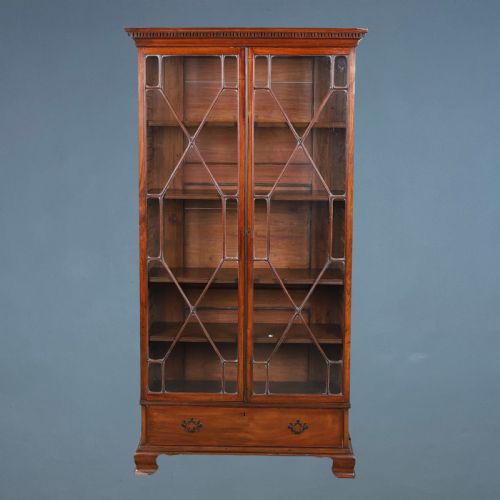
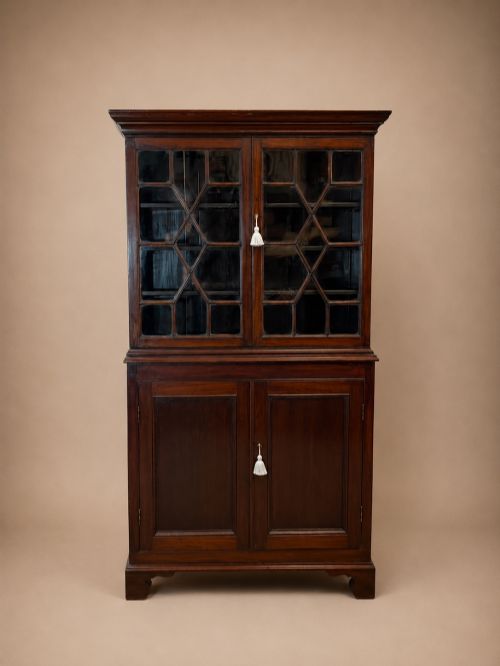
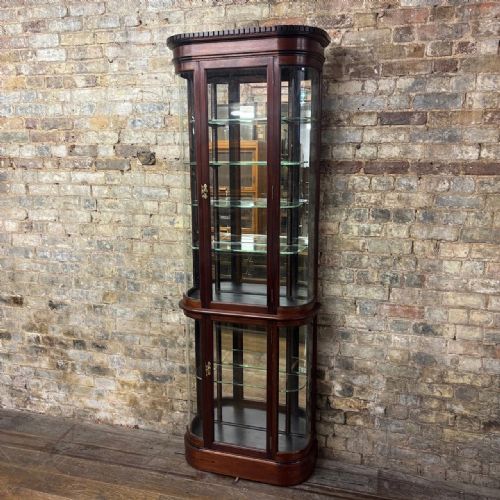
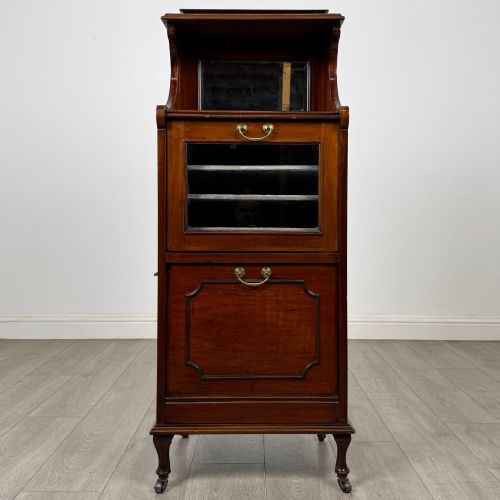
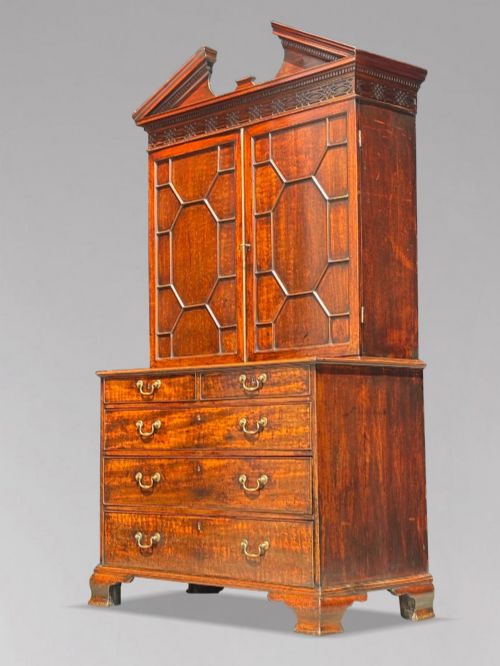
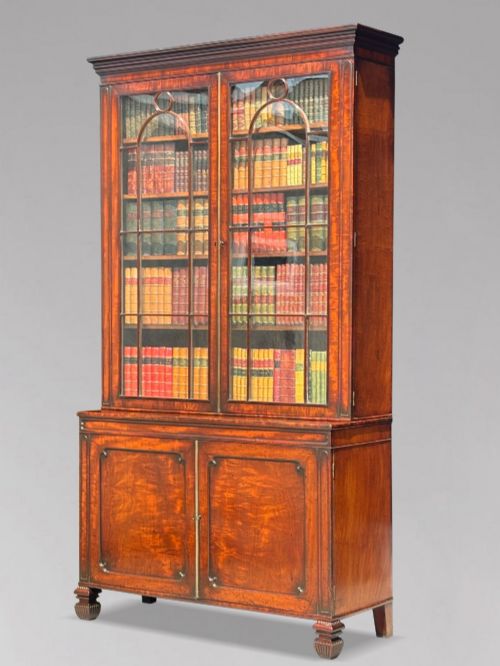
Tall Glazed Display Cabinet
A tall glazed display cabinet brings height and visible storage to a room, holding books and porcelain behind glass panels.
Tall Glazed Display Cabinet
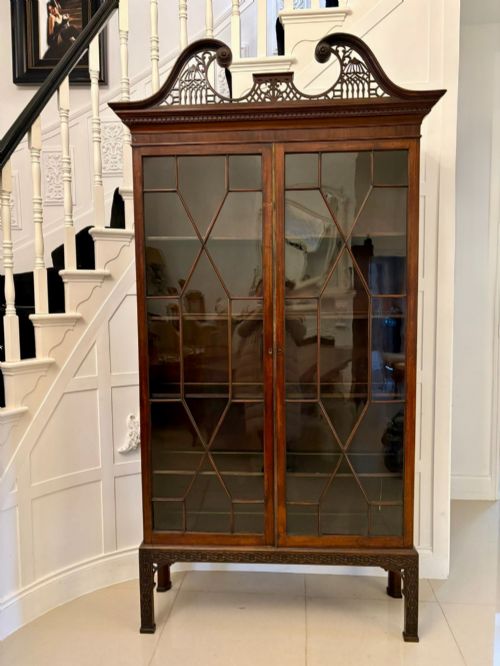
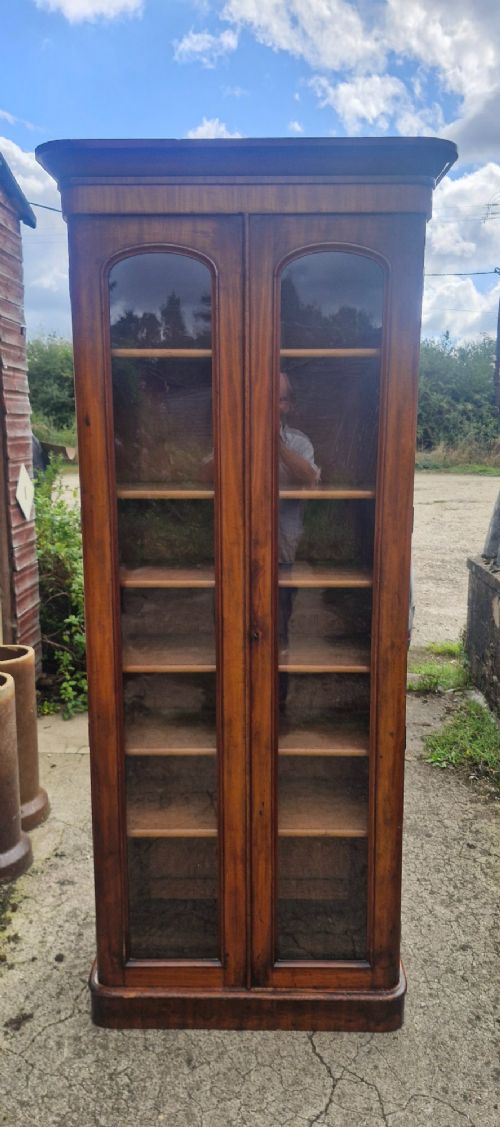
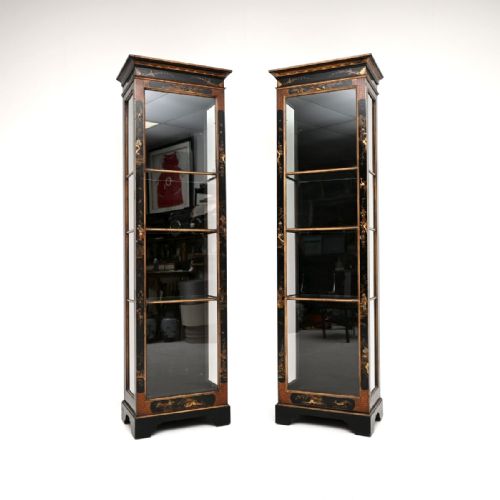
A tall glazed display cabinet stands vertical, combining glazed doors with wooden shelving to house books, collections, and prized objects. These pieces cross several centuries of British cabinet-making, appearing in formats from domestic libraries to corner rooms.
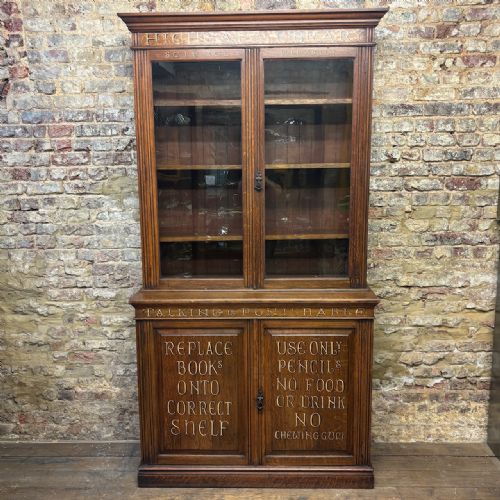
The versions most commonly met here originate in the Victorian, Edwardian, and Georgian periods, constructed in forms ranging from upright bookcases to shop display units. They serve to keep dust from valuable contents while offering a clear view from across the floor.
How they were made
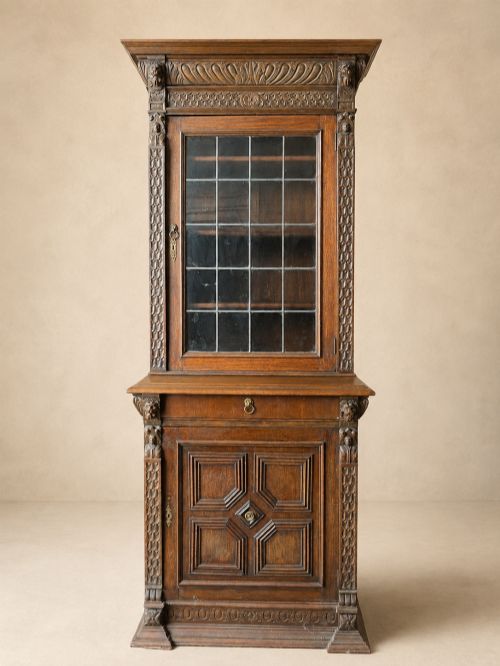
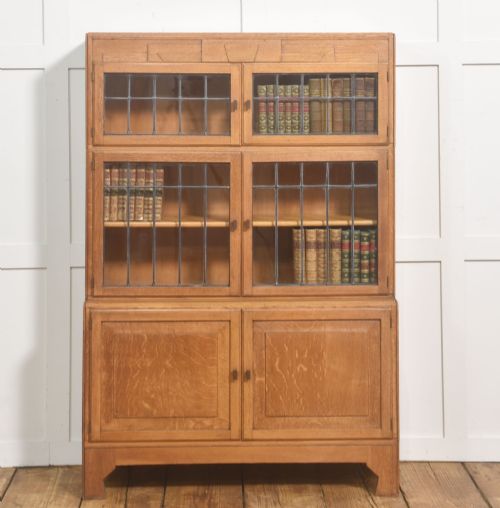
Cabinet-makers relied heavily on timbers such as mahogany, oak, walnut, and pine, often incorporating satinwood or yew for decorative contrast. Structural framing utilised traditional joinery, housing thick glass panes within wooden frames or lead cames.
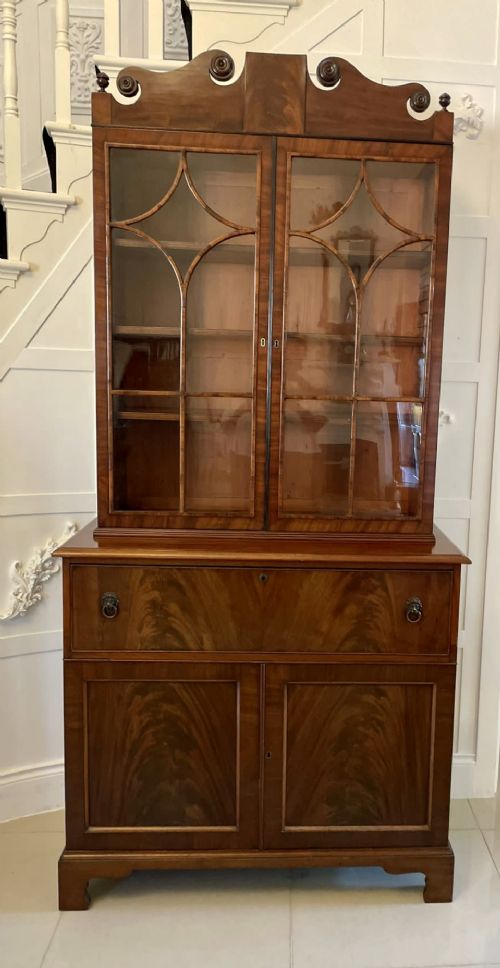
Glazing techniques defined much of the external character, utilising astragal bars to divide the glass into smaller geometric lights. Brass hardware, including hinges and locks, secured the doors while adding functional metallic detail.
Tall Glazed Display Cabinet Retail Price Guide 2026
Typical asking prices for tall glazed display cabinet among the pieces listed under this phrase on Sellingantiques today, from the lower quarter to the upper quarter. They describe what is for sale here now, not the wider market.
Periods represented span from the 18th century through the Georgian, Regency, Victorian, and Edwardian eras into the 1920s.
What varies in quality
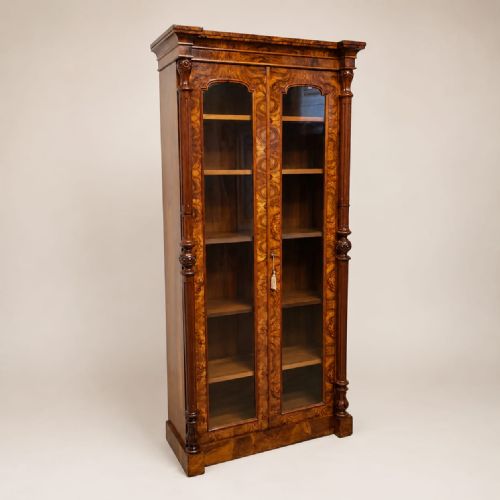
The distinction between tiers rests upon timber selection and the refinement of the joinery, particularly in the shaping of the astragal bars and cornice mouldings. Superior examples demonstrate tight timber grains, uniform colour, and well-balanced proportions that maintain stability at heights exceeding standard furniture.
Interior detailing also separates standard utility pieces from exceptional works, visible in adjustable wooden shelving systems and finely cut cockbeading around drawer fronts. The crispness of carved wooden ornamentation further marks the maker's hand.
Gillows·Howard & Sons·Marsh & Tatham·Minty
The Tall Glazed Display Cabinet Glossary
- Astragal glazing
- A method of dividing a glass door into smaller panes using slender wooden mouldings. These bars intersect to form geometric patterns across the cabinet front.
- Secretaire bookcase
- A tall cabinet featuring a pull-down writing drawer fitted with small compartments and pigeonholes above lower shelving or doors. It combines a desk workspace with upper display storage.
- Corner cabinet
- A triangular form designed to fit neatly into the corner of a room, maximising floor space. Versions often feature curved or bow-front glazed doors.
- Cornice
- The decorative horizontal moulding that crowns the top of the cabinet. It often mirrors architectural details from the period of manufacture.
Tall Glazed Display Cabinet: Frequently Asked Questions
How do I secure a tall cabinet?
Tall furniture requires physical attachment to a solid wall using concealed brackets to prevent tipping. This ensures stability given the considerable height and top-heavy nature of glass-fronted storage.
Positioning the piece on an even floor surface also helps distribute the weight evenly across the feet or plinth base.
Can shelves be adjusted inside?
Many period examples include adjustable wooden shelving supported on traditional wooden rachet systems or metal pins. This allows the internal layout to accommodate books or objects of varying heights.
Older fixed-shelf variations remain common in simpler pine and regional workshop pieces.
What wood types are most common?
Mahogany dominates formal 18th and 19th-century examples, frequently paired with satinwood stringing or crossbanding. Oak appears in earlier vernacular pieces as well as later Edwardian library cabinets.
Walnut and pine also feature widely, the latter often finished with painted surfaces or traditional wax.
How do I clean the glass safely?
Cleaning requires a soft lint-free cloth and a mild glass cleaner applied directly to the cloth rather than the wood surface. Moisture left on timber frames can damage polished or waxed finishes over time.
Care must be taken around lead cames and delicate astragal joints.