


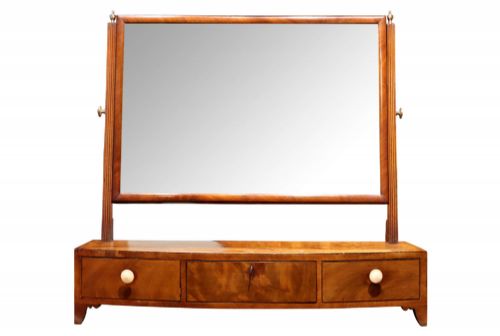
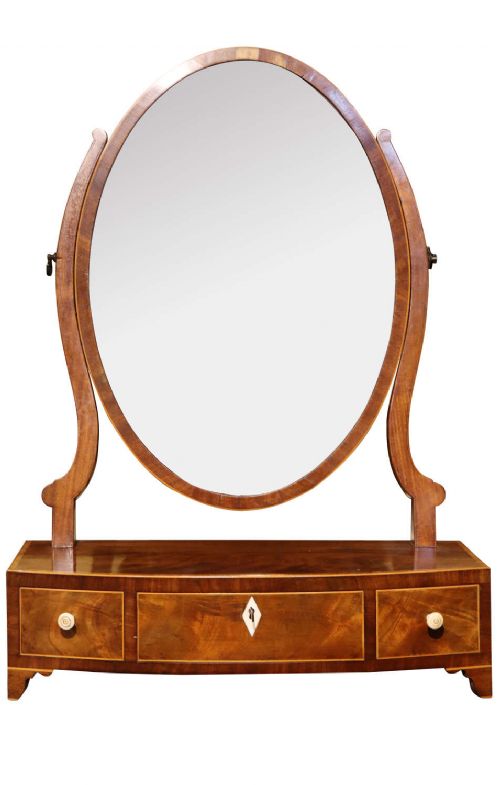
Tabletop Dressing Mirror Drawers
Tabletop dressing mirror drawers sit upon a chest or table, combining a swing glass with small compartments for personal items.
Tabletop Dressing Mirror Drawers
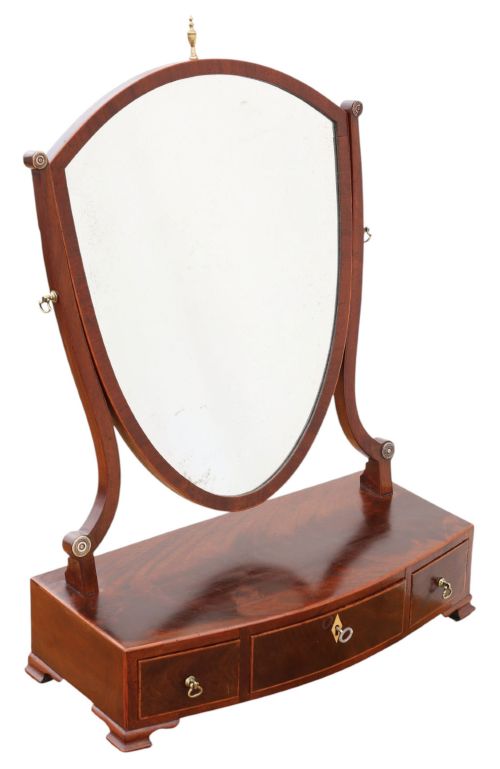
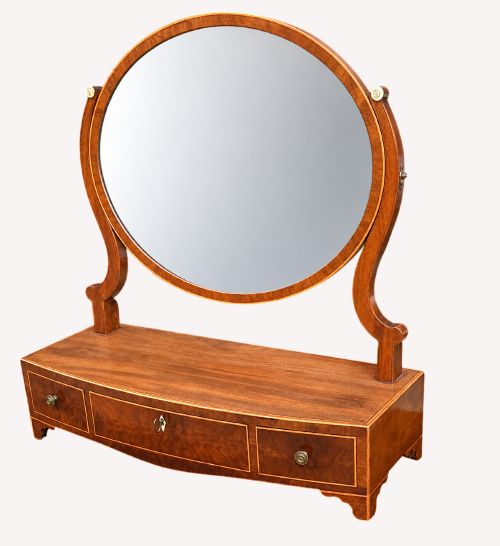
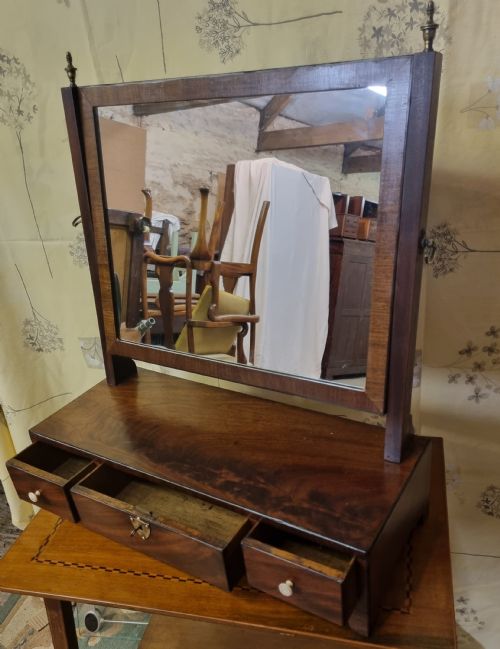
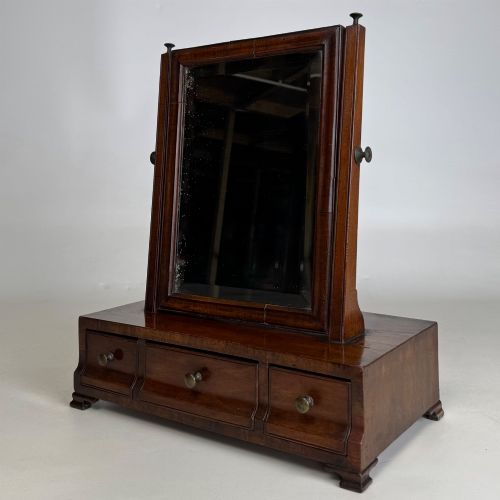
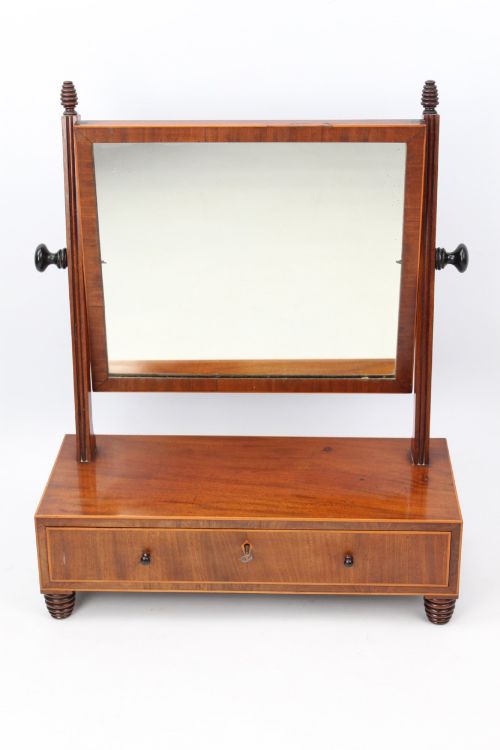
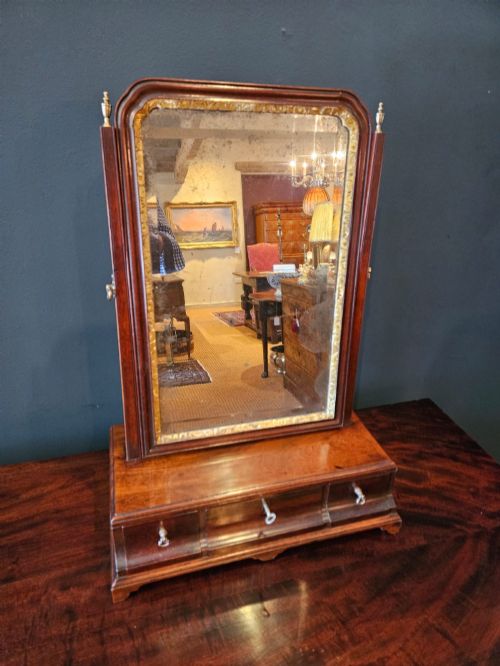
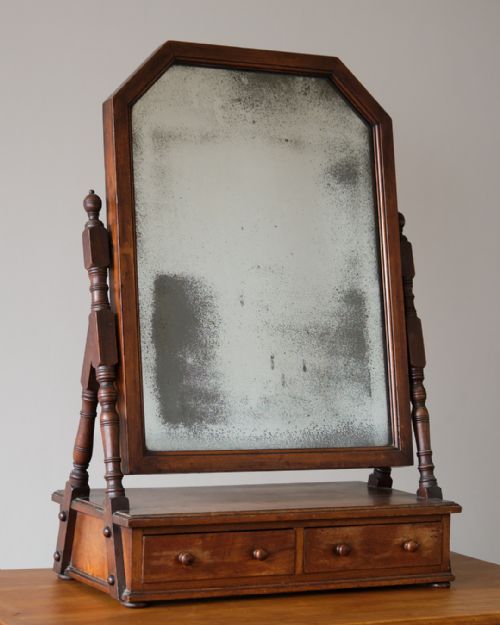
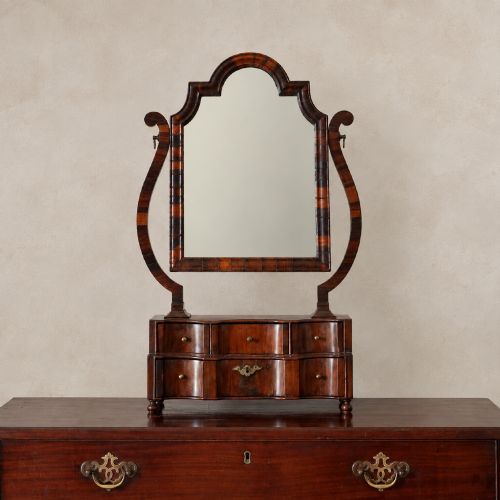
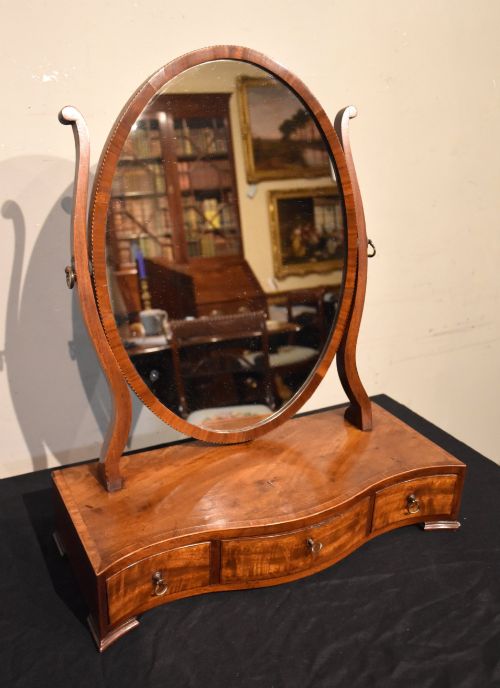
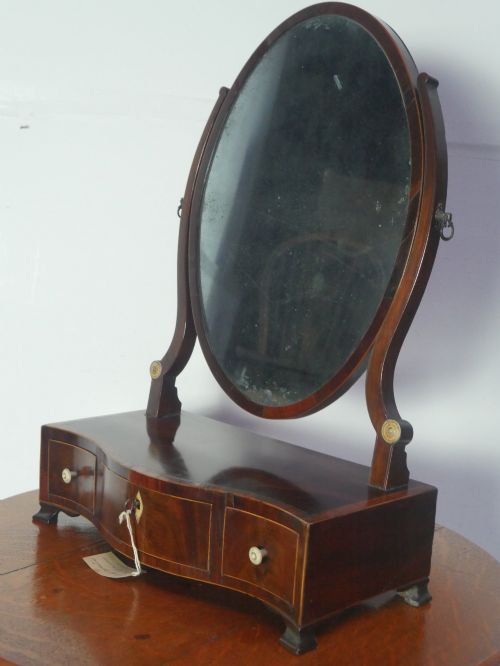
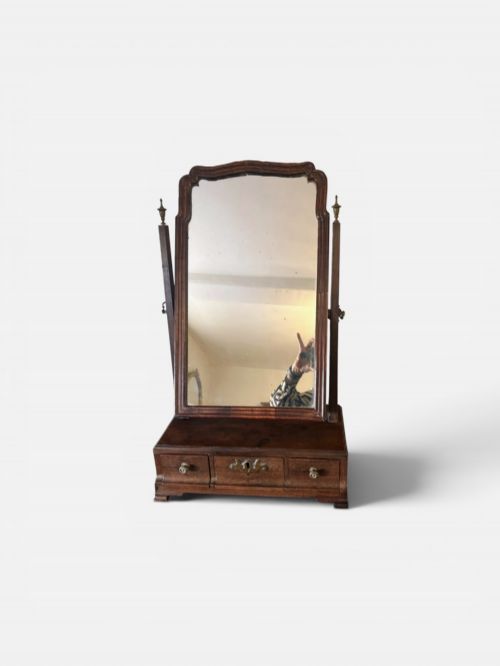
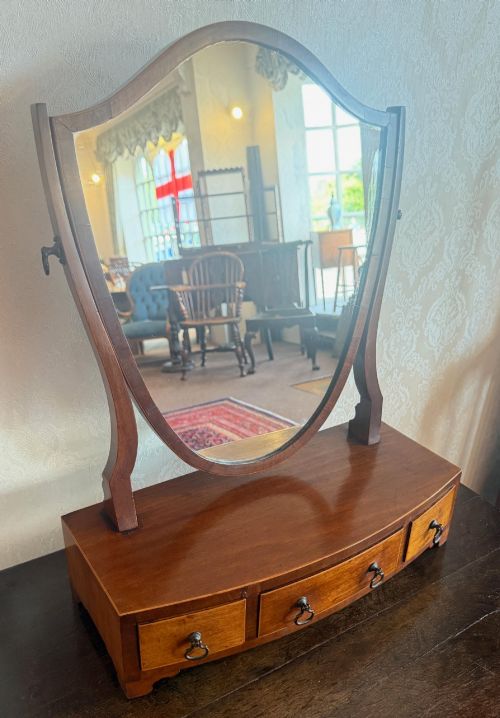
Tabletop dressing mirror drawers bring together a pivoting glass and a base fitted with small storage spaces. When you search for tabletop dressing mirror drawers, you encounter pieces designed for personal grooming on a chest of drawers or dressing table. The form appears predominantly in mahogany and walnut, ranging from straightforward upright boxes to serpentine shapes with ogee feet.
The pieces on this page span the eighteenth and nineteenth centuries, taking in the Georgian, Regency, and Victorian periods. Examples from the seventeen-hundreds often feature figured walnut veneers or parcel-gilt details, while later nineteenth-century versions lean towards simpler mahogany frames or satinwood inlays. Most examples rely on the classic swing mechanism supported by upright arms rising from the drawer base.
Materials and Construction
Cabinetmakers built these mirrors using solid timbers and fine veneers over secondary woods, with mahogany and walnut forming the primary structural choices. Craftsmen applied crossbanding, bone escutcheons, and marquetry details to enhance the surface appearance of the drawer fronts. Brass fittings, including pivoting screw knobs and small drop handles, secure the glass frame and operate the drawers.
The swing glass itself is held within a shaped wooden frame, which connects to upright standards via brass side screws that allow the angle to adjust. Base sections frequently incorporate dovetailed drawer construction, organising small compartments for personal items beneath the mirror plate.
The listings on this site show periods ranging from the eighteenth century through the Victorian era, utilising mahogany, walnut, and satinwood.
Assessing the Pieces
The standard of timber selection and cabinetwork defines the distinction between ordinary and exceptional examples. Finer pieces display carefully chosen mahogany or figured walnut veneers matched symmetrically across the drawer fronts and mirror frame. Crossbanding, stringing, and well-executed marquetry inlay reveal the hand of a skilled maker.
Proportion and structural integrity also separate the range. Top-tier examples maintain original mirror glass, balanced dimensions, and cleanly dovetailed drawer boxes without excessive replacement of brass hardware or secondary timbers.
Heal And Sons
The Tabletop Dressing Mirror Drawers Glossary
- Toilet mirror
- A historical term for a tabletop dressing mirror, used for grooming and personal care. These units typically sit on a separate table or chest.
- Swing mirror
- A mirror plate hung on pivots between two upright posts, allowing the user to tilt the glass to various angles.
- Crossbanding
- A border of veneer laid around the edges of a panel so the grain runs perpendicular to the central surface, often seen on fine Georgian drawer fronts.
- Serpentine front
- A furniture front curving outward in the centre and inward at the ends, creating a flowing, undulating outline.
- Parcel-gilt
- Partially gilded with gold leaf, highlighting carved details or mouldings against a dark wood background such as walnut or mahogany.
Tabletop Dressing Mirror Drawers: Frequently Asked Questions
What is the difference between a toilet mirror and a dressing mirror?
In historical terms, toilet mirrors and dressing mirrors refer to the same tabletop object used for personal grooming. Both sit upon a chest or table and feature an adjustable swing glass mounted above a set of small drawers.
Over time, different makers and regions used alternate names for these compact vanity pieces, but their fundamental function and form remain identical.
How do I date a mahogany dressing mirror?
Dating relies on stylistic clues, timber choices, and construction methods visible in the frame and drawer boxes. Eighteenth-century versions often feature figured walnut or early mahogany with fine crossbanding, while Regency and Victorian pieces introduce broader proportions or satinwood inlay.
Examining the secondary woods inside the drawer construction and the style of the brass pivoting hardware helps narrow the period of manufacture.
Are the mirror plates usually original?
Many surviving examples have replacement mirror plates because antique glass deteriorates or breaks over centuries of use. When a glass has been replaced, it is often mounted into the historic wooden frame using traditional methods.
Original mirror plates frequently show subtle foxing, silvering loss, or slight distortion that reveals their age.
How do I place a tabletop mirror in a room?
These mirrors require a stable surface of appropriate depth, such as a chest of drawers, sideboard, or dedicated dressing table. Positioning them near a natural light source provides the best illumination for the glass.
Ensure the weight of the base sits fully on the furniture top and leave enough clearance behind the uprights for the swing frame to tilt.