


Antique Swing Mirror Drawers
These antique swing mirror drawers combine a pivoting looking glass with small storage compartments, offering a practical tabletop piece for daily grooming.
Antique Swing Mirror Drawers
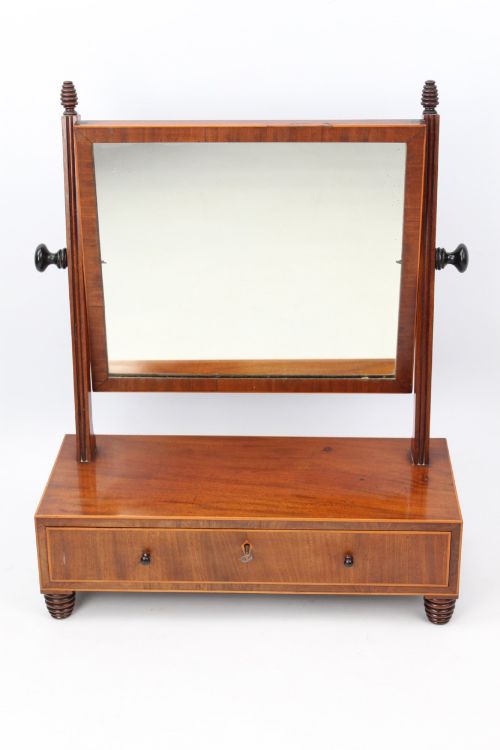
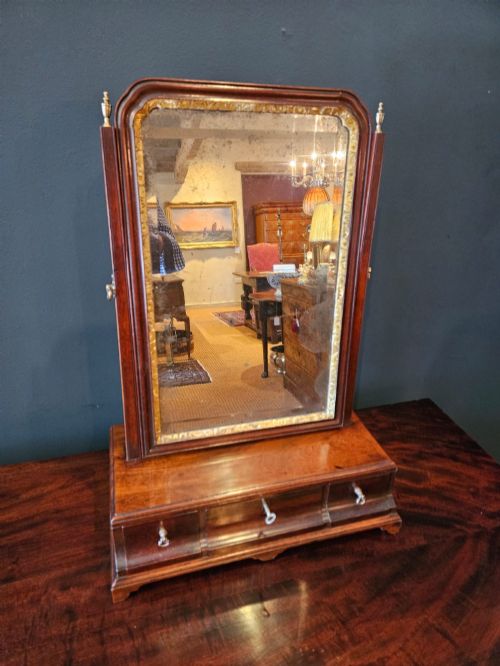
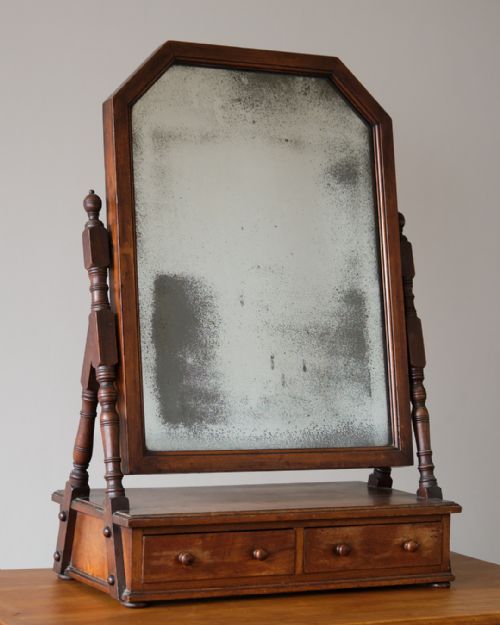
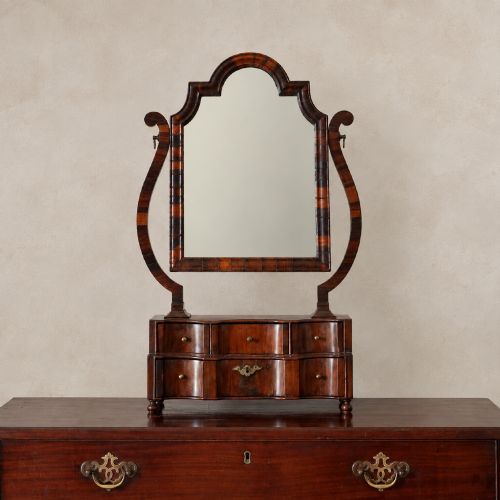
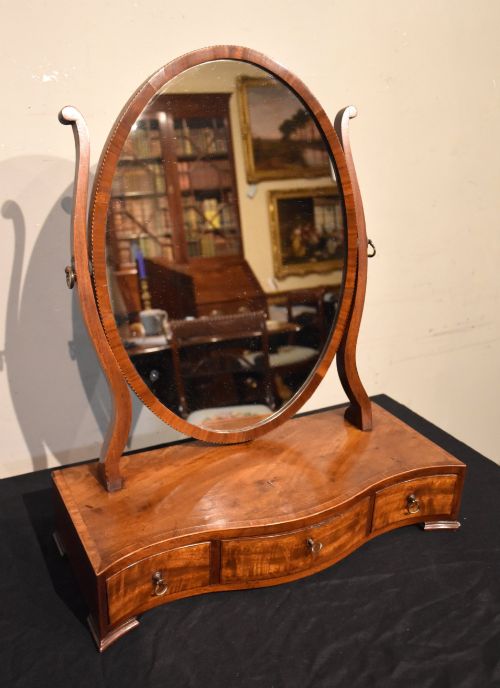
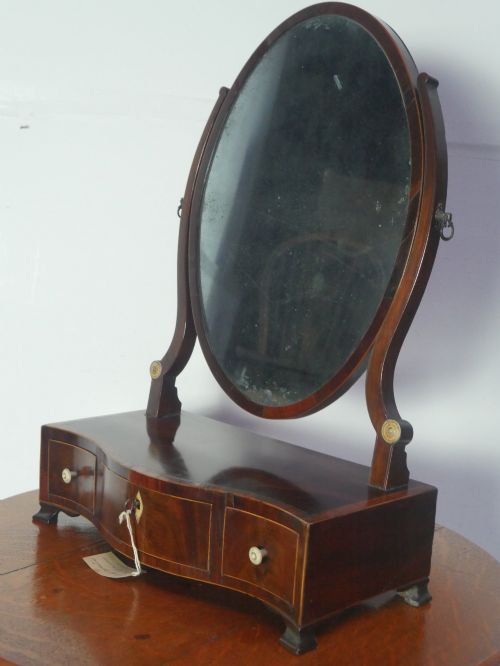
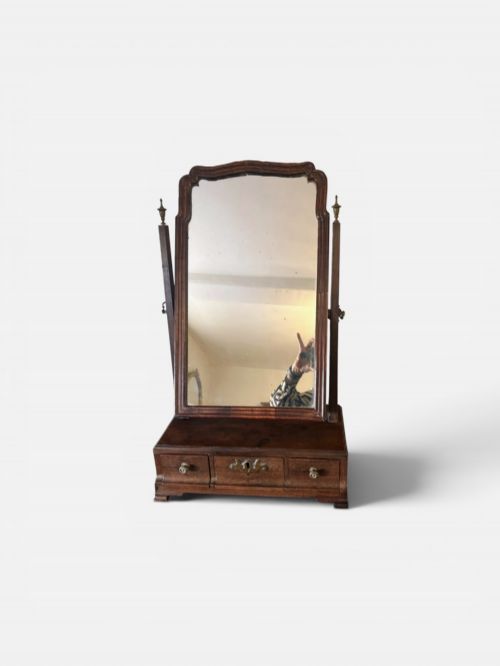
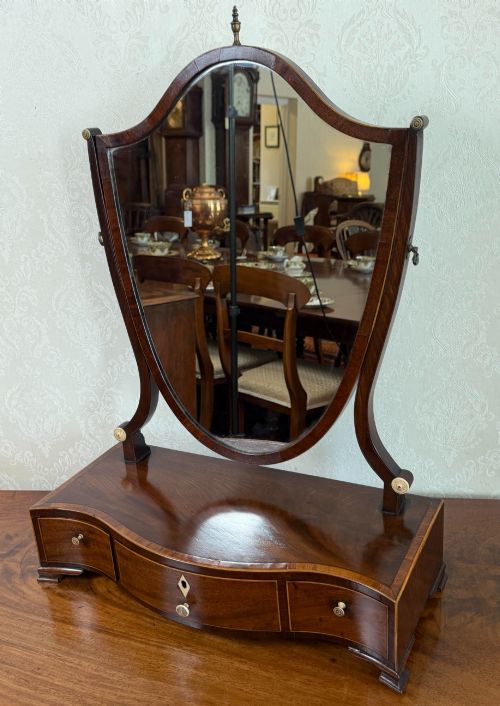
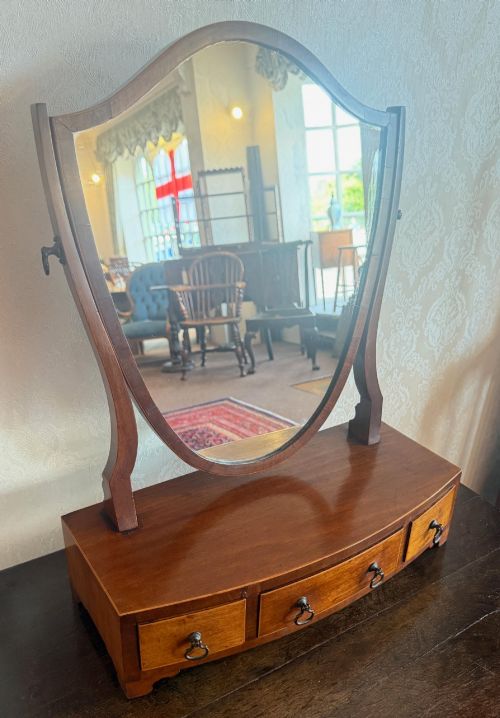
When you search for antique swing mirror drawers, you encounter pieces designed to sit upon a chest or dressing table, featuring an adjustable glass mounted between upright supports above a small drawer base. The selection spans the eighteenth and nineteenth centuries, taking forms such as dressing mirrors, toilet mirrors, and dressing glasses.
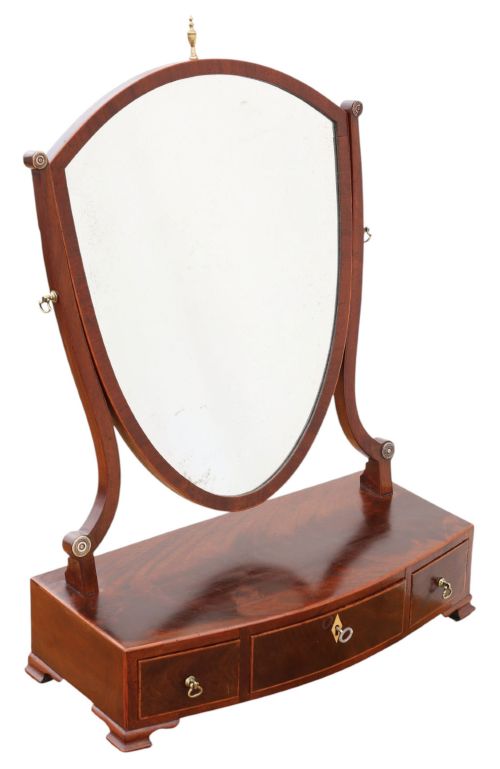
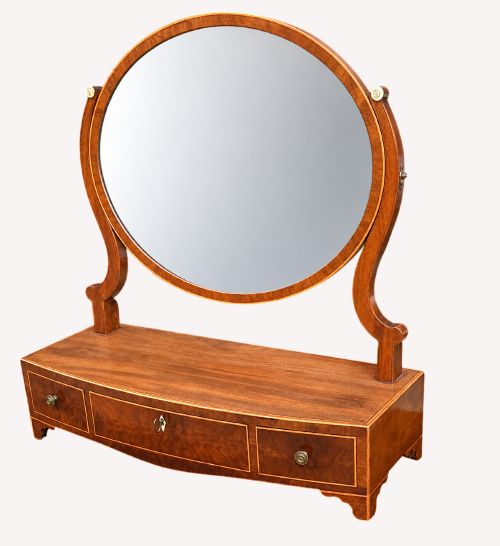
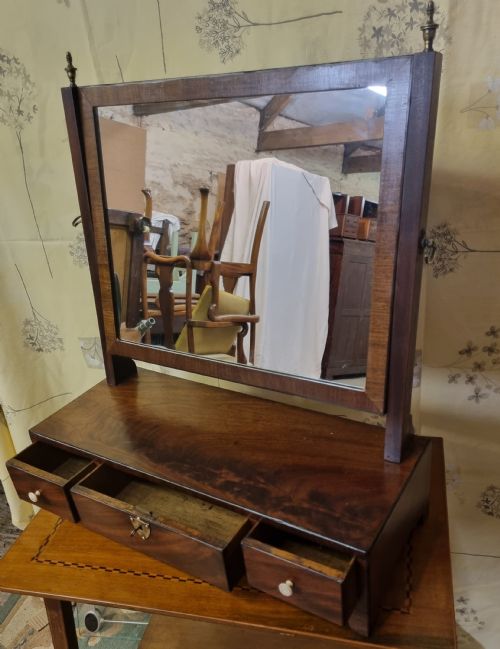
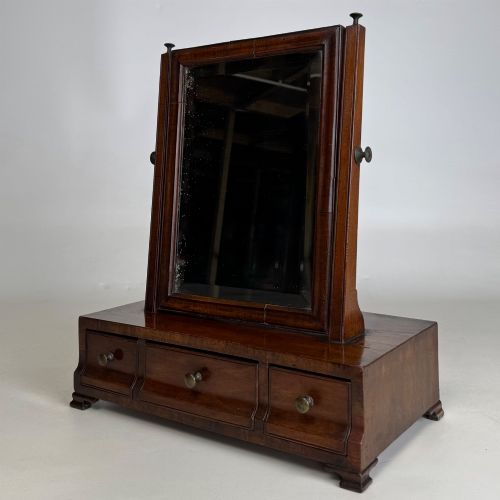
Georgian examples predominate, alongside Regency, Queen Anne, and Victorian pieces, showing shield, oval, and rectangular mirror plates. Base configurations range from simple single-drawer boxes to serpentine fronts with three drawers or bureau fitments, executed in proportions suited for a dressing surface.
Materials and construction
Cabinetmakers built these mirrors primarily in mahogany and walnut, frequently employing boxwood inlay, crossbanding, and Dutch marquetry to ornament the drawer fronts. Selected pieces incorporate parcel-gilt details, gesso, giltwood, laburnum, or painted pine.
The pivoting mirror frames connect to upright arms using brass screw caps or pivots, allowing the glass to tilt to the desired angle. Interiors typically feature oak-lined drawers designed to hold small personal items.
Listings feature mahogany and walnut as the primary woods, accompanied by brass hardware, bone details, and boxwood inlay.
Gradations of quality
Quality reveals itself in the selection of timbers, such as figured walnut or richly grained mahogany, and the precision of the boxwood inlay or crossbanding on the drawer section. Finer examples display harmonious proportions between the mirror frame and the stepped or serpentine base.
The construction of the drawer linings and the subtlety of the mouldings around the mirror glass differentiate standard workshop production from pieces of superior cabinetmaking skill.
Heal & Sons
The Antique Swing Mirror Drawers Glossary
- Toilet mirror
- A small portable mirror with an attached base containing drawers, historically placed on a dressing table or washstand. It allows the user to adjust the angle of the glass.
- Crossbanding
- A decorative border technique where thin strips of veneer are laid across the grain of the primary wood on drawer fronts or table edges. This creates a contrasting frame effect.
- Serpentine front
- A curved furniture front featuring a convex centre flanked by concave curves, adding visual movement to the drawer base. It requires advanced woodworking skill to execute properly.
- Shield mirror
- A mirror plate shaped like a heraldic shield, popular during the eighteenth century. It sits within a matching wooden frame supported by upright arms.
- Parcel-gilt
- Partially gilded woodwork where gold leaf highlights specific carved details or mouldings against a dark wood ground. It provides restrained contrast on period frames.
Antique Swing Mirror Drawers: Frequently Asked Questions
What is an antique swing mirror drawers?
It is a tabletop dressing glass mounted on pivots between two upright arms, positioned above a small chest of drawers. These pieces served as personal grooming stations on top of larger furniture.
Cabinetmakers designed them to hold cosmetics, trinkets, and small accessories within the integrated drawer base while providing an adjustable reflecting surface.
Where were these mirrors placed?
They were designed for bedrooms and dressing rooms, sitting securely upon a chest of drawers, dressing table, or washstand. Their portable nature allowed owners to move them to catch optimal natural light.
Because they required a stable surface, they formed a central part of the domestic dressing routine before fitted wardrobes with full-length mirrors became common.
How do I date a mirror?
Dating relies on stylistic shifts in the woodwork, such as the proportions of the frame, the shape of the mirror plate, and the design of the base. Eighteenth-century examples often feature walnut or figured mahogany with subtle bracket feet, while Regency and Victorian pieces introduce bolder cornices and different proportions.
Construction details, including drawer linings and the method of securing the mirror glass, also help establish the manufacturing period.
Are the mirror plates original?
Mirror glass frequently underwent replacement over the centuries due to wear or accidental breakage, making it a point of interest for collectors. Older glass often exhibits subtle distortions, slight foxing, or handmade characteristics.
Original plates add historical integrity to the piece, though replacement glass of a suitable age remains common in surviving examples.