
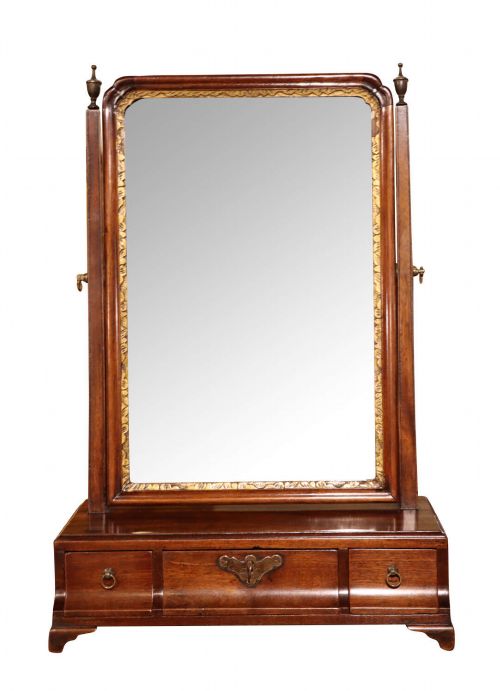


Tabletop Box Mirror
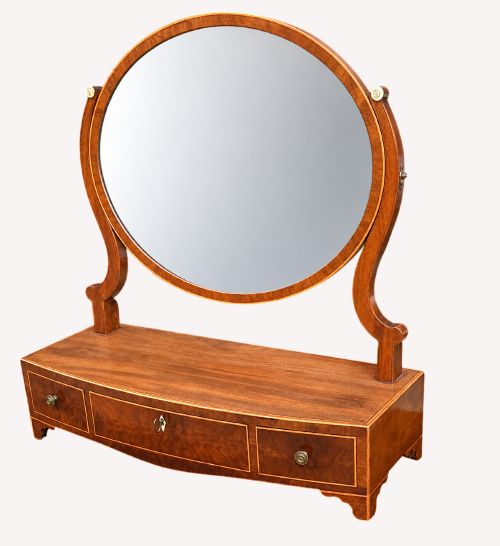
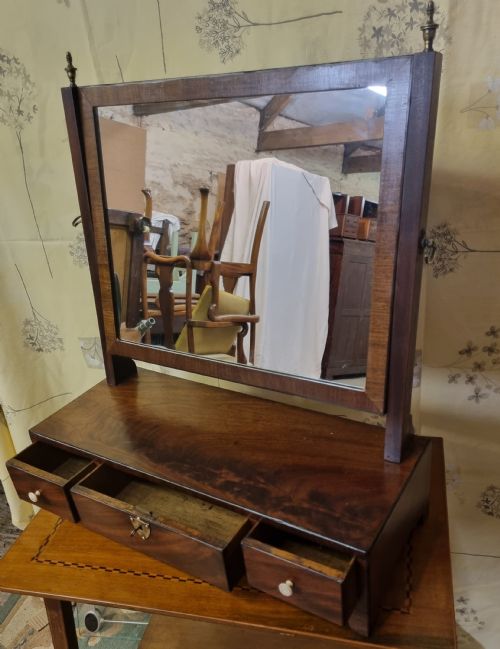
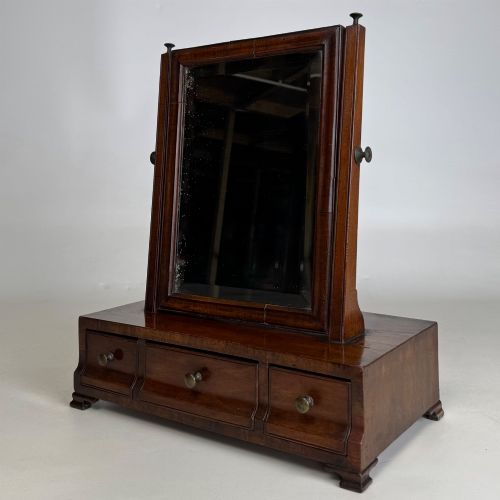
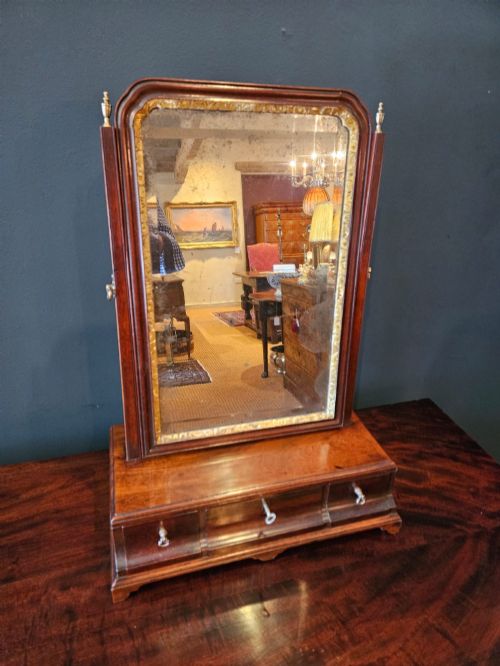
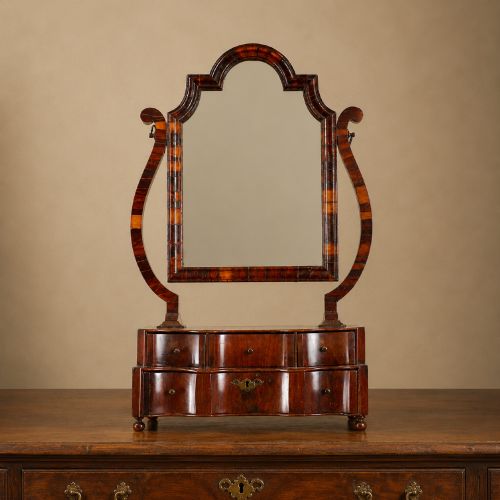
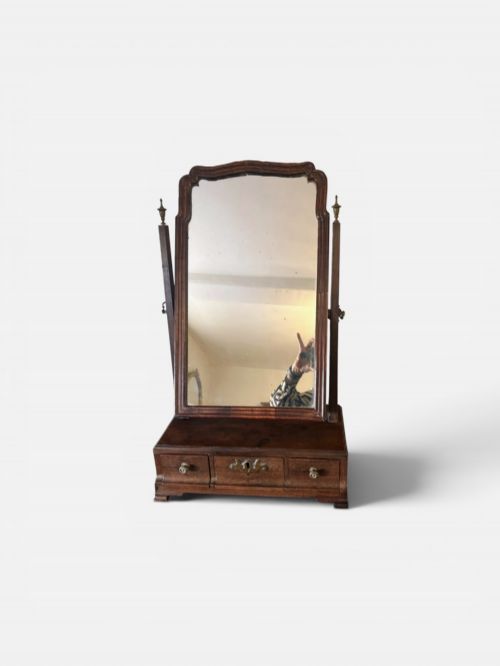
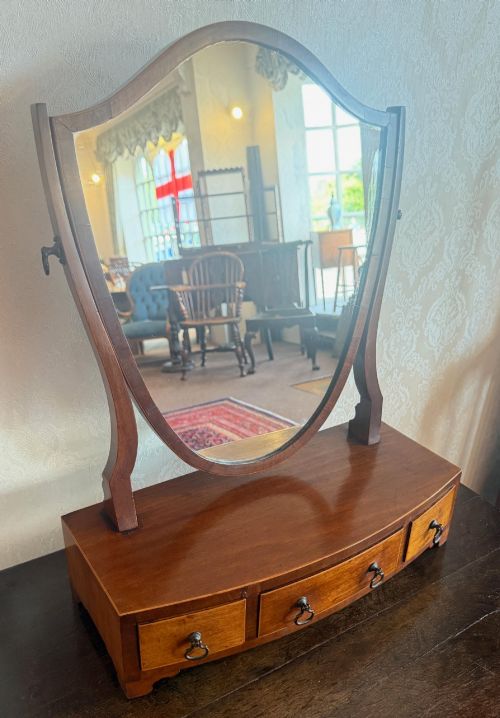
A tabletop box mirror is a dressing glass designed to sit upon a chest or table, offering a movable glass plate above small drawers.
Tabletop Box Mirror
A tabletop box mirror combines a small looking glass with a base containing one or more drawers, originating primarily in the Georgian and Victorian eras. These pieces served a daily purpose in bedchambers for personal grooming before fitted wardrobes became common.
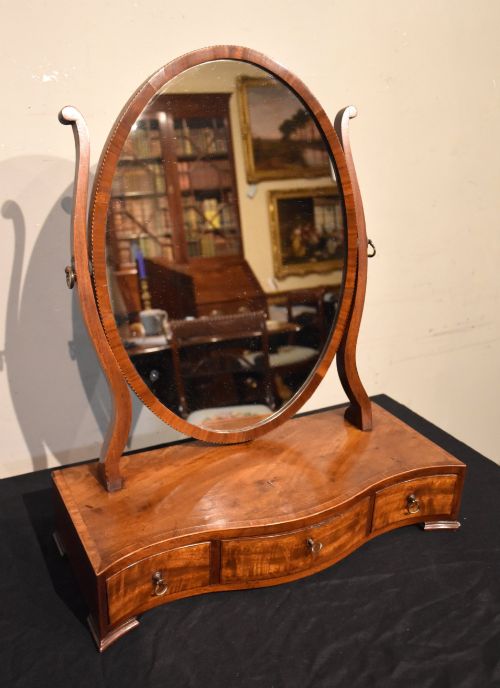
The version most frequently met on this page is the mahogany dressing table mirror from the eighteenth or nineteenth century. Walnut and laburnum examples also appear, reflecting earlier tastes from the Queen Anne period.
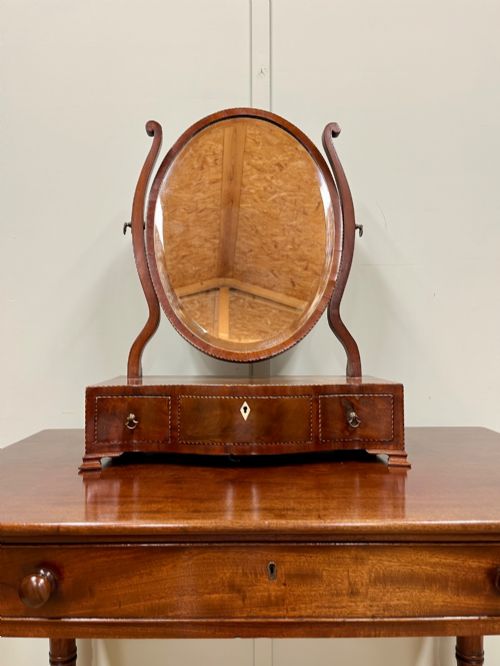
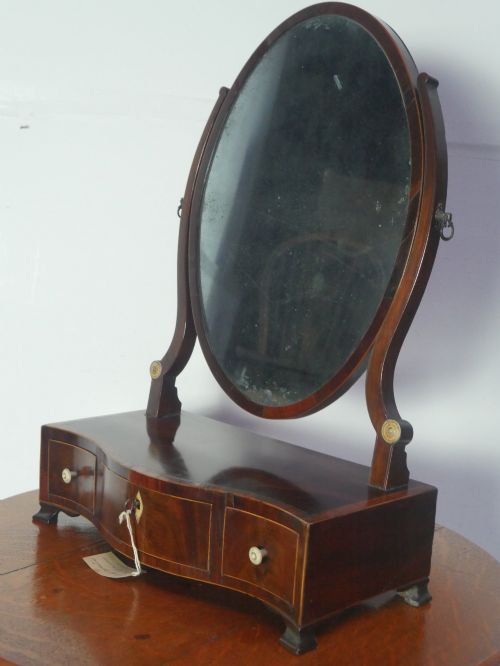
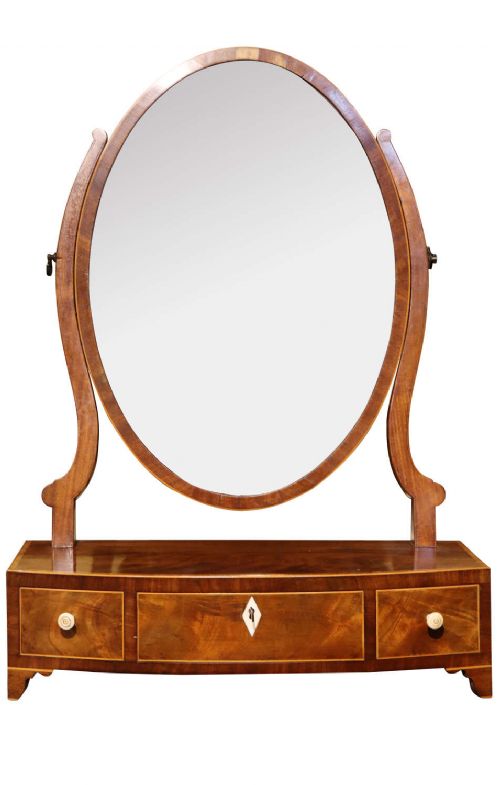
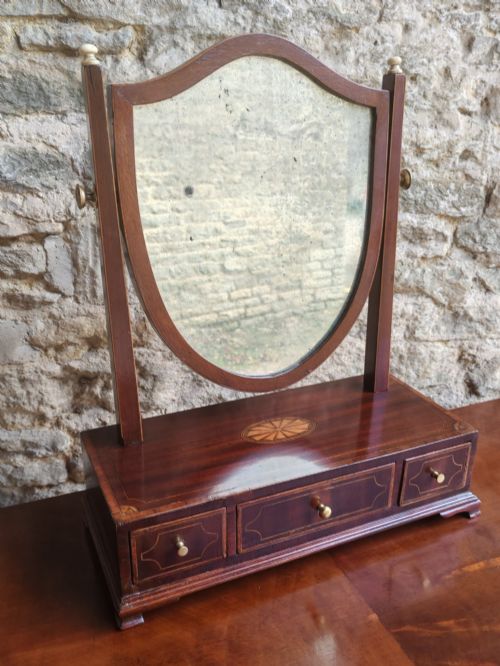
Makers fashioned these mirrors in various shapes, including rectangular, oval, shield-shaped, and serpentine fronts. Many incorporate small box bases fitted with tiny compartments for holding jewellery or personal items.
Materials and construction
Cabinet makers utilised dense timbers such as mahogany and walnut, frequently selecting veneers and crossbanding to decorate the drawer fronts and framing. Bone escutcheons, brass pivots, and delicate knob handles provide the functional metalwork.
The mirror plates themselves are held within pivoting wooden frames attached to upright arms, allowing the user to tilt the glass to the desired angle. These frames sit securely atop dovetailed box bases designed to balance the weight of the glass.
Listings feature walnut, mahogany, satinwood, and giltwood frames spanning the Georgian, Regency, and Victorian periods.
Distinguishing quality
Quality rests upon the selection of timber and the precision of the cabinet work, particularly in the dovetailing of the drawers and the shaping of the mirror frame. Finer examples display carefully matched veneers, delicate stringing, and well-proportioned ovals or shield forms.
The sophistication of the base design dictates the standing of a piece, with serpentine and bow-front variants requiring greater skill from the maker than simple rectangular boxes. Original mirror glass and brass hardware further elevate a piece.
The Tabletop Box Mirror Glossary
- Toilet mirror
- A small mirror designed for a dressing table or chest, typically mounted on a box base with drawers. These pieces were essential for shaving and dressing in eighteenth and nineteenth-century homes.
- Dressing glass
- An alternative period term for a tabletop mirror. It refers specifically to the glass plate and its supporting frame.
- Crossbanded
- A decorative technique where strips of veneer are laid across the grain of the primary timber. This method frames the edges of drawer fronts and tabletops.
- Serpentine
- A shaped furniture front featuring a convex centre flanked by concave curves. This undulating line demands considerable skill to construct.
- Pivots
- The brass screws or pins set into the upright arms that hold the mirror frame. They allow the glass to tilt forward and backward.
Tabletop Box Mirror: Frequently Asked Questions
What is a tabletop box mirror?
A tabletop box mirror is a portable dressing glass mounted on a small wooden chest with drawers. These items sat on tables to provide a reflection for grooming.
The base functioned as a storage box for small valuables and trinkets. They remain popular for their compact utility and traditional craftsmanship.
How old are these mirrors?
The examples on this page span from the eighteenth century through the Victorian era. Many date from the Georgian and Regency periods.
Craftsmen built them primarily in mahogany and walnut during the 1700s and 1800s. Construction details help date each individual piece.
Where should I place one?
These mirrors sit comfortably on top of chests of drawers, sideboards, or dressing tables. Their compact footprint makes them versatile for smaller spaces.
Ensure the surface is stable and level to support the weight of the box base. Position them near natural light for the best reflection.
How do I spot a Georgian mirror?
Georgian mirrors often feature solid mahogany or walnut construction with hand-cut dovetails inside the drawers. The wood develops a deep patina over centuries of care.
Details like ovals, shield shapes, and brass ogee bracket feet point towards eighteenth-century design. Earlier pieces from the Queen Anne era frequently utilise walnut and laburnum.