
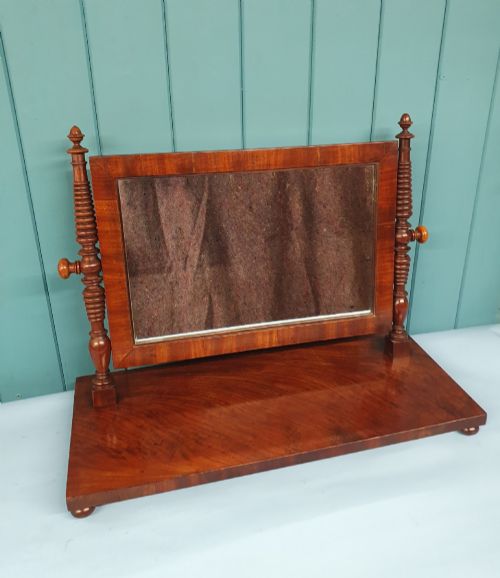
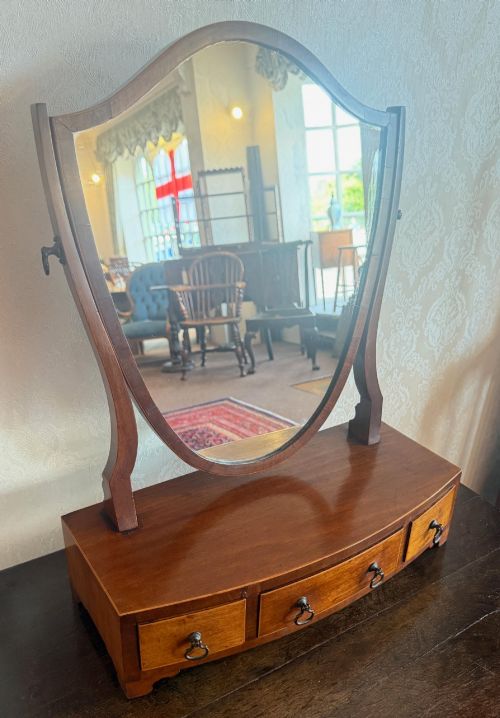
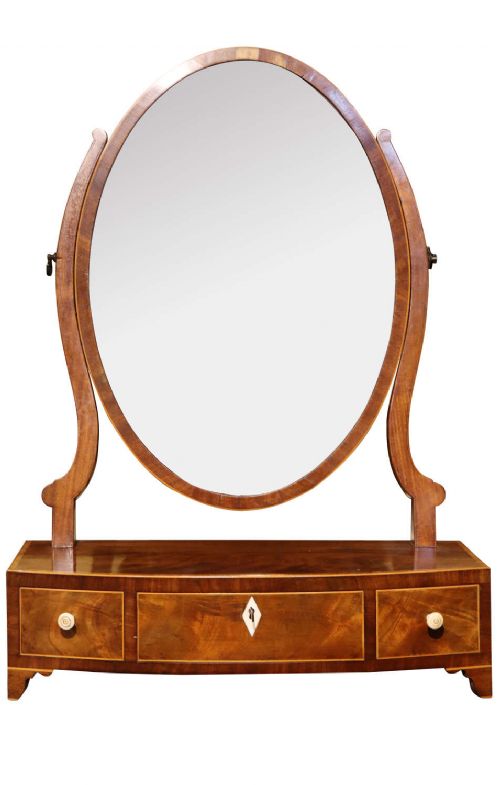

Georgian Mahogany Swing Glass
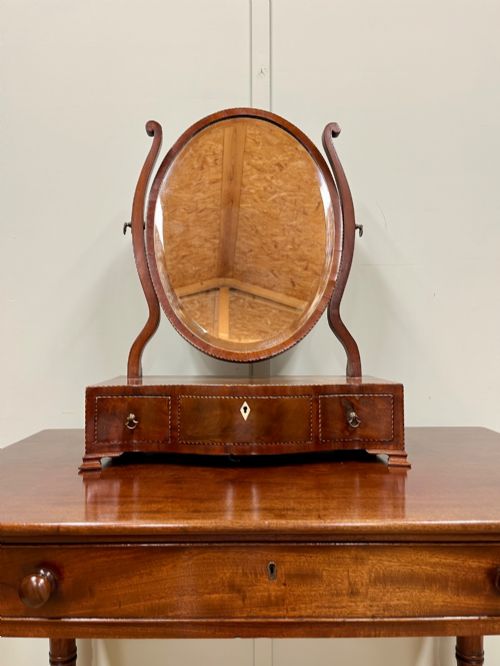
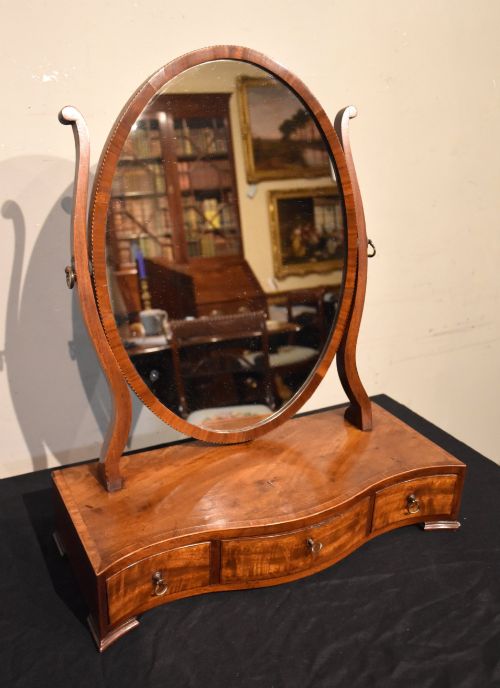
Georgian mahogany swing glass is a pivoting table mirror designed for the dressing table, offering a clear reflection framed in rich timber.
Georgian Mahogany Swing Glass
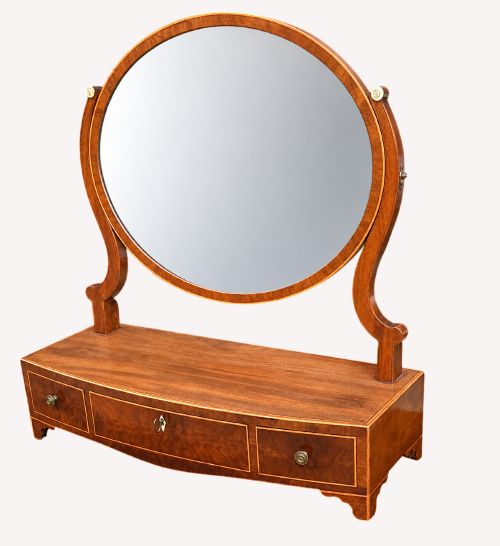
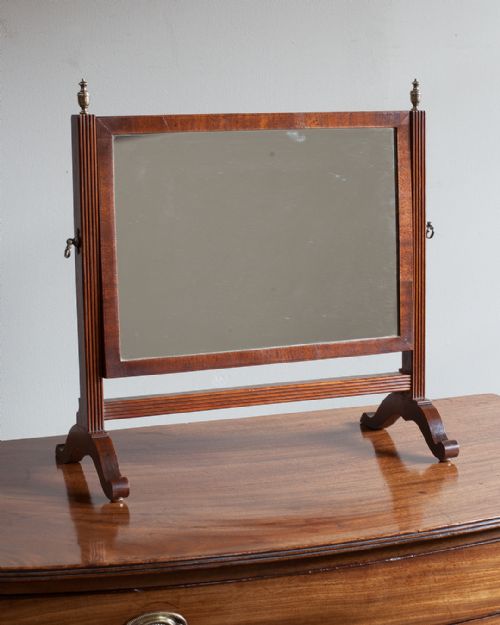
A georgian mahogany swing glass is a portable dressing mirror mounted on upright frame supports that allow the glass to tilt back and forth. These pieces date principally from the eighteenth and nineteenth centuries, spanning the Georgian, Regency and Victorian eras.
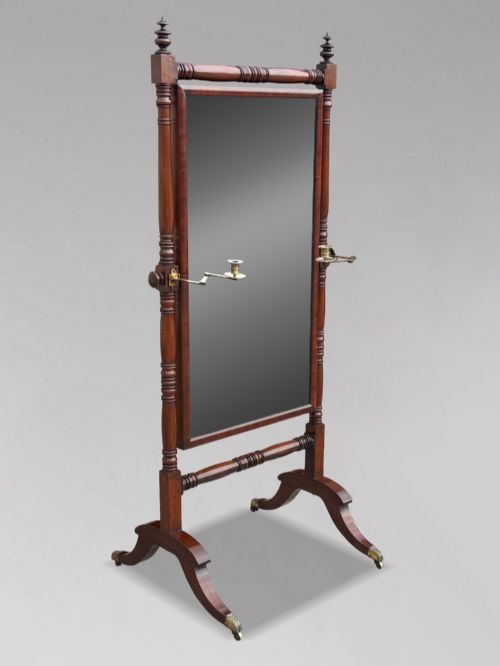
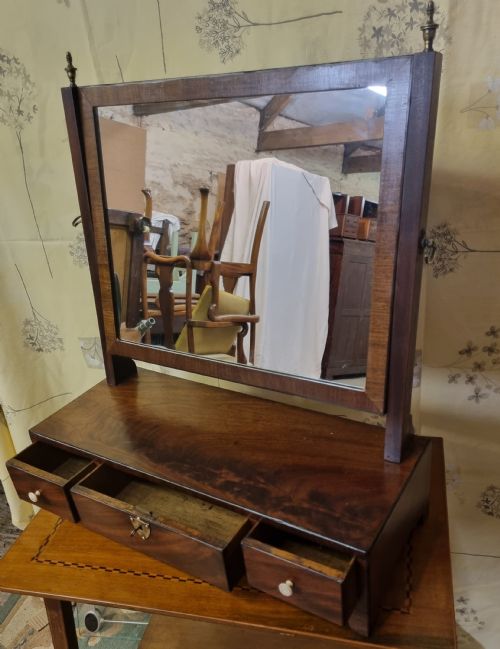
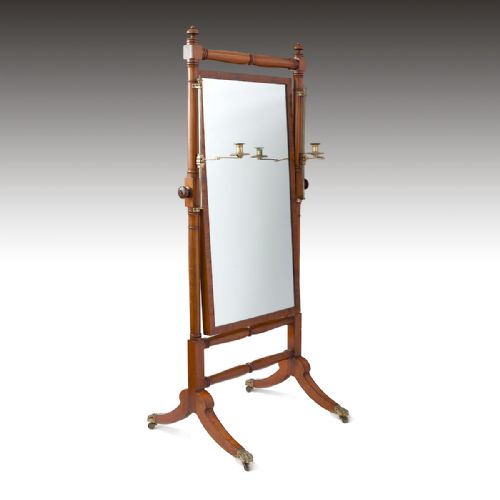
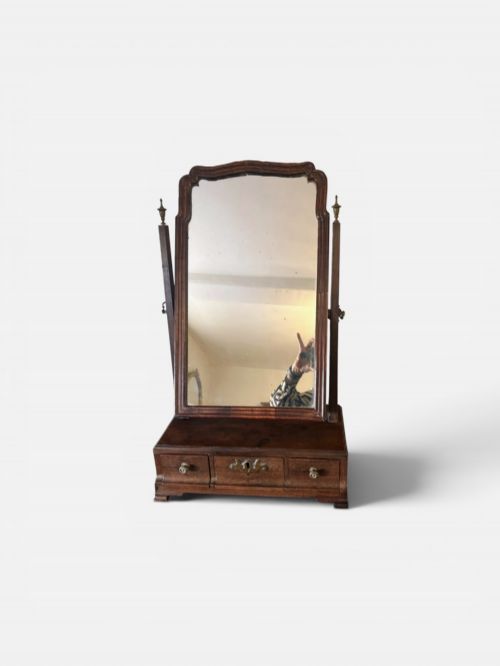
The format ranges from small toilet mirrors with fitted drawer bases to large cheval mirrors designed to stand upon the floor. Most examples on this page appear as table or dressing mirrors featuring rectangular or oval glass plates.
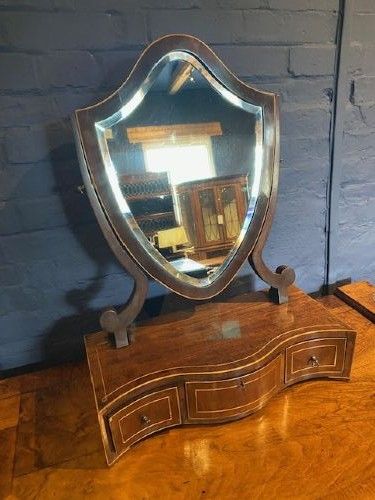
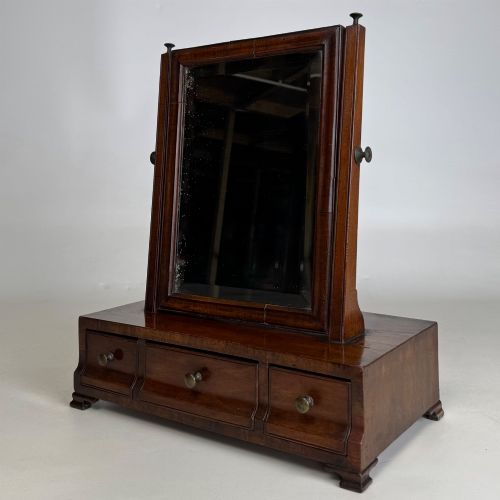
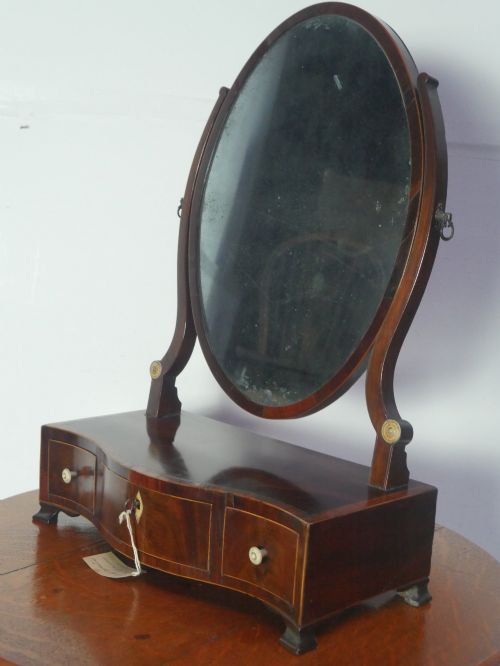
Makers shaped the bases into serpentine, bow-front and barrel forms, frequently incorporating small drawers beneath the glass. Walnut and burr maple also appear alongside the primary mahogany timber.
Materials and Construction
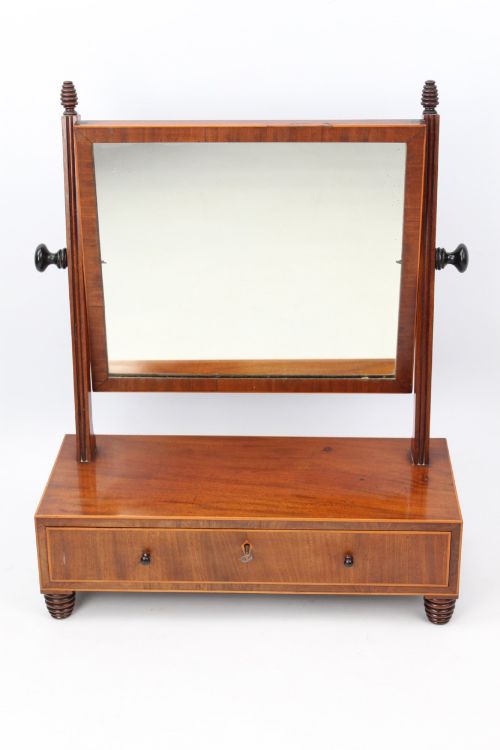
Cabinetmakers utilised solid mahogany and mahogany veneers for the frames and box bases, sometimes adding boxwood inlay, satinwood or giltwood accents. The glass plate rests within a pivoting wooden frame secured by brass screw knobs.
Drawer construction often involved hand-cut dovetails, while secondary woods lined the interior compartments of the table bases. Bone escutcheons and small brass feet occasionally completed the hardware details.
Listings feature dressing mirrors and cheval mirrors constructed from mahogany, brass, bone, giltwood, boxwood inlay and satinwood across eighteenth and nineteenth-century periods.
Standard and Execution
Quality rests upon the crispness of the timber carving, the choice of figured mahogany veneers, and the proportion of the glass frame to the support standards. Pieces with serpentine or bow-front bases demand greater carpentry skill than flat-fronted versions.
The integrity of the original mirror glass and the retention of matching brass hardware distinguish better examples. Subtle details such as crossbanding and finely executed inlay separate standard utility pieces from finer country house furniture.
The Georgian Mahogany Swing Glass Glossary
- Cheval mirror
- A large full-length swing glass mounted in a standing floor frame. This tall format allows the user to view their entire outfit.
- Toilet mirror
- A smaller dressing table mirror equipped with a box base containing small drawers. These pieces sat upon chests of drawers or dedicated dressing tables.
- Serpentine
- A curved shape featuring a convex centre flanked by concave sides. Cabinetmakers used this flowing contour on the drawer fronts of finer dressing mirrors.
- Crossbanding
- A border of veneer laid with the grain running perpendicular to the surrounding wood. This decorative technique frames the edges of drawer fronts and table tops.
- Boxwood inlay
- Narrow strips of pale wood inserted into recesses cut into the darker mahogany surface. This contrasting detail defines geometric and linear patterns.
Georgian Mahogany Swing Glass: Frequently Asked Questions
Where did people put these mirrors?
These mirrors sat upon dressing tables, chest of drawers, or washstands in bedrooms and dressing rooms. The smaller toilet versions provided a portable reflection surface before fitted wardrobes and wall mirrors became common.
Larger cheval mirrors stood directly on the floor in the bedroom or dressing parlour to provide a full-length view for checking attire.
How do I date a swing mirror?
Dating relies on timber choice, base shapes, and construction methods characteristic of different periods. Eighteenth-century examples often feature simpler rectangular plates and bracket feet, while serpentine fronts and boxwood stringing point towards the later Georgian and Regency eras.
Looking at the secondary woods inside the drawers and the style of the brass pivot hardware also helps confirm the period of manufacture.
Are the glass plates usually original?
Many mirrors retain their original glass, which often displays minor foxing, dark spots, or slight distortions characteristic of early silvering techniques. However, because mirror glass is fragile, replacement glass plates occur frequently across pieces from the eighteenth and nineteenth centuries.
Examining the backboards and how the glass is secured in the frame reveals whether the plate has been replaced.
How should I care for the wood and glass?
Keep the mahogany timber away from direct sunlight and strong heat sources to prevent the veneer from drying out and lifting. Dust the frame gently with a dry cloth and avoid harsh chemical polishes that can damage the antique wax finish.
Clean the glass plate carefully with a mild glass cleaner applied to a cloth rather than sprayed directly onto the surface, protecting the surrounding wood.