
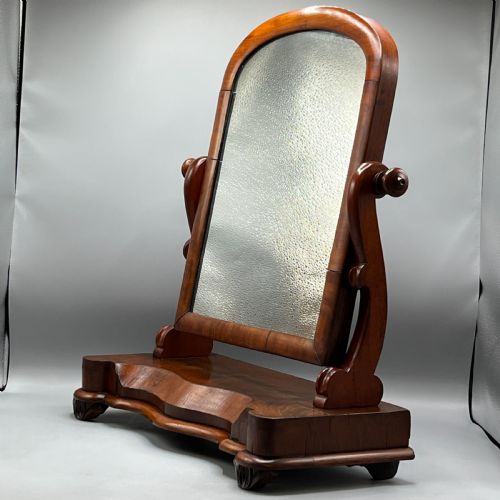


Vintage Vanity Mirror Base
These vintage vanity mirror base selections give you the architectural anchor for a dressing table, combining functional tilt frames with period cabinet work.
Vintage Vanity Mirror Base
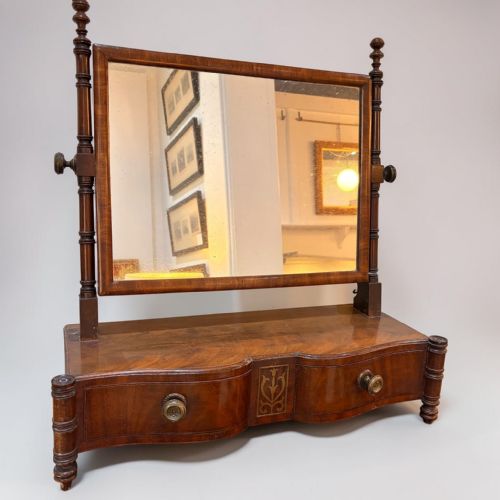
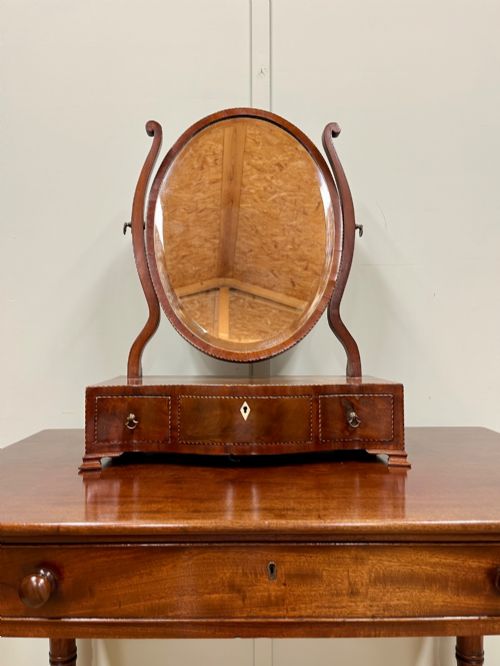
When you search for a vintage vanity mirror base, you are looking at the foundational support structure, swing frame, or box plinth that holds a tabletop dressing glass. These items range from simple upright standards to serpentine box bases fitted with small drawers for storage.
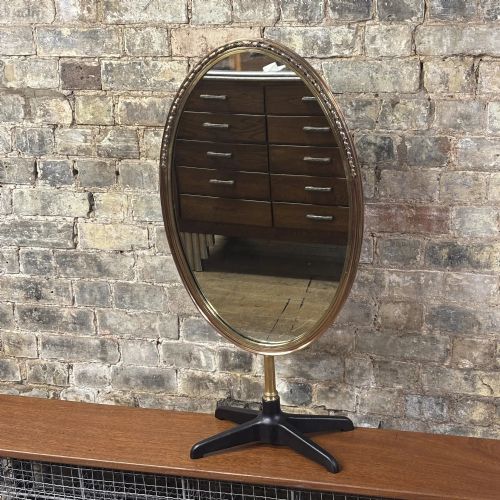
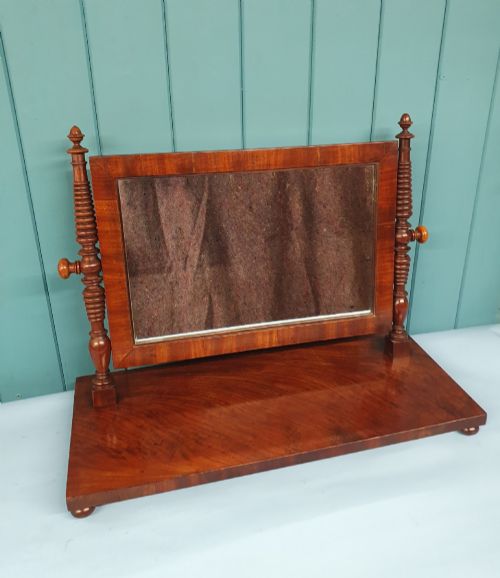
The pieces appearing on this page stretch across Georgian, Victorian, and early twentieth-century eras, featuring traditional forms such as toilet mirrors, swing mirrors, and shield-shaped desk glasses. Mahogany and walnut dominate the structural framing, accompanied by brass fittings and occasional marble tops.
You will encounter distinct regional and chronological subtypes, from eighteenth-century box mirrors with ogee bracket feet to substantial Victorian mahogany frames and streamlined Art Deco marble-based designs.
Materials and construction methods
Cabinet makers utilised dense hardwoods like mahogany and walnut for the primary frames and box bases, often shaping them with serpentine fronts or incorporating bone escutcheons for drawer pulls.
Brass was employed extensively for the adjustable pivot screws, side arms, and candle sconces that allowed the mirror glass to tilt at various angles.
Secondary structural elements included oak for internal drawer linings and cast iron or polished marble for heavier nineteenth and twentieth-century weighted supports.
Design styles span Georgian, Queen Anne, Victorian, Edwardian, and Art Deco periods.
Distinctions in quality and execution
The upper tier of these pieces displays superior timber selection, such as finely figured mahogany veneer and secondary woods chosen for stability rather than economy. Joinery details like hand-cut dovetails on the box base drawers indicate skilled workshop production rather than hurried assembly.
Hardware integrity separates standard examples from exceptional ones, with heavy cast brass pivots and original bone or ivory turnings retaining their proper tension and alignment after centuries of adjustment.
John Franklin London
The Vintage Vanity Mirror Base Glossary
- Toilet mirror
- A small mirror designed to sit upon a chest of drawers, dressing table, or pier table. These typically incorporate a small box base with one or more drawers.
- Box mirror
- A dressing glass mounted onto a shallow box plinth containing storage compartments. The box adds stability and provides a secure platform for small personal items.
- Serpentine
- A curved shape characterised by a convex centre flanked by concave sides. This undulating profile appears frequently on the front aprons of eighteenth-century bases.
- Cheval mirror
- A full-length freestanding mirror supported on four legs with vertical posts and pivots. Unlike tabletop versions, these stand directly on the floor.
- Shield shape
- A mirror plate cut into the outline of a heraldic shield. This silhouette gained popularity during the late eighteenth and Edwardian periods.
Vintage Vanity Mirror Base: Frequently Asked Questions
How do I date a dressing mirror base?
Examine the secondary woods inside the drawer boxes, such as oak or pine, alongside the construction of the dovetails and the type of screws used in the pivot mechanism. Hand-cut joints and original brass hardware point toward Georgian and early nineteenth-century manufacture.
Compare the silhouette of the base and the mirror plate shape against known period styles like Queen Anne, George III, or Art Deco. Subtle shifts in foot design, such as ogee bracket feet versus cast iron or marble plinths, help narrow down the decade.
Can I replace the glass safely?
Original mirror glass often exhibits foxing, silver loss, or dark spots due to age, which many collectors prefer to keep as proof of authenticity. If replacement is necessary, consult a specialist restorer who can source silvered glass that matches the original thickness and bevel.
Ensure that any replacement glass fits securely into the existing wooden rebate without putting undue pressure on the antique frame. Retain the original backing boards if they survive.
How do the pivot mechanisms work?
Most swing mirrors use threaded brass screws passing through upright side arms into threaded metal plates set into the mirror frame. Tightening these thumbscrews holds the glass at your chosen angle.
Over time, the wooden threads or metal inserts can wear down. A careful adjustment of the internal washers or professional re-threading restores proper tension without damaging the surrounding wood.
Where should I place a table mirror?
Position the piece on a sturdy chest of drawers, sideboard, or dedicated dressing table where the weight of the base is fully supported. Avoid areas exposed to direct sunlight or damp conditions to protect the wood veneer and silvered glass.
Ensure the surface is level so the swing frame does not constantly drift out of position. The height should allow comfortable viewing while seated or standing.