
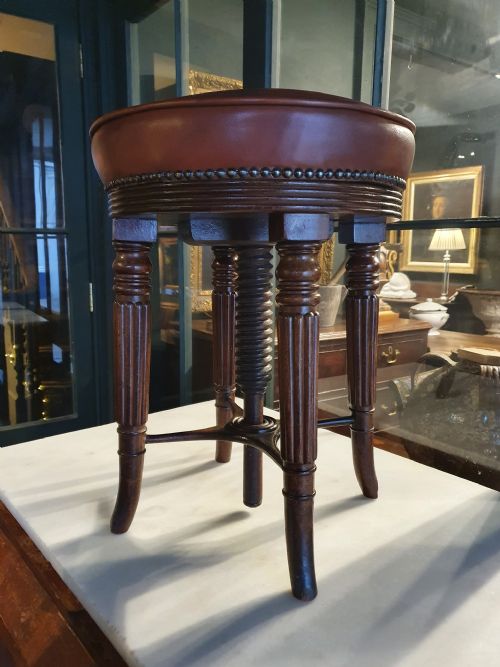
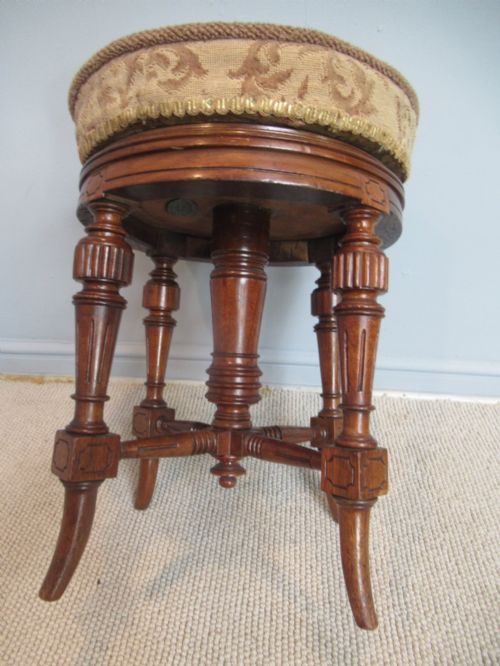

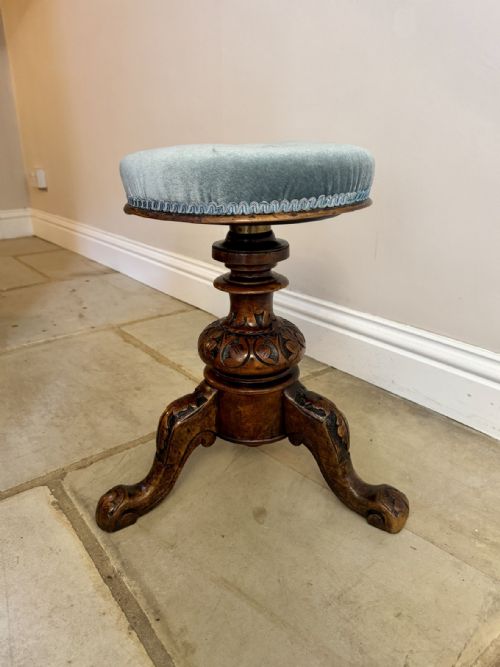
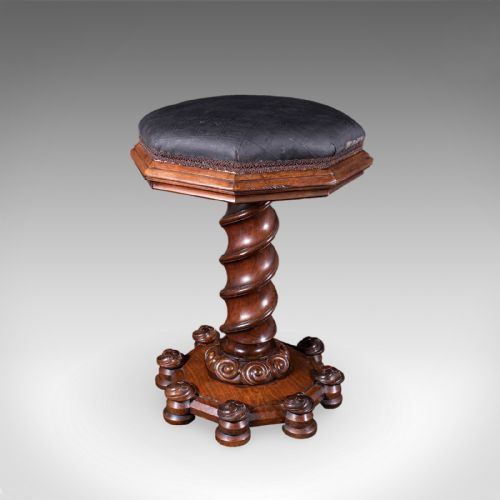


Swivel Music Seat
A swivel music seat is a sturdy revolving stool designed for pianists, organists and harpists across the nineteenth century.
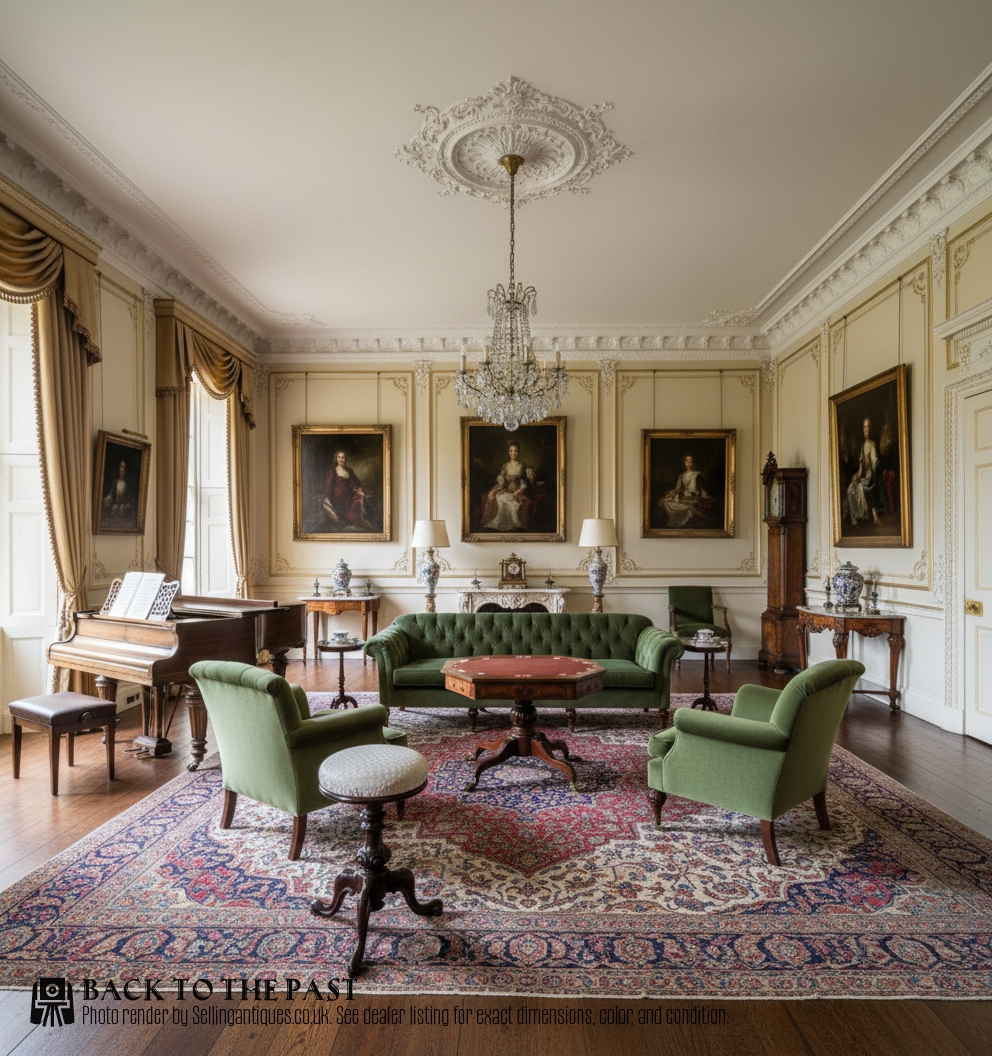
Swivel Music Seat
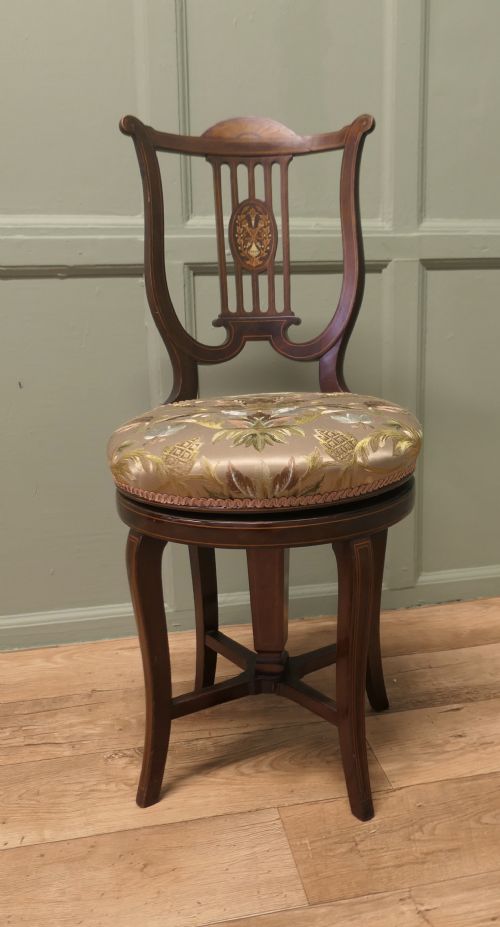
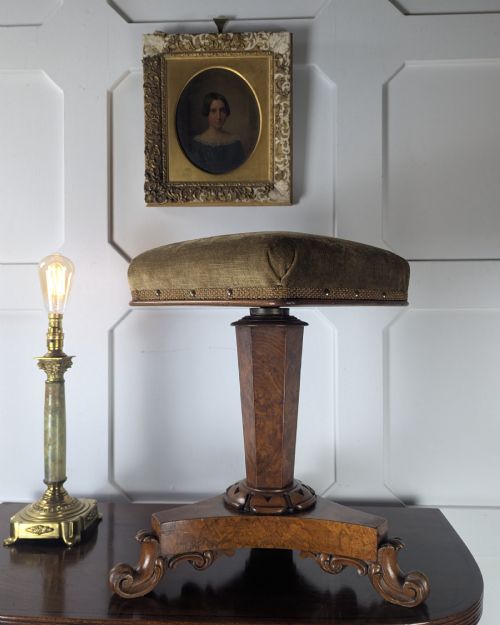
A swivel music seat provides the height adjustment and stability required by nineteenth-century musicians at the keyboard or instrument. These pieces appear most frequently as Victorian and William IV piano stools, alongside specialised harpist and organist chairs.
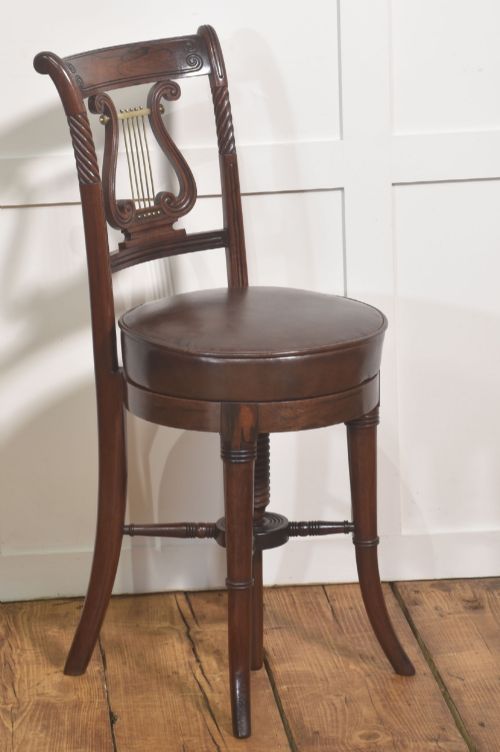
The form spans revolving seats with screw mechanisms, rise and fall designs, and lyre back music chairs. Makers produced them in forms ranging from simple circular top stools to elaborate chairs with backs and arms.
Origins stretch from English workshops to Scottish and French examples, with styles covering Regency, Victorian, Edwardian, and Arts & Crafts aesthetics. The selection here centres heavily on nineteenth-century walnut and mahogany pieces.
How they were made
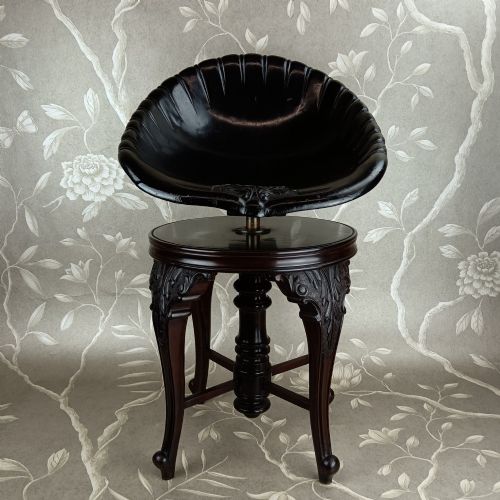
Cabinetmakers utilised dense timbers such as mahogany, walnut, rosewood, and padouk to construct the frames, often incorporating brass mechanisms for the swivel and height adjustment. Selected pieces feature papier-mâché components or intricate brass inlay.
Upholstery played a central role, with seats finished in leather, fabric, or velvet over padding. Turning, carving, and ebonising defined the decorative treatment of the wooden supports and legs.
Listings feature nineteenth-century seating executed in mahogany, walnut, rosewood, and padouk, alongside brass and leather elements.
What varies in quality
The sophistication of the revolving or rise and fall mechanism dictates the mechanical standard of a swivel music seat. Smooth action and robust threading separate superior examples from stiff or loose alternatives.
Timber selection and carving depth establish visual merit. Richly figured walnut or rosewood combined with crisp, hand-carved details elevate a piece above standard utility items.
Jennens and Bettridge·Gillows·James Shoolbred
The Swivel Music Seat Glossary
- Rise and fall
- A mechanical system utilising a threaded screw or ratchet to alter the height of the seat. This allows the player to adjust the stool to their preferred playing position.
- Lyre back
- A chair back shaped in the symmetrical outline of an ancient stringed musical instrument. This motif appears frequently on nineteenth-century music chairs.
- Papier-mâché
- A composite material made of paper pulp reinforced with glue and resin, pressed into moulds and lacquered. Jennens and Bettridge excelled in producing decorative articles using this technique.
- Ebonised
- Wood finished with a dark stain or black paint to imitate ebony. This treatment was popular for Victorian seating.
- Simulated rosewood
- Painted or grained wood finished to mimic the appearance of genuine rosewood figure. Makers utilised this method to achieve an expensive look using alternative timbers.
Swivel Music Seat: Frequently Asked Questions
How do I adjust the height on these seats?
Most swivel music seats operate on a central wooden or metal screw mechanism hidden beneath the upholstery. Turning the top clockwise or anticlockwise raises or lowers the seating platform.
Some later variants employ a rise and fall lever action. Users should turn the seat gently to test the thread before forcing any movement.
Were these seats only used for pianos?
While piano stools form the majority of surviving examples, makers also designed specific chairs for harpists, cellists, and organists. Harpist chairs often included asymmetric or low backs to accommodate the instrument.
Chapel organist stools and dressing table chairs shared similar revolving and adjustable formats. The mechanics served any seated musician requiring mobility.
How do I date a Victorian music stool?
Dating relies on timber choices, leg turning styles, and the complexity of the undercarriage mechanism. Early Victorian and William IV pieces frequently feature rosewood with heavy scroll supports.
Later Victorian and Edwardian examples lean towards walnut or mahogany with simpler turned legs. Patent marks or maker stamps underneath provide definitive chronological markers.
Are these seats suitable for daily use today?
Nineteenth-century swivel music seats are robustly built from hardwoods designed to withstand regular shifting and weight. Their sturdy construction makes them practical for modern seating at desks or instruments.
Care should be taken not to unscrew the revolving top past its thread limit. Regular gentle use maintains the vintage mechanism.