
Swing Dressing Glass
A swing dressing glass tilts to catch the light, offering a clear reflection while anchoring a bedroom or dressing table with period timber.
Swing Dressing Glass
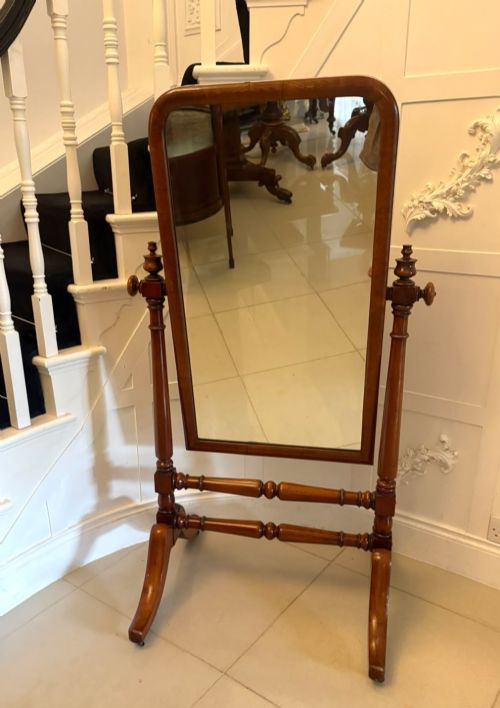
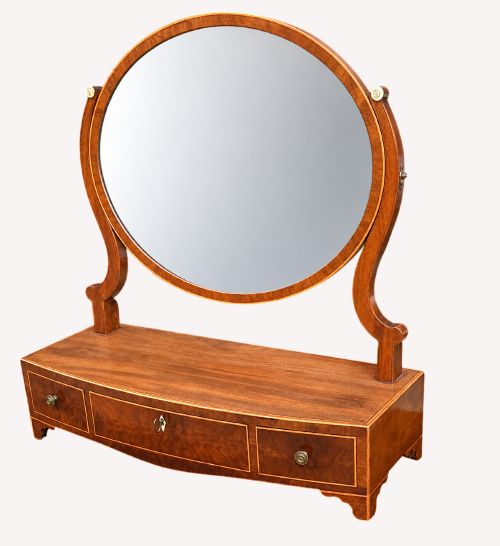
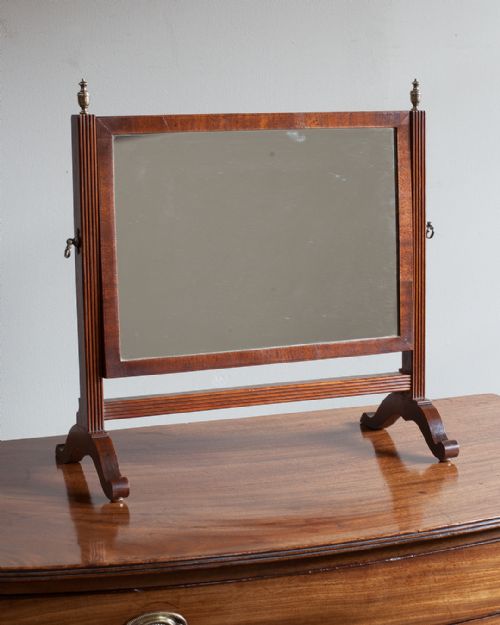
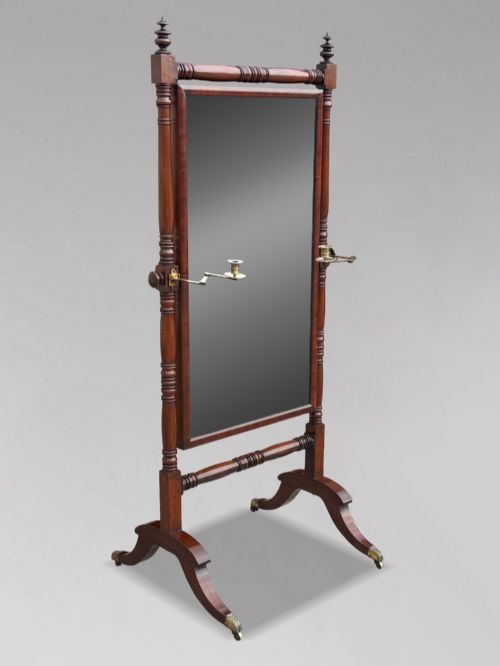
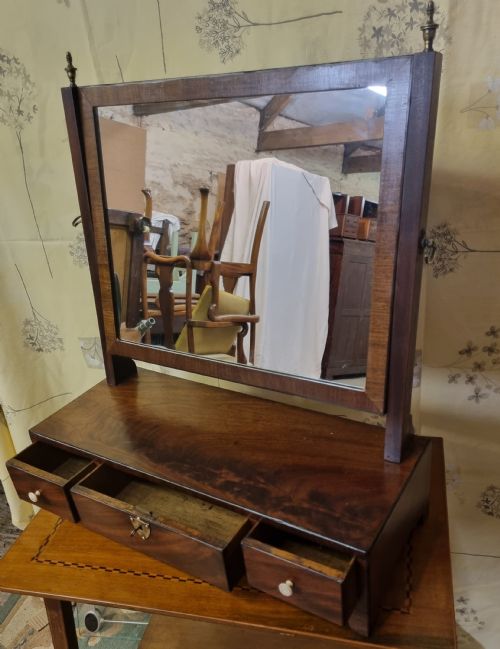
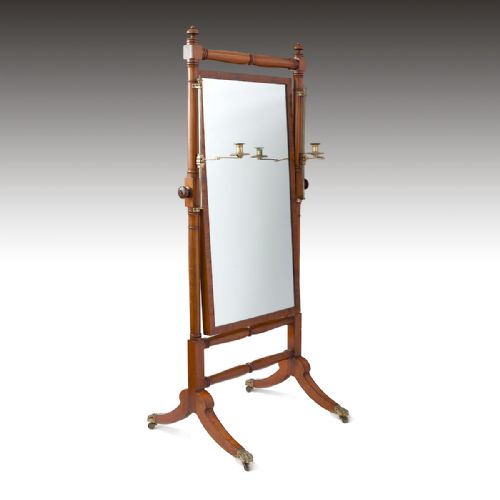
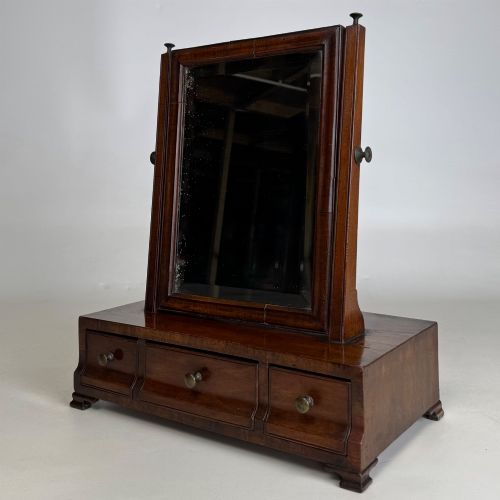
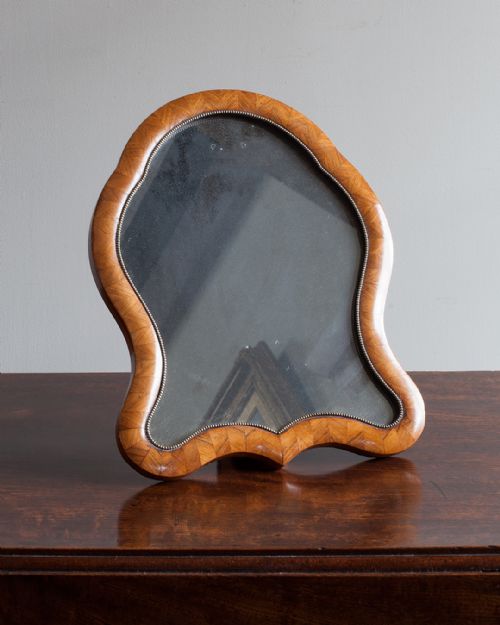
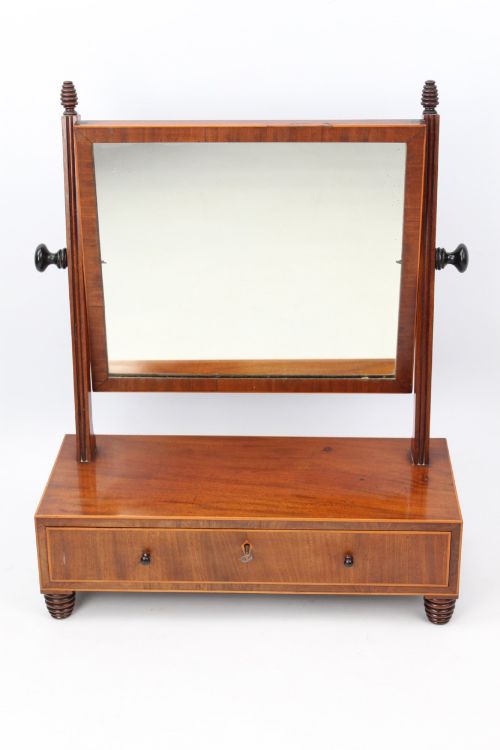
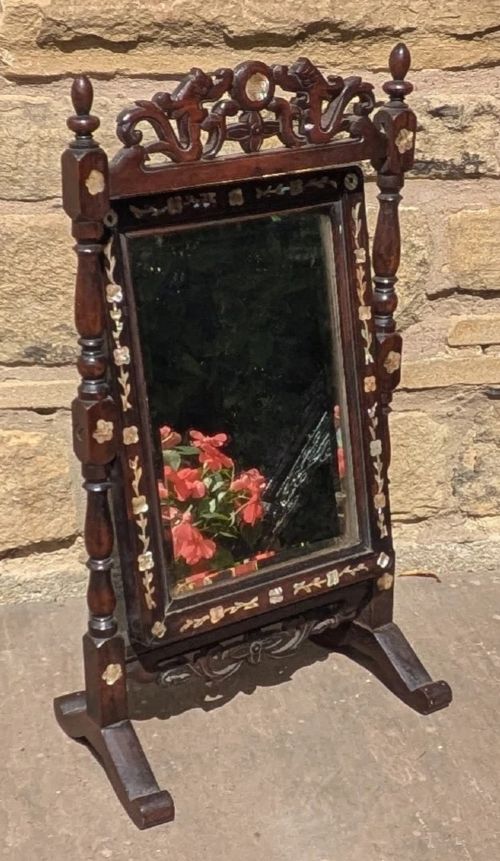
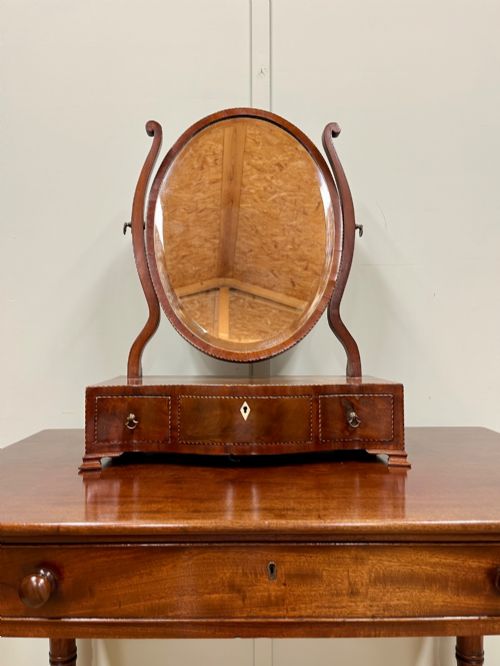
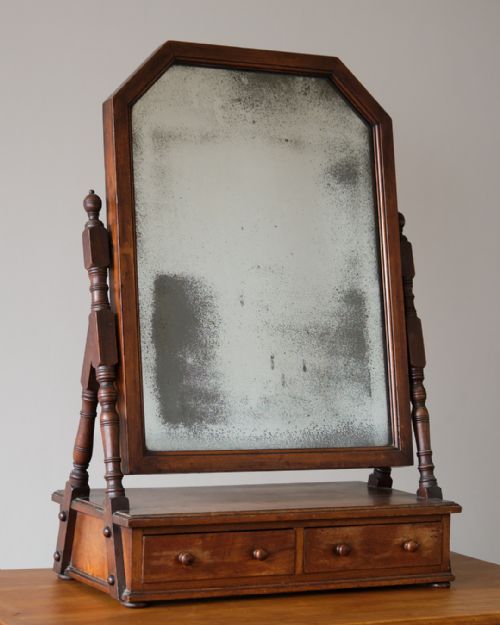
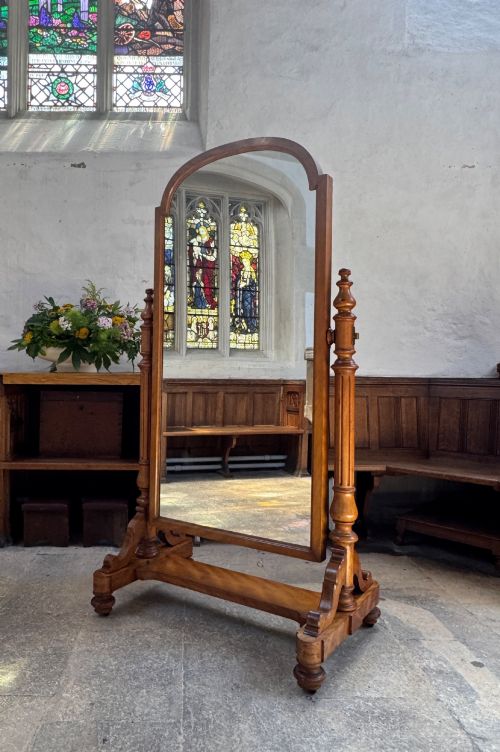
A swing dressing glass, also known as a dressing mirror, toilet mirror or table mirror, sits on a chest or table to provide a movable reflection for daily grooming. These pieces take several distinct structural forms, ranging from compact desk models with small drawers in the base to full-length freestanding cheval mirrors designed to stand directly on the floor.
The versions most commonly found here date from the Georgian and Victorian eras, alongside Regency designs and occasional 18th-century examples. Makers constructed these mirrors using rich timbers such as mahogany, walnut and satin birch, frequently incorporating small compartment drawers beneath the pivoting glass frame.
Construction and materials
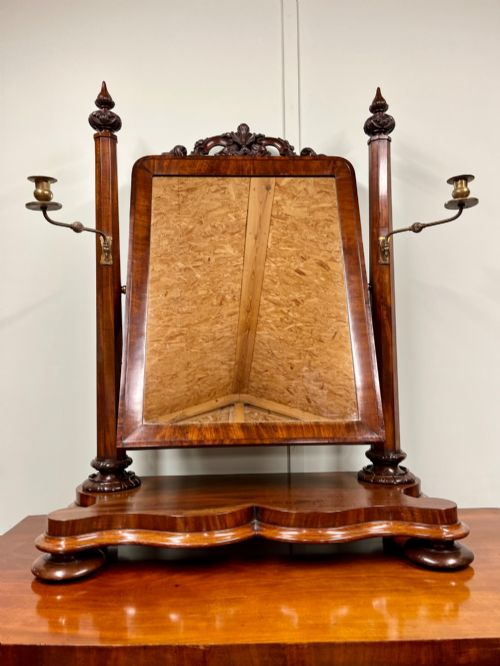
Cabinet makers built the frames of these swing dressing glasses from dense hardwoods, primarily mahogany and walnut, often embellished with delicate boxwood inlay, crossbanding or parcel-gilt details. The pivoting mechanism relies on brass side screws or pins set into upright arms, allowing the mirror plate to tilt freely at various angles.
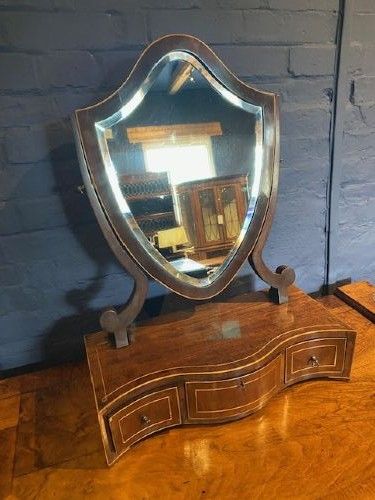
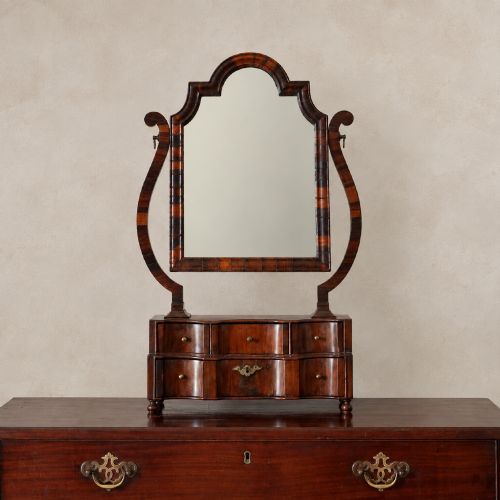
Many examples feature small fitted bases containing oak-lined drawers or jewellery compartments beneath the glass plate, demanding precise dovetail joinery. Mirror glass itself is held within a secondary wooden frame, sometimes shaped into an oval or serpentine contour rather than a simple rectangle.
Quality differences
Quality in a swing dressing glass rests upon the selection of timber and the crispness of the cabinet work in the base. Finer examples display highly figured mahogany or burr walnut veneers, meticulous crossbanding, and substantial brass mounts rather than flimsy plated fittings.
Proportion and stability dictate the upper tier of these pieces, where the upright supports balance the weight of the pivoting frame without sagging. The inclusion of original mirror glass, secondary oak linings in the drawers, and intact pivoting hardware separates standard domestic items from exceptional cabinet maker output.
Heal & Sons·Gillow
The Swing Dressing Glass Glossary
- Cheval mirror
- A large, freestanding swing mirror supported on four legs or a heavy frame that reflects the entire figure.
- Toilet mirror
- A smaller swing mirror designed to sit atop a dressing table, chest of drawers or washstand.
- Crossbanding
- A strip of veneer applied to the border of a panel or frame with the grain running perpendicular to the centre.
- Parcel-gilt
- Partially gilded with gold leaf, usually to highlight carved mouldings or decorative accents on a wooden frame.
- Serpentine
- A curved line of furniture fronts or mirror frames that curves outward in the centre and inward at the sides.
Swing Dressing Glass: Frequently Asked Questions
Where should I place a swing dressing glass?
These mirrors suit placement on top of a sturdy chest of drawers, a dedicated kneehole dressing table or a low sideboard where the height aligns comfortably for use.
Freestanding cheval mirrors stand directly on the floor and work best in a bedroom corner or dressing room where they can remain unobstructed.
What is the difference between a toilet mirror and a cheval mirror?
A toilet mirror is compact and built to sit on top of furniture, frequently featuring small storage drawers in the base for cosmetics or trinkets.
A cheval mirror is a tall, floor-standing piece that shows a full-length reflection and rests upon a heavy frame rather than a tabletop base.
How do I care for the antique wood?
Maintain the timber surfaces by dusting gently with a dry, soft cloth and occasionally applying a traditional beeswax polish to nourish the grain. Avoid chemical sprays and keep the mirror away from direct sunlight and damp environments to protect the antique veneers.