




Swedish Vanity Stool
These Swedish vanity stool examples bring northern light and clean neoclassical lines to a dressing room.
Swedish Vanity Stool
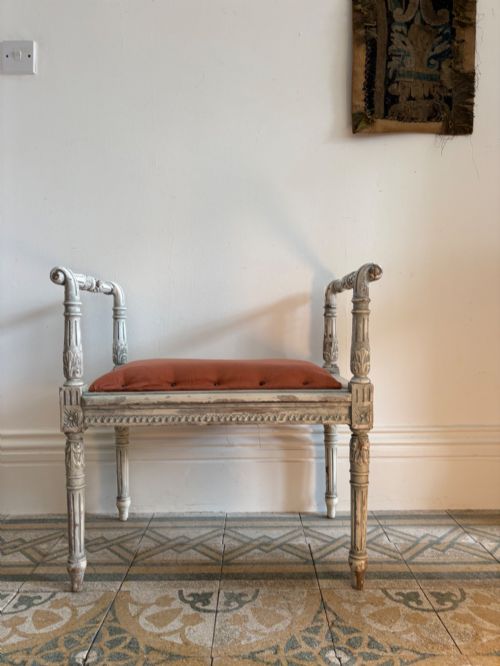
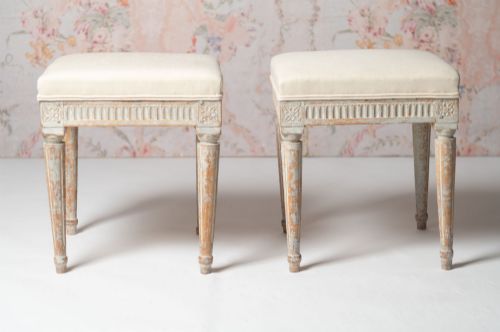
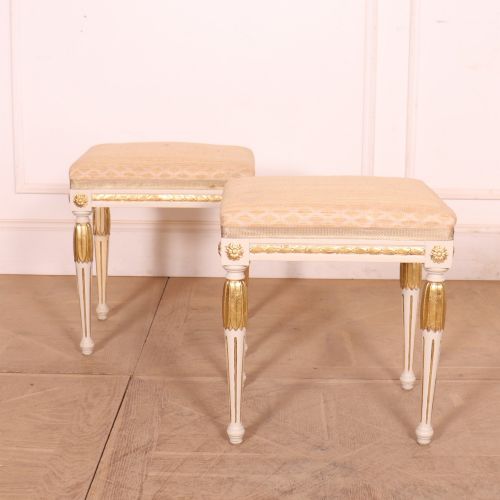
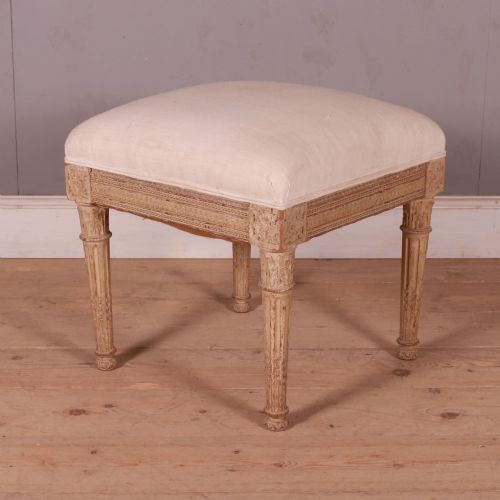
A swedish vanity stool provides a low, portable seat designed for use at a dressing table or in a bedchamber. The examples appearing here span from the eighteenth century through the nineteenth century, taking the form of single seats and matching pairs.
Most pieces seen on this page follow the Gustavian, Gustavian Neoclassical, Swedish Empire, or Swedish Biedermeier styles. They bridge the gap between French court influence and Scandinavian functionalism, offering understated elegance alongside practical utility.
The dominant forms are straightforward wooden stools, frequently turned or carved, standing on slender legs. They appear either with original painted surfaces or in native timbers like birch and satin birch.
How they were made
Makers constructed these frames from native softwoods or hardwoods such as birch and satin Birch. Woodworkers shaped the components using traditional turning and carving techniques before applying paint or finishing the timber to highlight the natural grain.
Surfaces receive layers of paint, often white, sometimes accented with gold leaf. Upholstery materials recorded in the listings include silk, satin, linen, and standard fabric, secured over traditional padding to the wooden base.
Many nineteenth-century swedish vanity stool frames hide layers of old white paint beneath which earlier pastel coats still whisper tales of forgotten bedchambers.
What varies in quality
The distinction between standard and superior pieces rests on the crispness of the wood carving and the fidelity of the period style. Finer examples display balanced proportions, delicate fluting, and harmonious turning that reflect high workshop standards.
Surface preservation dictates the character of each swedish vanity stool. Original painted finishes that show honest patination hold greater appeal than heavy modern repainting, while intact period upholstery fabrics add historical integrity.
The Swedish Vanity Stool Glossary
- Gustavian
- The Swedish neoclassical style spanning the late eighteenth and early nineteenth centuries. It adapts French Louis XVI motifs into a lighter, simpler vernacular.
- Satin Birch
- A pale northern European timber with a lustrous, shimmering grain. Cabinetmakers favoured it during the nineteenth century for its clean decorative effect.
- Biedermeier
- A central and northern European design movement prioritising comfort and utility. It relies on clean architectural lines rather than excessive ornamentation.
- Gold Leaf
- Extremely thin gold beaten into sheets and applied to wooden mouldings or carved details. It provides targeted highlights on painted frames.
Swedish Vanity Stool: Frequently Asked Questions
Where do I put a Swedish vanity stool?
These low seats fit comfortably beneath dressing tables, in bedrooms, or as occasional seating in small spaces. Their compact footprint allows them to move easily between rooms.
They also serve well as decorative accents in hallways or alongside low chairs where extra seating is required.
How do I care for painted wood?
Dust surfaces regularly with a soft, dry cloth to prevent dirt accumulation. Avoid harsh chemical cleaners that can degrade nineteenth-century paint layers.
Keep pieces away from direct heat sources and strong sunlight to prevent the timber from splitting and the paint from cracking.
Are these stools comfortable for sitting?
Most pieces feature padded tops upholstered in silk, linen, or fabric over traditional stuffing. They provide firm, upright support suited for grooming or short periods of sitting.
Because they lack backs, they are designed for temporary use rather than long lounging.
How do I spot a Gustavian piece?
Look for straight tapered legs, fluted column details, and restrained neoclassical carving. The palette typically relies on pale, muted paint finishes.
These elements create the characteristic light appearance associated with eighteenth- and nineteenth-century Swedish design.