


Needlepoint Bench Stool
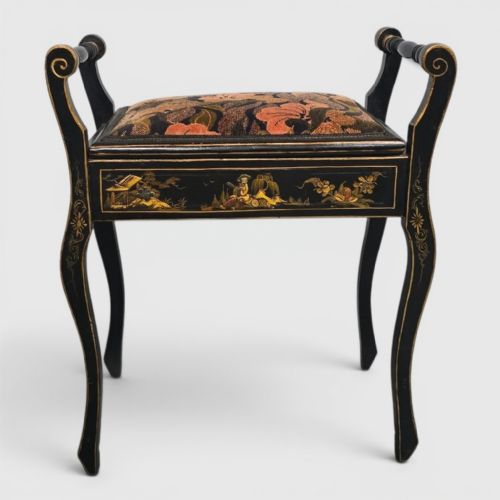
Needlepoint bench stool selections range from walnut dressing seats to mahogany piano stools.
Needlepoint Bench Stool
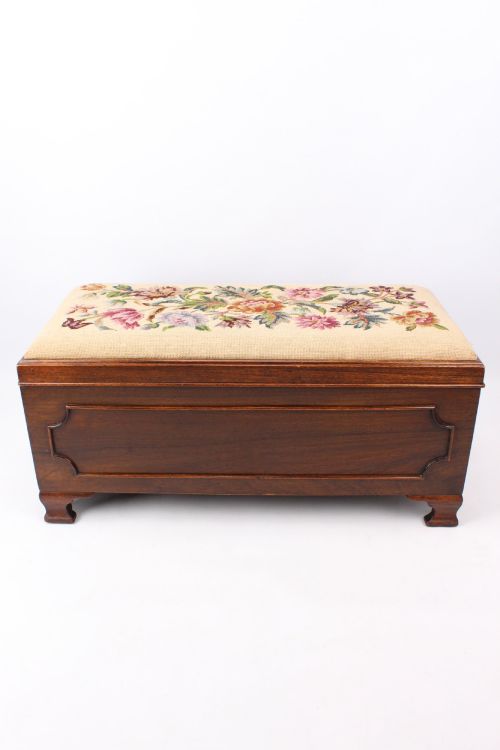
A needlepoint bench stool serves as a low seat, footstool or ottoman, often designed for a dressing table or piano. The pieces collected here span the nineteenth and early twentieth centuries, encompassing Victorian, Edwardian and revival aesthetics.
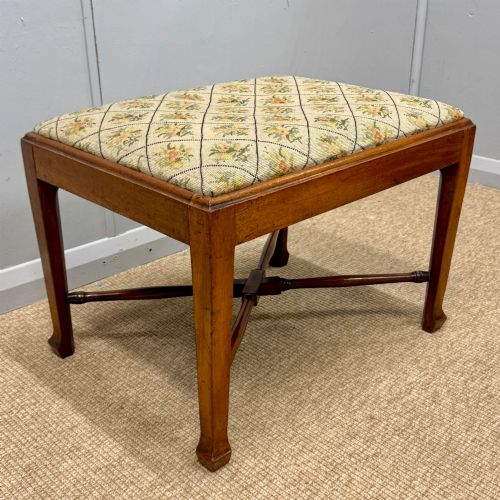
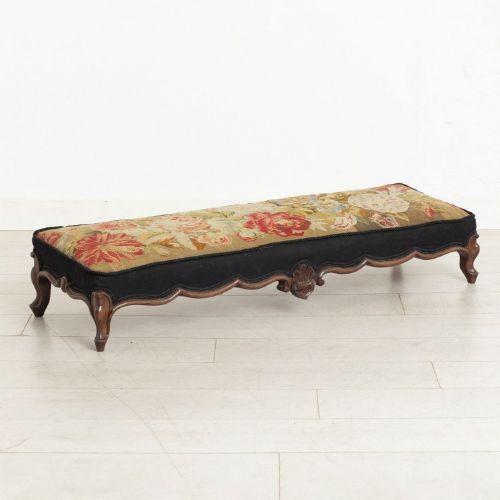
Most examples rely on wooden frames shaped in Queen Anne, Chippendale or plain cabriole leg designs. Walnut and mahogany dominate the timber choices, supporting tops worked in wool tapestry and textile needlework.
Buyers will encounter everything from small footstools to long dressing stools and centre benches. Many incorporate original fabric covers alongside later needlepoint additions.
What varies in quality
The fineness of the timber carving and the complexity of the frame design determine the standing of each stool. Elaborate cabriole legs, cross stretchers and decorative painted finishes distinguish finer examples from plain utility frames.
The execution and density of the needlework seat cover heavily influence the character of the piece. Hand-stitched wool tapestries with intricate pictorial or geometric designs represent the upper end of the range.
Jas Shoolbred·Whytock and Reid
The Needlepoint Bench Stool Glossary
- Cabriole leg
- A furniture leg that curves outward and then tapers inward, mimicking an animal's curving leg. This form appears frequently on Victorian and revival walnut stools.
- Needlepoint
- Embroidery stitched onto a stiff open-weave canvas using wool yarn. It forms the primary decorative upholstery seen on these bench tops.
- Cross stretcher
- Wooden bars connecting the legs near the base to add structural stability. They often feature curved X-shapes on dressing table and piano stools.
- Tapestry
- A heavy textile woven or worked by hand with decorative designs. In these listings, it describes the wool seat covers.
- Ottoman
- A low upholstered seat or bench without a back or arms. These pieces function as footstools or central seating.
Needlepoint Bench Stool: Frequently Asked Questions
What is a needlepoint bench stool used for?
These pieces function primarily as dressing table seats, piano stools or low footstools for resting feet. They provide low seating options suitable for bedrooms, living rooms and dressing areas.
Larger versions operate as centre stools or ottomans within a room scheme. Their decorated needlepoint tops allow them to serve as decorative accents as well as practical seats.
How do I identify a Victorian stool?
Victorian examples typically feature dark timbers such as walnut or mahogany with carved cabriole legs. Many incorporate original fabric or heavy needlework covers characteristic of the nineteenth century.
Look for traditional joinery methods and heavier frame construction. The stylistic details often reference earlier historical revivals popular during the period.
Are the needlepoint seats original?
Some pieces retain their original Victorian or early twentieth-century tapestry covers, while others have received later needlepoint upholstery. The listings specify original fabric where appropriate.
Needlework covers often match the estimated decade of the wooden frame, though textiles wore out faster than wood and frequently required replacement over time.
How do I care for antique needlepoint upholstery?
Protect wool needlepoint covers from direct sunlight to prevent the dyed yarns from fading. Gentle vacuuming through a mesh screen helps remove dust without damaging the old stitches.
Avoid placing heavy sharp objects on the textile top to prevent pulling the wool threads. Professional textile cleaners should handle any deep cleaning requirements.