
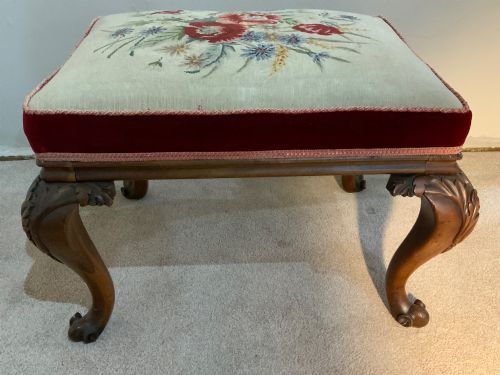


Embroidered Dressing Stool
An embroidered dressing stool brings texture and period character to a bedroom, offering a low seat finished with intricate needlework.
Embroidered Dressing Stool
An embroidered dressing stool is a low seat designed for use at a dressing table, combining a timber frame with a textile top. Buyers examining this category will find pieces spanning from the mid-eighteenth century through to the early twentieth century.
The most common examples encountered on this page date from the nineteenth century and the Edwardian period, often reflecting Victorian or revival styles. These pieces vary in form from oval frames to X-framed supports and long dressing benches.
How they were made
Makers shaped the structural frames from dense hardwoods like mahogany and walnut, employing traditional joinery and turning techniques. Some examples utilise birch, reflecting regional preferences across different European workshops.
The seats are upholstered over padding using durable textiles, specifically wool needlepoint and tapestry. Brass details occasionally appear as structural or decorative elements on the frames.
Every needlepoint top represents countless hours of quiet stitching by hands long forgotten, now supporting tired modern feet.
What varies in quality
Quality in an embroidered dressing stool rests upon the crispness of the timber carving and the density of the needlework. Finer frames exhibit precise joinery and well-defined stylistic details, such as Queen Anne or Chippendale revival motifs.
The textile work distinguishes standard pieces from superior examples through the complexity of the needlepoint pattern and the preservation of the wool and fabric fibres. The harmony between the proportions of the wooden base and the worked top determines the overall success of the piece.
The Embroidered Dressing Stool Glossary
- Needlepoint
- A type of canvas work embroidery executed with wool or yarn, frequently used for upholstery on period seats. This technique allows for dense, durable patterns across the top of the stool.
- Tapestry
- A form of textile art woven on a loom or worked by hand, appearing on historical seating tops. It provides a pictorial or geometric surface for the furniture.
- X-framed
- A structural design where the legs cross in the centre to form an X shape, seen on certain nineteenth-century examples. This configuration offers both stability and a distinct silhouette.
- Queen Anne Style
- A design tradition characterised by cabriole legs and pad feet, often referenced in later reproduction frames. It brings curved lines to the wooden base of the stool.
Embroidered Dressing Stool: Frequently Asked Questions
What is an embroidered dressing stool used for?
These low seats were originally placed in bedrooms or dressing rooms to provide a comfortable seat while sitting at a dressing table. Today they also function as decorative accent pieces or small footstools in living spaces.
Because of their compact size, they fit easily beside chairs or against walls while adding textile warmth to a room.
Which woods were used for these stools?
Mahogany and walnut are the most frequently encountered timbers in these frames, providing strength and a dark grain. Birch also appears in certain continental European pieces from the nineteenth century.
These hardwoods were chosen both for their durability and their suitability for detailed carving.
How do I care for the needlework top?
Care involves keeping the textile away from direct sunlight to prevent the wool and yarn colours from fading over time. Gentle brushing or low-suction vacuuming through a protective mesh helps remove dust without damaging the fibres.
Avoiding excessive moisture protects both the historic fabric and the internal padding of the seat.