
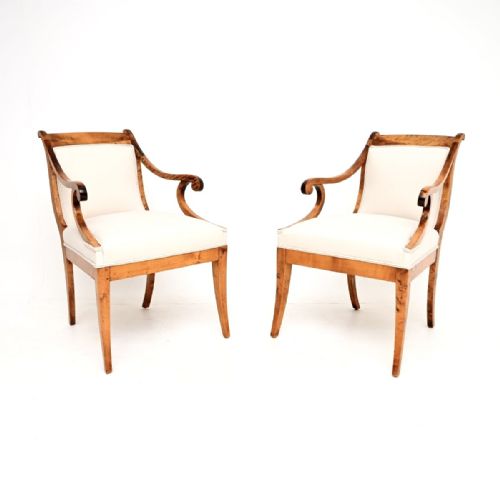


Swedish Accent Chairs
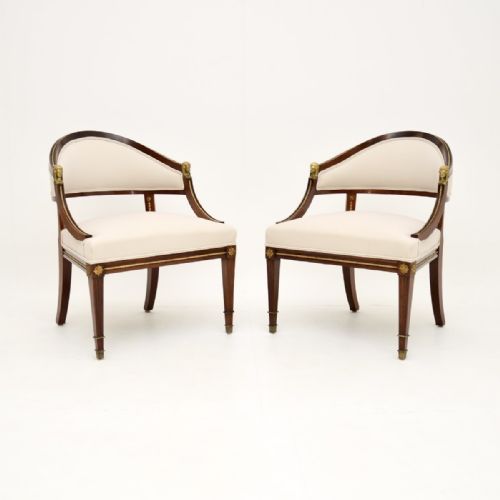
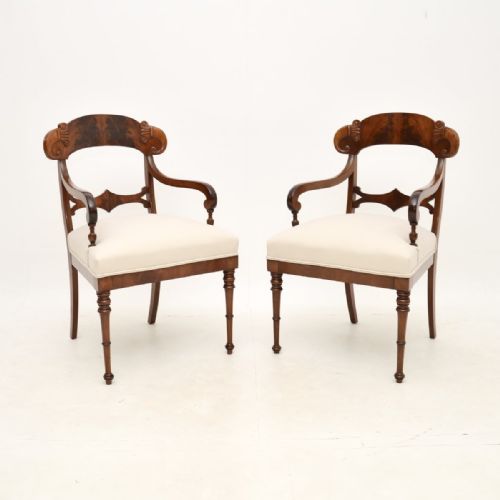
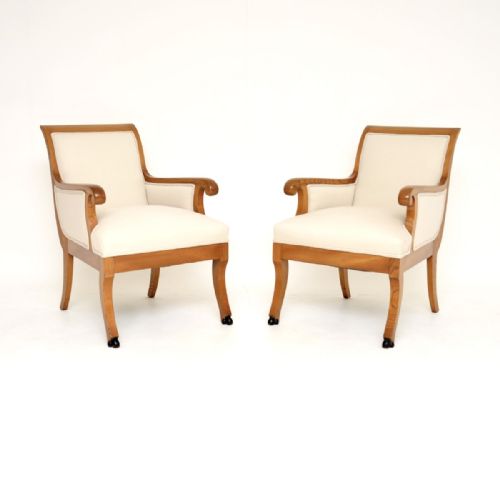
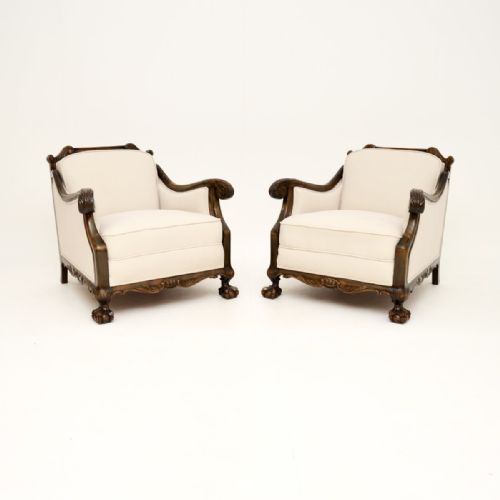
These Swedish accent chairs bring distinct Scandinavian character to a room through varied period woods and upholstery.
Swedish Accent Chairs
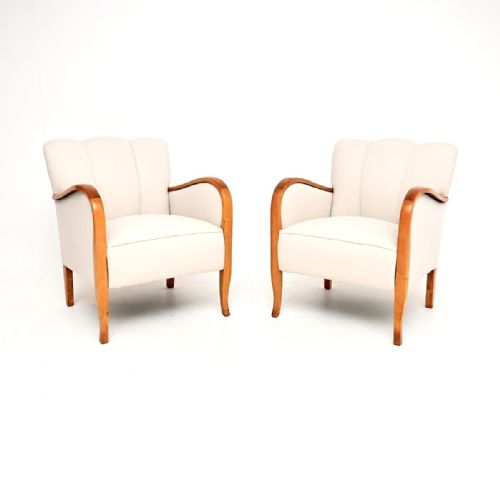
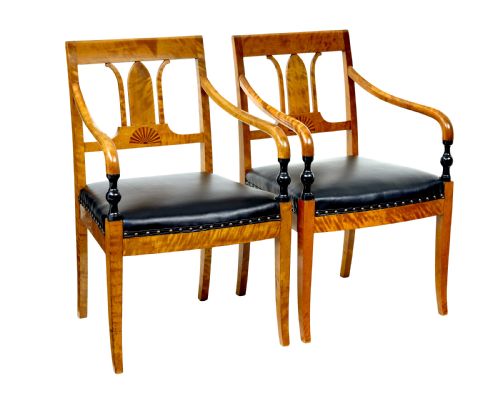
When you search for Swedish accent chairs, you encounter seating spanning the nineteenth and early twentieth centuries, with birch and mahogany framing diverse regional styles. The selections range from rustic nineteenth century pieces to defined Art Deco lounge designs.
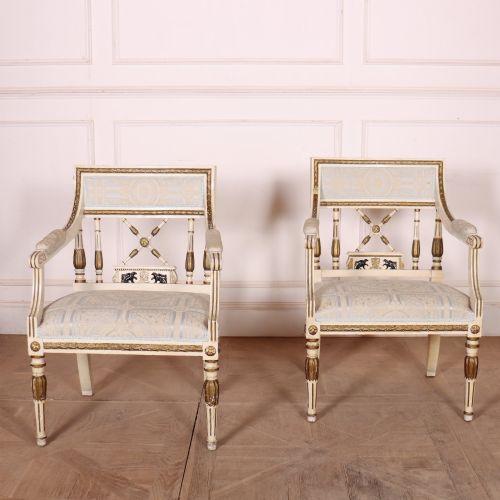
You frequently meet pairs among these listings, particularly within the Art Deco, Neoclassical and Biedermeier groupings. These armchairs function as striking singular statements or balanced matching pairs within a room layout.
Judging the quality
The standard of carving and the selection of wood grain determine the distinction between simpler country forms and refined urban pieces. Crisp detailing on Neoclassical motifs or sleek geometric lines on Art Deco models elevate the work.
The integrity of the timber frame and the finish of the painted wood or polished birch reflect the original maker's skill and subsequent preservation.
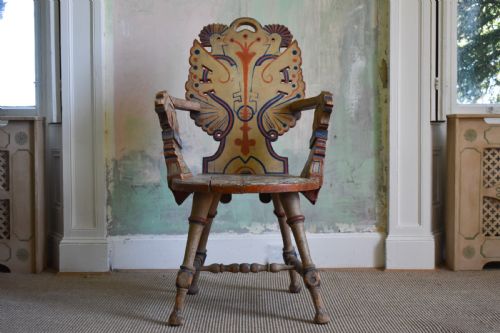
Turned wooden bobbins transform ordinary chair legs into strings of polished wooden beads.
The Swedish Accent Chairs Glossary
- Biedermeier
- A Central European and Scandinavian style characterised by utilitarian comfort and clean lines, often executed in birch. This aesthetic favoured warm wood grains over heavy ornamentation.
- Satin Birch
- A prized timber displaying a shimmering, reflective grain pattern. Makers utilised this wood extensively for high-status Scandinavian seating.
- Neoclassical
- A revival style drawing inspiration from classical antiquity, featuring restrained proportions and balanced geometric forms. These pieces often incorporate mahogany and formal carving.
- Bobbin
- A turned furniture detail resembling a string of spools or bobbins. This technique appears on country and folk art seating.
Swedish Accent Chairs: Frequently Asked Questions
How do I identify a Biedermeier armchair?
Biedermeier armchairs present clean, unadorned lines that emphasise the natural figure of birch or other pale woods. They prioritise comfort while maintaining a restrained geometric silhouette.
Look for smooth curved arms and warm timber tones rather than heavy carving or applied ornamentation.
Are these chairs comfortable for daily use?
These historical armchairs were built for domestic seating, though internal padding and support vary by period and original function. Many serve well as occasional chairs in modern living spaces.
Upholstered versions offer softer seating, while wooden frame models function best with supportive cushions.
How do I care for satin birch wood?
Protect satin birch surfaces from direct sunlight to preserve the warm golden tones of the timber grain. Dust regularly with a dry cloth and avoid harsh chemical polishes.
Maintaining stable indoor humidity prevents the wood from drying out or splitting over time.
What is the difference between Gustavian and Art Deco Swedish chairs?
Gustavian pieces draw on eighteenth-century neoclassical restraint, featuring painted wood, tapered legs and classical symmetry. They offer an airy, refined aesthetic.
Art Deco examples from the early twentieth century embrace streamlined curves, rich elm and birch contrasts, and bolder geometric massing.