


Antique Swedish Carvers
Antique Swedish carvers are sturdy wooden armchairs built for comfort and presence, offering rich historical craftsmanship to anchor a room.
Antique Swedish Carvers
Antique Swedish carvers encompass a range of formal and country armchairs produced across the nineteenth and early twentieth centuries. These seating pieces typically serve as master chairs at the ends of dining tables or as standalone accents in a hallway.
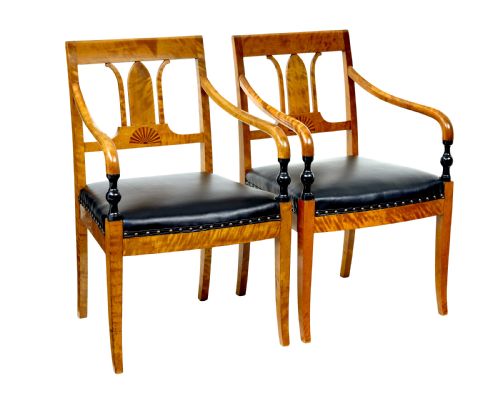
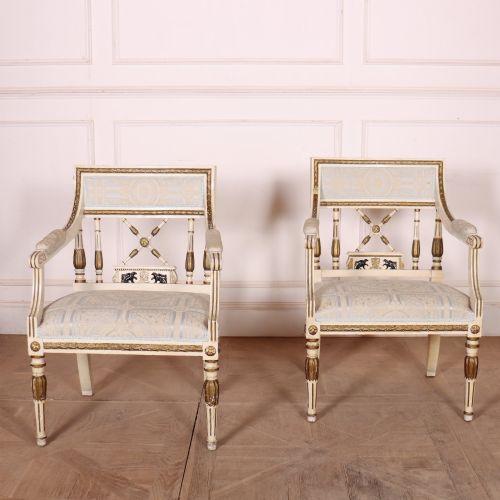
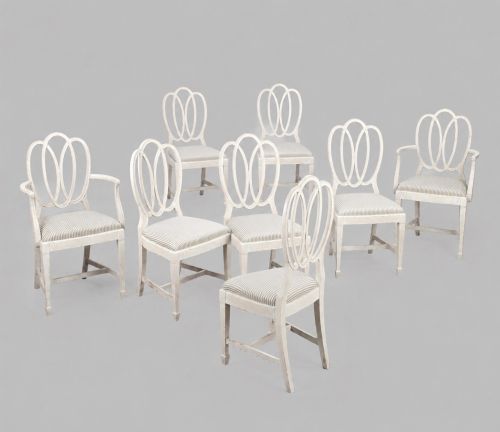
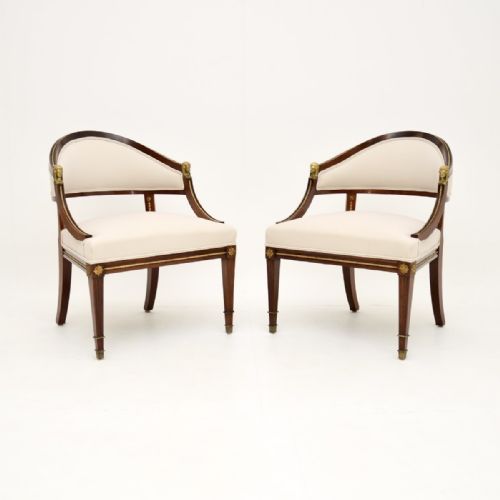
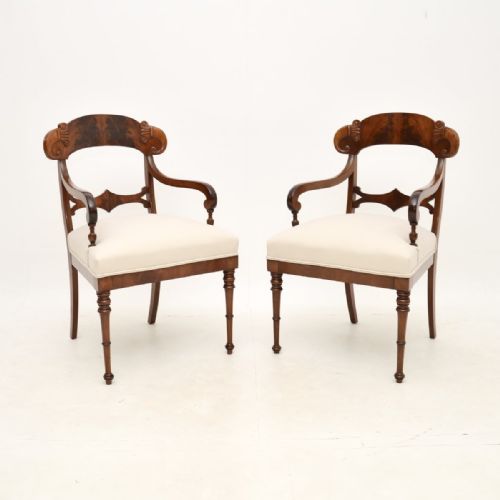
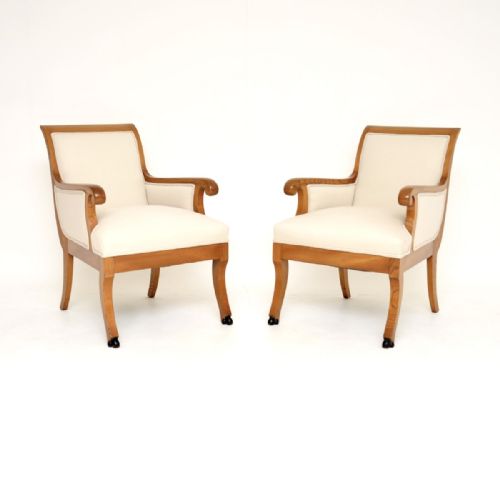
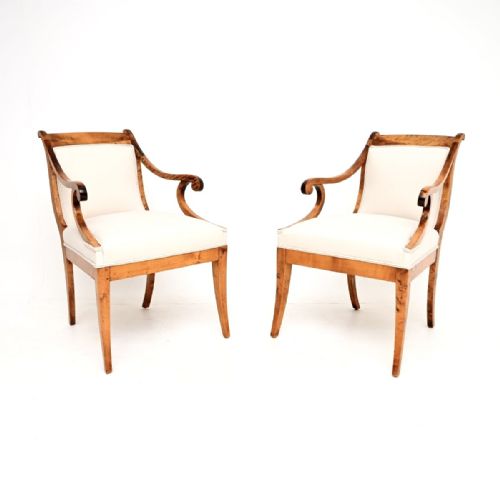
Buyers on this page most frequently encounter pairs of armchairs dating from the Victorian era up through the nineteen-thirties. The selection spans distinct design movements including Biedermeier, Art Deco, Neoclassical, and Scandinavian Country.
Makers shaped these wooden seats during periods ranging from eighteen-fifty to nineteen-thirty, using robust regional timbers. The resulting forms balance structural integrity with regional interpretations of broader European decorative arts.
How they were made
Cabinetmakers constructed antique Swedish carvers primarily from native hardwoods such as birch, flame birch, burr birch, and mahogany. Workshops also utilised ebonised wood, solid elm, and painted wood surfaces to achieve distinct visual finishes.
Joiners integrated decorative details through precise carving and surface treatments, often pairing exposed wood frames with upholstered seats in fabric or leather. Brass elements occasionally appear as structural or decorative accents on specific frames.
Alongside armchairs, the selection includes a solid burr birch mallet, proving that Swedish turners applied their woodworking skills well beyond the dining table.
What varies in quality
The distinction between standard and superior pieces rests on the choice of timber figure and the crispness of the woodwork. Selected grain patterns in birch or flame birch elevate the visual weight of the frame significantly.
Proportion and execution of historical styles dictate the standing of an armchair within its period. Pieces demonstrating confident adherence to Neoclassical or Biedermeier tenets display a greater command of form by the original maker.
The Antique Swedish Carvers Glossary
- Carver
- A term for an armchair, traditionally designed with arms to sit at the head of a dining table. These pieces offer wider proportions than standard side chairs.
- Biedermeier
- A influential Central European style spanning the nineteenth century that prioritised utility, clean lines, and minimal ornamentation. Swedish interpretations often utilised striking local birch veneers.
- Flame birch
- A highly decorative wood figure showing rippled, flame-like patterns across the grain. Cabinetmakers prized this timber for prominent surfaces on high-status furniture.
- Ebonised wood
- Timber treated with a chemical stain or finish to simulate the deep, dark appearance of ebony. This technique was popular in Victorian and later period seating.
- Neoclassical
- A revival style drawing inspiration from classical antiquity, characterised by symmetry, restrained carving, and geometric clarity. Swedish adaptations developed a distinct, lighter palette.
Antique Swedish Carvers: Frequently Asked Questions
How do I identify a Biedermeier carver?
Biedermeier carvers are characterised by smooth expanses of pale wood, particularly birch, combined with restrained, graceful curves. They eschew heavy ornamentation in favour of showcasing the natural grain of the timber.
Look for architectural clarity and warm honey tones that define nineteenth-century Scandinavian interpretations of the style.
What is the difference between Neoclassical and Art Deco pieces?
Neoclassical carvers rely on classical symmetry, column-like supports, and restrained antique motifs derived from Greek and Roman design. They reflect the formal aesthetic of the nineteenth century.
Art Deco examples, emerging into the nineteen-thirties, favour streamlined geometry, bolder wood selections, and a transition toward modernism while retaining traditional craftsmanship.
Can I use antique Swedish carvers every day?
These solid wood armchairs were built with durable joinery intended for regular domestic use. Their sturdy construction from birch, mahogany, or elm allows them to withstand daily seating.
Proper care for the upholstery and periodic maintenance of the wooden frames ensure these historical pieces remain functional furniture in a modern home.