


Gustavian Style Chairs
These gustavian style chairs bring pale painted elegance and classical restraint to a room, offering both comfortable seating and crisp historical character.
Gustavian Style Chairs
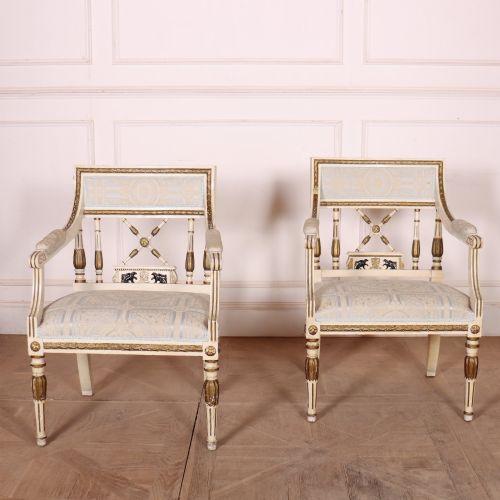
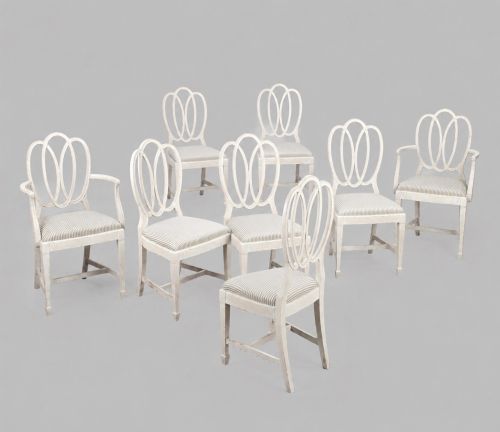
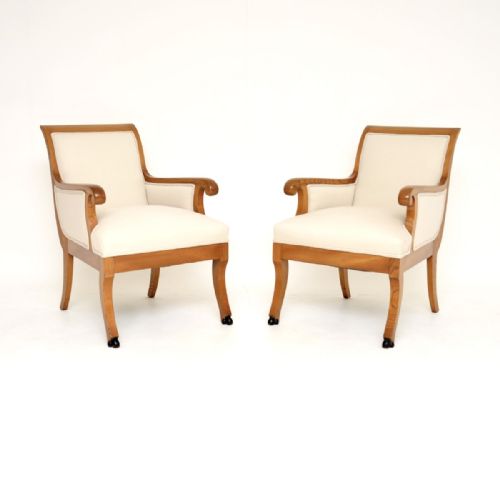
When you search for gustavian style chairs, you are looking at seating rooted in Scandinavian interpretations of neoclassical design. The examples recorded here span from the nineteenth century into the twentieth century, taking the form of armchairs, dining chairs, and occasional highchairs.
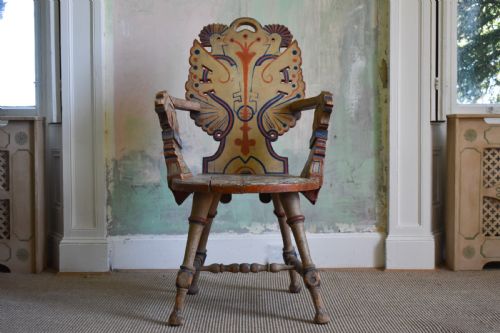
The versions you are most likely to meet on this page include painted armchairs and sets of dining chairs. These pieces reflect broader regional influences ranging from Swedish folk art to French provincial styles, all maintaining a distinctly Nordic lightness.
How they were made
Makers shaped these frames primarily from timber such as pine, elm, and mahogany, often applying layers of paint or lacquer to achieve the signature pale finish. Giltwood accents occasionally appear to highlight carved neoclassical details.
Upholstery forms a vital part of the construction, utilising various fabrics and textiles to pad seats and backs. The combination of turned woodwork, applied paint, and tactile coverings defines the physical presence of each piece.
What varies in quality
The standard of carving and the crispness of the timber mouldings separate simpler country pieces from refined neoclassical interpretations. More accomplished work demonstrates balanced proportions and finer execution in the turned or fluted legs.
The integrity of the painted surface also dictates the character of a chair, with original or patinated layers holding more interest than heavy modern repainting. Structural solidity in the joints underpins how well a chair has survived its working life.
The Gustavian Style Chairs Glossary
- Gustavian
- A Swedish neoclassical design movement spanning the late eighteenth and early nineteenth centuries. It draws heavily on French Louis XVI motifs but simplifies them with clean, restrained lines.
- Giltwood
- Timber that has been coated with a thin layer of gold leaf or gilt powder. This technique highlights carved ornamentation on finer frames.
- Neoclassical
- A style reviving classical Greek and Roman forms, featuring symmetrical geometry, fluted columns, and urn motifs. It forms the foundation of Gustavian aesthetics.
- Elm
- A sturdy hardwood utilised for chair frames and structural components. It provides durability and distinct grain patterns beneath painted finishes.
Gustavian Style Chairs: Frequently Asked Questions
How do I clean painted wood frames?
Dust the surfaces regularly with a soft, dry cloth to prevent dirt accumulation. Avoid harsh chemical cleaners that might strip the historic paint layers.
For stubborn marks, use a damp cloth with mild soap and dry the wood immediately afterward. Gentle care preserves the delicate patination built up over decades.
Can I use these chairs daily?
Most antique seating functions well for everyday dining or occasional sitting, provided the joints remain solid. Check the structural stability before putting older frames to heavy use.
Lighter frames benefit from mindful placement away from direct heat sources. Proper maintenance ensures these chairs withstand regular interaction without compromising their integrity.
How do I distinguish regional styles?
Swedish pieces often display lighter painted finishes and simpler neoclassical carvings compared to their continental counterparts. Folk art variants introduce rustic charm and local motifs.
Examine the turning on the legs and the overall proportion to spot Scandinavian traits. Subtle shifts in decorative restraint usually point to the origin of the workshop.
What fabric suits these chairs?
Traditional linens, cottons, and muted wools complement the pale aesthetic of Scandinavian seating. Neutral tones maintain the historical balance of the painted frames.
Patterned textiles can also work if they reflect period-appropriate motifs like stripes or simple florals. The choice of covering determines how traditional or contemporary the chair appears.