


Vintage Swedish Armchairs
These vintage Swedish armchairs bring clean Nordic lines and striking wood grains into a room, offering both comfort and strong decorative presence.
Vintage Swedish Armchairs
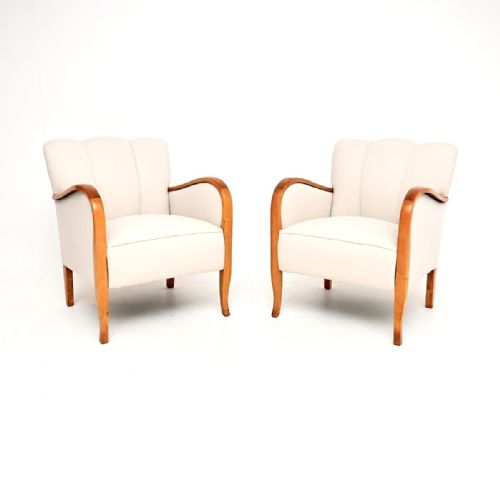
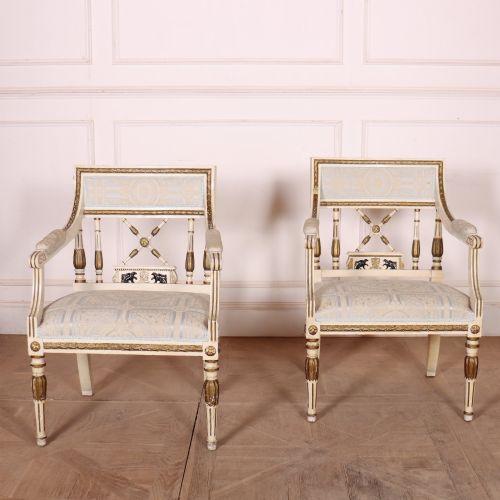
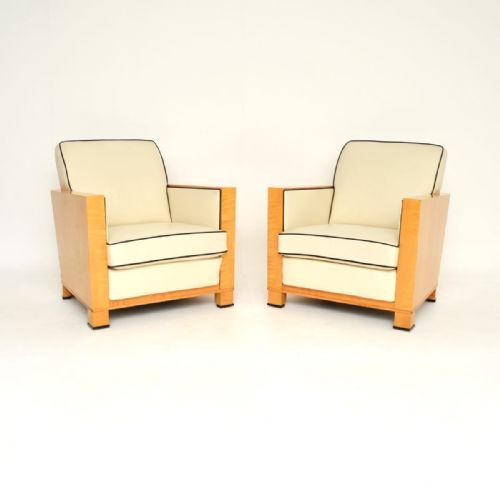
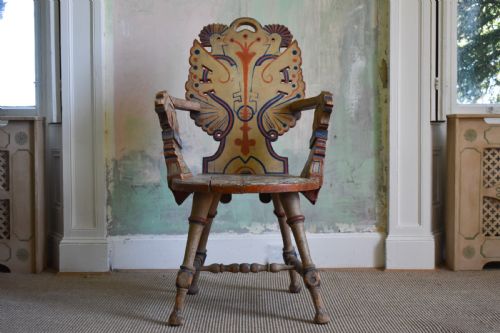
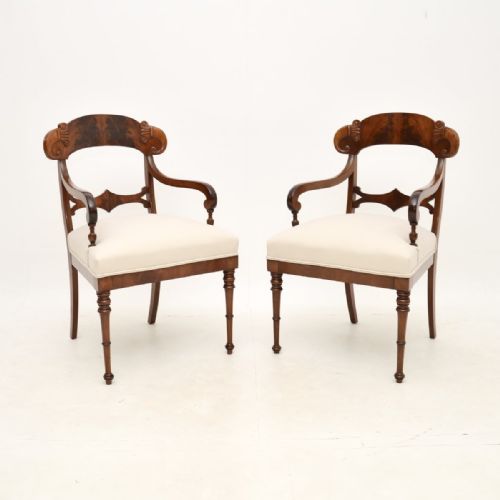
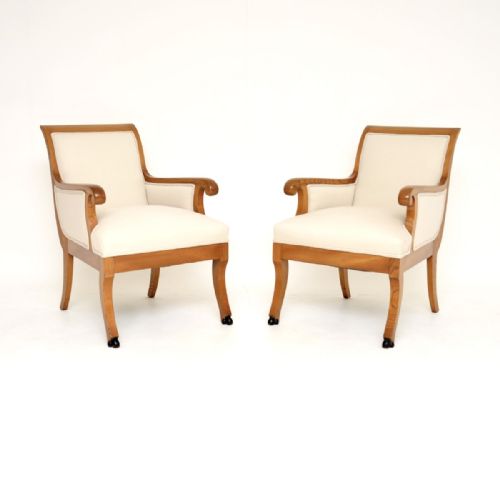
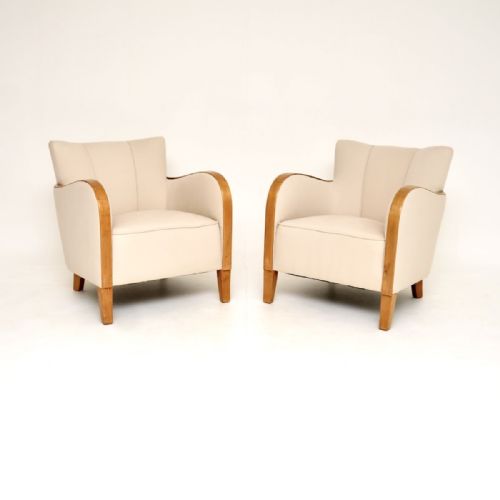
Vintage Swedish armchairs encompass seating ranging from nineteenth-century folk art and neoclassical designs to twentieth-century art deco and modern interpretations. Buyers seeking vintage Swedish armchairs most frequently encounter twentieth-century satin birch art deco pairs alongside earlier nineteenth-century examples in mahogany, elm, and painted finishes.
The selection includes specific regional forms such as rocking chairs and childs armchairs alongside standard lounge seating. Many pieces arrive as matched pairs, reflecting the traditional Scandinavian preference for balanced interior layouts.
Periods represented stretch from the Victorian era and the nineteenth century through the 1880s, 1890s, 1900, 1920, and 1930. Stylistic influences span Scandinavian folk art, neoclassical, Swedish empire, and art deco movements.
How they were made
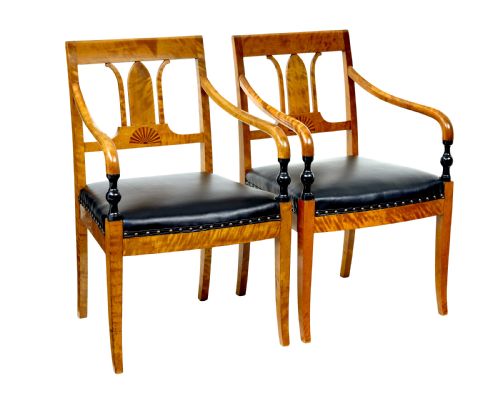
Wood selection defines these chairs, with birch, satin birch, burr birch, mahogany, elm, and pine forming the structural framework. Craftsmen also utilised ebonised wood and painted wood surfaces, often retaining original paint layers on folk and country pieces.
Upholstery methods combine traditional springs and stuffing with durable coverings in fabric and leather. The exposed woodwork showcases polished timber grains, particularly on art deco and neoclassical frames.
Someone once sat in a nineteenth-century childs armchair and wondered if tiny Victorians were simply more serious.
What varies in quality
The refinement of the timber figure separates standard examples from exceptional ones, with highly figured satin birch and burr birch commanding particular attention. Wood selection and the crispness of carved or turned details indicate the original maker's ambition.
The integrity of the structural joinery and the survival of original surface finishes, such as early paint or polished veneer, dictate the overall standard of the piece. Matching pairs demonstrate a higher level of initial commission than single surviving chairs.
The Vintage Swedish Armchairs Glossary
- Satin birch
- A timber with a lustrous, light-reflecting grain widely utilised in Scandinavian art deco furniture. It provides a pale, golden surface tone.
- Burr birch
- Wood harvested from tree growths that produce complex, swirling grain patterns. This material appears on high-end art deco lounge chairs.
- Neoclassical
- A style drawing on classical antiquity, producing symmetrical forms with restrained ornamentation. Pieces from this tradition often utilise mahogany or elm.
- Ebonised wood
- Timber treated to resemble ebony through a dark staining or painting process. It offers high contrast against lighter upholstery fabrics.
Vintage Swedish Armchairs: Frequently Asked Questions
What periods do these armchairs cover?
The selection spans the nineteenth century up to the 1930s. Pieces range from Victorian folk art and neoclassical designs to 1920s and 1930s art deco.
Earlier nineteenth-century examples sit alongside twentieth-century modern and empire style items.
Are most chairs sold in pairs?
A substantial portion of the inventory consists of matched pairs. This applies particularly to the twentieth-century art deco satin birch models.
Single pieces appear more frequently among the nineteenth-century folk art and rocking chair categories.
What woods are commonly found?
Birch, satin birch, and burr birch dominate the twentieth-century pieces. Earlier furniture relies on mahogany, elm, pine, and painted or ebonised woods.
Surfaces range from polished timber grains to original painted finishes.
How do I distinguish art deco from neoclassical styles?
Art deco chairs from the 1920s and 1930s feature sweeping, rounded forms and pronounced satin or burr birch grains. Neoclassical pieces from the nineteenth century display straighter lines and darker woods like mahogany.
Folk art examples show simpler, country-made vernacular construction.