
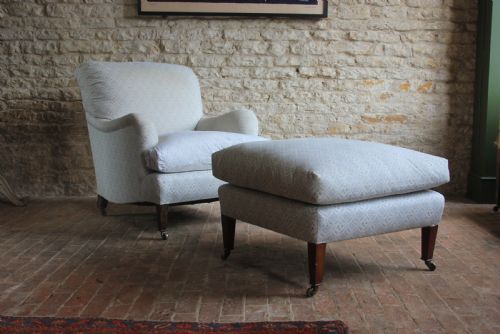


Blue Upholstery Armchairs
Blue upholstery armchairs bring character and comfort to a room, spanning periods from Victorian craftsmanship to Art Deco design.
Blue Upholstery Armchairs
Blue upholstery armchairs encompass a wide variety of seating forms designed for comfort and reception rooms, ranging from salon chairs to club armchairs. When exploring blue upholstery armchairs, buyers encounter diverse historical periods including the Victorian era, Edwardian period, and early twentieth century. These seating options include pairs and single pieces reflecting distinct decorative approaches.
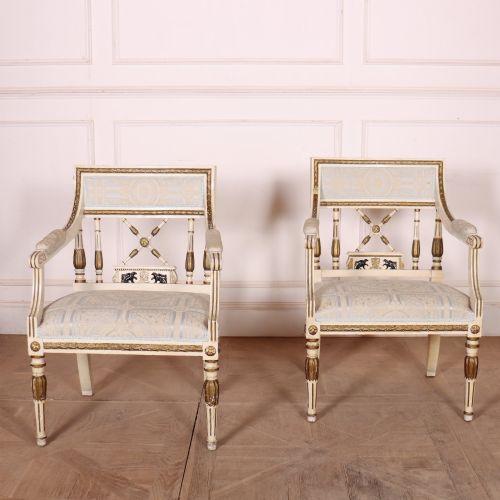
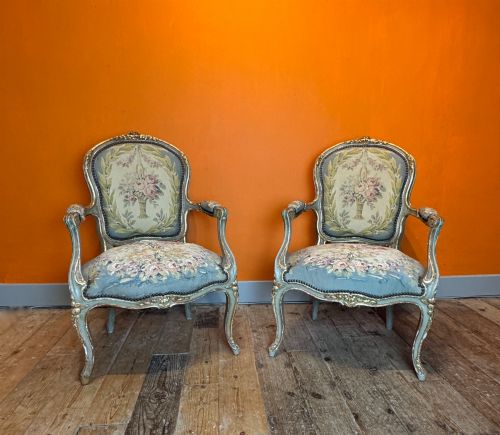
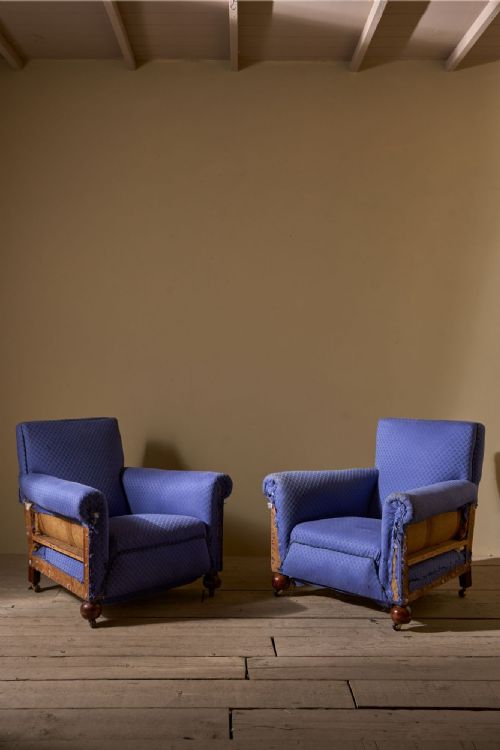
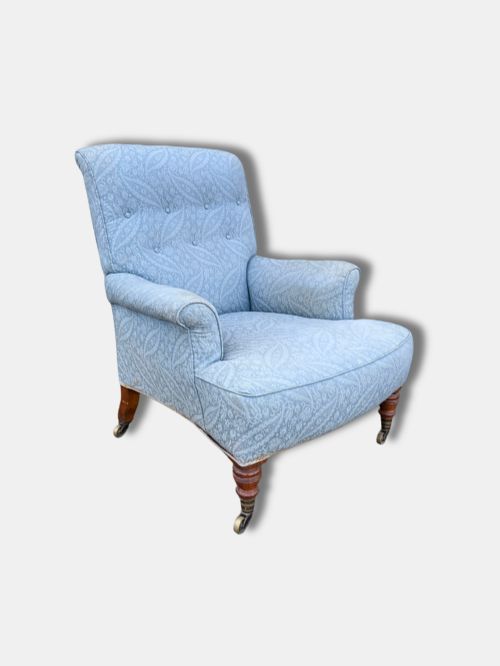
The selection ranges from French painted and parcel gilt armchairs with tapestry upholstery to English country house designs and Swedish Empire style armchairs. Makers such as Howard and Sons contributed substantial club and Bridgewater armchair forms upholstered in ticking or blue fabrics. Salon chairs with silk parrot designs and walnut framed fireside armchairs further broaden the available types.
Victorian and Edwardian examples sit alongside Art Deco club chairs and Louis XVI style fauteuil armchairs. Each piece demonstrates the domestic seating preferences of its respective decade, utilising specific framing materials and decorative textiles.
How they were made
Frames rely on traditional timbers including walnut, mahogany, hardwood, and painted wood, providing structural integrity for the upholstered bodies. Joinery and carving techniques define the period styles, from the carved walnut of the nineteenth century to the inlaid mahogany of Edwardian pieces.
Upholstery techniques incorporate diverse textiles such as tapestry, silk with parrot designs, ticking, and standard fabric coverings. Additional decorative elements include brass accents and parcel gilt finishes applied to wooden frames.
Listings feature pieces spanning the 1850s to 1930, utilising walnut, mahogany, hardwood, and brass.
What varies in quality
The standard of carving and woodwork sets individual pieces apart, distinguishing simple frames from elaborately shaped and parcel gilt structures. Timber selection, such as figured walnut or solid mahogany, dictates the structural refinement of the chair.
The execution of the upholstery and the choice of textile, whether patterned silk, tapestry, or robust ticking, influence the overall character and finish. Maker attribution, particularly pieces associated with workshops like Howard and Sons, adds a distinct level of documented provenance.
Howard and Sons
The Blue Upholstery Armchairs Glossary
- Bridgewater armchair
- A comfortable upholstered armchair style characterised by low arms and a deep seat. This form is frequently associated with nineteenth and early twentieth century English makers.
- Parcel gilt
- A decorative technique where specific areas of a wooden frame are partially gilded with gold leaf. This finish highlights carved details and mouldings.
- Ticking
- A tightly woven, durable cotton or linen textile traditionally used to cover mattress springs and sturdy upholstered furniture. It provides a firm and hard-wearing outer surface.
Blue Upholstery Armchairs: Frequently Asked Questions
How do I identify a Howard and Sons armchair?
Howard and Sons armchairs are typically recognised by their deep, comfortable proportions and specific upholstery methods involving ticking or traditional fabrics. Many pieces from this maker date from the Victorian and Edwardian periods.
Examination of the frame and traditional upholstery build often reveals the distinct construction methods employed by the firm.
What is the difference between a salon chair and a club armchair?
Salon chairs are generally lighter, more decorative seating options designed for reception rooms, often featuring exposed wooden frames in walnut or mahogany. Club armchairs are larger, deeply upholstered seats built primarily for relaxation and comfort.
While salon chairs prioritise refined woodwork and patterned silks, club chairs focus on deep cushioning and sturdy frames.
Are these armchairs suitable for daily use?
Many of these seating options were built during the nineteenth and early twentieth centuries using solid hardwoods like mahogany and walnut. Their robust construction supports continued domestic use when maintained properly.
Consider the existing structure and fabric condition to determine how well an individual piece fits into a modern living space.
How can I tell a Victorian armchair from an Edwardian one?
Victorian armchairs often feature heavier carved walnut frames and darker timber tones, reflecting mid to late nineteenth-century tastes. Edwardian examples frequently display lighter mahogany frames, sometimes with delicate inlaid details.
Comparing the decorative carving and wood selection helps differentiate between these two periods.