


Sterling Silver Mirror
A sterling silver mirror brings weight and bright reflection to a dressing table, spanning Victorian hand-held pieces to Art Deco vanity designs.
What They Are
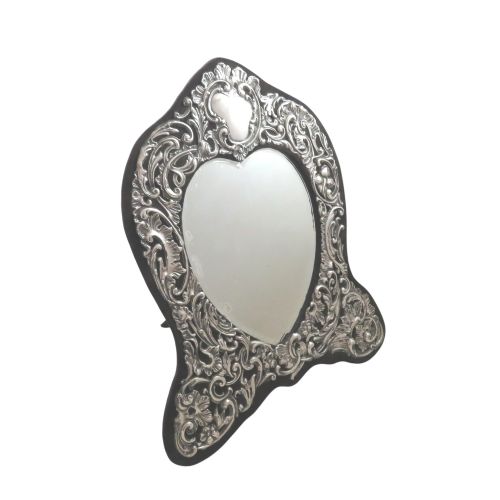
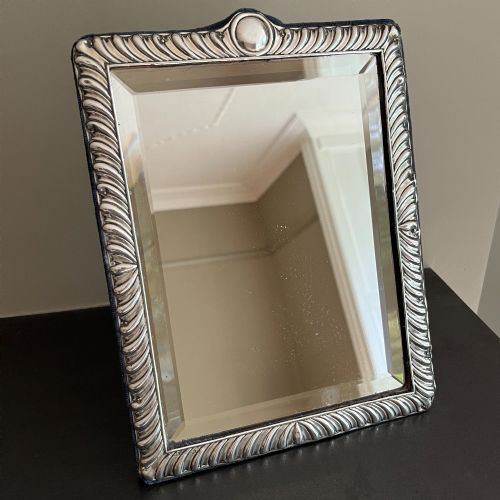
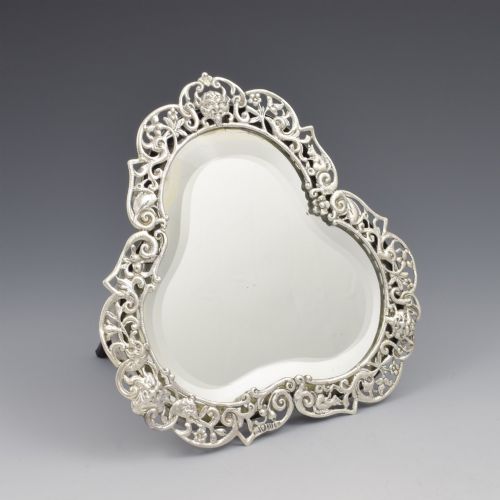
A sterling silver mirror appears in several distinct forms across these records, ranging from large table mirrors and dressing table mirrors to smaller hand mirrors and vanity pieces. Buyers searching for a sterling silver mirror will frequently encounter sturdy Edwardian examples and elaborate Victorian table mirrors supported by wooden or leather struts.
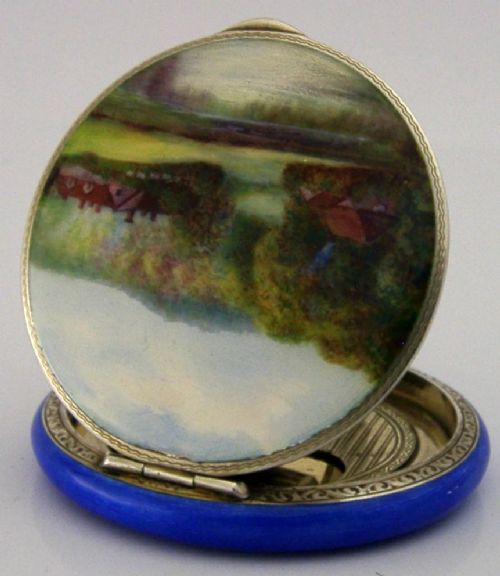
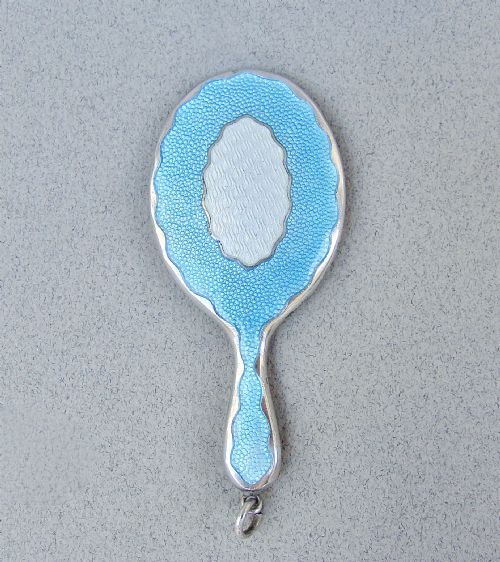
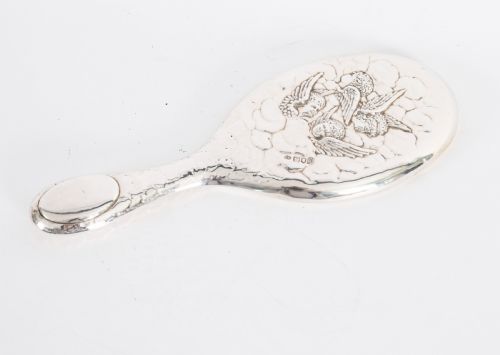
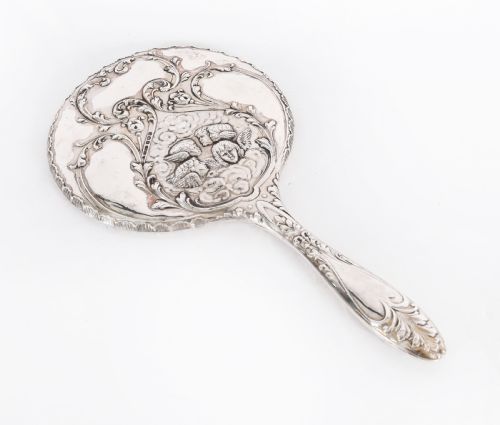
The archive shows that hand mirrors dominate the earlier records, often decorated with embossed cherubs, angels, or birds in the Art Nouveau and Victorian Rococo Revival styles. Later pieces shift toward clean geometric lines, featuring vibrantly coloured vitreous enamel panels from the Art Deco period.
How They Were Made
Silversmiths constructed these pieces using heavy sterling silver frames mounted over wooden cores or lined with plush velvet, secured with glass and mirror glass inserts. Many examples utilise repousse techniques to push elaborate floral or figural motifs outward from the metal sheet.
Makers applied vitreous enamel directly onto textured guilloche grounds to create translucent pink, blue, green, and yellow finishes. Hand-painted floral details occasionally sit atop these enamelled surfaces, complemented by crisp assay office hallmarks stamped into the silver.
Retail Price Guide 2026
Typical UK retail prices for sterling silver mirror, calculated from the Sellingantiques database of over a million retail prices indexed since 2003. This retail price guide relies exclusively on Sellingantiques data; no external sources or auction records are used, so the figures do not describe the wider market.
Angels, cherubs, and embossed birds watch over your reflection across multiple antique hand mirrors.
What Varies in Quality
The distinction between standard production and exceptional work lies in the depth of the repousse relief and the crispness of the chased details. Heavier gauge silver provides a more substantial feel in the hand, whereas lighter frames bend easily under pressure.
Enamelled pieces depend entirely on the preservation of the vitreous surface, where smooth, unbroken colour without chips separates superior examples from lesser items. The integration of structural wooden backs and secure strut mechanisms also dictates the overall longevity of a table mirror.
Henry Williamson·Charles Boyton·William Comyns·Tiffany and Co
The Sterling Silver Mirror Glossary
- Sterling silver
- A silver alloy containing 92.5 percent pure silver and 7.5 percent other metals, usually copper, ensuring durability for functional items like mirrors.
- Guilloche
- A decorative technique where a precise repeating pattern is mechanically engraved into the underlying metal before translucent enamel is applied.
- Repousse
- A metalworking method where the artisan hammers the design from the reverse side to form raised relief patterns on the front.
- Easel mirror
- A dressing table mirror featuring a hinged rear strut that allows the glass to stand upright at an angle.
- Hallmark
- A series of official marks stamped onto precious metals indicating the standard of purity, the assay office, and the year of manufacture.
Frequently Asked Questions
How do I clean a sterling silver mirror?
Use a soft microfibre cloth designed specifically for silver to gently remove tarnish from the frame. Avoid getting polish or water trapped beneath the mirror glass edge.
Keep abrasive chemicals away from any enamelled panels or painted floral details, as harsh cleaners permanently damage the glass surface.
Are these mirrors heavy to hold?
Hand mirrors from the Victorian and Edwardian periods often feel surprisingly substantial due to the thick silver mounts and internal wooden framing used to support the glass.
Smaller vanity pieces and miniature purse mirrors offer a lighter alternative for daily use while retaining the solid silver construction.
What is the difference between a strut mirror and a hand mirror?
A strut mirror incorporates a hinged wooden or leather-covered back support, allowing the piece to stand independently on a dressing table or vanity surface.
Hand mirrors feature an integrated handle extending directly from the silver frame, designed to be lifted and held during grooming.
How do I date an antique silver mirror?
Look for the series of hallmarks stamped directly into the silver frame, which typically include a date letter corresponding to the assay office records of London or Birmingham.
Stylistic indicators such as Art Deco geometric enamelling or Victorian Rococo Revival embossing also help narrow down the decade of production.