
Standing Dial Clock
A standing dial clock brings the measured tick of centuries into a room, uniting mechanical precision with cabinet timber.
Standing Dial Clock
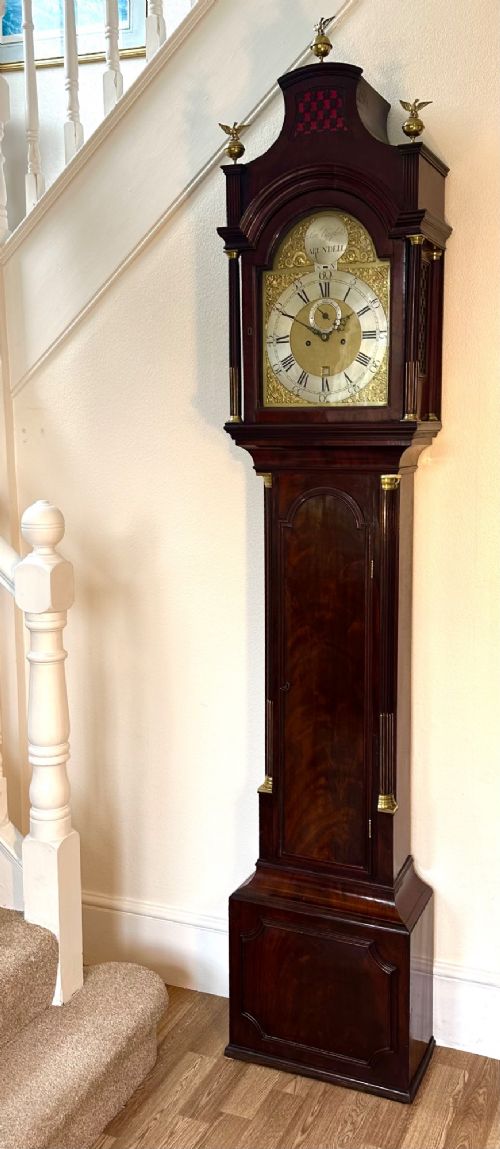
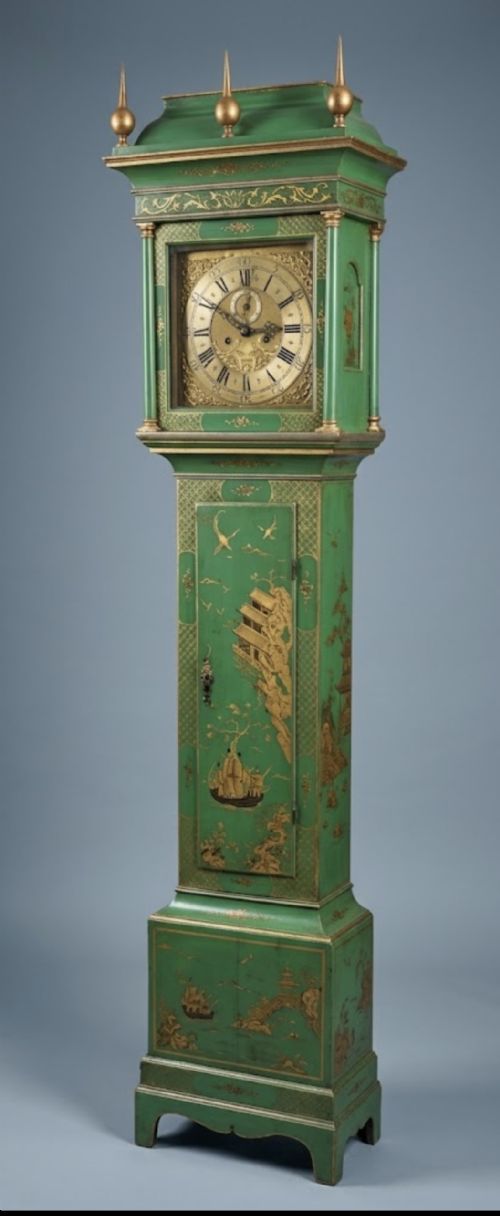
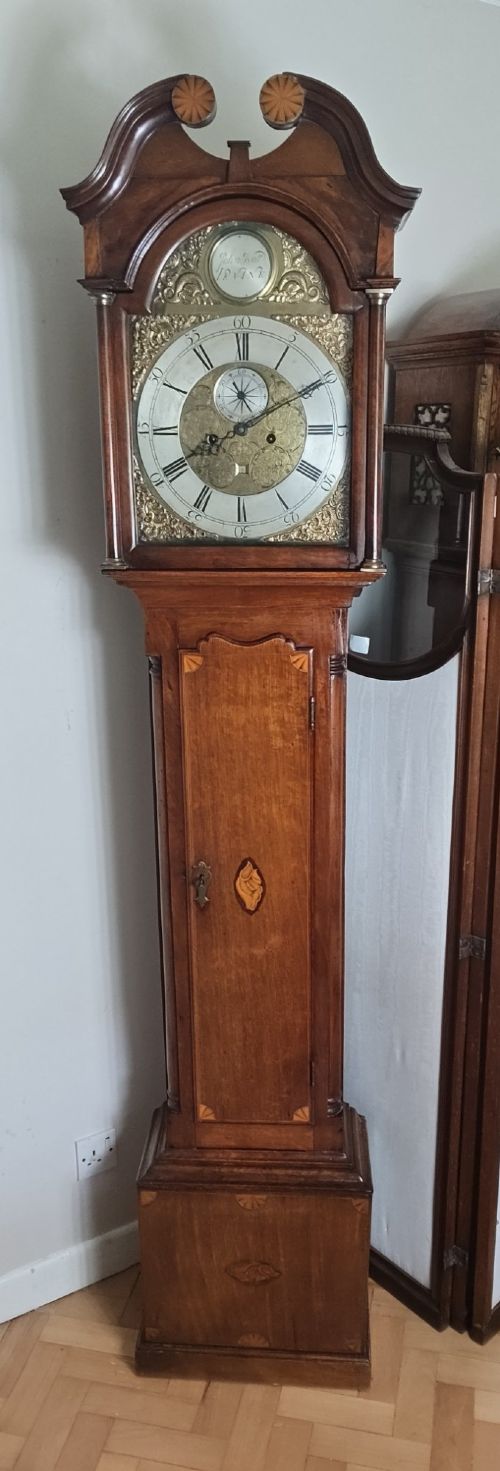
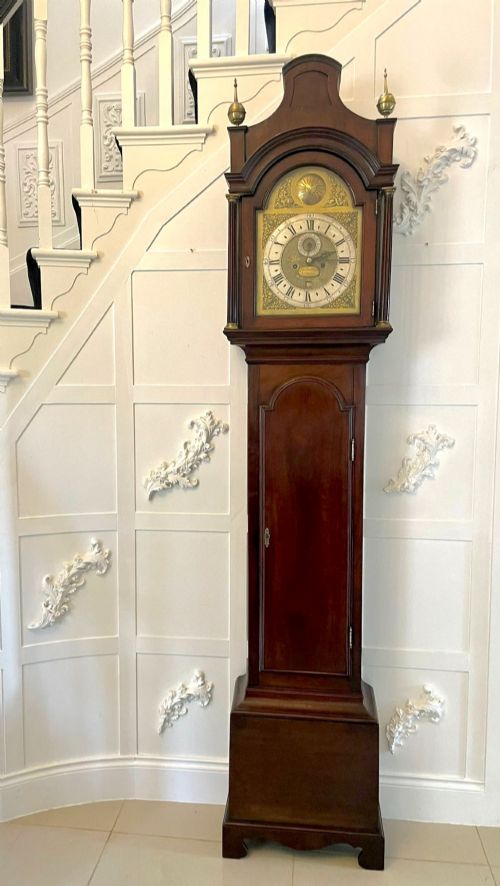
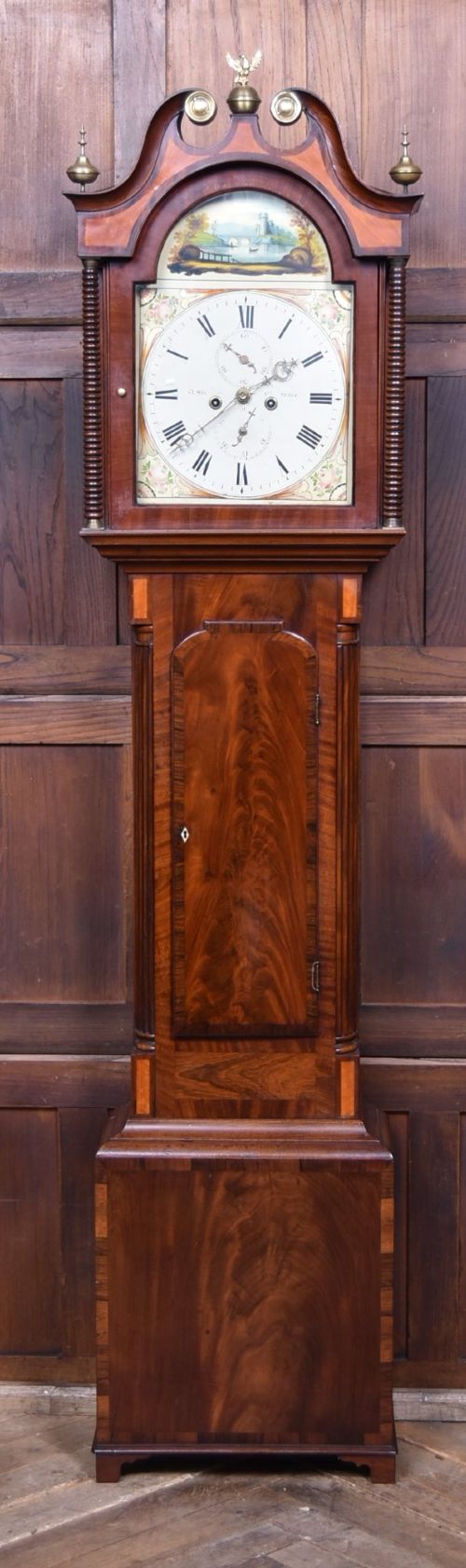
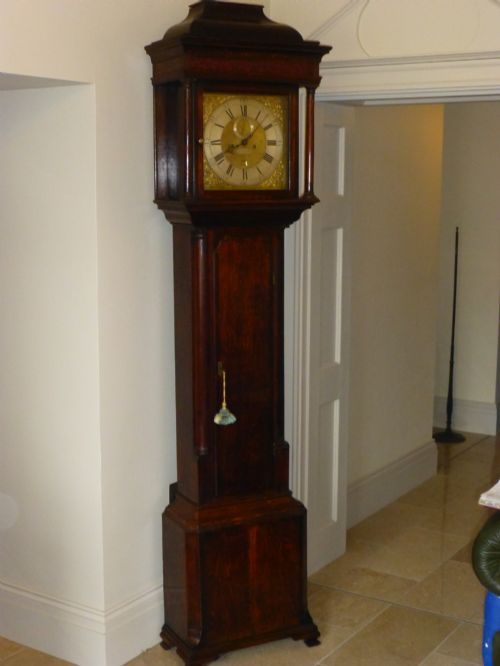
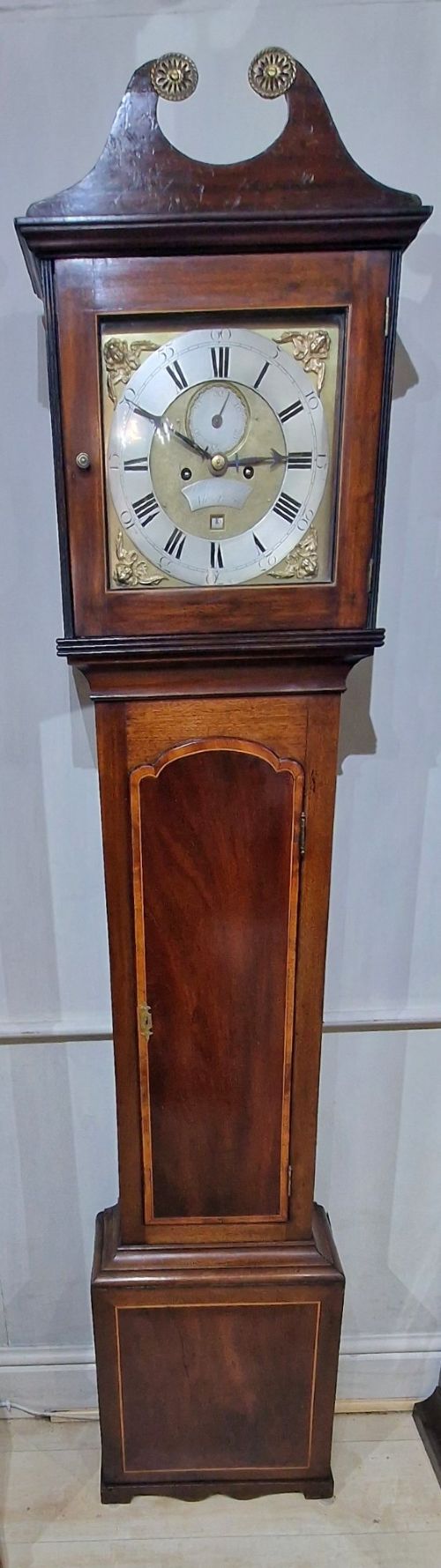
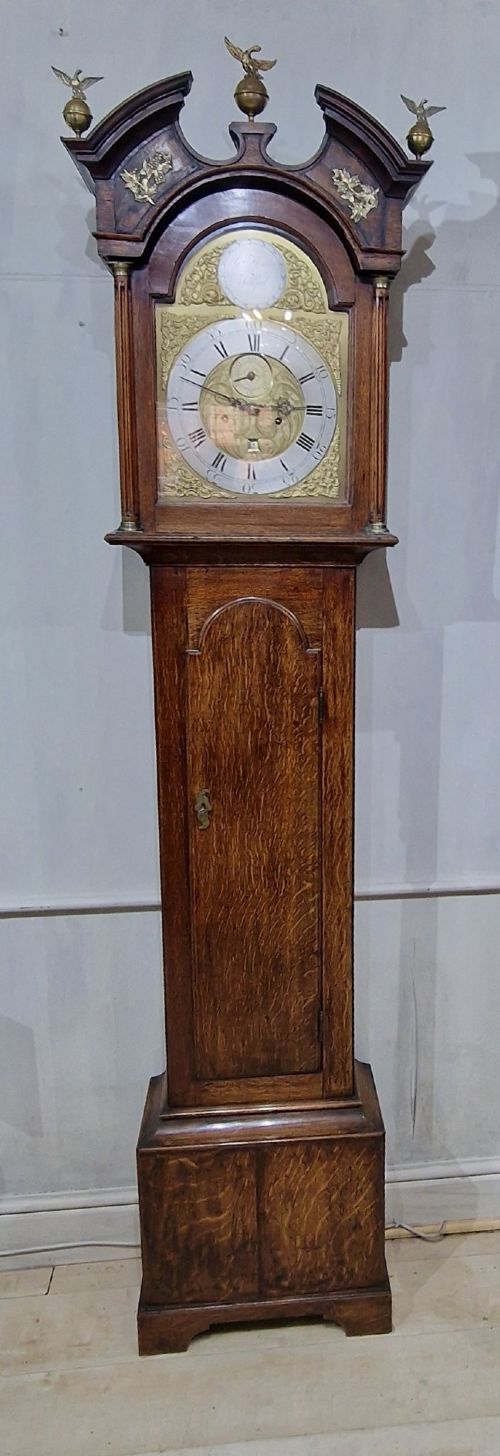
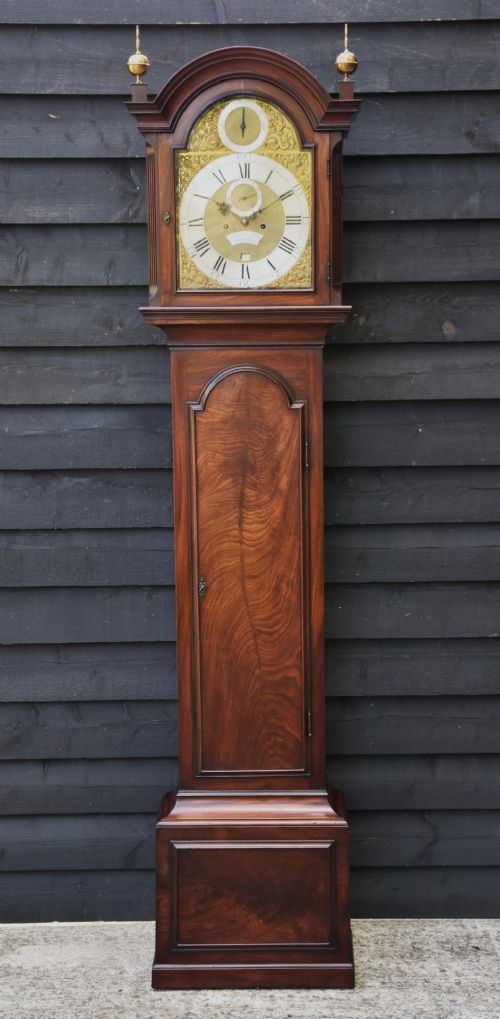
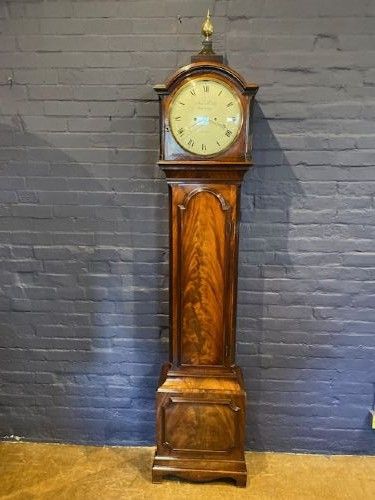
A standing dial clock houses a weighted movement within a tall wooden case, designed to rest directly upon the floor. These pieces appear in forms such as longcase clocks, grandfather clocks, and smaller grandmother clocks originating from Georgian, Victorian, and Edwardian eras.
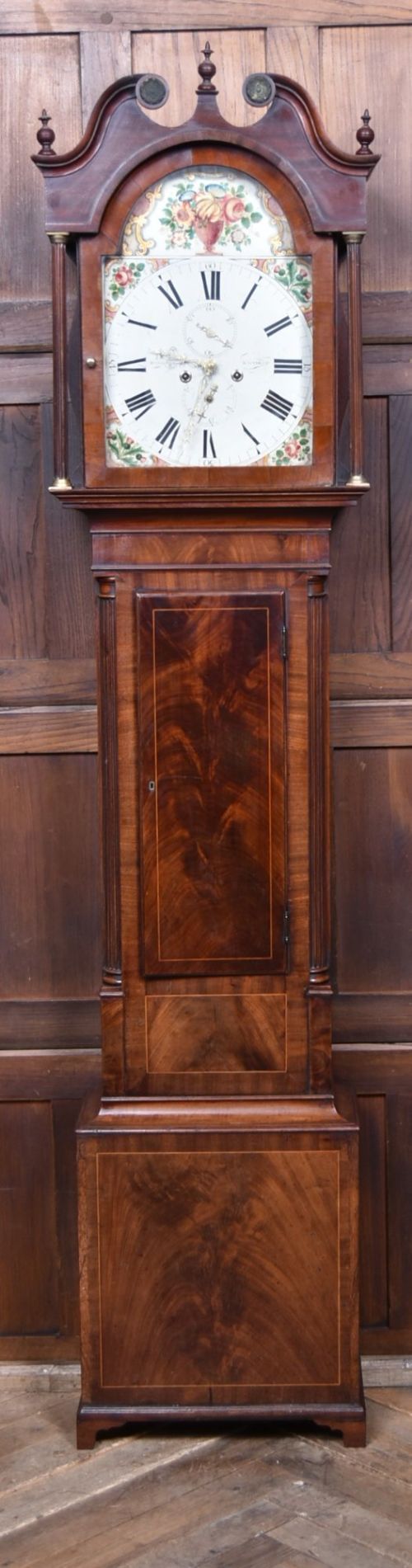
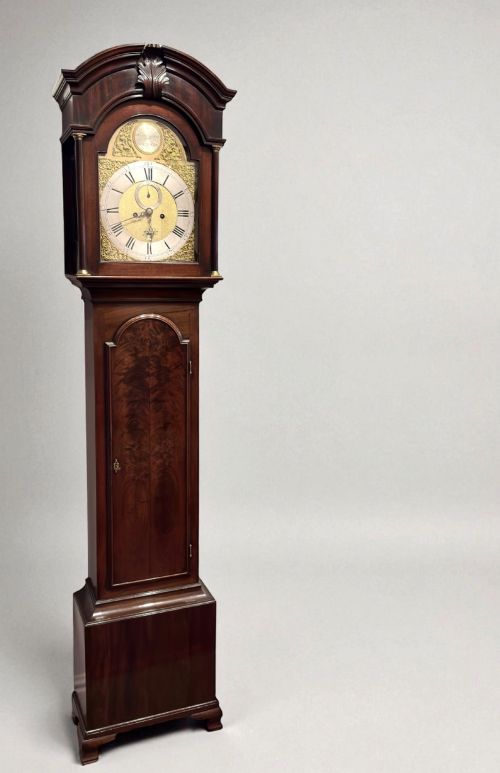
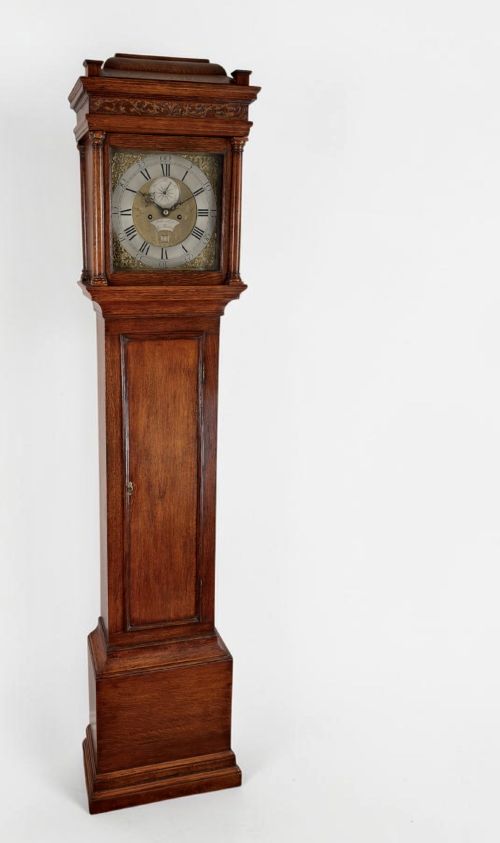
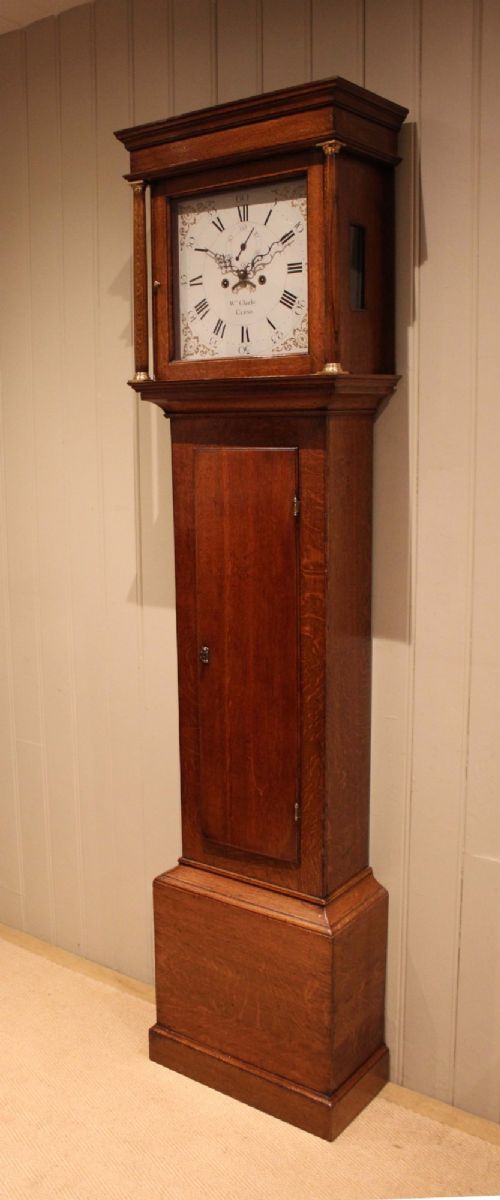
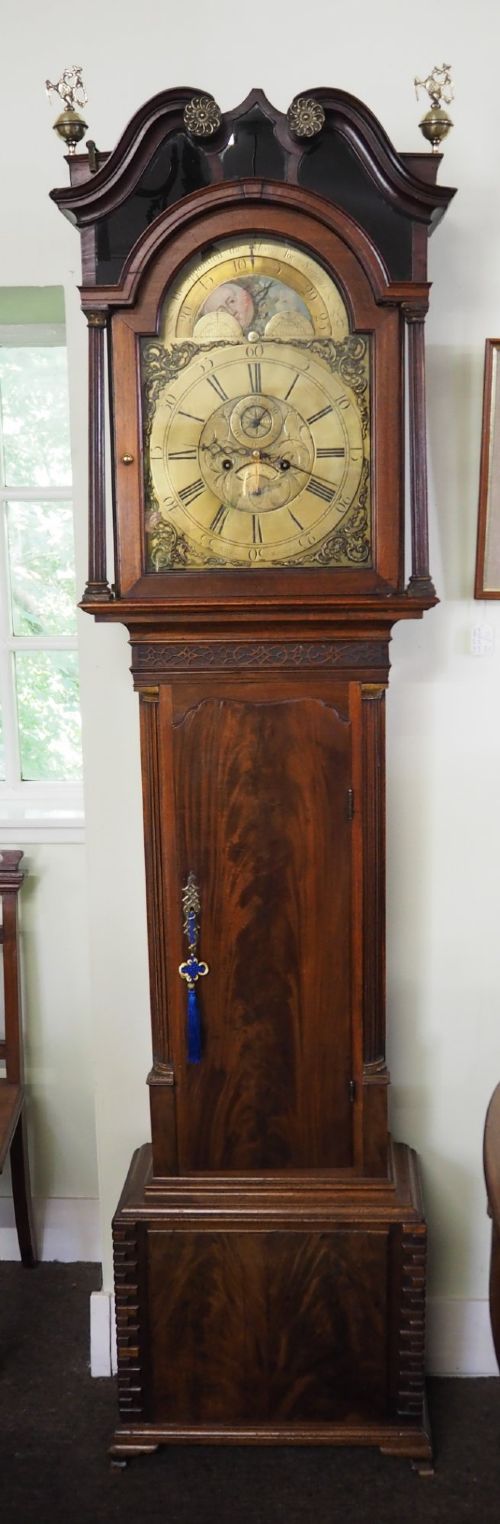
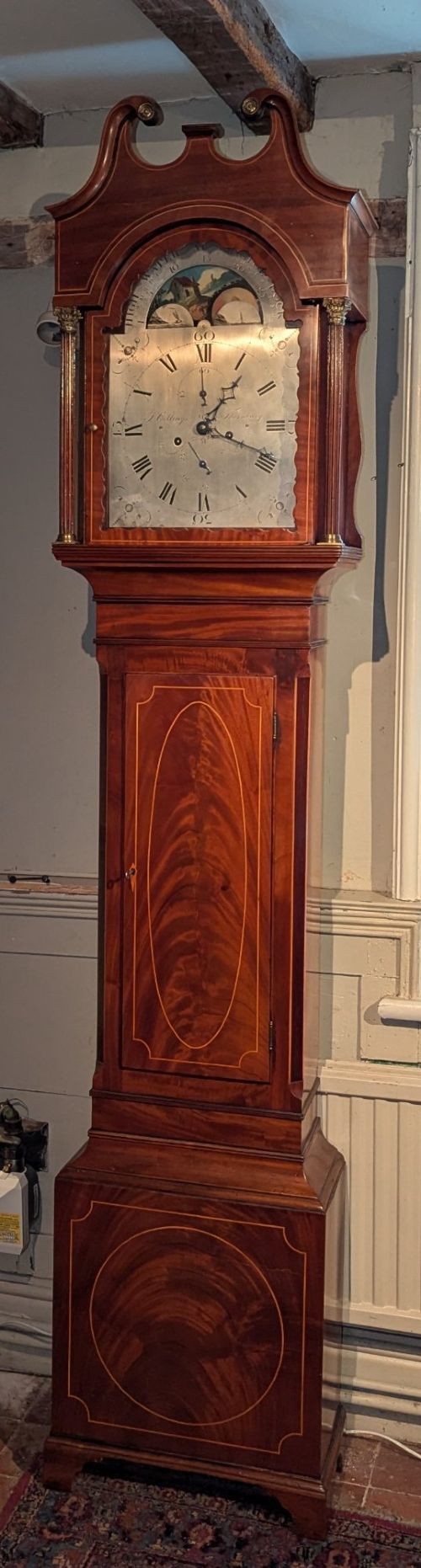
The layout typically combines a glazed hood protecting the brass or painted iron dial with a long trunk concealing the falling weights and pendulum. Cabinet styles range from Scottish Georgian variants to London pieces executed in mahogany, oak, walnut, and burr walnut.
Makers often signed directly on the dial face, recording regional workshops across the Home Counties, Scotland, and provincial towns alongside metropolitan centres. Smaller proportions emerge in later decades, while musical movements and tubular bells appear in Edwardian and early twentieth-century examples.
Materials and construction
Cases are constructed from native and imported timbers, notably mahogany, oak, and walnut, frequently selected for figured grain or flame veneers. Dial faces combine brass plates with engraved silvered chapters, or iron panels finished with painted numerals and subsidiary moon rollers.
Internal movements rely on brass gear trains driven by hanging weights of lead or cast iron, paired with steel arbours and pivots. Glazed dial hoods protect the delicate hands, while brass or steel components govern the strike, chime, and moon phase complications.
Cabinet woods span native oak and imported mahogany alongside decorative figured walnut and flame veneer applications.
Judging quality
Quality rests upon the harmony between the cabinet proportions and the sophistication of the internal movement. Timber selection dictates visual depth, where figured mahogany and burr walnut display careful matching across the trunk door and plinth.
Dial execution separates provincial utility from master craftsmanship, visible in the crispness of brass engraving or the detail within painted phases of the moon. Movement complexity also defines grade, moving from simple time-only eight-day trains to quarter-chiming musical systems with multiple bells or gongs.
Charles Shuckburgh·Hendrie Ogg·Gordon of Aberdeen·Lee of Great Marlow·D. Straiton·Richard Corless·James Hendrie·James McCabe·Winsor Bishop Norwich·Benjamin Taylor·Windmills and Wightman·D Williams
The Standing Dial Clock Glossary
- Longcase clock
- An alternative term for a tall floor-standing timepiece enclosed in a wooden case with a pendulum and weights.
- Grandfather clock
- A colloquial name for a standard full-sized longcase clock, typically housing an eight-day movement.
- Grandmother clock
- A smaller, more slender version of the traditional longcase clock, common in twentieth-century production.
- Moon dial
- A rotating painted disc beneath the clock face that tracks the lunar cycle alongside the standard time.
- Strike silent
- A mechanical lever allowing the clock's hourly sounding mechanism to be disengaged at night.
Standing Dial Clock: Frequently Asked Questions
How do I wind a standing dial clock?
Wind the movement using the matching key or crank inserted into the winding holes on the dial face. Support the weight cord gently if necessary to avoid straining the internal gutline or cable.
Take care not to overwind the train once resistance is felt at the top of the barrel. Ensure the weights hang freely inside the trunk without catching the pendulum.
Where should I place a standing dial clock?
Position the clock against a sturdy interior wall away from direct sunlight, central heating vents, and damp draughts. Timber cases respond poorly to rapid humidity shifts.
The floor beneath must remain level so the pendulum swings with an even, symmetrical beat. Secure the upper case to the wall bracket if the building experiences vibration.
Why does my clock go out of beat?
Floorboards settle over time, altering the tilt of the heavy wooden case and causing the escapement to lose its rhythmic tick. Adjust the feet or shim the base until the sound is even.
Changes in seasonal temperature can also affect the suspension spring and pendulum rod length. Minor adjustments to the crutch or regulating nut restore accurate timekeeping.
How do I tell an 18th-century dial from a 19th-century one?
Eighteenth-century dials often feature cast brass spandrels in the corners surrounding a matted or engraved centre. The chapter ring is frequently a separate applied piece fastened with tiny pins.
Nineteenth-century examples frequently utilise painted iron dials decorated with floral corners or mechanical moon rollers. The execution of the lettering and subsidiary seconds dial also reflects changing manufacturing fashions.