
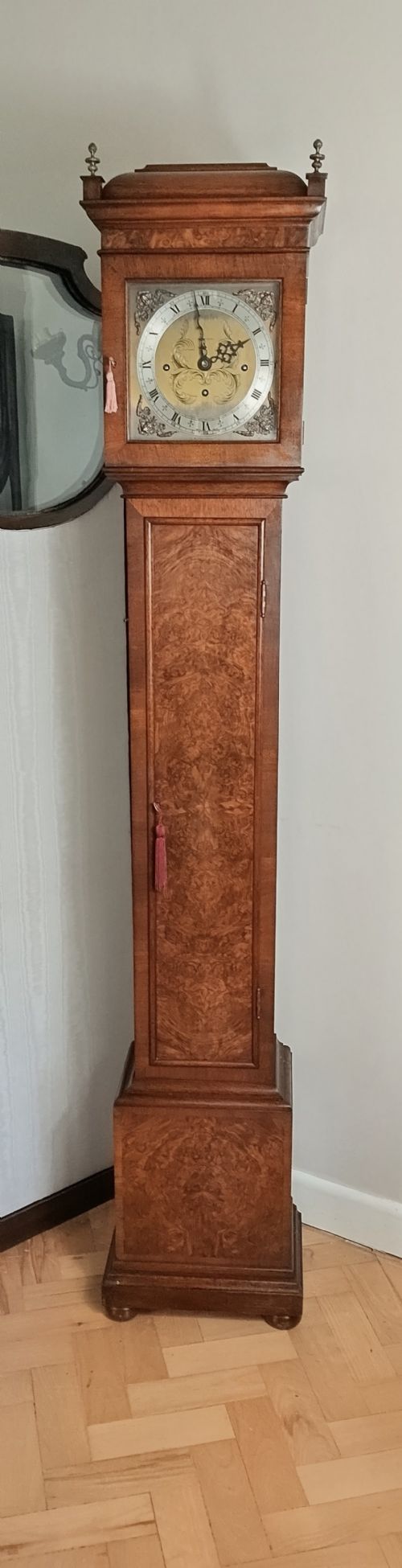
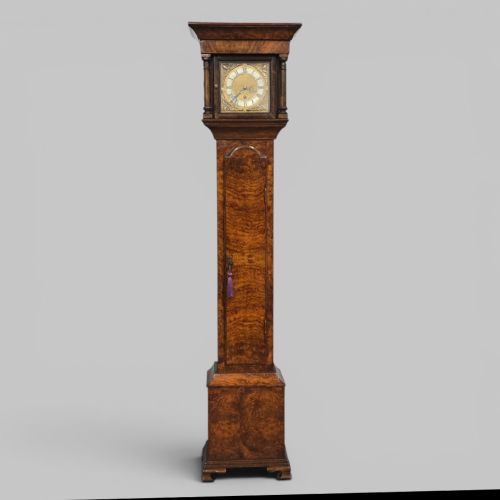


Burr Walnut Tallcase
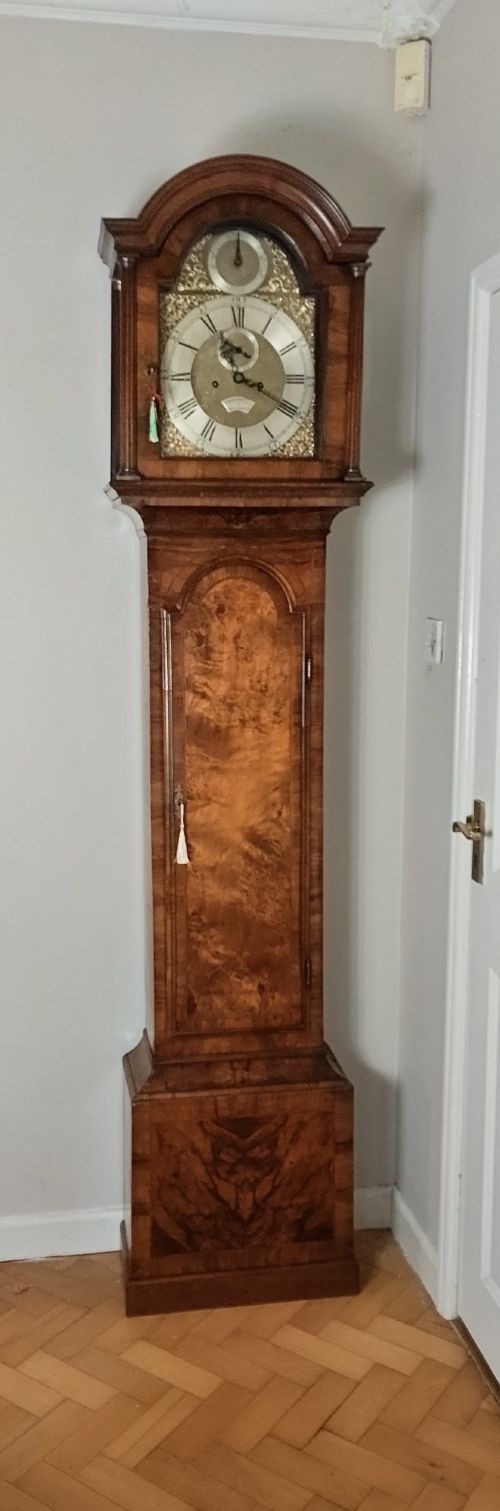
When you want a burr walnut tallcase, you are looking for architectural presence and figured timber that only centuries of growth produce.
Burr Walnut Tallcase
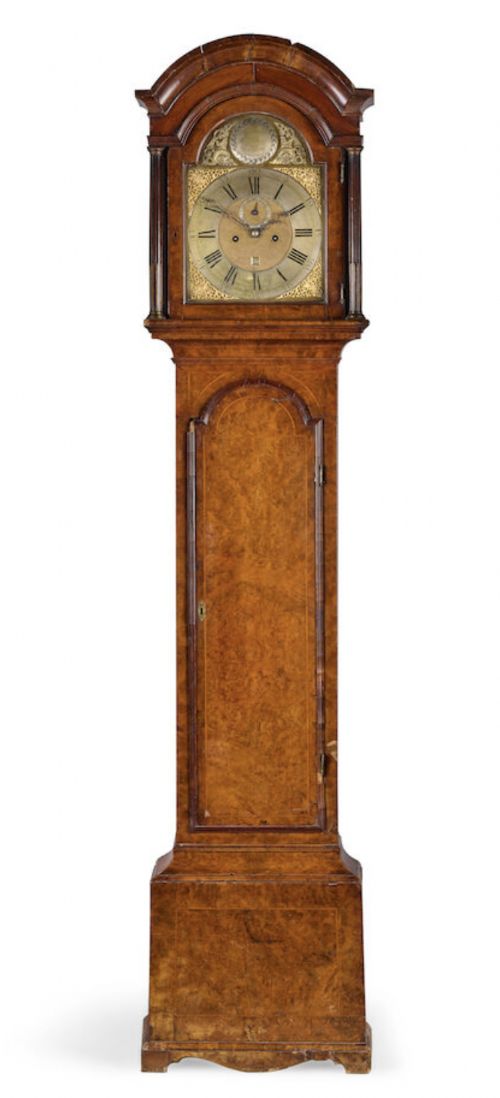
A burr walnut tallcase brings together tall floor-standing clock cases and the distinctively rippled grain patterns found in walnut growths. These pieces span centuries of cabinetmaking, from the seventeenth century through to mid-twentieth-century revivals.
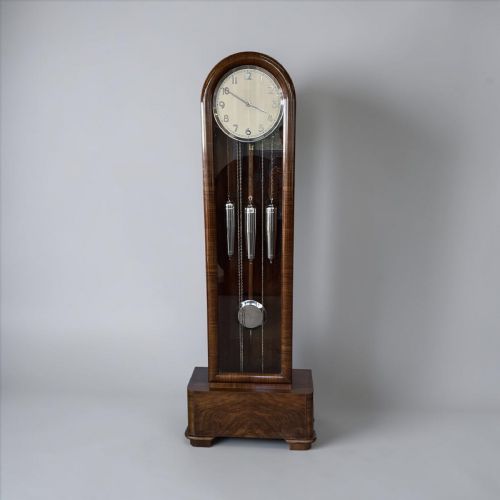
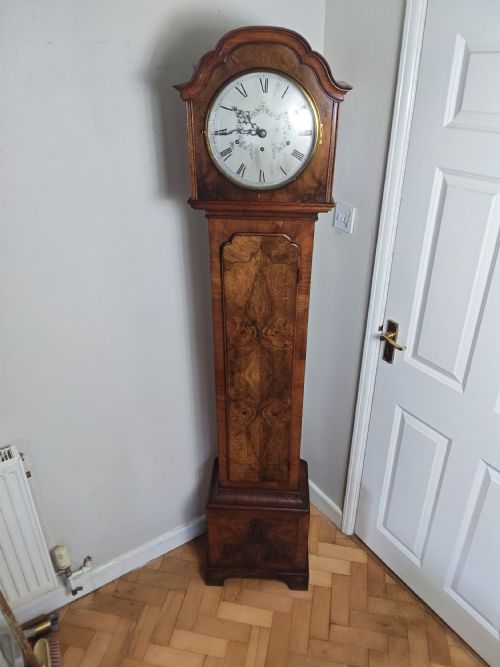
You will encounter various proportions, ranging from full-sized grandfathers down to smaller grandmother and miniature clocks. The forms draw on Queen Anne, Georgian, and Art Deco design vocabularies.
Makers housed complex movements inside these figured wooden trunks, combining horology with decorative veneering. The combination of brass dials, glass hoods, and rich timber surfaces defines the category.
Materials and Construction
Cabinetmakers constructed the foundational carcases using sturdy secondary timbers like oak before applying prized veneers. Selected burr walnut sections were sliced and laid out across the long door and trunk fronts to create symmetrical patterns.
Movements utilise brass gears, steel components, and occasionally tubular bells or musical cylinders. Glass panels protect the dial face, while cast brass hardware secures the trunk doors and hood access.
Listings feature burr walnut tallcases spanning the seventeenth century, Georgian period, and mid-twentieth-century revivals.
Evaluating Quality
The sophistication of the veneer matching across the long door dictates much of the visual success. Superior examples display balanced, highly figured walnut grain that flows naturally across the architectural sections without jarring interruptions.
The integration between the clock movement and the fitted timber case reveals the maker's hand. Signed dials by notable London horologists paired with proportionate, well-maintained casework represent the pinnacle of the form.
Windmills and Wightman·Henry Massy·Edin Burgis·Langley Bradley·Edward East·Bentley London·James Drury·Joseph Oxley
The Burr Walnut Tallcase Glossary
- Burr walnut
- A figured wood grain obtained from walnut tree growths, prized for its swirling patterns. Cabinetmakers sliced this timber into thin veneers for furniture facades.
- Grandmother clock
- A smaller version of the traditional longcase clock, typically produced in the twentieth century. These shorter floor clocks fit domestic spaces with lower ceilings.
- Longcase clock
- A tall, weight-driven pendulum clock housed inside a protective wooden case. Collectors often refer to these floor-standing pieces as grandfather clocks.
- Quarter chiming
- A mechanical capability allowing a clock to play chimes every fifteen minutes. These movements use multiple weights or gongs to sound musical sequences.
- Quarter veneered
- A technique where four matching pieces of wood veneer are arranged symmetrically. This method highlights the grain pattern of burr walnut.
Burr Walnut Tallcase: Frequently Asked Questions
How do I wind a tallcase clock?
Winding requires using a crank key to pull up the hanging weights inside the trunk, matching the specific requirements of the movement.
Take care not to over-wind the springs or pull the weights too high against the dial plate.
What is the difference between a grandfather and a grandmother clock?
Grandfather clocks are full-sized floor clocks standing well over six feet tall, whereas grandmother clocks are significantly smaller scaled versions.
Both utilise similar pendulum and weight mechanisms housed in tall wooden cases, but the grandmother variations emerged more commonly in the twentieth century.
Where should I place a tallcase clock in my home?
Position the piece against a stable interior wall away from direct sunlight, central heating vents, and exterior doorways.
Solid placement ensures the pendulum swings evenly and the delicate walnut veneer remains protected from rapid temperature shifts.
How can I tell the age of a burr walnut tallcase?
Examine the dial signature, construction methods inside the trunk, and the style of the wood veneer layout.
Seventeenth-century and Georgian pieces display different hinge types, movement construction, and cabinetry details compared to later twentieth-century revivals.