

Staffordshire Pottery Pair
These robust earthenware animals and portrait figures offer a direct link to the domestic mantelpieces of the nineteenth century.
Staffordshire Pottery Pair
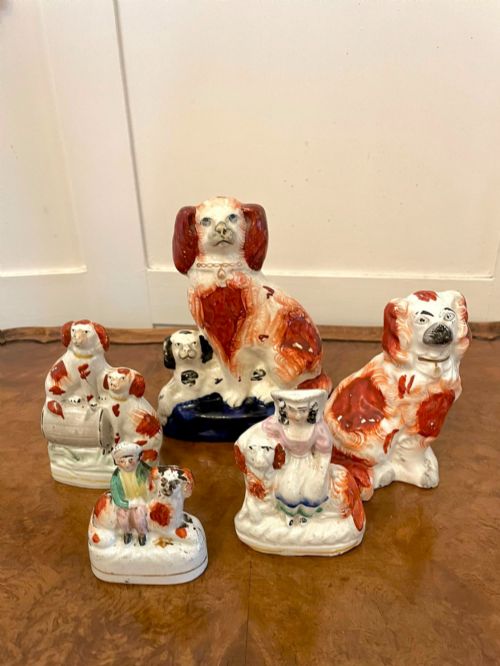
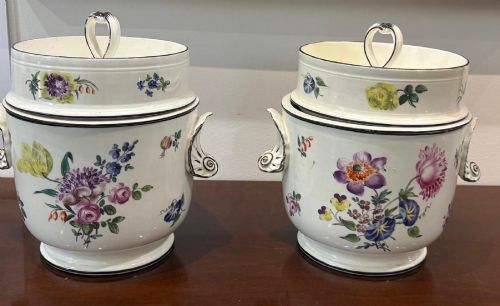
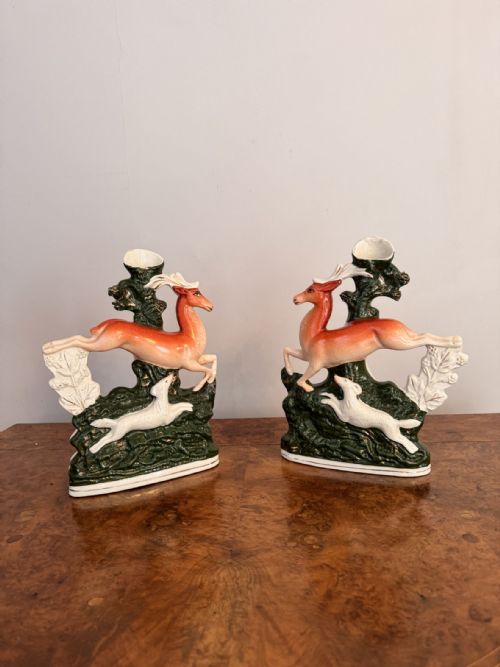
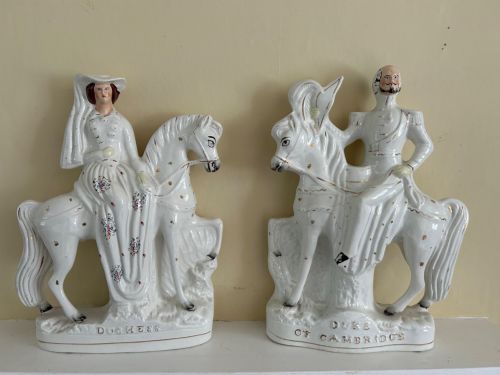
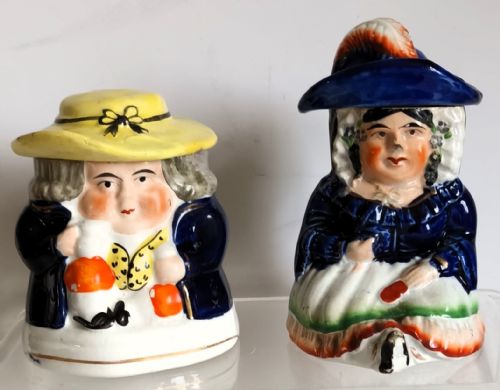
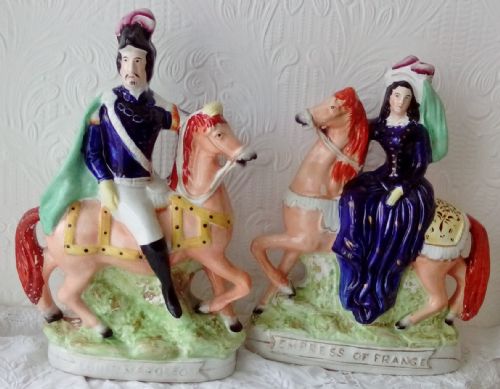
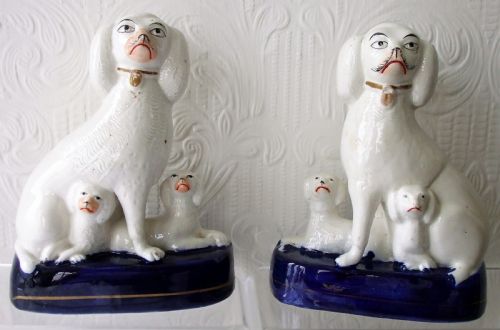
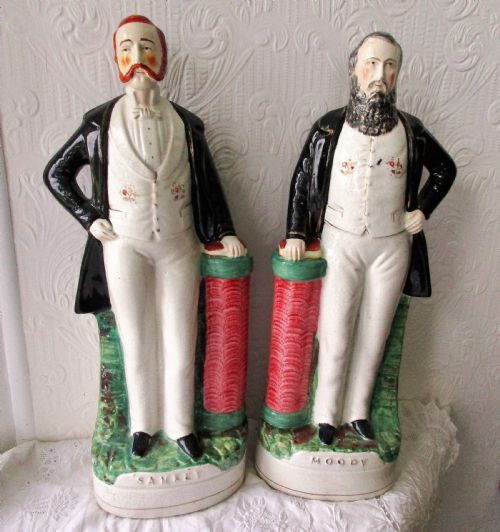
When you examine a Staffordshire pottery pair, you are looking at matched figures designed for symmetry on a Victorian mantelpiece or side table. The selection spans domestic pets, exotic animals, literary characters, and theatrical or political portrait figures.
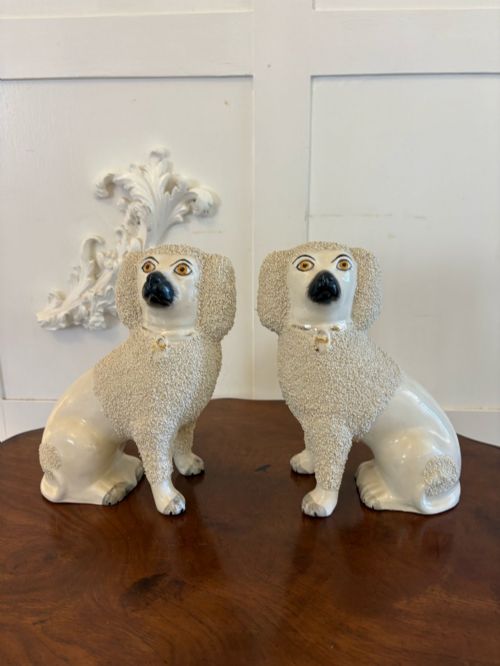
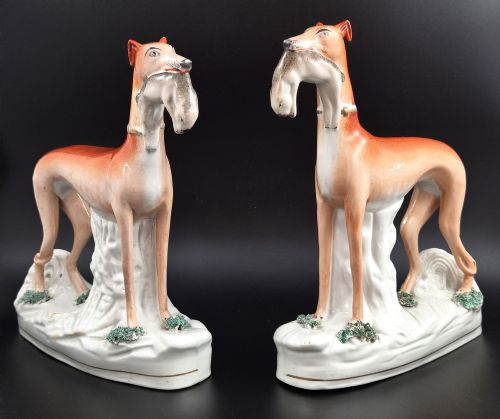
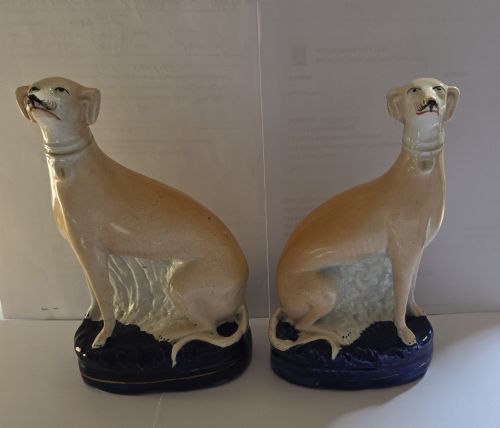
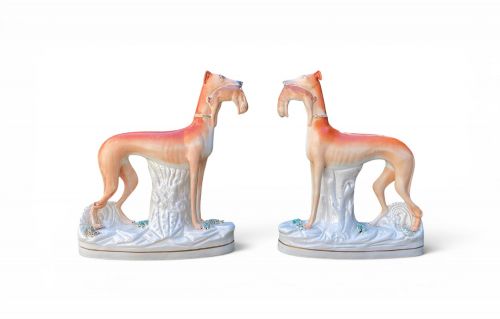
Spaniels, greyhounds, and poodles dominate the groupings, alongside spill vases, lions, cats, and birds. These pieces reflect the popular visual culture of the nineteenth century, often produced in mirrored left and right orientations to sit at either end of a hearth.
Method and Material
Potters shaped these figures from earthenware using slip-casting or press-moulding techniques in regional workshops. Artisans then applied lead glaze, enamel paint, and occasional gold leaf highlights or gilt details before firing.
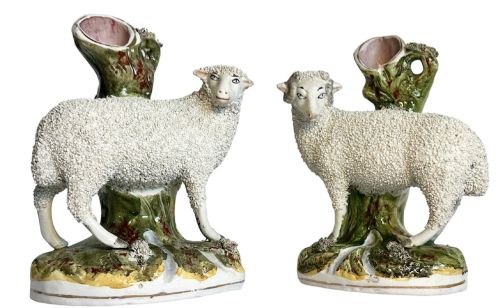
Variations in surface texture include confetti or gravelware applications used to simulate animal fur on poodles and spaniels. Some examples feature simpler underglaze black and white markings, while others incorporate applied ceramic elements like separate legs and modelled puppies.
Listings feature earthenware animals and portrait figures spanning the Victorian, Regency, and Georgian periods.
Assessment of Quality
Workshops of higher renown executed intricate texturing, such as detailed feathering on birds or realistic fur on hounds, rather than relying on heavy overpainting to define the form. The preservation of original gilt accents and the absence of clumsy factory touch-ups also elevate a pair.
Thomas Parr
The Staffordshire Pottery Pair Glossary
- Flatback
- A figure moulded with a finished front and a plain, unglazed or minimally glazed flat rear designed to sit flush against a wall.
- Spill vase
- A hollow cylindrical holder incorporated into the figure's design, intended to hold wooden spills for lighting fires or pipes.
- Pearlware
- A refined, thin earthenware body developed with a bluish-tinted lead glaze that pooled slightly blue in recesses.
- Creamware
- A pale cream-coloured refined earthenware perfected during the eighteenth and early nineteenth centuries.
- Treacle glaze
- A rich, dark brown lead glaze that produced a glossy, translucent finish resembling molasses.
- Gravelware
- Applied crushed pottery or sand embedded into the wet glaze to create a textured, woolly coat on poodles.
Staffordshire Pottery Pair: Frequently Asked Questions
What are Staffordshire dogs called?
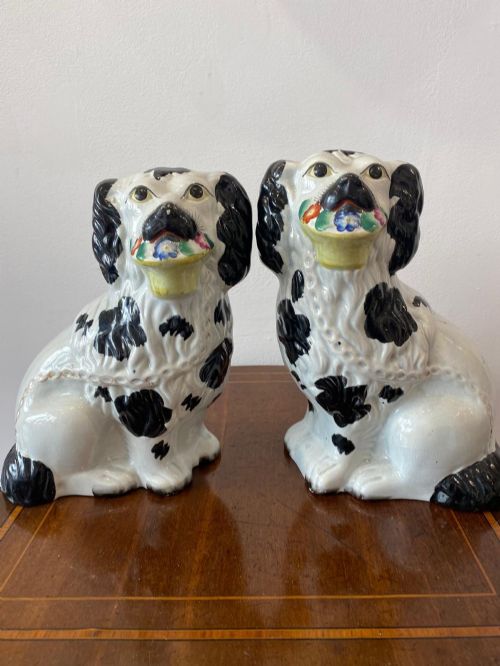
Collectors and dealers frequently refer to the seated spaniels as comforter spaniels or Wally dogs.
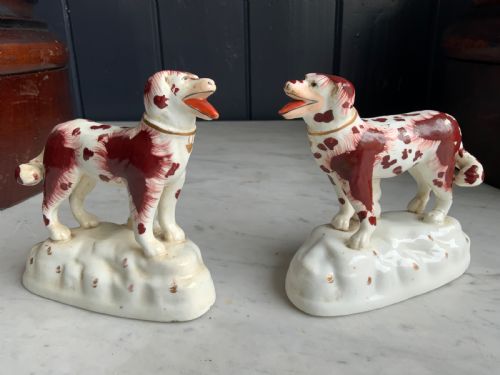
These terms specifically describe the popular white and black or red-spotted dogs that guarded Victorian mantelpieces.
Were these figures meant for display?
Makers designed these matched pairs strictly for visual symmetry on interior fireplace mantels and shelves.
They served as accessible ornaments for middle-class homes rather than functional tableware.
How do I spot a reproduction?
Genuine nineteenth-century pieces exhibit crazing within the glaze, weight appropriate to dense earthenware, and hand-painted brushwork rather than modern transfer printing.
Examining the unglazed base often reveals the age-appropriate wear and discoloration expected from historic ceramics.
Why do some figures have holes?
Hollow-cast figures often feature small circular vent holes underneath or at the back to allow steam to escape during the high-temperature kiln firing.
These apertures also accommodated the integral sockets for spill vases or quill holders.