

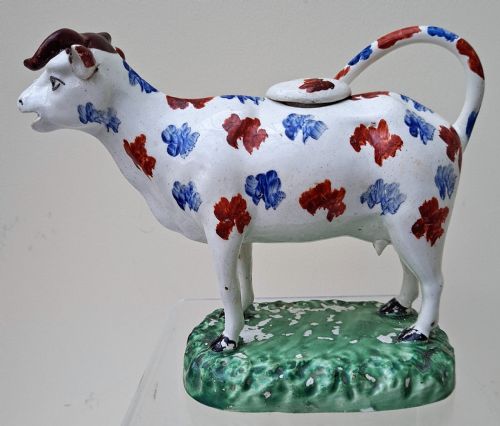
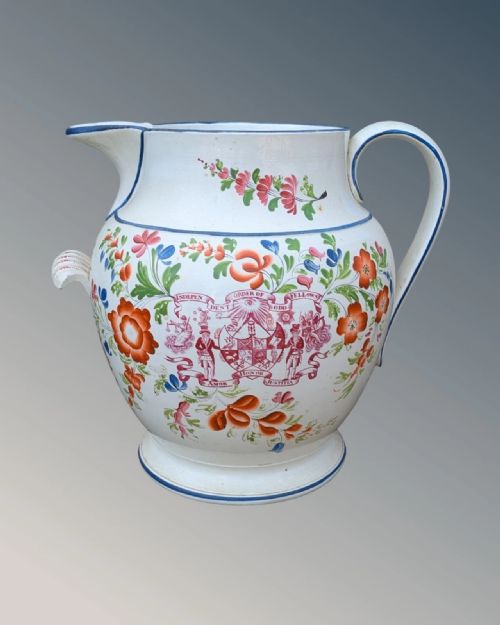

Staffordshire Earthenware Jug
Staffordshire earthenware jug pieces bring spirited character and rich transfer-printed colour into a room, offering both practical service and robust pottery history.
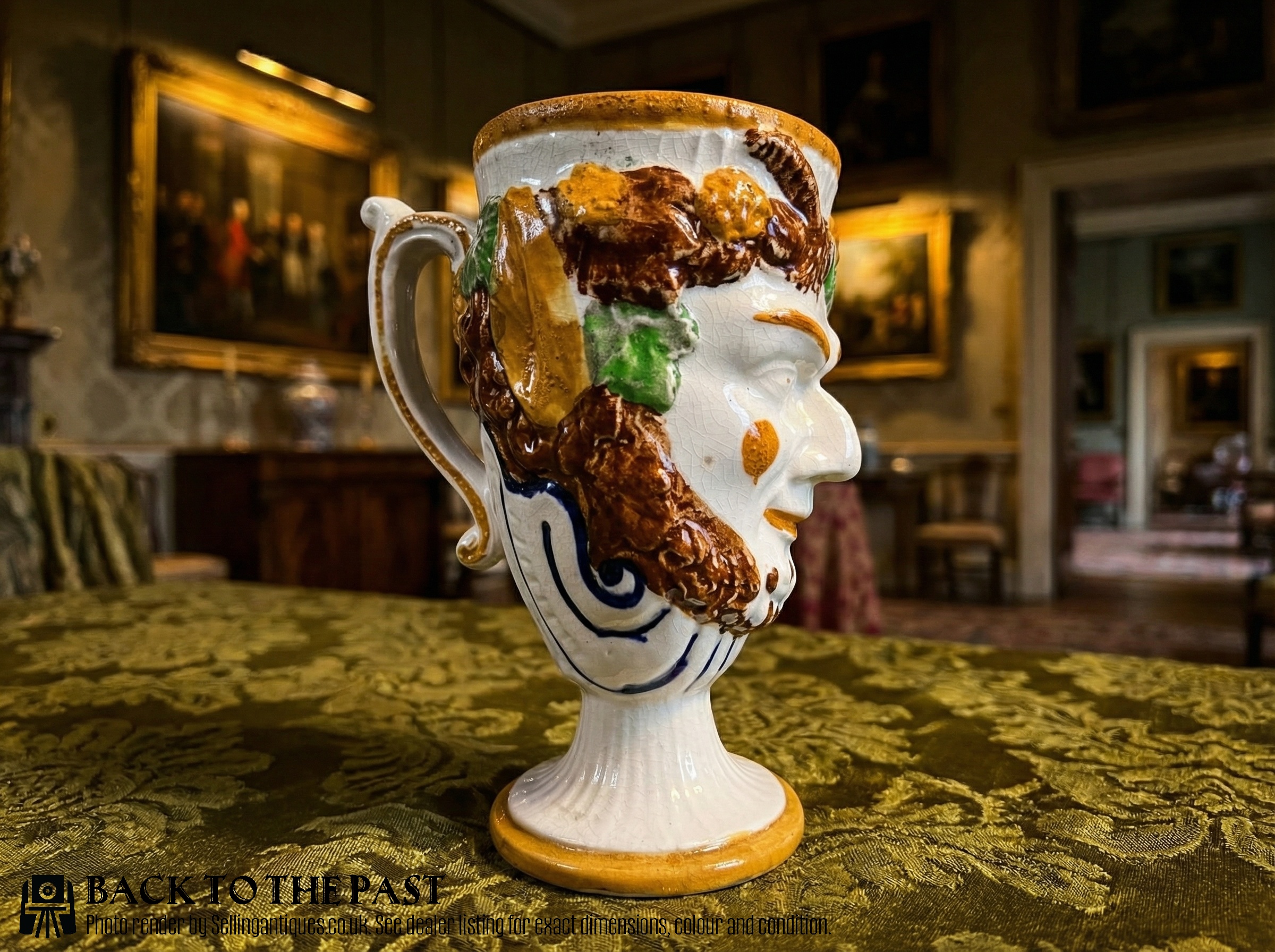
Staffordshire Earthenware Jug
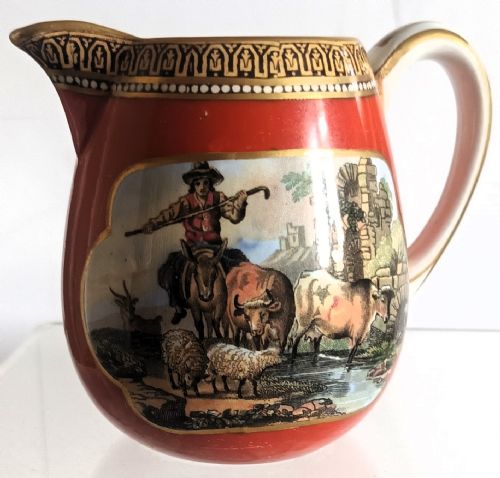
A Staffordshire earthenware jug is a utilitarian vessel transformed into folk art, spanning Georgian and Victorian periods with robust forms. Collectors encounter everything from large commemorative water pitchers to modest cream jugs.
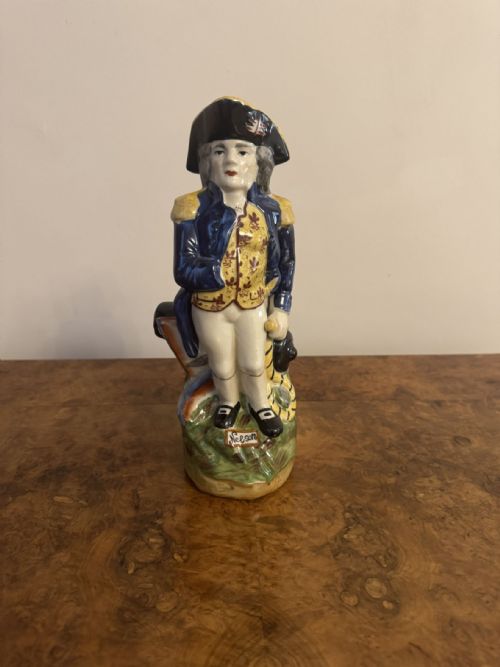
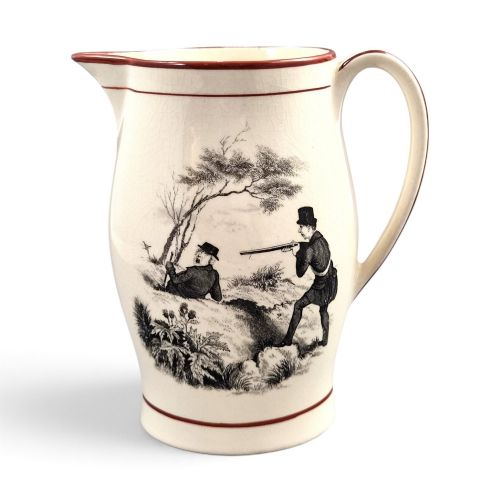
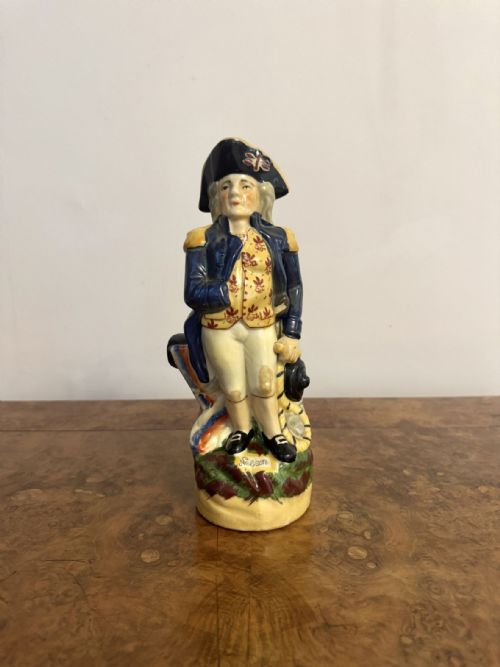
The selection here includes Toby jugs shaped as named figures like Lord Nelson or Mr Snuff, alongside creamware transfer-printed pieces and copper lustre milk jugs. These vessels served domestic and celebratory roles in British homes.
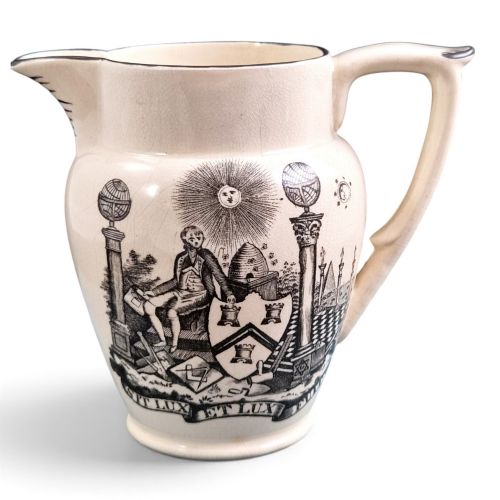
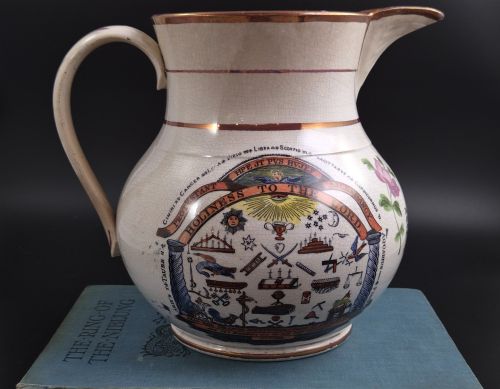
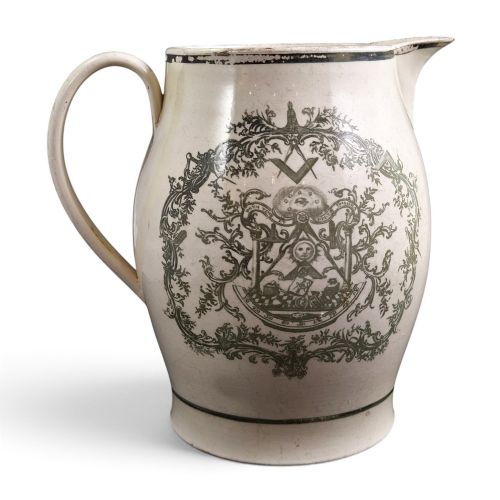
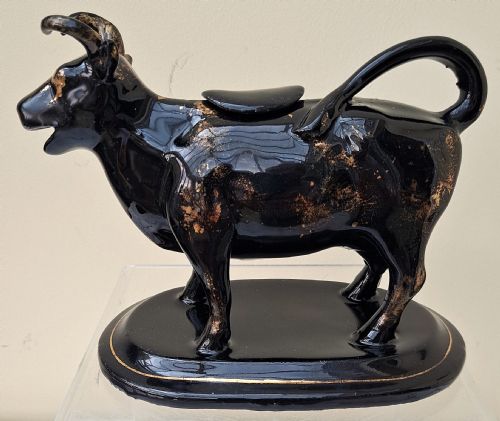
Moulded vessels display diverse regional themes, from Masonic emblems and Orange Order commemoratives to bovine creamers and agricultural scenes. Each period brings distinct decorative choices, moving from pearlware bodies to later glazed majolica.
Materials and Techniques
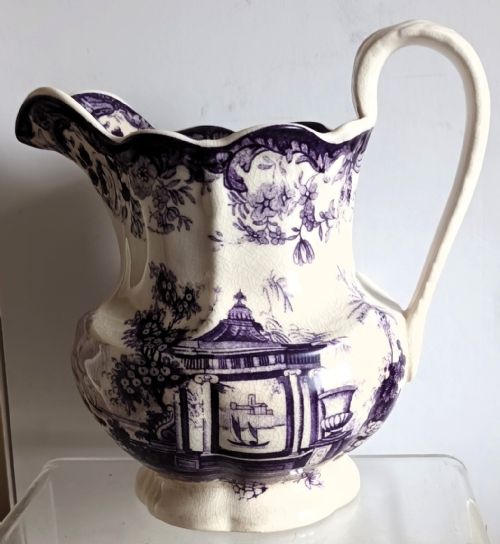
Potters shaped these vessels using earthenware, creamware, and pearlware bodies, often finishing them with clear lead glazes or rich copper lustre. Cobalt oxide provided the deep blue tones found in early transfer-printed examples.
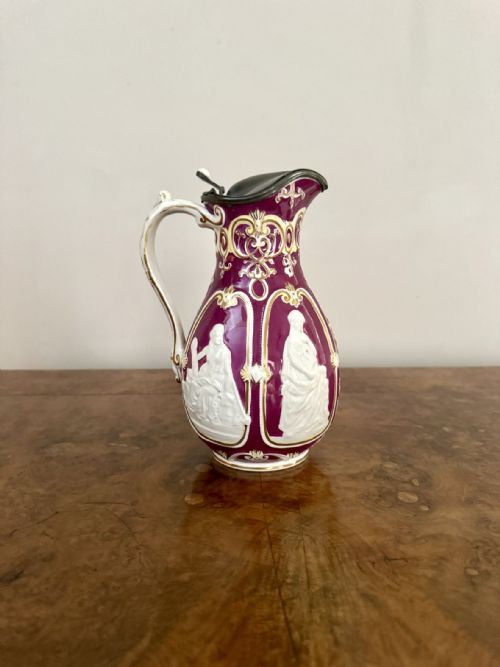
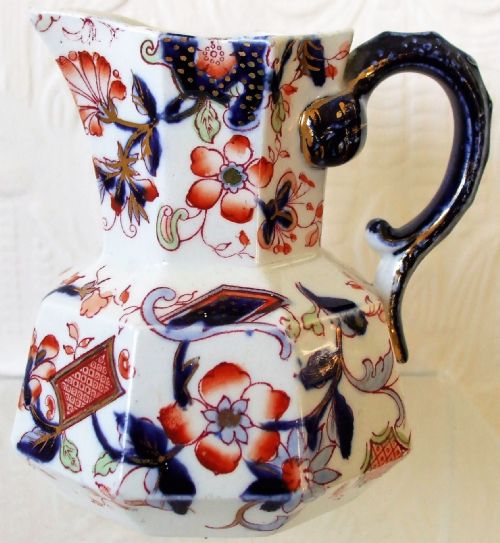
Decoration relied heavily on black, magenta, and polychrome transfer printing, alongside hand-applied enamel colours and cabbage leaf moulding. Some pieces combined relief-moulded figures with faceted bodies and applied pewter lids.
Listings feature pearlware and creamware bodies spanning the Georgian and Victorian eras, alongside glazed earthenware and copper lustre finishes.
Judging Quality
The vibrancy of polychrome enamels and copper lustre glazes distinguishes finer production pieces from standard utility wares. Potteries achieved greater depth through careful firing and controlled glaze application.
Keeling And Co·George Jones
The Staffordshire Earthenware Jug Glossary
- Pearlware
- An improved earthenware body introduced in the late eighteenth century containing a small amount of cobalt. This addition lent the surface a faint bluish tint that made the white glaze appear brighter.
- Transfer printing
- A method of applying detailed designs to pottery from an engraved copper plate via tissue paper. This technique allowed intricate patterns and historical scenes to be reproduced consistently.
- Toby jug
- A pottery jug modelled in the form of a stout, jovial person usually seated and holding a mug or pipe. These figures often depict historical personages or satirical archetypes.
- Copper lustre
- A metallic glaze technique that produces a reflective, coppery sheen across the ceramic surface. Potters achieved this effect by firing metallic oxides in a reduced oxygen atmosphere.
Staffordshire Earthenware Jug: Frequently Asked Questions
What is a Staffordshire earthenware jug?
These pieces are glazed ceramic vessels produced in the Staffordshire potteries for daily use, display, or commemoration. They range from large water pitchers to small cream jugs.
Potters shaped them in diverse styles including pearlware transfer-printed designs, copper lustre finishes, and moulded figural Toby jugs.
How do I date a Staffordshire jug?
Dating relies on identifying ceramic bodies such as creamware, pearlware, or later Victorian earthenware, alongside stylistic clues. Transfer-print subjects and costume details offer further chronological markers.
Early pieces often feature lighter bodies and blue and white printing, while mid-nineteenth-century examples introduce bolder polychrome enamels and majolica glazes.
Were Toby jugs used daily?
While many Toby jugs served practical functions for pouring ale or beverages at table, others functioned primarily as decorative mantelpiece ornaments. Their characterful forms made them popular conversation pieces in homes.
Figural jugs depicting figures like Lord Nelson combined utility with patriotic commemoration.
How do I care for antique earthenware?
Antique pottery benefits from gentle dusting and keeping away from direct sunlight and fluctuating temperatures. Hand washing in lukewarm water without harsh detergents protects fragile glazes.
Avoid immersing pieces with repaired sections or metal lids in water to preserve their structural integrity.