




Earthenware Ceramic Character Jug
An earthenware ceramic character jug captures historical figures and local types in colourful, glazed clay.
Earthenware Ceramic Character Jug
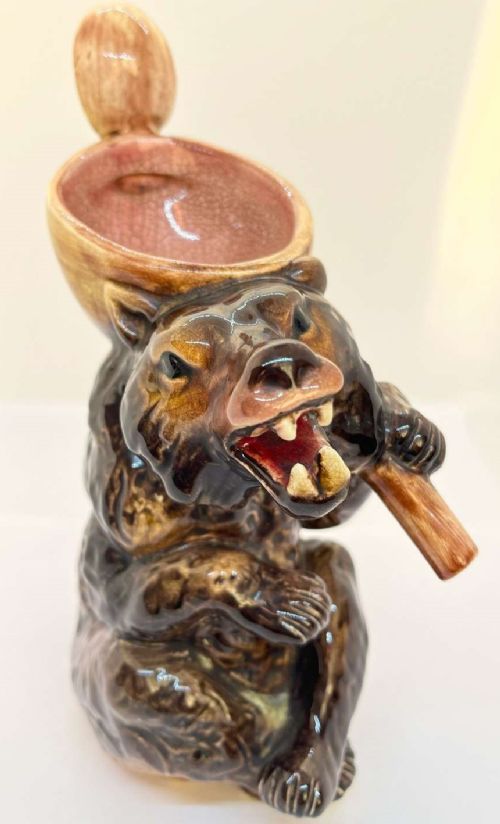
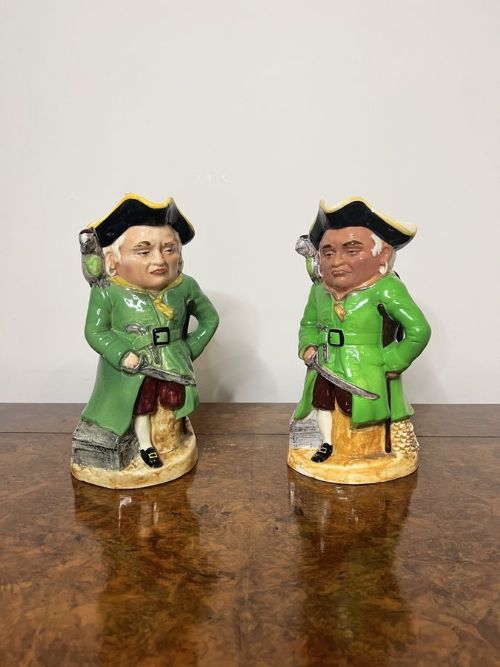
An earthenware ceramic character jug takes the form of a seated figure, a historical commander, an animal, or a mythological subject. These vessels serve practical pouring roles or stand purely as decorative ornaments on a mantelpiece.
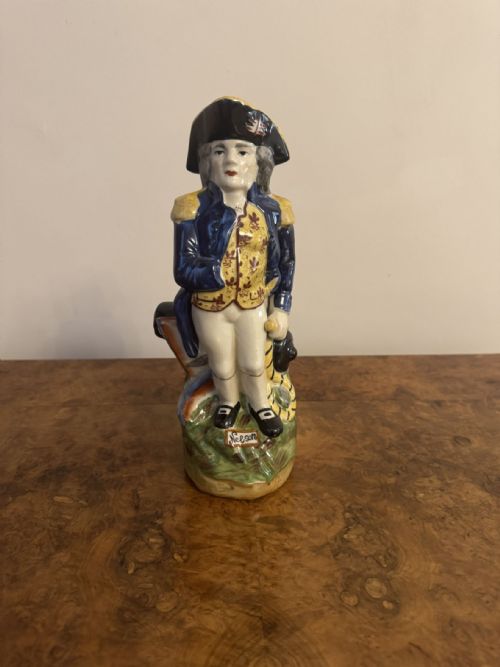
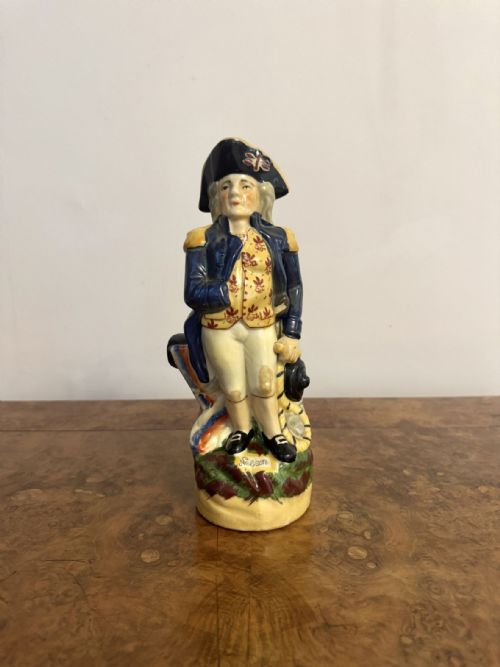
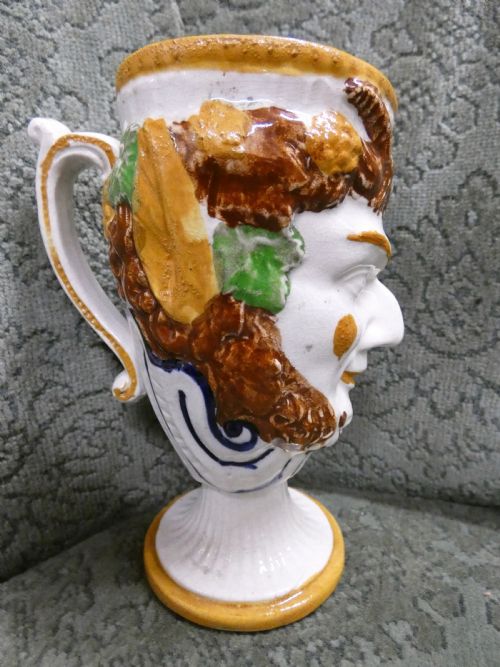
The most common examples on this page are Victorian Staffordshire figures and Toby jugs depicting notable personalities such as Lord Nelson and Lord Kitchener. Potters also modelled traditional characters like the Squire, Mr Snuff, and Bacchus.
Origins span Georgian English potteries and Dutch Delftware workshops, moving through Victorian majolica to Edwardian commemoratives. Forms range from large water jugs down to small pepperpot figures and frog mugs.
How they were made
Potters shaped these earthenware bodies using traditional moulding techniques before applying lead glazes, enamel paints, or tin-glaze tin-lead surfaces. Ceramic glaze seals the porous clay body and provides a glossy protective coating.
Polychrome decoration involves hand-painting pigments directly onto the glazed surface to highlight facial expressions, uniform details, and clothing textures.
The listings here feature earthenware ceramics from the Georgian period through to the First World War, spanning English Staffordshire and Dutch Delftware traditions.
What varies in quality
Early Georgian and Victorian Staffordshire examples show distinct artistic execution in character expression compared to later commercial production.
Holdcroft
The Earthenware Ceramic Character Jug Glossary
- Earthenware
- Porous pottery fired at lower temperatures than stoneware or porcelain. It requires a glaze to hold liquids.
- Lead Glaze
- A glossy surface coating containing lead oxide, commonly used on early pottery to seal the clay. It gives a warm, luminous finish to the colours beneath.
- Majolica
- A colourful Victorian lead-glazed earthenware decorated with vibrant coloured enamel glazes. This style produced robust decorative figures and animal jugs.
- Toby Jug
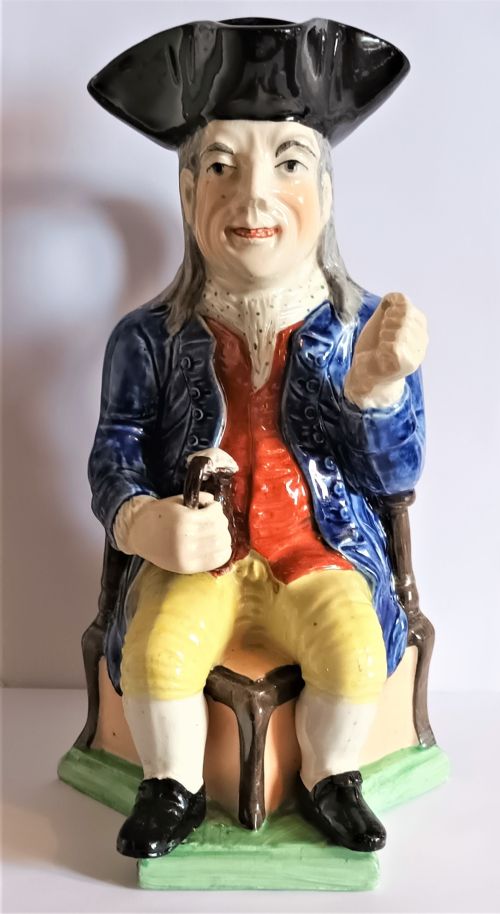
- A seated pottery figure depicted as a robust, smiling individual holding a mug of ale and a pipe. They date primarily from the Georgian and Victorian eras.
- Polychrome
- Decoration employing multiple distinct colours painted onto the ceramic body. This technique brings depth to historical character costumes.
Earthenware Ceramic Character Jug: Frequently Asked Questions
What is a character jug?
A character jug is a ceramic vessel modelled in the shape of a human head, a historical personage, or a traditional figure. These pieces combine sculptural form with a functional pouring spout.
Potters across Staffordshire and the Netherlands produced these vessels to honour military leaders, literary figures, and local archetypes.
How do I date a Staffordshire jug?
Dating relies on stylistic clues, clothing details, and the type of glaze used on the earthenware body. Georgian pieces typically show simpler hand-painting, while Victorian examples often feature brighter majolica glazes.
Historical subjects like Lord Nelson or Lord Kitchener provide useful chronological anchors based on the eras they commemorate.
Were these jugs used for drinking?
Many larger jugs served practical roles for pouring water, ale, or other beverages at the table. Smaller versions and pepperpots functioned as decorative display items.
Frog mugs included a small ceramic frog hidden inside the base to surprise the drinker as the liquid lowered.
What is the difference between a Toby jug and a character jug?
A Toby jug specifically depicts a seated, stout eighteenth-century figure wearing a tricorn hat and holding a jug of beer. Character jugs can represent any person, animal, or historical commander, often showing just the head and shoulders.
Both styles share the same earthenware traditions and colourful hand-painted finishes.