



Glazed Earthenware Mug
These glazed earthenware mug items range from English country pottery and Georgian creamware to commemorative cups and Japanese Sumida Gawa pieces.
Glazed Earthenware Mug
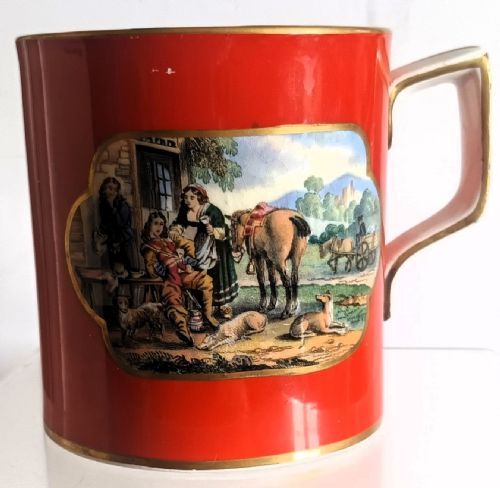
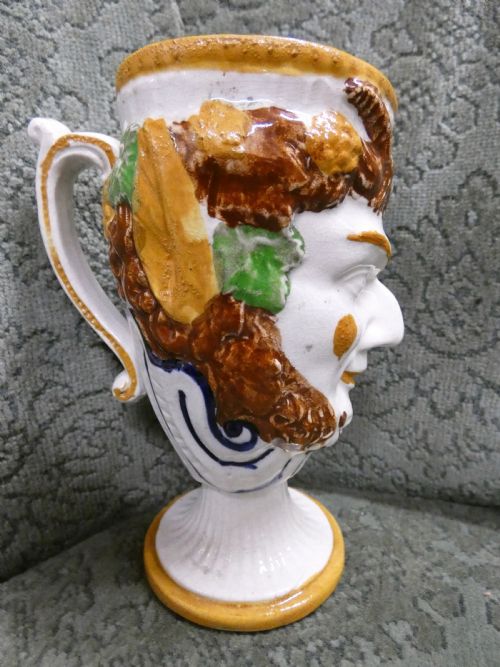
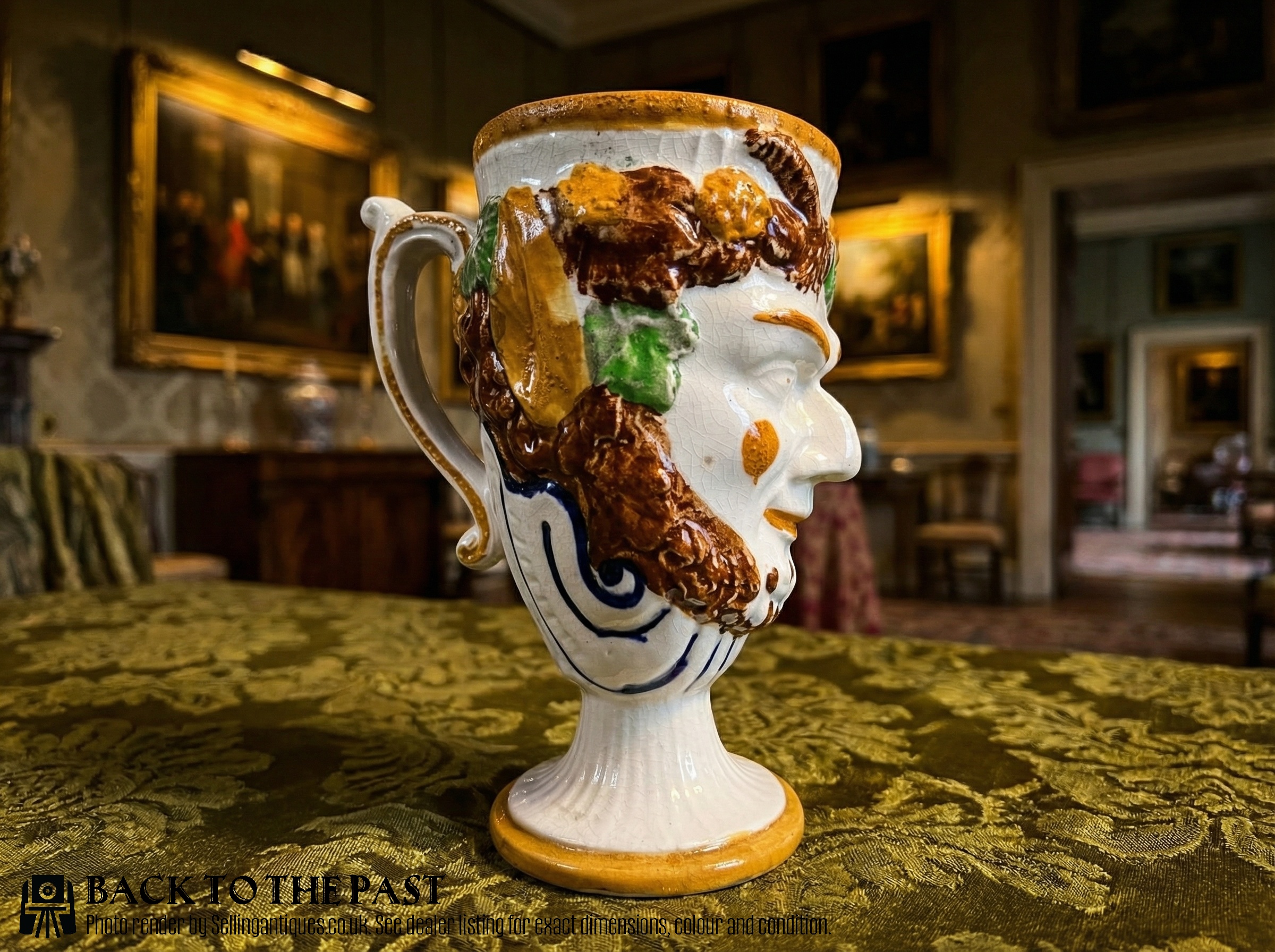
A glazed earthenware mug combines utilitarian drinking vessels with decorative domestic objects spanning the seventeenth century through to the nineteen thirties. Buyers searching for this phrase encounter English Victorian Pratt-ware, Georgian creamware, and Staffordshire frog mugs alongside European beer steins and Japanese Sumida Gawa ceramics.
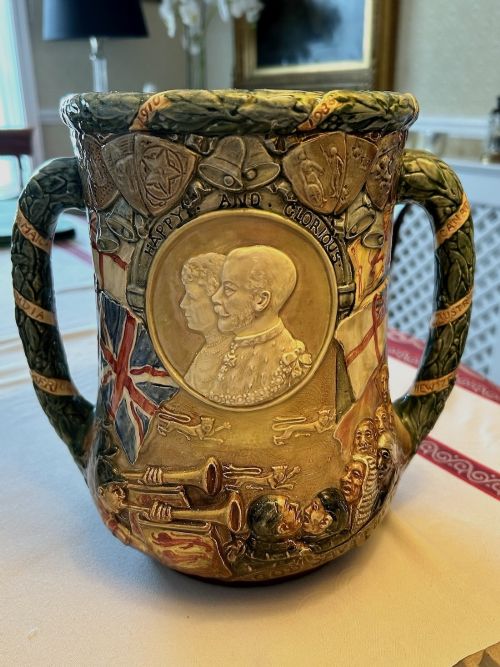
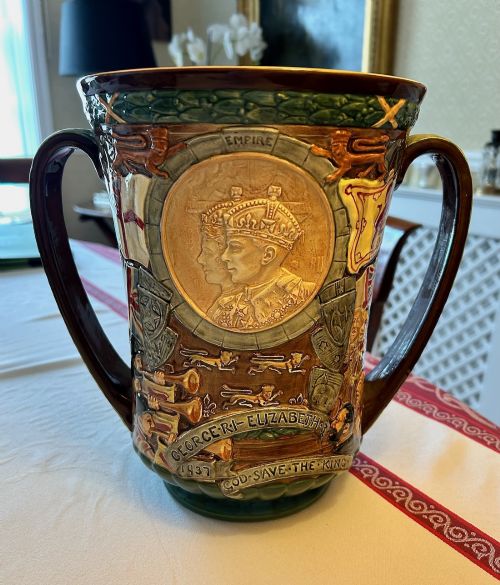
The selection includes commemorative pieces issued for British royal coronations and jubilees, alongside character jugs and ale tankards. Most examples originate from British, German, and Japanese workshops, reflecting diverse regional pottery traditions.
How they were made
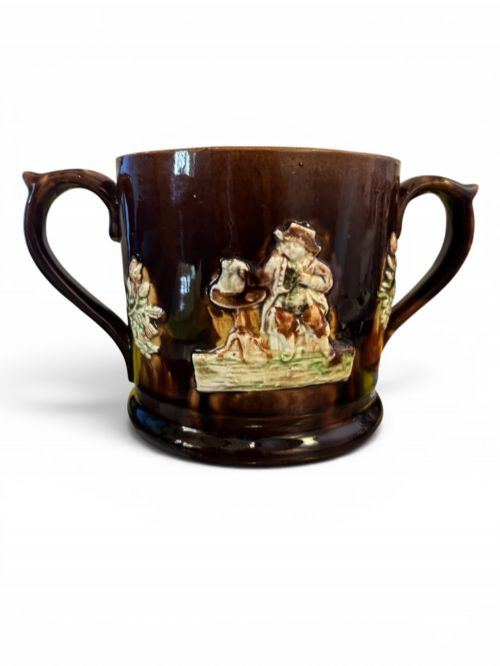
Potters shaped these vessels from earthenware, terracotta, and ceramic bodies, often applying lead glazes, polychrome pigments, or slipware decoration to the surfaces. Some vessels feature applied figures and hand-painted details.
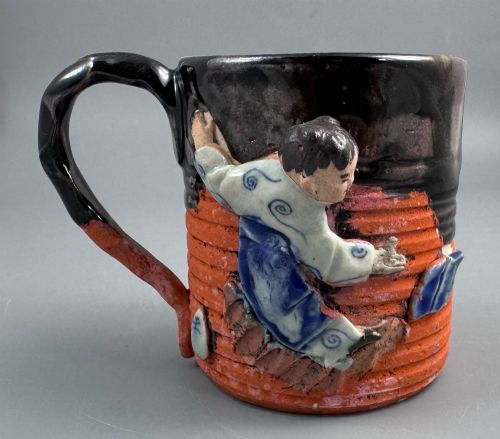
German and English workshops utilised traditional throwing and moulding techniques, while Japanese makers added sculptural figures to the exterior walls of the mugs.
Materials recorded across the inventory include earthenware, terracotta, stoneware, slipware, and lead glaze.
What varies in quality
Quality rests in the crispness of the modelled relief, the control of the glaze application, and the clarity of painted or printed commemorative details. Earlier pieces show the variable characteristics of historic kilns.
Signed Japanese vessels or specific royal commemorative editions demonstrate distinct workshop standards, separating standard utilitarian items from notable collector pieces.
Royal Doulton·Inoue Ryōsai Workshop·Sarreguemines
The Glazed Earthenware Mug Glossary
- Earthenware
- Porous pottery fired at lower temperatures than stoneware or porcelain. It requires a glaze to become impermeable to liquids.
- Slipware
- Pottery decorated with slip, which is a liquid clay mixture applied to the wet body before firing. This technique creates contrasting surface patterns.
- Frog mug
- A drinking vessel featuring a small ceramic frog moulded inside near the rim or bottom. It served as a practical joke drinking item in taverns.
- Creamware
- A refined cream-coloured earthenware developed in eighteenth-century England. It superseded heavier salt-glazed stonewares for table use.
- Stein
- A traditional German drinking vessel usually made of earthenware or stoneware. These items often incorporate hinged pewter lids.
Glazed Earthenware Mug: Frequently Asked Questions
What is a frog mug?
A frog mug is a traditional drinking vessel featuring a small ceramic frog modelled on the inside base or rim. When the drinker finishes the beverage, the hidden frog appears as a surprise.
These novelty items were popular in English taverns during the eighteenth and nineteenth centuries to catch drinkers off guard.
How do I date a commemorative mug?
Commemorative mugs are usually dated by the royal event they celebrate, such as a coronation or jubilee printed on the body. Monarchs like King George V, Queen Victoria, and Tsar Nicholas II appear on pieces from their respective periods.
Stylistic details, pottery bodies like creamware or Pratt-ware, and maker marks help confirm the manufacturing era.
Are these mugs safe for drinking?
Historic glazed earthenware mugs often contain lead glazes and porous bodies that absorb liquids over time. They are intended primarily for display and collection rather than daily beverage consumption.
Changes in historic manufacturing standards mean older ceramics should be treated as decorative objects.
What is Sumida Gawa pottery?
Sumida Gawa pottery refers to Japanese ceramics produced in the Tokyo area during the Meiji and Taishō periods. These pieces are recognised by their heavily textured glazes and applied sculptural figures.
Workshops such as that of Inoue Ryōsai created distinctive mugs and vessels featuring characters like Sennin and Karako.