
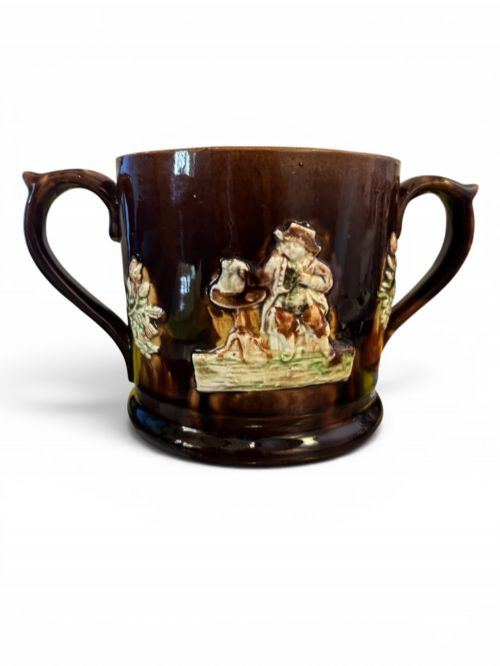


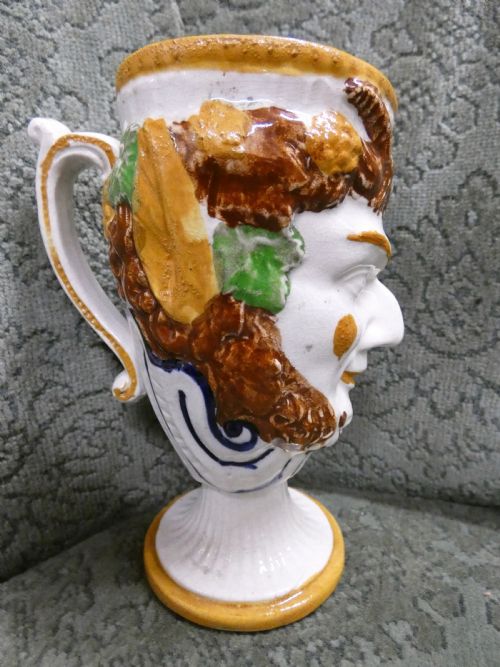
Staffordshire Frog Mug
These Staffordshire frog mug pieces are drinking vessels featuring a hidden ceramic creature inside, built for the tavern.
What a Staffordshire frog mug is
A Staffordshire frog mug is a drinking vessel designed to surprise the drinker as the liquid lowers and a ceramic creature emerges. These pieces generally take the form of mugs, tankards, and loving cups with single or double handles.
The versions most commonly met span the nineteenth and eighteenth centuries, reflecting Georgian and Victorian periods of English country pottery. Formats range from hand-painted pearlware to transfer-printed earthenware decorated with hunting scenes, poems, names, and dates.
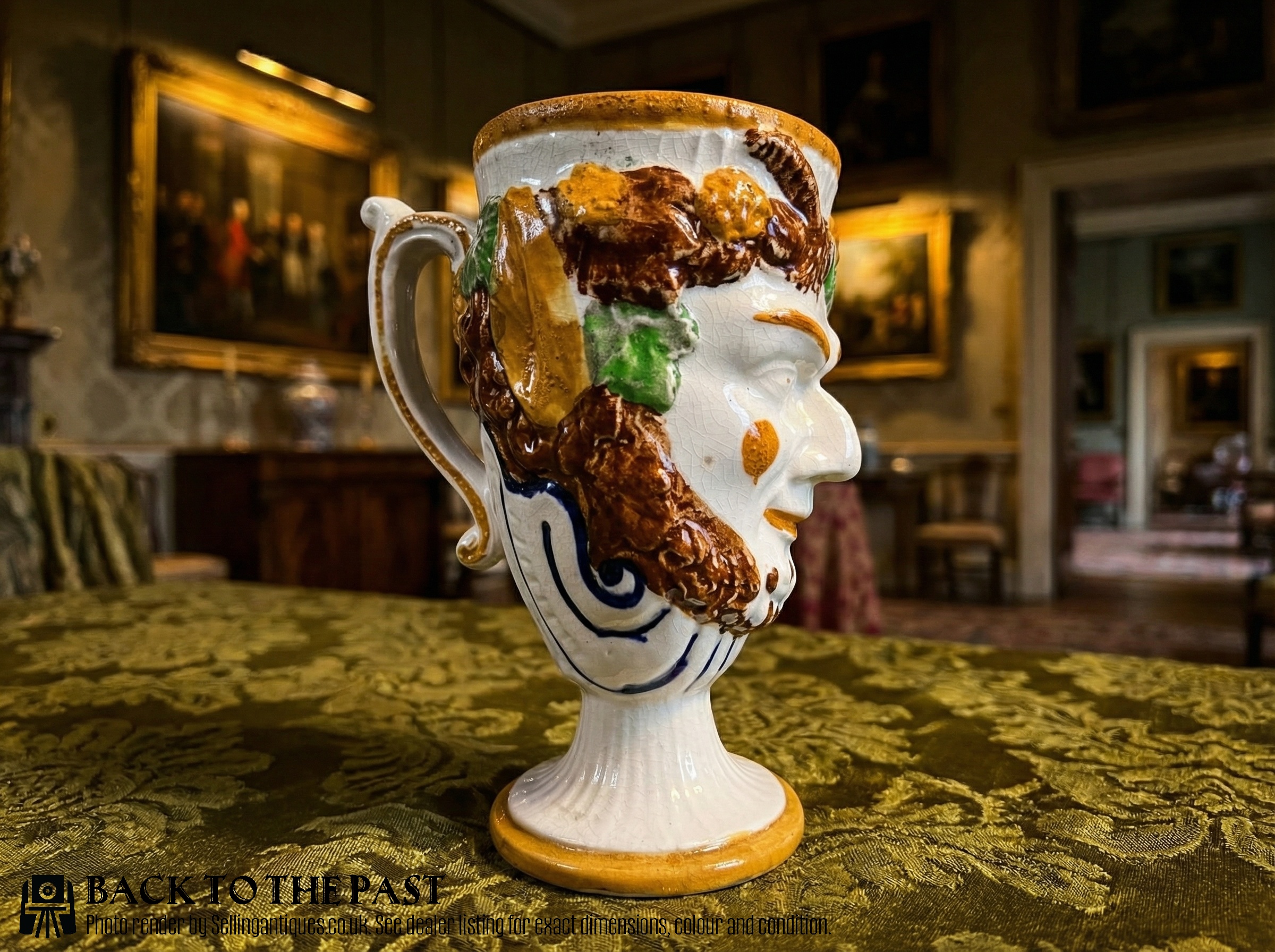
Makers produced variants featuring frogs, newts, and even Bacchus satyr figures inside the base. Some examples include specific inscriptions or dates, while others display blue, black, mulberry, or treacle glazes.
How they were made
Potters shaped these items from earthenware and pearlware, applying ceramic glazes, lead glazes, and pearlware glazes to seal the porous body. The interiors conceal modelled frogs or newts attached during construction, designed to emerge as the drink is consumed.
Decoration relied on hand-painting or transfer printing in blue, black, or mulberry tones. Specific pieces also incorporated names, dates, poems, and hunting scenes applied directly to the ceramic surface before firing.
Retail Price Guide 2026
Typical UK retail prices for staffordshire frog mug, calculated from the Sellingantiques database of over a million retail prices indexed since 2003. This retail price guide relies exclusively on Sellingantiques data; no external sources or auction records are used, so the figures do not describe the wider market.
The listings span the eighteenth and nineteenth centuries, featuring earthenware, pearlware, and lead glaze.
What varies in quality
Quality rests upon the crispness of the transfer print or the precision of the hand-painted details. Finer vessels show clear articulation in the modelling of the internal frog or newt, rather than a crude lump of clay.
The variety of the glaze application separates standard production from superior examples. Smooth, even lead or pearlware glazes without excessive pooling elevate the visual weight of the piece.
The Staffordshire Frog Mug Glossary
- Pearlware
- A refined earthenware developed in the eighteenth century featuring a subtle blue-tinted glaze over a white body. This material forms the base of many painted frog mugs.
- Transfer printing
- A decoration technique where an engraved metal plate transfers a design onto paper and then onto the ceramic body. This method allowed intricate hunting scenes and poems to cover the mug surface.
- Loving cup
- A large drinking vessel typically fitted with two or more handles for passing between drinkers. These appear frequently in larger formats alongside standard mugs.
- Lead glaze
- A glossy coating containing lead oxide applied to earthenware to create a waterproof surface. It gives the pottery a characteristic shine.
- Bacchus satyr
- A mythological figure associated with wine and revelry, used to shape the bodily form of specific drinking vessels. These figural pieces combine the face of Bacchus with the internal surprise frog.
Frequently Asked Questions
What is a staffordshire frog mug?
A Staffordshire frog mug is a traditional drinking vessel featuring a small ceramic frog or newt modelled inside the bottom. As the drinker finishes their beverage, the creature appears as a surprise.
These pieces date across the eighteenth and nineteenth centuries, appearing in earthenware and pearlware with hand-painted or transfer-printed decoration.
How were frog mugs used?
These mugs served as novelty drinking vessels in taverns and social gatherings during the Georgian and Victorian eras. The hidden creature was intended to startle or amuse the drinker.
Two-handled loving cups and tankards allowed the vessels to be passed safely between companions during communal toasts.
What materials are frog mugs made from?
Makers constructed these vessels from local clays finished as earthenware or pearlware. The surfaces were sealed using lead glazes, ceramic glazes, or pearlware glazes.
Decoration was applied through hand-painting or transfer printing in blue, black, or mulberry tones.
How do I date a frog mug?
Dating relies on stylistic markers, materials, and specific decorative techniques recorded across the eighteenth and nineteenth centuries. Pearlware bodies and specific transfer-printed scenes often point toward the nineteenth century.
Some items include painted names and dates that provide a direct point of origin.
What styles do frog mugs come in?
Surviving examples reflect Georgian and Victorian aesthetics within English country pottery traditions. Decoration ranges from hunting scenes and poems to figural Bacchus satyr designs.
Glazing styles vary from standard clear lead finishes to deep treacle glazes.