




Surprise Frog Mug
These surprise frog mugs are traditional ceramic drinking vessels featuring a hidden amphibian inside, designed to startle the drinker.
Surprise Frog Mug
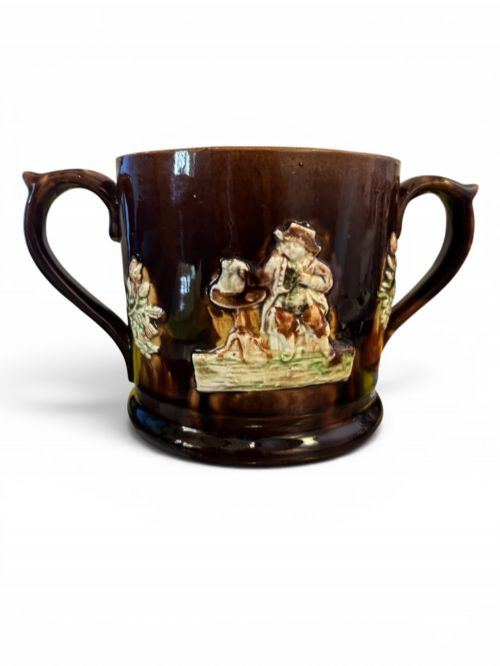
A surprise frog mug is a traditional drinking vessel designed to startle the drinker when they reach the bottom of their drink and reveal a ceramic amphibian inside. These pieces span the eighteenth and nineteenth centuries, taking the form of mugs, tankards, and loving cups.
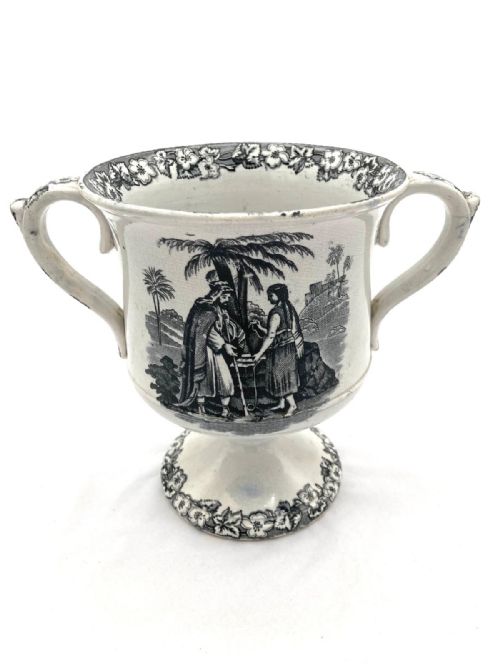
You are most likely to meet nineteenth-century examples on this page, including pearlware loving cups and transfer-printed mugs featuring frogs and newts. Georgian and Victorian pieces often incorporate handles, poems, or specific names and dates.
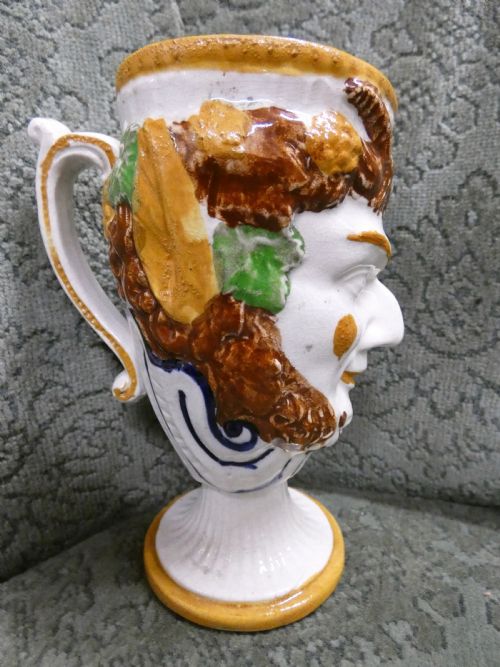
Originating within English country pottery traditions, some variations also emerge from Staffordshire or potentially Welsh potteries. Forms range from standard single-handled mugs to substantial two-handled pedestal loving cups.
How they were made
Potters shaped these vessels from earthenware and pearlware, applying ceramic glaze to seal the clay body before decoration. The hidden frogs and newts were modelled separately and fixed to the interior base before glazing and firing.
Decoration relied on hand-painted pigments, enamel work, and transfer printing in black, blue, and mulberry tones. Some finer examples incorporated gold leaf detailing alongside inscriptions, names, dates, and moral verses.
Listings feature earthenware and pearlware bodies decorated with transfer printing, enamel, and hand-painted glaze.
What varies in quality
The refinement of the modelling inside the vessel determines much of the character, distinguishing a simple moulded creature from a carefully hand-painted frog or newt. Surface decoration also varies significantly, ranging from straightforward transfer printing to detailed hand-painted polychrome scenes.
The complexity of the ceramic body itself plays a role, with two-handled loving cups and pedestal forms requiring greater skill from the potter than a standard single-handled mug. Early pearlware bodies and the crispness of transfer-printed hunting scenes further separate ordinary examples from more ambitious pieces.
The Surprise Frog Mug Glossary
- Pearlware
- A refined earthenware developed in the eighteenth century, characterised by a faint bluish tint in the glaze. This material provided a smoother surface for transfer printing and hand-painted decoration.
- Loving cup
- A large drinking vessel featuring two or three handles, designed to be passed among companions at social gatherings. These pieces often commemorate specific dates, names, or events.
- Transfer printing
- A decoration technique where an engraved copper plate transfers a design onto paper, which is then stamped onto the ceramic surface before glazing. This method allowed for intricate hunting scenes and printed poems.
- Staffordshire
- A major English pottery region known for producing diverse earthenware figures, mugs, and decorative ceramics. Pieces attributed to this area often display distinctive regional modelling and glazing styles.
Surprise Frog Mug: Frequently Asked Questions
What is the point of a surprise frog mug?
These vessels were humorous drinking cups used in taverns and social gatherings during the Georgian and Victorian periods. As the drinker finished their ale, a ceramic frog emerged from the liquid to startle them.
Hosts used them for drinking games and practical jokes among friends. The surprise added an element of amusement to communal toasts.
How do I date a surprise frog mug?
Dating relies on the ceramic body, decorative technique, and any inscriptions present on the piece. Earlier examples utilise eighteenth-century pearlware and hand-painted details, while mid-nineteenth-century pieces often feature transfer printing.
Specific dates, names, and poems written on the mug provide direct evidence of its creation period. Stylistic shifts from Georgian simplicity to Victorian polychrome decoration also help determine the age.
What styles of decoration appear on these mugs?
Decoration varies from hand-painted pearlware to detailed transfer printing in black, blue, and mulberry tones. Common motifs include hunting scenes, poems, and names alongside the characteristic interior frog or newt.
Some pieces incorporate multicoloured enamels and gold leaf highlights. The exterior often displays traditional country pottery aesthetics alongside these applied narratives.