
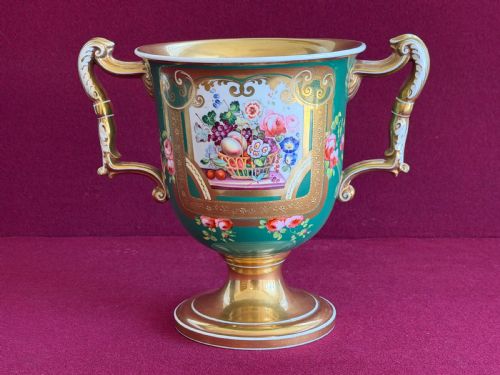


Hand Painted Loving Cup
A hand painted loving cup is a two-handled ceramic vessel made for sharing, offering tactile history and vibrant hand-applied decoration.
Hand Painted Loving Cup
When you search for a hand painted loving cup, you encounter traditional two-handled drinking vessels created across the nineteenth and early twentieth centuries. These ceramics range from standard loving cups and commemorative pieces down to miniature tygs, reflecting both functional origins and cabinet display purposes.
The pieces on this page span the Regency, Victorian, and Edwardian eras, alongside production from around 1900 to 1920. You find earthenware and pearlware bodies alongside fine porcelain, often carrying specific regional or factory attribution.
Examples include named works from makers such as H & R Daniel and Royal Worcester, as well as distinct regional pottery such as Scottish Wemyss wares and Welsh earthenware. The form remains consistent through these periods: a central body flanked by two or three handles designed for communal passing.
How they were made
Potters shaped these vessels in porcelain, earthenware, or pearlware glaze, building the characteristic two-handled or multi-handled profile by hand or mould. Artisans then applied enamel paints directly onto the ceramic body before firing.
Makers finished many of these decorative vessels with gilding and gold leaf accents to highlight rims, handles, and painted motifs. Specialised techniques produced distinctive surfaces such as the blush ivory finishes seen in later Royal Worcester pieces.
Listings feature pieces spanning the Regency, Victorian, and Edwardian periods, executed in porcelain, earthenware, and pearlware.
What varies in quality
Quality rests in the crispness of the hand-painted decoration and the precision of the enamel work across the ceramic surface. Finely executed botanical or commemorative scenes on porcelain command greater attention than simple utilitarian earthenware.
The distinction also lies in the factory origin and the preservation of delicate elements like gold leaf gilding and multi-handled structures. Earlier Regency and Victorian examples show individual artisan handiwork that separates standard production from notable named manufactories.
H & R Daniel·Royal Worcester·Wemyss
The Hand Painted Loving Cup Glossary
- Loving cup
- A large drinking vessel with two or more handles, traditionally passed around a group for communal toasts. These pieces often feature hand painted decoration or commemorative inscriptions.
- Tyg
- A thick-walled drinking vessel with three or more handles, allowing multiple people to hold the cup securely without touching the same section. Mini tygs serve as small decorative cabinet examples.
- Pearlware
- A fine earthenware developed in the late eighteenth century featuring a subtle bluish glaze that pools in crevices. This material provides a pale background for hand painted designs.
- Blush ivory
- A matte cream-coloured ceramic ground developed by Royal Worcester, often decorated with soft floral hand painting and gold leaf. It creates a warm, textured surface quality.
- Gilding
- The application of gold leaf or gold paint to ceramic surfaces to accent handles, rims, and painted details. This technique adds reflective contrast to the fired enamel colours.
Hand Painted Loving Cup: Frequently Asked Questions
What is a loving cup?
A loving cup is a two-handled ceramic vessel traditionally passed between guests during celebrations and toasts. The multiple handles allowed people to hold the cup safely with both hands while sharing.
Over time, these vessels transitioned from functional drinking objects into decorative display items and commemorative pieces. Hand painted examples often marked coronations, weddings, or family milestones.
How do I date a loving cup?
Dating relies on identifying the ceramic body, glaze type, and factory marks stamped or painted on the base. Pearlware glazes and specific painting styles point toward the early nineteenth century, while blush ivory finishes indicate later Edwardian production.
Stylistic cues such as Victorian floral motifs or specific commemorative dates also help narrow down the period. Comparing the weight and handle construction against known factory standards clarifies the era.
How were mini tygs used?
Mini tygs are smaller multi-handled versions of standard drinking vessels created primarily for cabinet display rather than actual use. Makers produced these miniature ceramics to showcase painting skill and pottery techniques on a small scale.
Collectors placed them on mantelpieces and shelves alongside larger decorative ceramics. Their multiple handles mirror full-sized loving cups in miniature form.
How do I display a ceramic loving cup?
Display these vessels in secure cabinets or on stable shelves where the hand painted details catch natural light. Position the cup so the primary painted scene faces outward while the multiple handles remain visible.
Keep ceramics away from direct sunlight to preserve the vibrancy of enamel paints and gold leaf gilding. Ensure the display surface is firm to protect the projecting handles from accidental knocks.