



Two Handled Mug
When you search for two handled mug, you encounter drinking vessels designed for sharing, featuring dual handles and often concealing a whimsical ceramic creature within.
Two Handled Mug
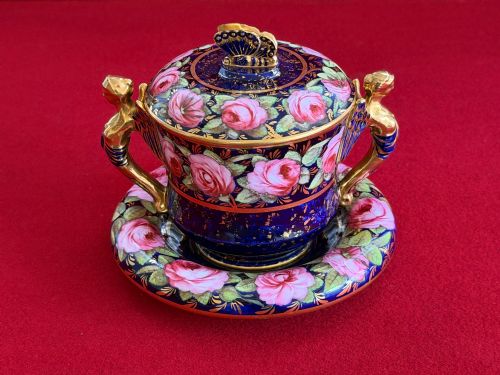
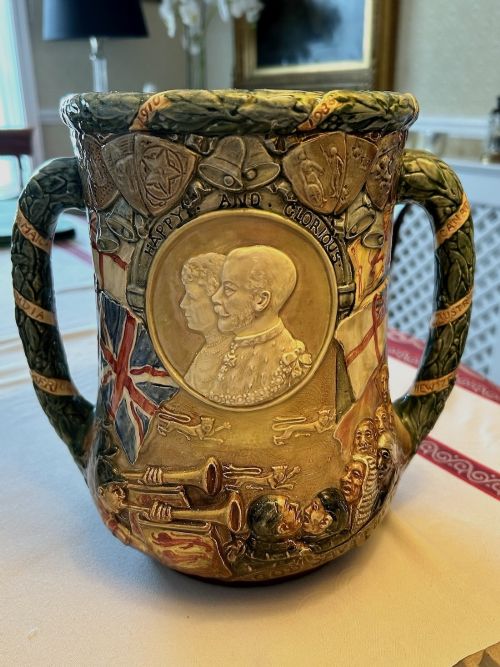
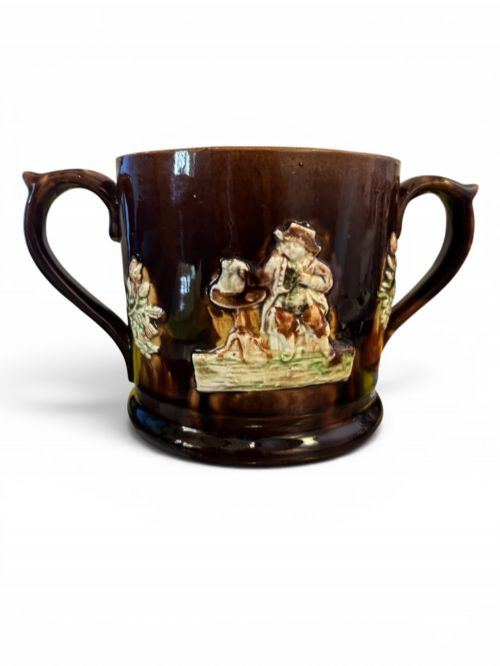
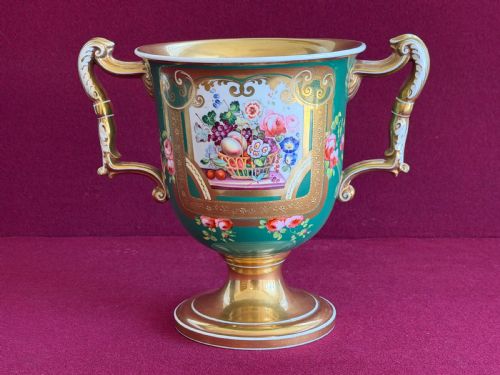
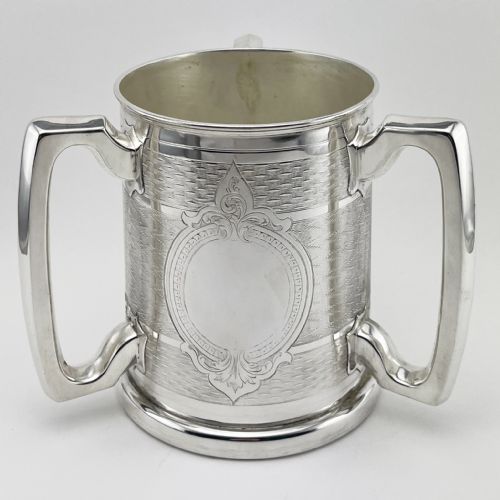
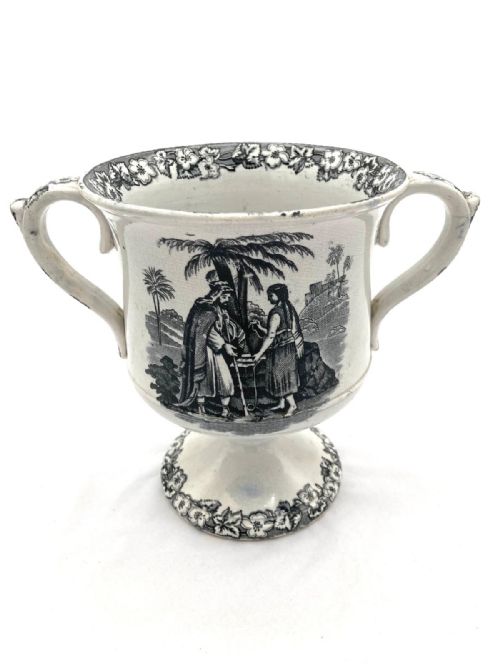
A two handled mug takes the form of a loving cup, harvest cup, or tankard, fashioned to be passed among companions during communal toasts and celebrations. The examples found here span the eighteenth, nineteenth, and early twentieth centuries, encompassing Georgian, Regency, and Victorian aesthetics alongside later commemorative pieces.
You meet earthenware, pearlware, and porcelain vessels bearing transfer-printed hunting scenes, hand-painted floral motifs, or commemorative inscriptions. Many nineteenth-century specimens incorporate interior ceramic frogs and newts designed to surprise the drinker as the liquid recedes.
Materials and technique
Potters shaped these vessels from ceramic bodies including porcelain, pearlware, and robust earthenware, applying fluid glazes to seal the porous clay. Decoration relied on hand-painting or transfer printing in black, blue, and polychrome mulberry pigments, occasionally heightened with gilding or gold leaf.
Makers formed handles separately before attaching them firmly to the body prior to firing. Interior surprises such as frogs and newts were modelled by hand and positioned inside the base before the final glaze and kiln cycle.
Listings feature pearlware, porcelain, and earthenware bodies decorated with transfer printing, hand-painting, and gilding.
Quality and execution
Quality rests in the crispness of the transfer printing or the precision of the hand-painted brushwork, distinguishing neatly rendered hunting scenes and floral sprays from blurred or hasty decoration. The crispness of modelled interior figures and the even application of glaze across complex handle attachments also mark superior production.
The sophistication of the ceramic body itself sets pieces apart, moving from utilitarian earthenware towards refined porcelain bodies. Balance in the dual handles and proportion in the pedestal foot contribute to the visual weight of the vessel.
Spode·H and R Daniel·Royal Doulton·Wemyss·Royal Worcester
The Two Handled Mug Glossary
- Loving cup
- A large drinking vessel equipped with two or three handles, designed to be passed around a company during toasts.
- Pearlware
- A refined earthenware developed in the late eighteenth century featuring a subtle bluish glaze that pooled in recesses to mimic Chinese porcelain.
- Transfer printing
- A method of applying detailed designs to ceramics by pressing paper engraved with metallic oxides onto the biscuit or glazed surface.
- Polychrome
- Decoration employing multiple distinct colours, frequently applied by hand over or under the glaze to enliven floral and figural subjects.
- Frog mug
- A drinking vessel containing a small ceramic frog modelled inside the base to emerge as the beverage is consumed.
Two Handled Mug: Frequently Asked Questions
What is a two handled mug used for?
These vessels served as communal drinking cups for ale, cider, or wine at gatherings, weddings, and harvest celebrations. Passing the cup required two hands, symbolising trust and fellowship among companions.
Later examples often commemorated royal jubilees, coronations, and historical events rather than serving everyday table use. Their substantial size accommodated shared toasts across a room or table.
Why do some mugs have frogs inside?
Potters placed ceramic frogs or newts inside the bottom of the mug as a drinking joke or surprise for the unsuspecting guest. As the drinker finished the ale, the creature appeared to leap from the liquid.
This playful element was particularly popular on nineteenth-century tavern and harvest cups. The surprise added amusement to drinking games and communal gatherings.
How do I date a two handled mug?
Dating relies on stylistic clues, ceramic bodies, and specific commemorative inscriptions or transfer-printed themes. Early pieces utilise pearlware and creamware bodies with hand-painted or simple transfer designs.
Later Victorian and Edwardian examples show denser floral painting, silver rims, or specific royal jubilee markers. Maker marks on the base, when present, provide definitive production periods.
Are these mugs safe to drink from?
While historic ceramic vessels held beverages in the past, antique pieces often display hairline cracks, crazing, or old repairs that make regular use impractical. Older glazes may also contain lead or other substances unsuited for modern consumption.
Collectors generally treat these items as display pieces rather than functional drinkware. Gentle dusting preserves the delicate transfer printing and hand-painted surfaces.