


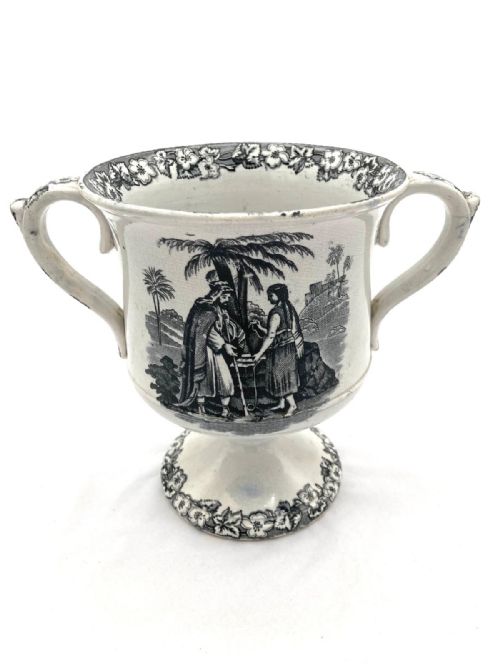


Victorian Earthenware Mug
A victorian earthenware mug brings robust English pottery tradition straight to your shelf.
Victorian Earthenware Mug
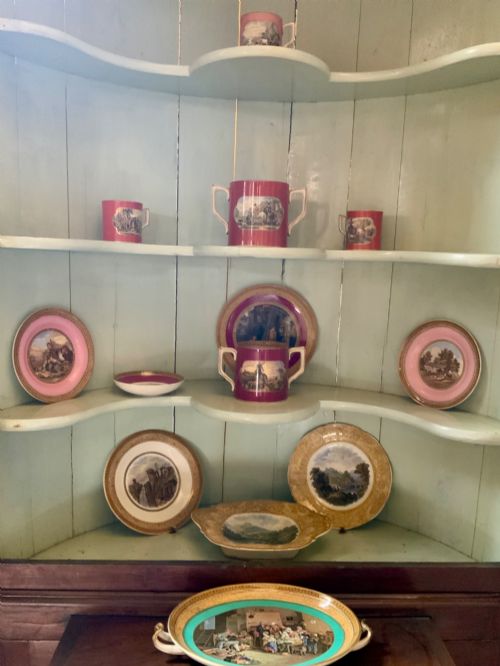
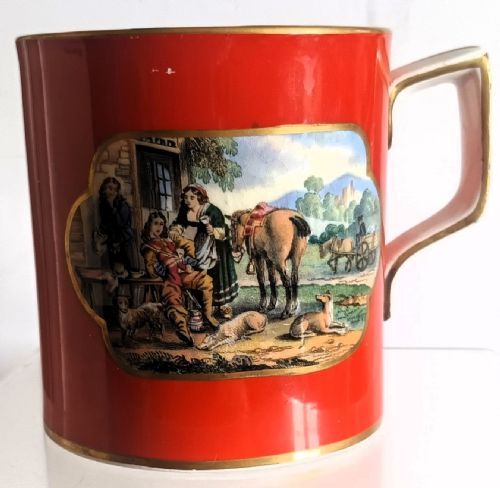
You are most likely to meet pieces decorated with transfer printing or hand-painted details, often incorporating local scenes, poems, or animal motifs. These ceramics reflect the everyday drinking habits and decorative tastes of the Victorian period.
Many of the earthenware mugs on this page date from the mid-nineteenth century, while others reach back into earlier traditions or extend to the 1880s. Alongside standard drinking mugs, you find specialised forms like frog mugs designed to surprise the drinker.
Materials and methods
Potters shaped these vessels from earthenware clay, applying glazes to seal the porous body for practical use. The surfaces then received decoration through ceramic glazes, enamel colours, and transfer printing techniques.
Makers added finishing touches such as gilt or gold leaf to highlight rims and handles on finer vessels. Monochrome and multicoloured transfers brought complex hunting scenes, poems, and alphabet designs to the pottery surface.
The listings show nineteenth-century earthenware decorated with black and white transfer printing, polychrome enamels, and gold leaf.
Distinguishing quality
The division between standard domestic ware and finer pieces rests on the crispness of the transfer print and the skill of the hand-painting. Potters who applied careful polychrome enamels or detailed gilding produced vessels of greater visual ambition.
Specialised forms such as institutional tankards or mugs with interior novelty figures demonstrate higher production effort than basic utilitarian vessels. The inclusion of personalized inscriptions, school connections, or detailed poems elevates a piece above everyday manufacture.
Copeland
The Victorian Earthenware Mug Glossary
- Earthenware
- Porous pottery fired at lower temperatures than stoneware or porcelain. It requires a vitreous glaze to hold liquids effectively.
- Transfer printing
- A decoration technique where an engraved copper plate transfers an ink design onto tissue paper, which is then pressed onto the ceramic body before glazing.
- Loving mug
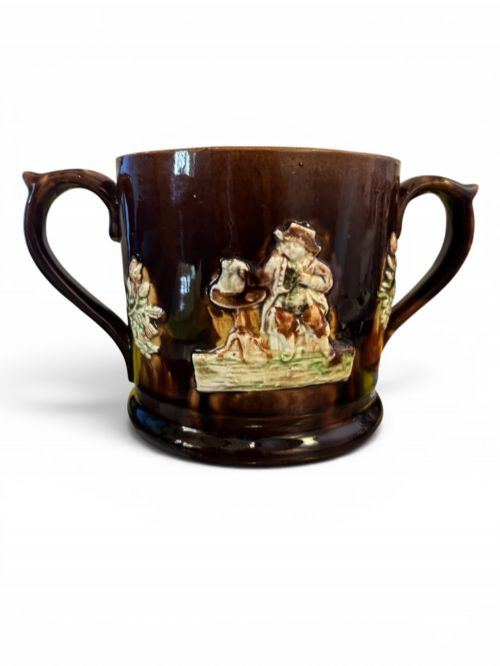
- A large drinking vessel featuring two or three handles, designed to be passed among companions at communal gatherings.
- Frog mug
- A novelty drinking vessel featuring a small ceramic frog moulded inside the base, designed to surprise the drinker as the liquid empties.
- Gaudy Welsh
- A brightly coloured style of Staffordshire pottery featuring cobalt blue, copper lustre, and iron-red enamel, popular in the nineteenth century.
Victorian Earthenware Mug: Frequently Asked Questions
What is a frog mug?
A frog mug is a traditional drinking vessel featuring a small ceramic frog moulded inside the bottom of the mug. As the drinker finishes the beverage, the hidden frog appears as a practical joke.
These novelty mugs date primarily to the eighteenth and nineteenth centuries and were popular in taverns and social gatherings across England.
How do I date a Victorian mug?
Dating these ceramic pieces relies on stylistic cues, manufacturing techniques, and any inscribed dates or historical references. Transfer printing styles and colour palettes also help narrow down the production era within the nineteenth century.
Many pieces carry specific decade markers or reflect Victorian design trends such as transfer-printed animal alphabets and nursery rhymes.
Were these mugs used for daily drinking?
Many of these earthenware vessels served practical functions for ale, beer, or everyday household liquids in the nineteenth century. Larger two-handled loving cups and school tankards often commemorated specific institutions, schools, or social events.
Over time, many decorative mugs transitioned from functional tavern use to display pieces on collector shelves.
How should I display earthenware mugs?
Displaying antique earthenware requires stable shelving away from direct sunlight and high-traffic areas where handles might suffer knocks. Because earthenware is porous beneath the glaze, keeping pieces in dry indoor conditions protects the ceramic body.
Grouping mugs by their transfer prints, such as hunting scenes or nursery alphabets, highlights the variety of nineteenth-century decoration.