
Antique Ceramic Cup
When you handle an antique ceramic cup, you hold centuries of refined firing techniques and domestic social history in the palm of your hand.
Antique Ceramic Cup
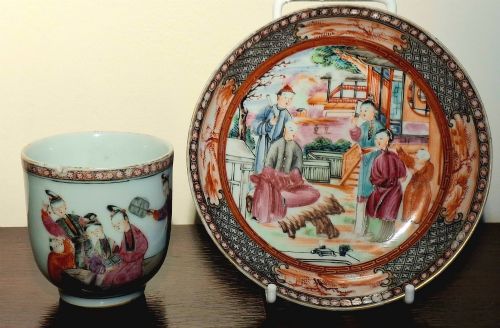
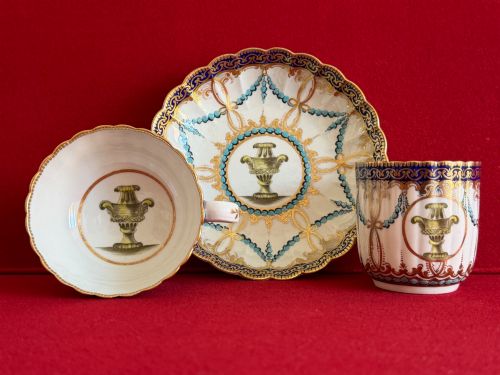
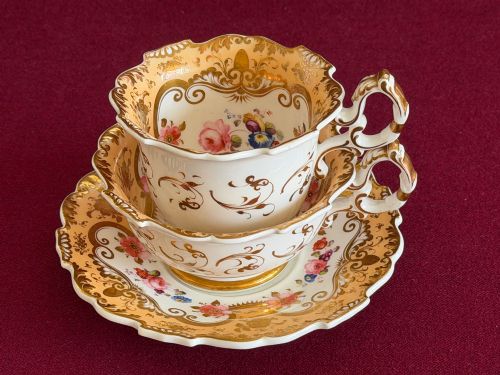
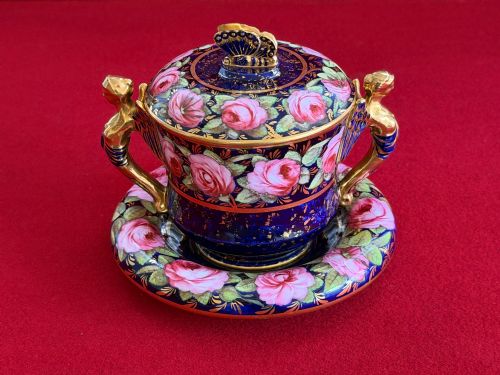
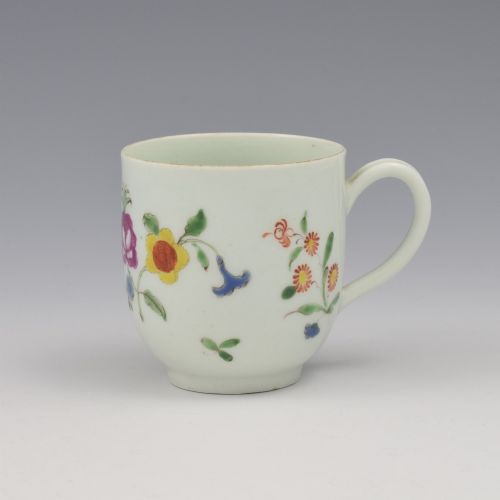
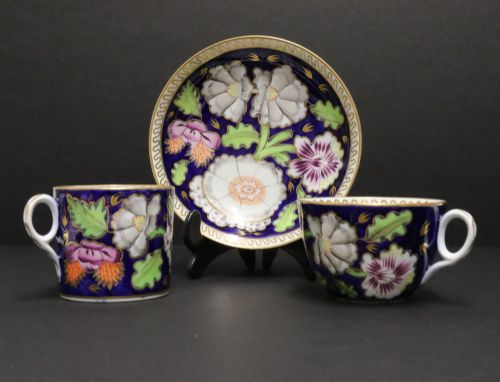
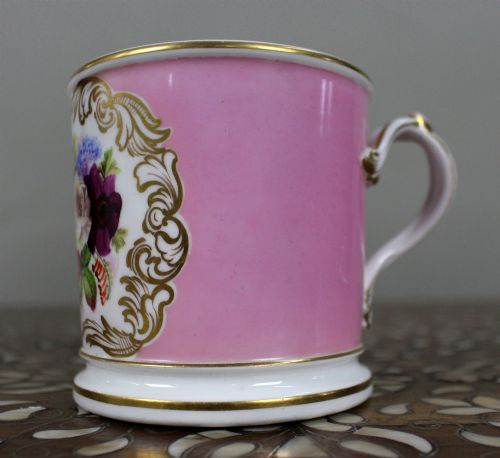
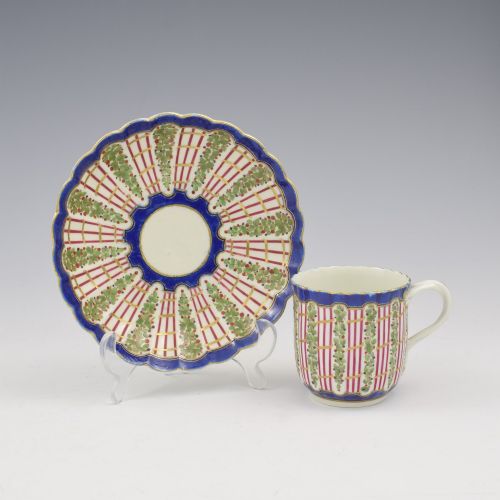
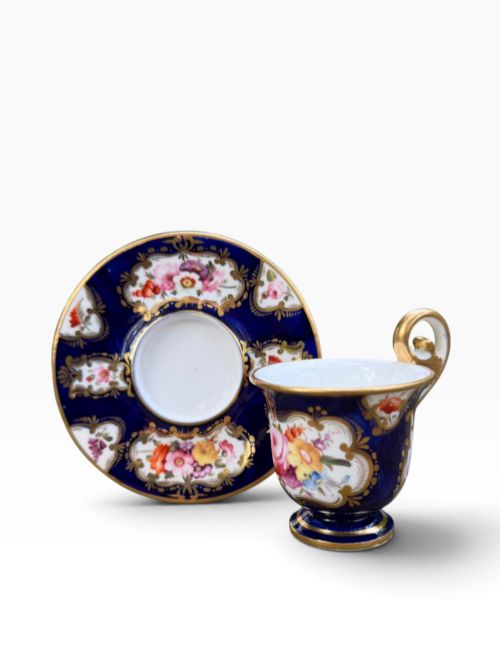
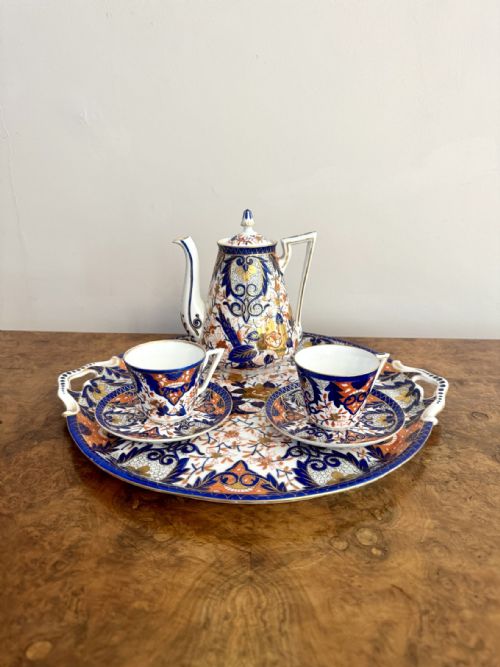
An antique ceramic cup encompasses a diverse range of drinking vessels, including delicate cabinet trios, sturdy mugs, chocolate cups, and specialised coffee cans spanning several centuries of production. The examples most frequently encountered on this page originate from Georgian, Regency, and nineteenth-century English and continental potteries, reflecting the evolution of tea and coffee drinking habits.
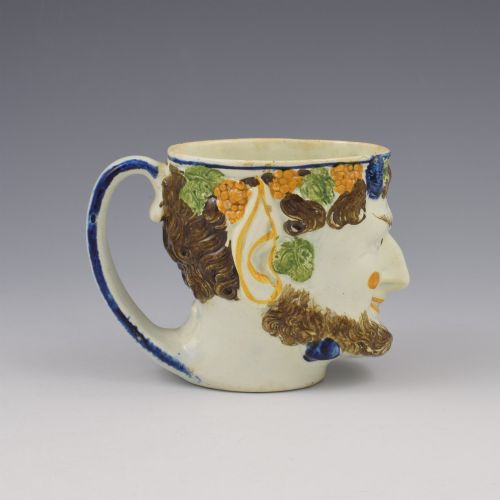
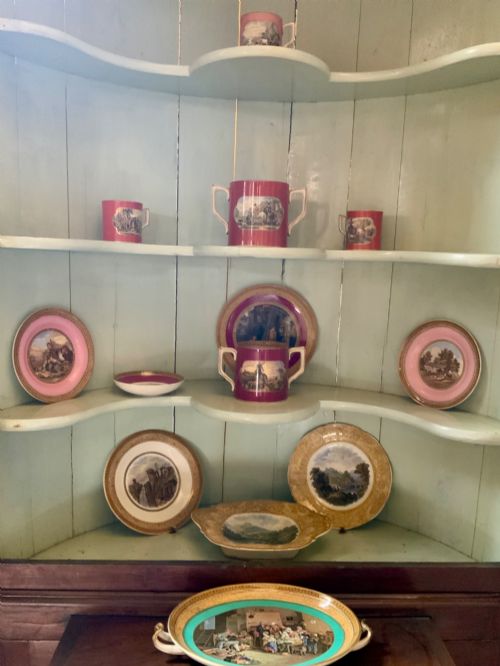
Forms extend from simple earthenware vessels and heavy stoneware tygs to translucent soft-paste porcelain tea bowls and saucers. Buyers will find both utilitarian tavern tankards and highly decorative cabinet pieces designed primarily for display within wealthy households.
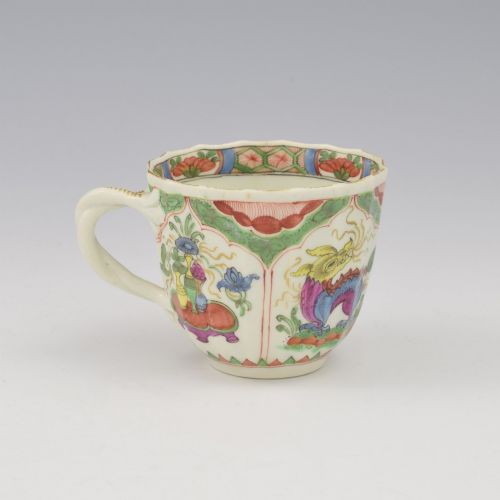
Origins stretch across English factories such as Worcester, Derby, and Spode, alongside continental works and East Asian export wares. Each piece captures the specific domestic utility or social ritual of its era, from morning chocolate to evening ale.
How they were made
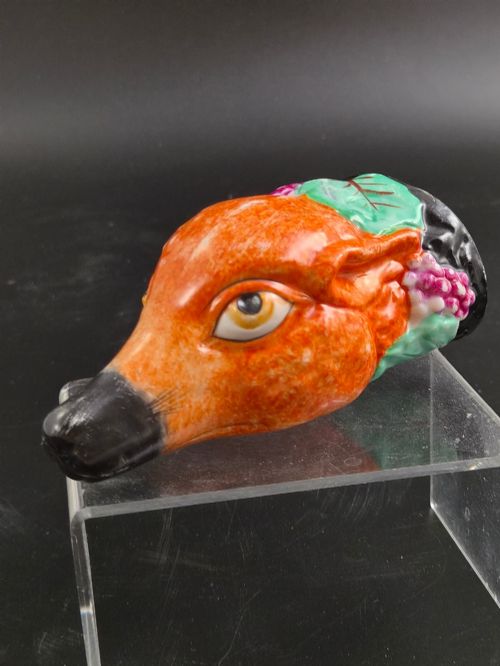
Potters utilised a foundation of clay, soft-paste porcelain, ironstone, or stoneware, shaped either by throwing on a wheel or by moulding complex forms like figural stirrup cups. The body was then biscuit fired to create a stable ceramic structure before receiving hand-painted or transfer-printed decoration.
Glazes provided a smooth, impermeable surface, often enriched with gold leaf, enamels, and intricate gilding applied over or under the glaze. Skilled artisans hand-painted polychrome floral motifs, topographical scenes, and oriental patterns directly onto the ceramic surface before a final high-temperature kiln firing.
Listings feature porcelain, earthenware, and stoneware across the Georgian, Regency, and Victorian periods.
What varies in quality
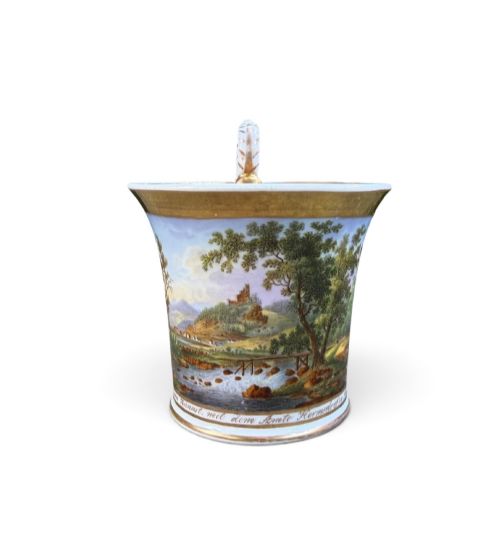
Quality rests upon the crispness of the moulding, the fineness of the ceramic paste, and the artistic execution of the hand-painted decoration. Superior pieces display masterwork brushwork, such as detailed landscape miniatures or precise enamel work, whereas simpler items rely on standard transfer-printing.
The sophistication of the potting technique also dictates standard, with thin-walled, translucent porcelain bodies requiring significantly higher technical skill to fire successfully than heavy earthenware mugs or stoneware tygs.
A H & R Daniel·Spode·Richard Chaffers·Royal Staffordshire·Newhall·Coalport John Rose·Grainger Worcester·Staffordshire Prattware·Berlin·Bloor Derby·Doulton Lambeth·Derby Porcelain·Flight & Barr Worcester·Rockingham·Yates Leeds·Minton·Sevres·H & R Daniel
The Antique Ceramic Cup Glossary
- Coffee can
- A cylindrical, handleless ceramic cup designed specifically for drinking strong coffee during the eighteenth and nineteenth centuries.
- Trio
- A matched set consisting of a tea bowl or cup, a coffee cup, and a matching saucer, popular during the Georgian and Regency periods.
- Stoneware
- A robust, vitrified ceramic body fired at high temperatures until impermeable to liquids, frequently used for durable mugs and tygs.
- Soft-paste porcelain
- An artificial porcelain composition fired at lower temperatures than hard paste, prized by early English factories for its creamy body and glaze absorption.
- Tyg
- A multi-handled drinking vessel traditionally used for communal passing at feasts and taverns.
Antique Ceramic Cup: Frequently Asked Questions
How do I date an antique ceramic cup?
Dating relies upon identifying factory marks, stylistic traits, paste compositions, and potting shapes characteristic of specific eras like the Regency or Georgian periods. Hand-painted patterns and glaze types offer further clues to the decade of manufacture.
Comparing the bottom profile and handle shape with documented factory outputs helps narrow the timeframe of production.
Were these cups used daily?
Many robust earthenware and stoneware vessels saw heavy daily service in households and taverns, whilst delicate porcelain cabinet cups were reserved for formal tea and coffee rituals.
Over time, utilitarian pieces acquired wear patterns that reflect their active domestic histories.
What is a cabinet cup?
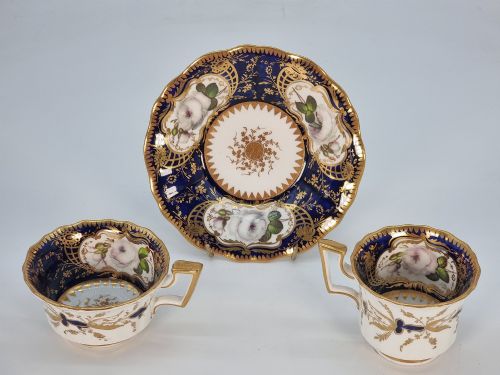
A cabinet cup is a decorative vessel made primarily for display in a collector's cabinet rather than for practical table use. These pieces often feature elaborate topographical scenes, gilt highlights, and intricate hand-painted subjects.
They frequently include a matching saucer and showcase the highest skill of the pottery painter.