



Victorian Two Handled Cup
These Victorian two handled cup examples range from earthenware loving mugs with surprise frogs inside to silver plated trophy vessels made for display.
Victorian Two Handled Cup
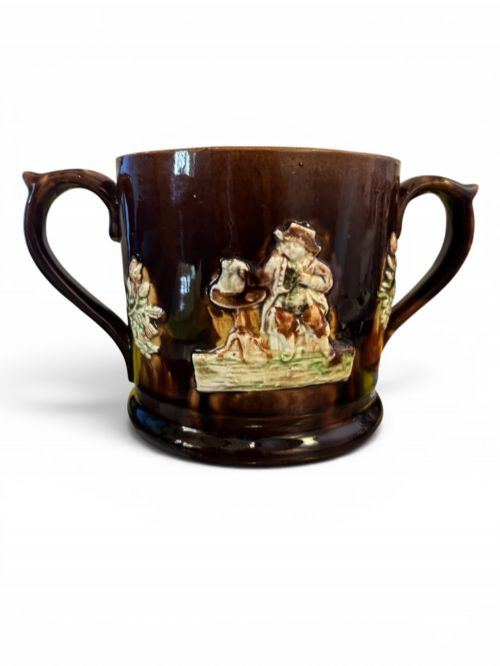
A Victorian two handled cup encompasses diverse drinking vessels and decorative objects from the nineteenth century, including transfer printed loving cups and silver plated trophy cups. Buyers searching this phrase encounter substantial earthenware mugs decorated with hunting scenes alongside porcelain pieces featuring hand painted details.
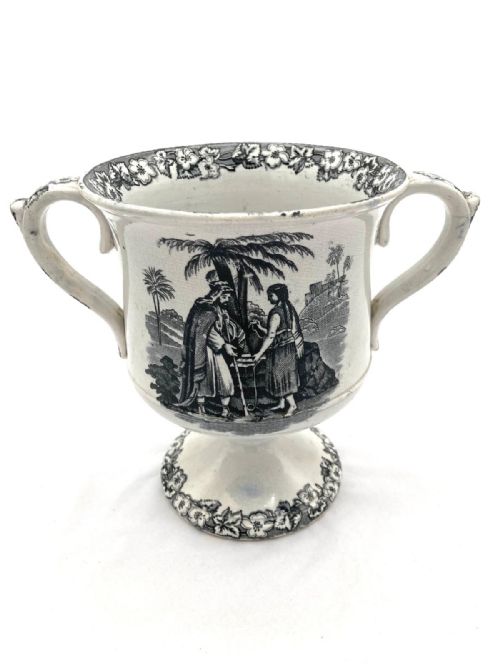
The ceramic loving cups frequently incorporate amusing interior elements such as moulded frogs and newts, intended to surprise the drinker. Other variations feature traditional poems, harvest themes, or monochrome and polychrome transfer printing in mulberry and blue and white.
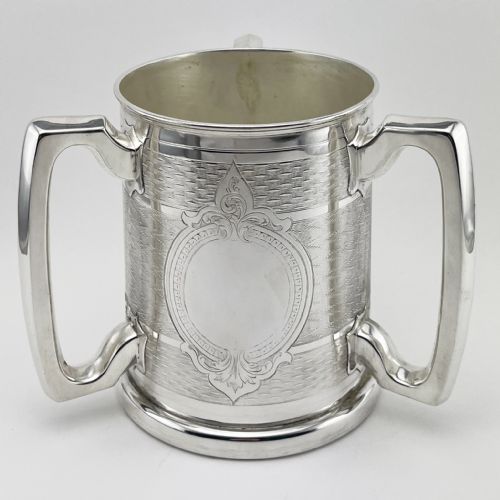
Metal versions in silver plate and brass introduce entirely different forms to the selection, appearing as large trophy vases and handled presentation pieces. These metal items bridge the gap between drinking vessel and ornamental centrepiece, reflecting nineteenth century taste for celebratory plate.
Materials and production methods
Potters shaped these vessels using earthenware, ceramic, and porcelain bodies, applying lead and enamel glazes to seal the surface. Transfer printing techniques allowed makers to apply complex hunting scenes, poems, and botanical motifs onto the clay before firing.
Metal examples utilise electroplated nickel silver and brass, often paired with applied silver rims for reinforcement and visual contrast. Artisans also employed hand painting and gold leaf detailing over porcelain grounds, particularly seen on later factory productions.
Listings feature items spanning the eighteenth century through to the early twentieth century, encompassing both earthenware and silver plated metalwork.
Factors determining quality
Quality in these vessels depends largely on the crispness of the transfer printing and the precision of any hand painted or gilded highlights. Earlier earthenware pieces with well modelled interior surprises show superior craftsmanship compared to mass produced later equivalents.
The weight and gauge of the metal plating on silver plated and brass trophy cups dictate their durability and finish. Intact gilding, clear ceramic bodies, and well preserved enamel details separate fine cabinet pieces from ordinary utilitarian wares.
James Dixon & Sons Sheffield·Royal Worcester
The Victorian Two Handled Cup Glossary
- Loving Cup
- A large drinking vessel fitted with two or three handles, traditionally passed around a company at feasts and celebrations. These often feature commemorative inscriptions or decorative transfer prints.
- Frog Mug
- An earthenware drinking vessel containing a small ceramic frog moulded inside the base, designed to surprise the drinker as the liquid drained. They were popular in English potteries during the nineteenth century.
- Transfer Printing
- A method of decorating ceramics by engraving a design onto a copper plate, pulling it on tissue paper, and pressing it onto the unfired or biscuit ware. This technique enabled intricate multi-scene illustrations to be produced rapidly.
- Silver Plate
- A base metal, such as copper or nickel silver, coated with a thin layer of silver through chemical or electrochemical processes. It provided the opulent appearance of solid silver at a lower cost.
Victorian Two Handled Cup: Frequently Asked Questions
Why do some loving cups have frogs inside?
Potters placed moulded ceramic frogs inside these mugs as a playful practical joke for the tavern patron finishing their drink. The hidden amphibian would emerge as the ale lowered, startling the unsuspecting drinker.
Such vessels formed part of a long tradition of novelty drinkware intended to provoke amusement and test the sobriety of guests at communal gatherings.
How do I care for a ceramic loving cup?
These antique vessels require gentle hand washing in lukewarm water with mild soap, avoiding abrasive sponges that might damage fragile enamel or transfer prints. Due to their age, they serve best as decorative display pieces rather than functioning tableware.
Sudden temperature changes can cause historic glazes to craze, so keeping them away from direct heat sources and strong sunlight preserves their colours.
What is the difference between earthenware and porcelain cups?
Earthenware uses coarse clay fired at lower temperatures, resulting in a porous, heavier body that requires glazing to hold liquids. Porcelain utilises refined kaolin clay fired at extremely high temperatures, producing a dense, vitrified white material that allows for delicate hand painting.
Earthenware pieces on this page lean towards traditional tavern and harvest mugs, whereas porcelain versions reflect more refined decorative or factory standards.
Were metal trophy cups used for drinking?
Silver plated and brass vessels usually functioned as presentation pieces, sporting prizes, or decorative ornaments rather than everyday drinking cups. Their sturdy metal construction and decorative handles made them ideal for engraving with dedication inscriptions and civic crests.
Over time, these metal cups transitioned into mantlepiece ornaments and display items reflecting Victorian and Edwardian competitive culture.