

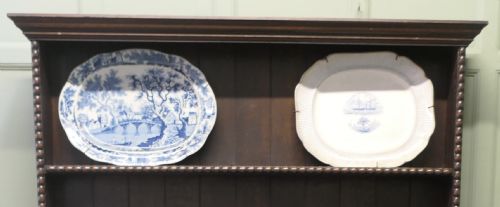


Staffordshire Blue White Charger
These staffordshire blue white charger plates bring bold transfer-printed scenes of temples, battles, and landscapes directly to the table.
Staffordshire Blue White Charger
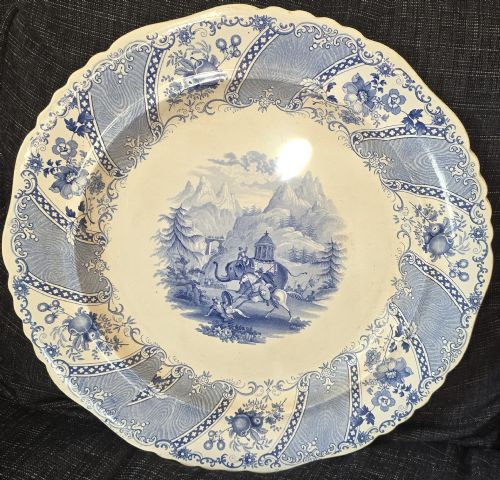
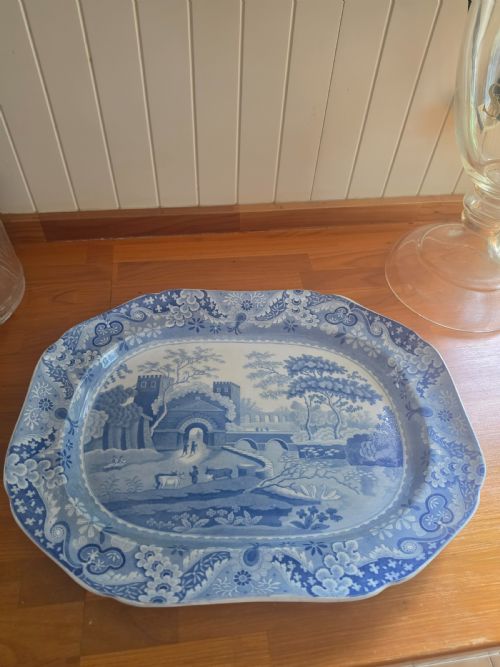
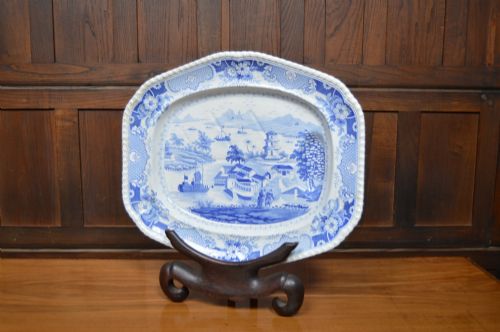
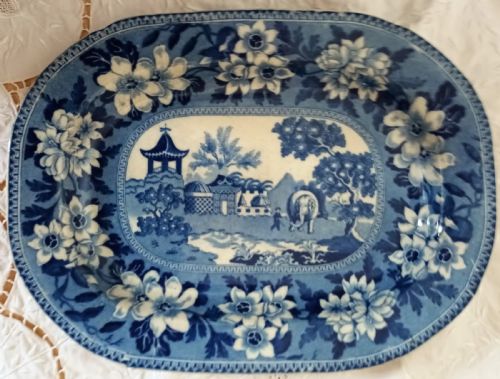
A staffordshire blue white charger represents a large serving piece produced primarily during the nineteenth century. These items include heavy meat plates and expansive platters designed for domestic utility and display. Buyers frequently encounter nineteenth century examples featuring distinct transfer-printed pictorial motifs.
The aesthetic of a staffordshire blue white charger draws heavily on Georgian, Regency, and Victorian tastes. Common patterns recorded in these earthenwares range from oriental-inspired scenes like India Temple to historical naval engagements and architectural views. Most surviving specimens measure considerably larger than standard dining plates.
Origins trace back to English earthenware potteries operating through the 1800s and 1850s. The forms span serving platters, decorative plates, and chargers finished in striking blue and white ceramic glaze. Collectors find these pieces in various states of preservation across the Victorian transferware tradition.
How They Were Made
Potters shaped these objects from earthenware and pearlware bodies before applying a fluid ceramic glaze. The foundational clay was moulded or thrown into large serving platters and heavy meat plates. Firing took place in traditional kilns to vitrify the ceramic material.
Decoration relied on the transfer printing technique, transferring intricate engraved copperplate designs onto the porous bisque surface. Cobalt blue oxides provided the deep coloration prior to the final glazing and secondary firing. This method allowed potteries to produce consistent pictorial scenes at scale.
Object forms span large meat plates, serving platters, and decorative charger plates finished in blue and white transferware.
What Varies in Quality
Quality rests primarily in the clarity of the transfer printing and the depth of the cobalt pigment. Strong impressions reveal crisp architectural details and sharp lines in complex narratives like battles or architectural views. Faded printing or blurred edges indicate a worn copperplate or an uneven kiln fire.
The smoothness of the ceramic glaze and the flatness of the large earthenware body also separate standard utility wares from finer cabinet pieces. Potteries achieved superior results when the glaze pooled evenly without excessive pitting across expansive charger surfaces. Early pearlware bodies often exhibit a subtle blueish tint in the pooling glaze that enhances visual depth.
Spode·J W R·John Rogers And Son·William Adam·Minton
The Staffordshire Blue White Charger Glossary
- Charger
- A large decorative plate or serving dish intended for substantial portions or formal display. These substantial pieces typically measure well above standard dinnerware dimensions.
- Transferware
- Pottery decorated by applying a printed paper design from an engraved copper plate onto a ceramic surface. This technique revolutionised Staffordshire production during the nineteenth century.
- Pearlware
- A refined earthenware developed in the late eighteenth century featuring a thin glaze with a slight blueish tint. It served as a transitional body toward harder whitewares.
- Earthenware
- Porous ceramic pottery fired at lower temperatures than stoneware or porcelain. It requires an impermeable glaze to hold liquids effectively.
- Meat Plate
- A large, heavy serving dish often featuring a well-and-tree drainage system for roasting juices. These functional items form a core category of nineteenth-century ceramic output.
Staffordshire Blue White Charger: Frequently Asked Questions
How were these large plates used?
These large serving dishes held roasted meats and large communal portions at the nineteenth-century dining table. Their generous proportions made them central to formal meal service before modern tableware sets became common.
Beyond the dining room, many owners displayed them upright on sideboards or hung them on walls to showcase the intricate blue transfer patterns.
Are these chargers safe for food?
Most nineteenth-century earthenware contains lead within the historic ceramic glaze formulation. Using them for serving greasy or acidic foods is generally discouraged by modern standards.
Collectors today primarily appreciate them as decorative objects, wall hangings, or historical display pieces rather than for everyday dining.
How do I date a piece?
Dating relies heavily on ceramic body composition, stylistic markers, and known factory operating periods. Early nineteenth-century pieces often utilise pearlware bodies with subtle blue pooling in the glaze, while later Victorian examples shift toward whiter earthenwares.
Named topographical views and specific historical events referenced in the patterns also provide a reliable terminus post quem for the manufacture date.
What causes the blue colour variation?
The iconic blue tone results from cobalt oxide mixed into the printing oil and applied beneath the transparent glaze. Variations in hue stem from differences in kiln temperature, cobalt concentration, and the thickness of the glaze layer.
An intense, deep cobalt indicates skilled preparation and precise firing conditions within the pottery kiln.