


Blue White Landscape Platter
A blue white landscape platter brings domestic service and distant vistas together in earthenware and porcelain.
Blue White Landscape Platter
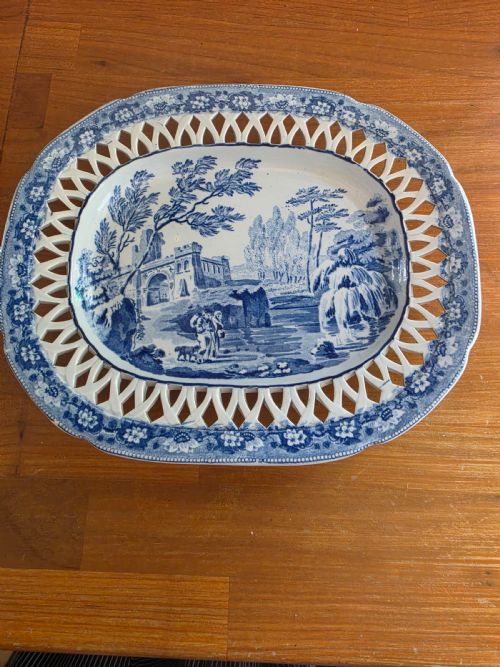
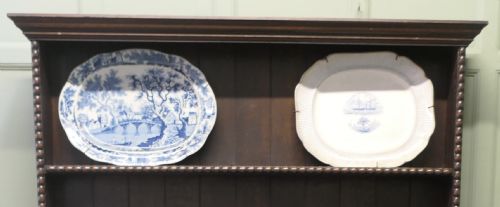
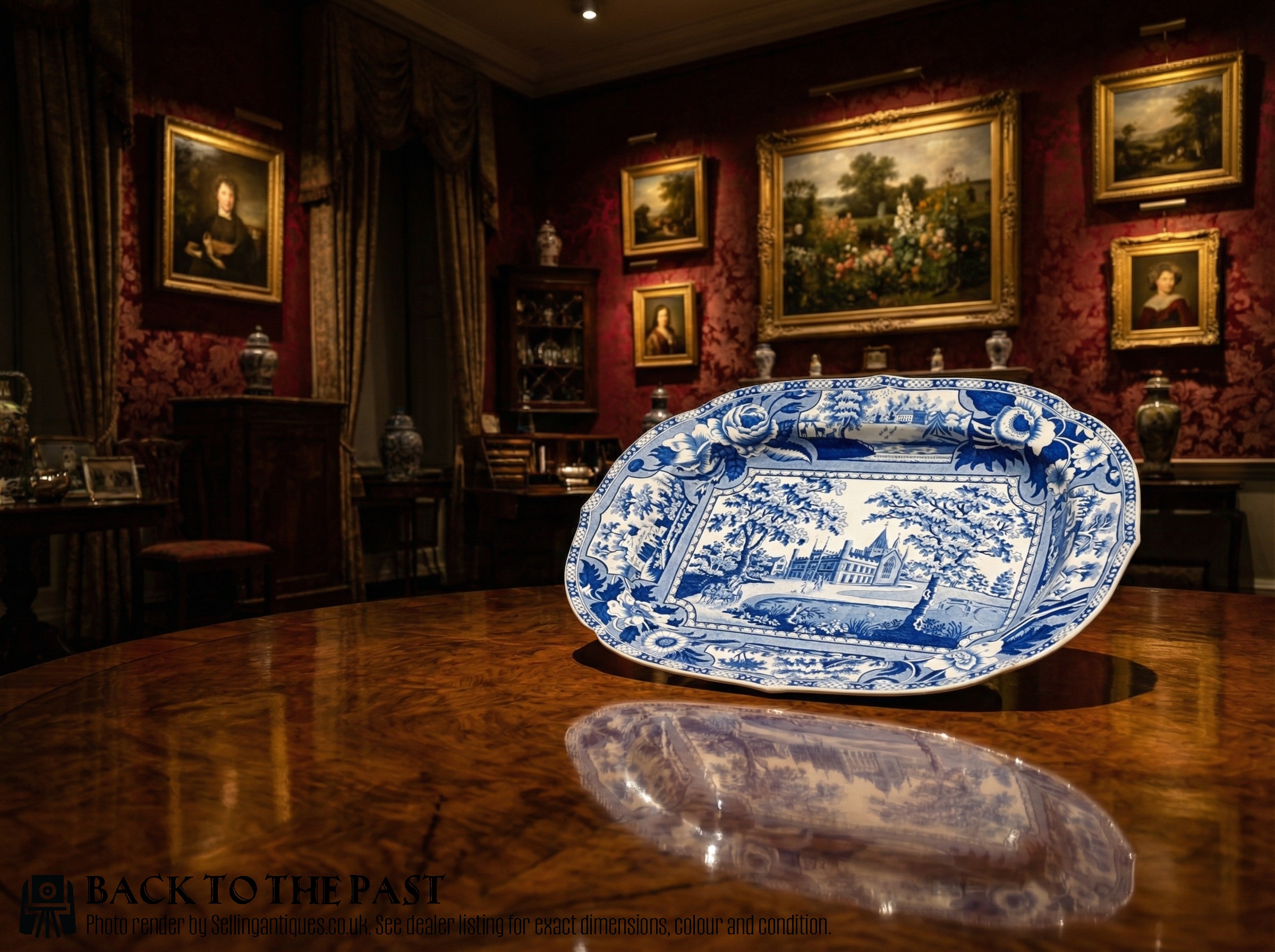
A blue white landscape platter is a large serving dish or charger decorated in blue pigment upon a pale ground, featuring scenic views, rivers, bridges, and distant structures. When searching this phrase, a buyer encounters serving dishes spanning the eighteenth and nineteenth centuries, originating from English potteries and Asian export kilns alike.
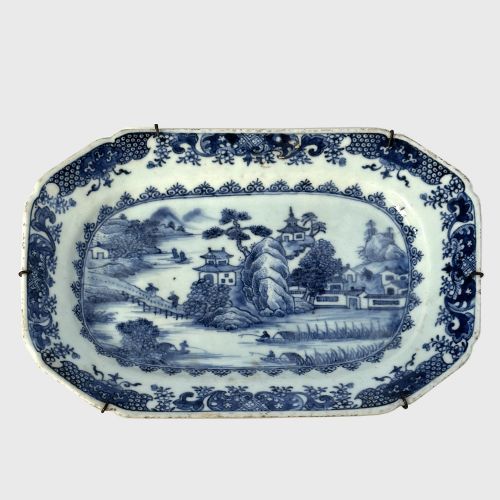
The English examples on this page typically take the form of heavy earthenware, pearlware, or ironstone meat platters, often bearing transfer-printed views of specific locations or classical scenes. Alongside these, Chinese export porcelain and Japanese Arita pieces offer finer bodies and hand-painted coastal or river landscapes rendered in deep cobalt.
Forms range from traditional octagonal and oval serving platters to sauce tureen stands and asparagus dishes, reflecting the demands of the formal dining table. The selection bridges English Staffordshire production, Chinese Nanking wares, and Regency tastes, providing domestic utility as well as decorative presence.
Materials and methods of production
Potters built these pieces using earthenware, pearlware, ironstone, or hard-paste porcelain, shaping the clay by hand or upon a wheel before applying a transparent glaze. The bodies vary from porous, thick ceramic earthenware to dense, ringing porcelain capable of holding heat and resisting moisture during heavy use.
Decoration relied primarily on cobalt pigment, applied either through meticulous hand-painting beneath the glaze or via the transfer-printing technique that dominated nineteenth-century English factories. Firing took place in high-temperature kilns, fixing the blue pigment permanently beneath a glossy protective surface.
Listings feature items from the eighteenth and nineteenth centuries, including the Regency and Victorian periods, alongside Chinese export and Japanese Arita works.
Distinctions in craftsmanship and condition
Quality rests upon the crispness of the cobalt painting or the clarity of the transfer print, where sharper lines and deeper tones distinguish superior work from blurred or smudged surfaces. The weight and balance of the ceramic body also matter, with finer porcelain and well-potted earthenware showing greater refinement at the rim and foot.
Preservation of the glaze and the integrity of the ceramic body separate everyday utility items from well-kept display pieces. Wear, firing flaws from the kiln, and the stability of the glaze surface influence how a platter holds its historic character over time.
Davenport·Spode·Mason
The Blue White Landscape Platter Glossary
- Transferware
- Pottery decorated by applying a design from an engraved copper plate onto tissue paper, which was then transferred onto the unglazed or biscuit ceramic surface before firing. This technique allowed intricate landscape scenes to be produced in large quantities during the nineteenth century.
- Pearlware
- A refined form of earthenware developed by Josiah Wedgwood in the late eighteenth century, featuring a thin glaze with a slight bluish tinge that pooled in crevices to mimic Chinese porcelain.
- Ironstone
- A heavy, durable type of earthenware patented in the nineteenth century, designed to resist chipping and closely resemble true porcelain.
- Arita
- Japanese porcelain produced in the Hizen province and exported in large quantities, known for its fine body and cobalt blue underglaze decoration.
- Nanking porcelain
- Chinese export porcelain shipped through the port of Nanking during the eighteenth and nineteenth centuries, typically decorated with blue river and pagoda landscapes.
Blue White Landscape Platter: Frequently Asked Questions
How do I care for an old platter?
Wash these ceramics by hand in warm water using mild soap, avoiding abrasive pads or modern dishwashers that can craze the historic glaze.
Store them securely on plate stands or flat surfaces to protect the edges from chips and structural stress.
Can I use these for serving food?
While these platters were made for dining, age can leave the ceramic and glaze fragile, meaning many owners prefer them for display.
If used for serving, avoid acidic foods and sudden temperature changes that might affect the historic body.
How do I tell English from export ware?
English pieces generally employ heavier earthenware, pearlware, or ironstone bodies with transfer-printed botanical or architectural borders.
Chinese and Japanese pieces utilise hard-paste porcelain with hand-painted cobalt details and distinct foot rims typical of Asian kilns.
What periods are represented here?
The selection spans the eighteenth and nineteenth centuries, incorporating Georgian, Regency, and Victorian manufacturing styles.
Date ranges reflect both English factory production and traditional East Asian export periods.