


Vintage Meat Platter
A vintage meat platter brings substantial presence to the dining table, offering generous proportions and distinct transfer-printed decoration for modern serving.
Vintage Meat Platter
A vintage meat platter serves as a large ceramic or metal vessel designed for presenting joints of meat at the table. When you search for a vintage meat platter, you encounter substantial serving dishes spanning the Georgian, Victorian, and Edwardian periods.
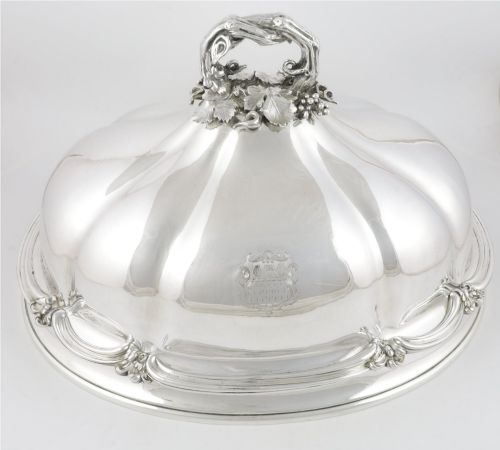
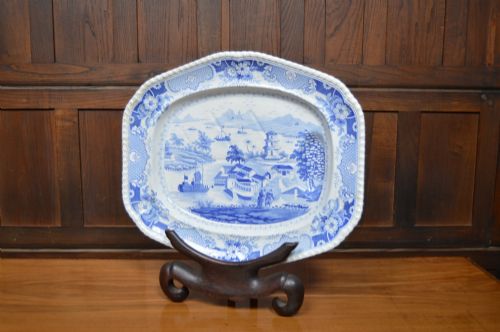
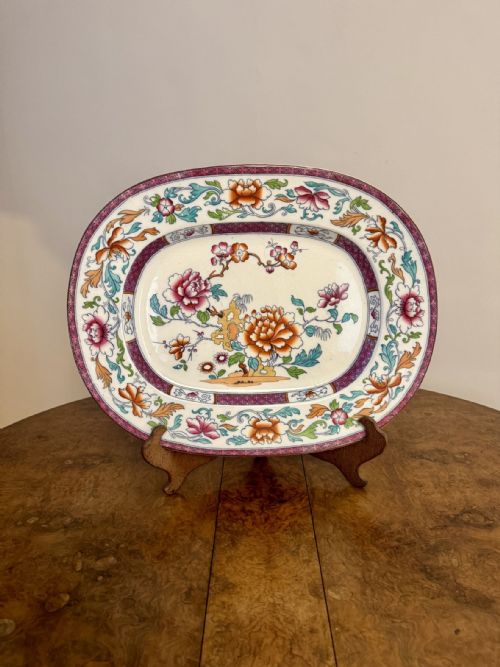
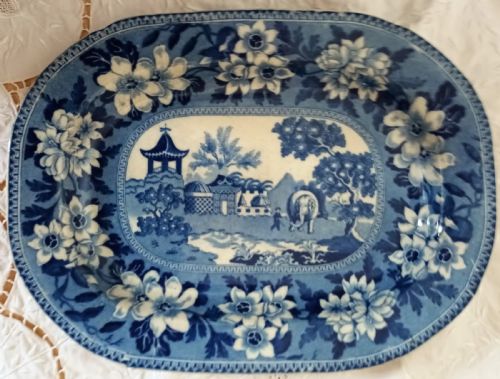
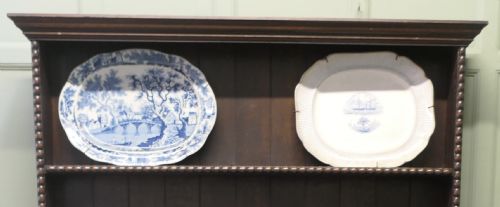
The most common versions on this page are blue and white transferware platters alongside heavy ironstone dishes and silver-plated meat domes. These pieces originate from nineteenth-century English potteries and workshops, often bearing detailed landscape or animal patterns.
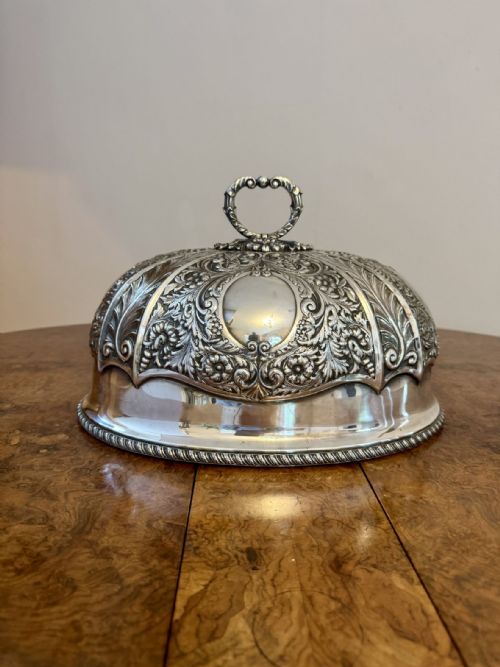
Alongside standard platters, the selection includes specialised warming dishes, fitted meat drainers, and domed covers designed to keep joints hot during long formal meals. Their generous dimensions reflect the heavy feasting traditions of the eras in which they were made.
How they were made
Potters shaped earthenware and heavy ironstone bodies before applying intricate blue and white transfer prints, sealing the design beneath a glossy lead glaze. Ironstone provided a dense, durable ceramic body capable of withstanding the weight of large joints and frequent heavy use.
Metal alternatives employ copper or base metal fused with silver through the Old Sheffield method, or rely on later silver plating over a supportive metal base. These metallic domes and warming trays required skilled silversmiths to shape and polish the heavy sheets into protective covers.
Listings feature earthenware, ironstone, and ceramic wares alongside silver-plated copper, Old Sheffield Plate, and enamel, spanning the Georgian to Edwardian eras.
What varies in quality
Quality rests primarily on the crispness of the transfer-printed design and the clarity of the underlying ceramic body. Finer ironstone platters exhibit deep, even colour saturation without blurring or smudging in the intricate borders.
In metalware and domes, standard is determined by the weight of the silver plate and the integrity of the base metal. Superior examples retain their original plating evenly across large surfaces and decorative handles without thinning or base metal showing through.
Roberts Cadman·John Rogers And Son·Henry Wilkinson·Mason·Spode·Meissen
The Vintage Meat Platter Glossary
- Transferware
- Earthenware decorated by applying a printed paper design from an engraved copper plate onto the ceramic surface. This technique allowed intricate pictorial scenes to be reproduced consistently across large batches.
- Ironstone
- A dense, durable ceramic patent developed in the nineteenth century to rival imported Chinese porcelain. It resists chipping and staining better than standard earthenware.
- Old Sheffield Plate
- A composite material formed by fusing a thin sheet of silver to a thicker copper core under heat and pressure. It was widely used for meat domes and warming dishes before modern electroplating.
- Ashet
- A regional Scottish term for a large serving platter or dish used for meat at the table. It derives from the French assiette.
- Meat Dome
- A heavy metal cover placed over a roasting joint on a platter to retain heat. These covers often feature decorative cast handles.
Vintage Meat Platter: Frequently Asked Questions
What were meat platters used for?
These large vessels were designed for presenting roasted joints, poultry, and game at the centre of the dining table during large household meals.
They often worked alongside matching drainers and warming dishes filled with hot water to keep carved meat warm throughout the course.
How can I date transferware patterns?
Potters often registered specific patterns with the patent office, stamping the maker's mark and pattern name directly onto the underside of the ceramic body.
Comparing the style of the blue and white border and the registry marks helps narrow the decade of production across the nineteenth century.
What is the purpose of a meat drainer?
A meat drainer is a perforated ceramic insert that sits inside the well of a larger platter to elevate the joint above resting juices.
This kept the meat out of pooling fats during carving and presentation at the table.