

Staffordshire Blue Transferware
Staffordshire blue transferware brings together bold cobalt scenes and sturdy earthenware vessels from the nineteenth century.
Staffordshire Blue Transferware
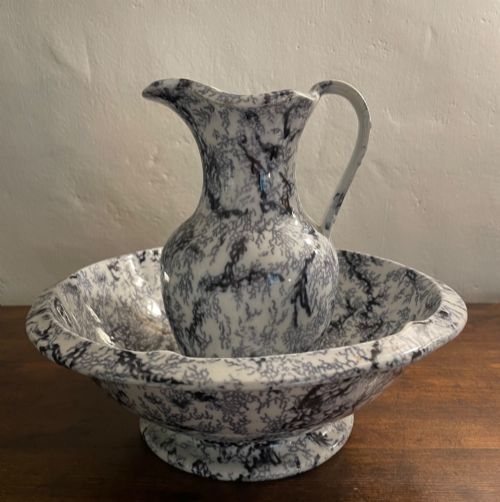
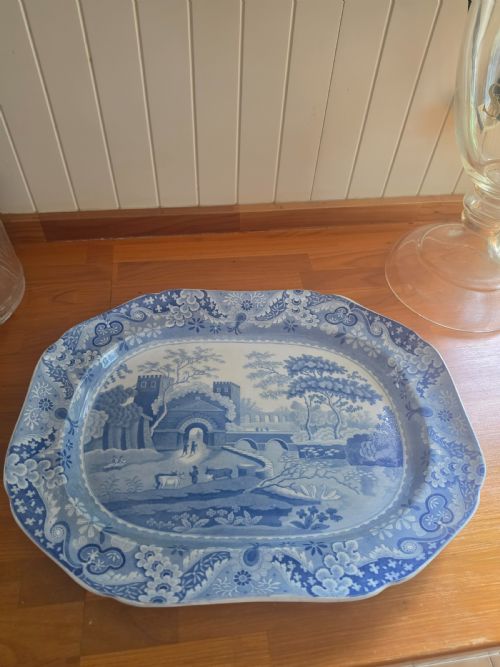
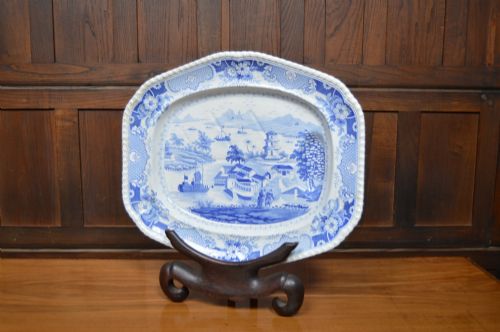
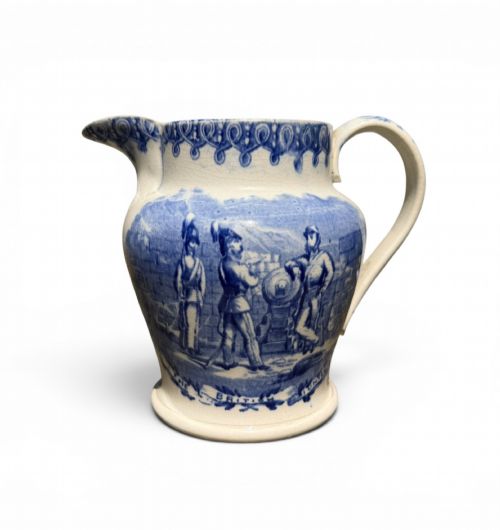
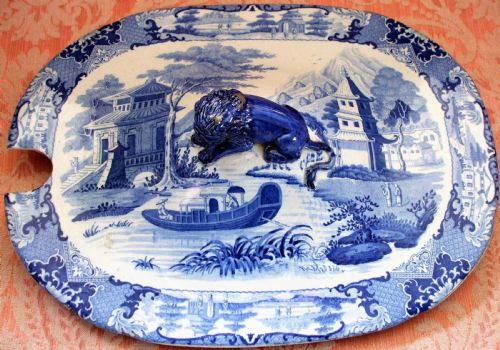
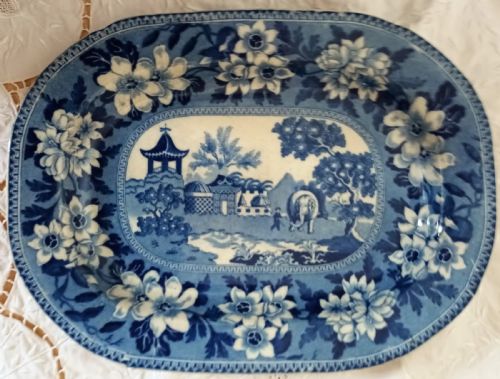
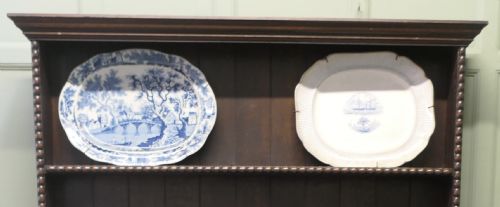
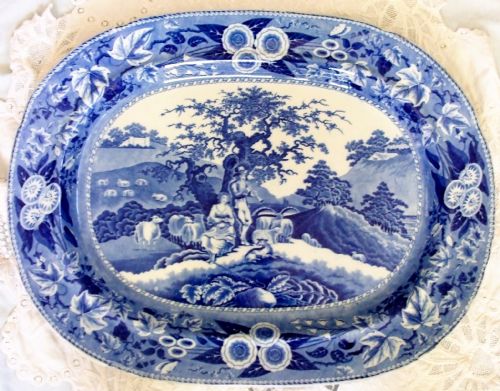
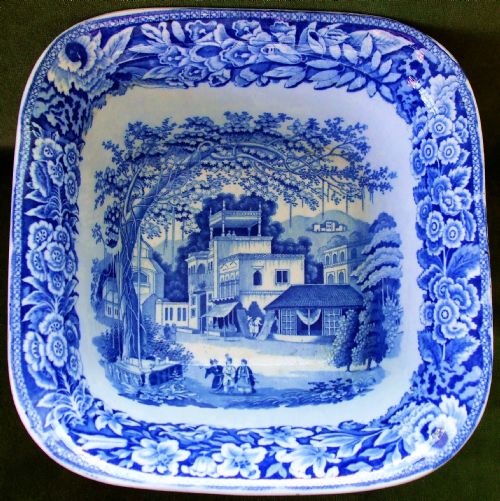
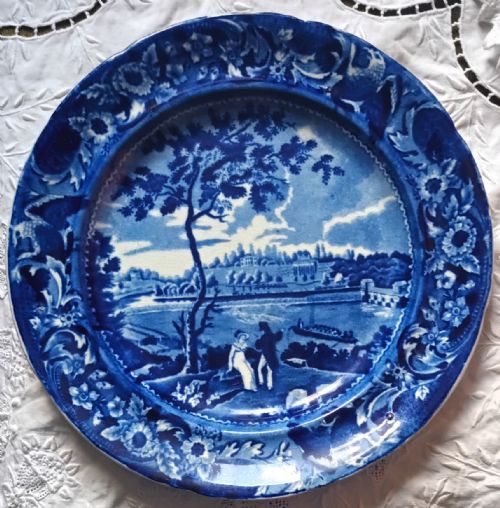
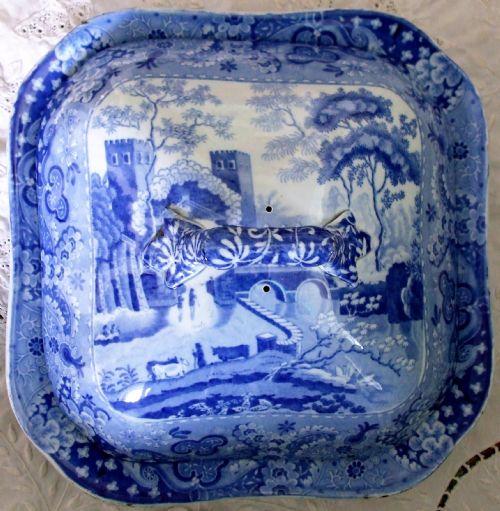
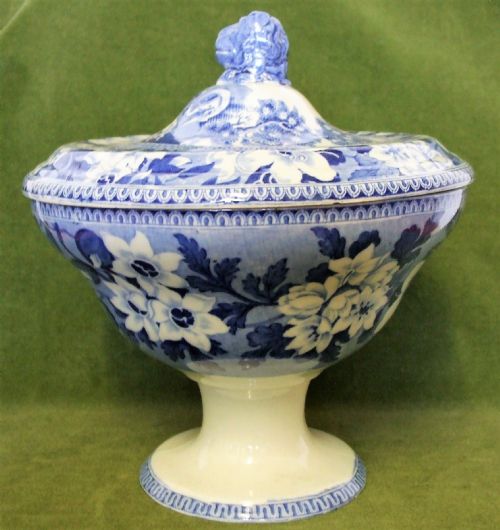
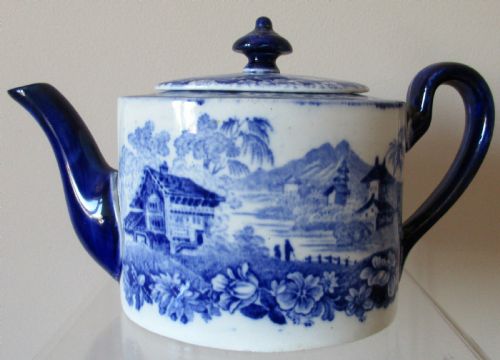
When you search for staffordshire blue transferware, you encounter domestic pottery decorated with printed cobalt designs spanning the Georgian and Victorian periods. The selections on this page centre on serving platters, decorative plates, tureens, jugs, and footbaths originating from English potteries.
These items range from large meat dishes bearing landscape scenes to child's services and soup ladles. Most examples date from the early nineteenth century through to the later Victorian decades, reflecting steady domestic production.
How they were made
Potters shaped earthenwares, pearlwares, and stonewares before applying cobalt pigment to paper from engraved copper plates, transferring the ink onto the ceramic body. Lead and ceramic glazes provided a glossy protective coating prior to final kiln firing.
The combination of cobalt glaze and transfer printing allowed workshops to produce intricate patterns such as river scenes, historical views, and architectural subjects consistently across large services.
Listings feature earthenwares and pearlwares decorated with cobalt pigment, spanning the Georgian, Regency, and Victorian periods.
What varies in quality
Quality rests in the clarity of the transfer print and the depth of the cobalt pigment against the white earthenware body. Sharp outlines on complex patterns like architectural views or multi-figure scenes indicate careful copperplate engraving and skilled application.
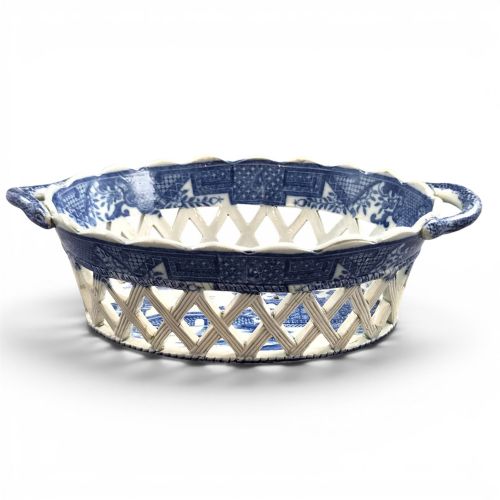
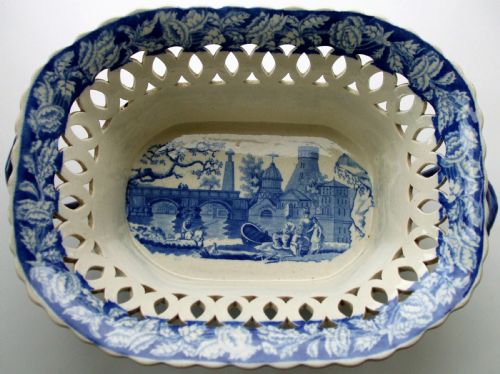
Form and scale also separate standard domestic plates from substantial items like footbaths, chestnut baskets, and large meat platters. Intricate reticulation or specialised shapes demand greater skill from the potter during moulding and firing.
Spode·J. W. R.·Robert Hamilton·John Rogers and Son·J. and R. Clews·J. and R. Riley·Stubbs·Mintons·Heathcote·John Ridgway·William Adam
The Staffordshire Blue Transferware Glossary
- Transferware
- Pottery decorated by printing a design from an engraved copper plate onto tissue paper, which was then transferred onto the ceramic surface before glazing.
- Pearlware
- A refined earthenware developed in the late eighteenth century with a slightly bluish glaze that enhanced the whiteness of the body.
- Flow blue
- A style of Staffordshire pottery where the cobalt blue pigment intentionally blurred or bled into the surrounding glaze during the firing process.
- Tureen
- A deep serving vessel with a cover, designed for holding soups, sauces, or vegetables at the dining table.
- Footbath
- A large ceramic basin utilised in nineteenth-century households for washing feet or for cooling wine bottles.
- Reticulation
- An openwork or pierced decorative pattern cut into the rim or body of baskets and plates before firing.
Staffordshire Blue Transferware: Frequently Asked Questions
What is staffordshire blue transferware?
It is nineteenth-century English pottery decorated with printed cobalt blue designs transferred from engraved copper plates onto earthenware bodies.
Items range from everyday plates to large serving platters and footbaths depicting landscapes, architecture, and figurative scenes.
How do I date these pieces?
Dating relies on stylistic clues, pottery marks, and the shade of the ceramic body, with earlier Georgian pieces often utilising pearlware.
Victorian examples frequently display denser all-over patterns or blurred flow blue decoration characteristic of mid-century kilns.
Can I use these plates for dining?
Most buyers treat these nineteenth-century ceramics as decorative display pieces rather than for everyday meals.
Due to age and historic glazing materials, gentle hand washing protects the earthenware body and the transfer-printed surface.
Why do some patterns look blurred?
Blurring is usually the result of flow blue techniques, where manufacturers added lime or ammonia to the kiln atmosphere to make the cobalt bleed.
This intentional chemical reaction created a soft, hazy aesthetic that collectors prize for its rich depth of colour.