

Staffordshire Blue Pottery
Staffordshire blue pottery brings the rich ceramic history of nineteenth-century England into homes through striking transfer-printed platters, jugs and figures.
Staffordshire Blue Pottery
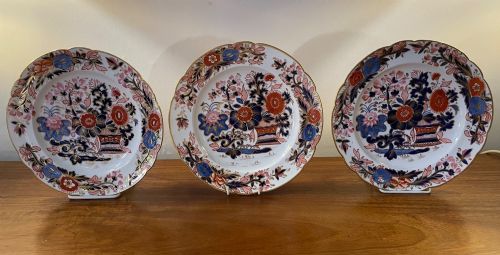
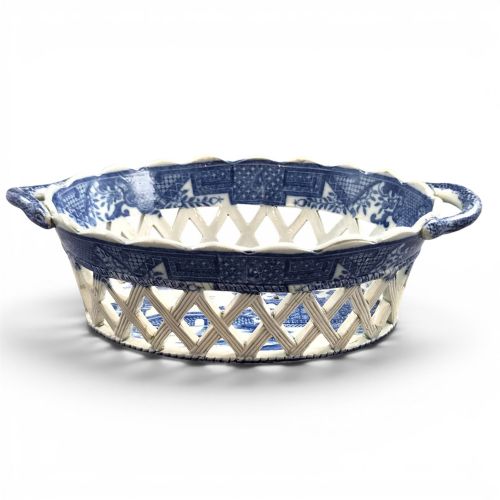
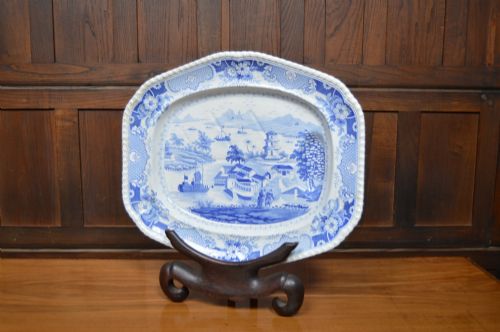
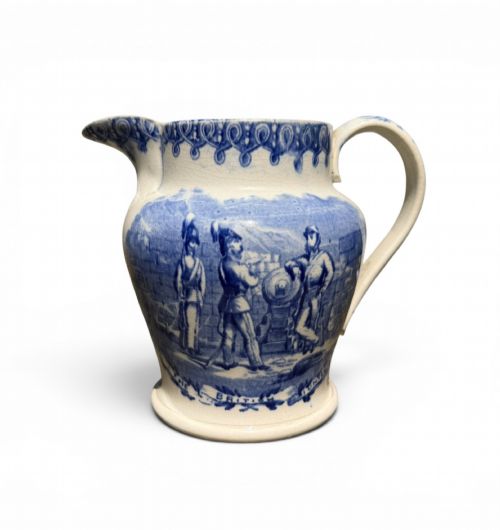
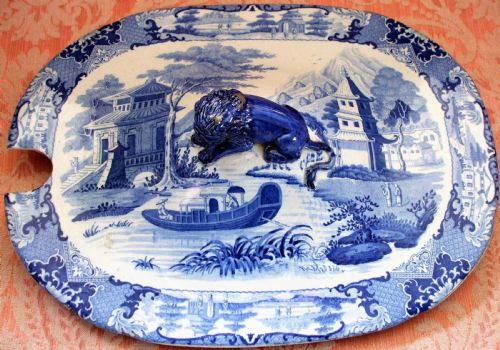
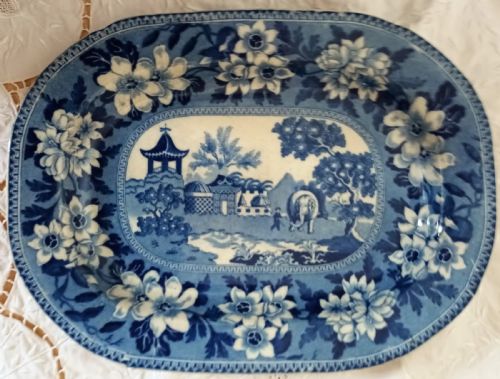
Staffordshire blue pottery encompasses a diverse array of earthenware and pearlware items produced primarily during the nineteenth century, ranging from utilitarian serving vessels to decorative figures. When exploring this category, buyers frequently encounter transfer-printed platters, tureens and chargers depicting detailed topographical scenes alongside charming ceramic animals and portrait figures.
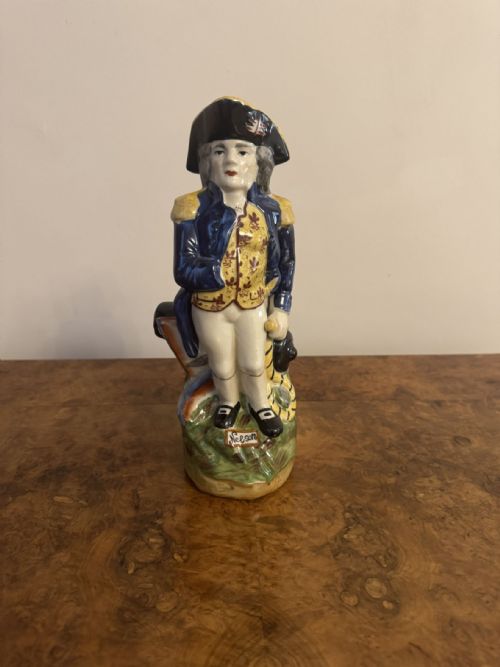
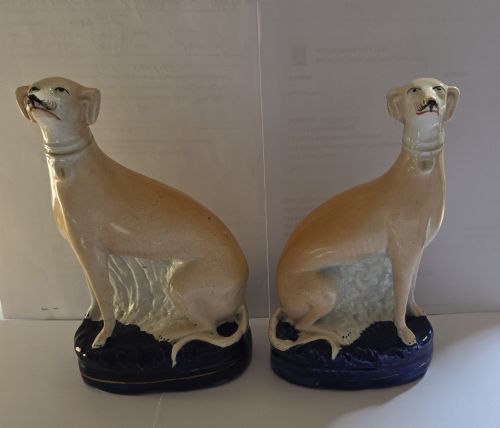
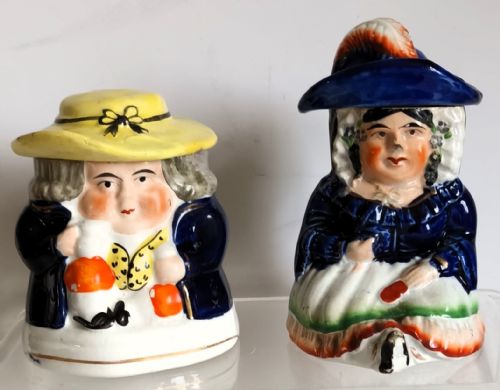
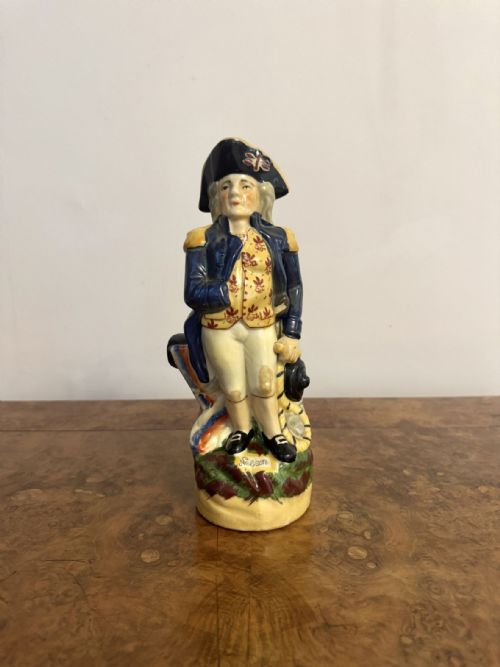
The objects span Georgian, Regency and Victorian periods, capturing changing tastes in domestic display and dining. Common utilitarian forms include jugs, basins and vegetable tureens, while decorative examples feature theatrical groups, seated whippet dogs and historical personages such as Lord Nelson and Queen Victoria.
Originating largely from the potteries of Staffordshire alongside related Welsh and English manufactories, these pieces represent both everyday utility and mantlepiece ornament. The prevalence of nineteenth-century items ensures collectors can find robust blue and white transferware alongside carefully modelled earthenware figures.
Materials and Techniques
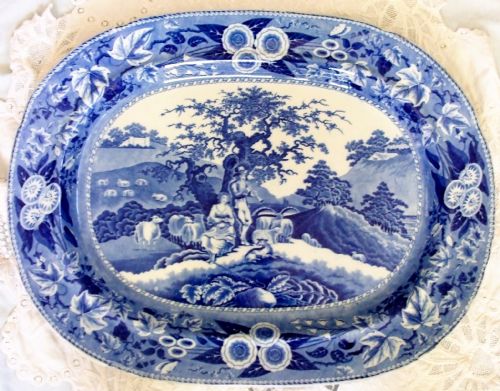
Makers utilised earthenware, pearlware and ceramic bodies shaped into platters, jugs and figurines before applying intricate blue and white transfer printing. This technique allowed potteries to transfer complex copperplate engravings onto curved and flat surfaces with remarkable consistency.
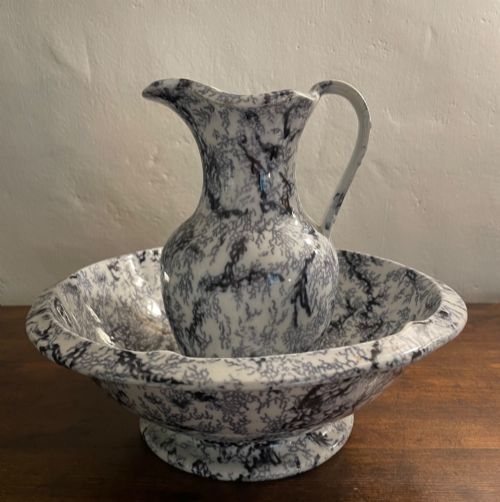
Pieces often received a transparent lead glaze or specialised flow blue application, which caused the cobalt pigment to blur softly into the surrounding glaze during firing. Enamel paint, enamel and gold leaf were occasionally added by hand over the glaze to highlight specific details on figures and tableware.
Forming methods combined press-moulding for hollow figures and animals with traditional throwing and turning for domestic vessels. The resulting ceramic body was then subjected to high-temperature kiln firings to fuse the cobalt decoration into the glaze.
Poodles modelled with tiny ceramic clay curls demonstrate the wonderfully eccentric lengths Victorian potters went to capture domestic pets.
Assessing Quality and Execution
Quality in Staffordshire blue pottery depends heavily on the crispness of the transfer print and the depth of the cobalt colour. Superior pieces display sharply defined lines in complex landscape scenes without blurring or smudging, whereas lesser examples suffer from muddy prints and misaligned transfers.
The retention of original surface characteristics, including bright enamel highlights, clean lead glaze and minimal firing flaws, elevates an object within its type. The distinction rests on the maker's mastery of the kiln and the precision of the initial copperplate engraving.
Spode·J. & R. Clews·John Rogers and Son·John and Richard Riley·Mintons
The Staffordshire Blue Pottery Glossary
- Pearlware
- A refined earthenware body developed in the late eighteenth century featuring a subtle bluish glaze that pooled in recesses to mimic Chinese porcelain. It served as a primary canvas for early transfer-printed wares.
- Transferware
- Pottery decorated by applying a design from a copper engraving onto tissue paper and then pressing it onto the ceramic surface before glazing. This innovation enabled mass production of detailed pictorial scenes.
- Flow Blue
- A nineteenth-century transfer printing technique where lime or ammonia chloride was introduced into the kiln to deliberately blur the cobalt oxide design into the surrounding glaze. The resulting aesthetic resembles a watercolour wash on ceramic.
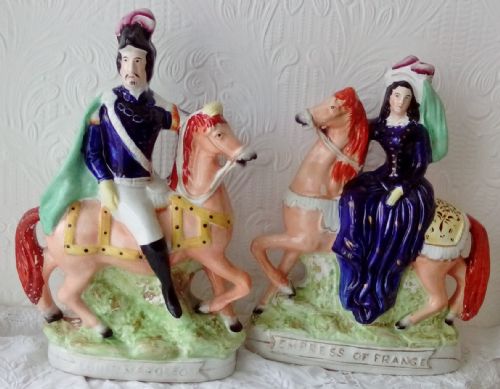
- Flatback
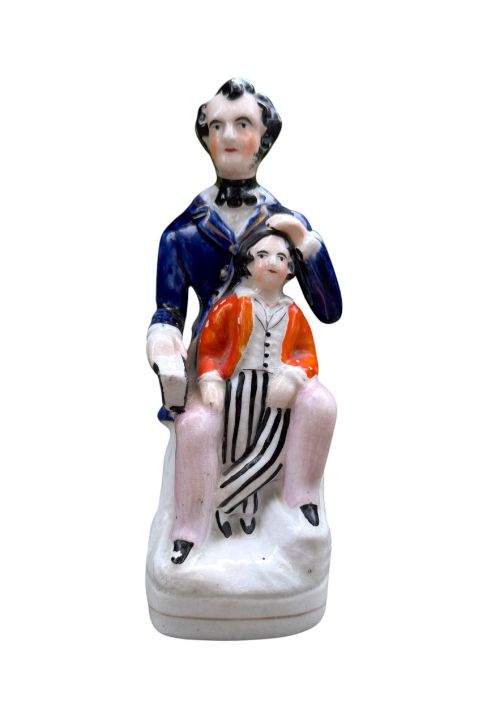
- A style of Staffordshire figure designed with a flat, unadorned back intended to sit flush against a wall on a mantelpiece or shelf. These pieces became immensely popular during the Victorian era.
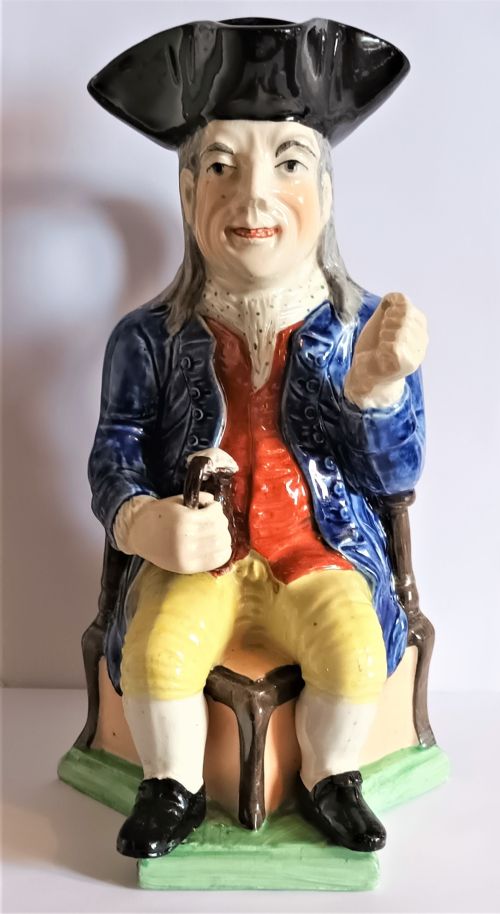
- Toby Jug
- A pottery jug shaped as a stout, jovial figure, usually seated and holding a mug of beer or a pipe. They often depict recognizable historical archetypes or specific personalities.
- Cow Creamer
- A hollow ceramic vessel modelled as a cow, used for serving cream through its mouth while being filled via an aperture on the back. These charming items were produced across various English and Welsh potteries.
Staffordshire Blue Pottery: Frequently Asked Questions
What is flow blue pottery?
Flow blue is a specific type of nineteenth-century transferware where the cobalt blue pigment intentionally bled into the surrounding white glaze during the kiln firing. This created a soft, hazy aesthetic that made intricate landscape and floral patterns appear atmospheric.
Peculiar kiln atmospheres and chemical additives produced this blurred effect, which Victorian buyers found deeply fashionable for their dining tables and washstands.
How do I date Staffordshire figures?
Dating Staffordshire figures involves examining the modelling style, the type of ceramic body, and the nature of the glaze and pigments. Earlier Georgian pieces often utilised pearlware bodies, while Victorian examples commonly shifted toward heavier earthenware with flat backs intended for mantel display.
Historical subjects and contemporary dress also provide crucial chronological clues, linking specific figures to coronations, military campaigns, or popular theatrical productions of the era.
Were transferware platters used daily?
Transferware platters and tureens were manufactured primarily for domestic dining and food presentation within middle and upper-class households. Large platters accommodated substantial joints of meat, while vegetable tureens and soup bowls formed coordinated service sets for formal meals.
Over time, many heavy earthenware pieces transitioned from active dining service to decorative display due to their robust construction and striking pictorial designs.
How should I display pottery figures?
Pottery figures and flatbacks are best displayed on stable, flat surfaces away from direct sunlight and high-traffic areas where they might be easily knocked. Because many of these nineteenth-century earthenware items feature delicate hand-painted enamels or gilt highlights, stable shelving protects their fragile surfaces.
Grouping complementary pairs, such as whippet dogs or theatrical figures, creates a balanced visual arrangement that reflects their original mantlepiece context.