




Blue Transferware Pottery Plate
A blue transferware pottery plate brings nineteenth-century landscape and narrative scenes directly to the table through rich cobalt prints on earthenware.
Blue Transferware Pottery Plate
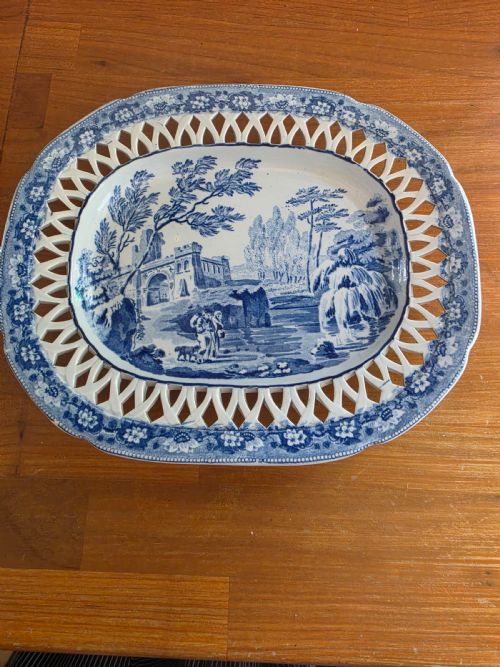
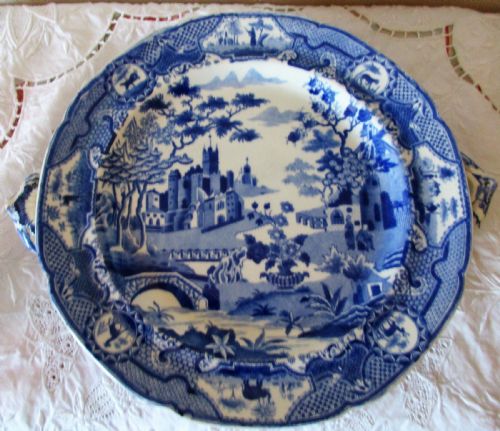
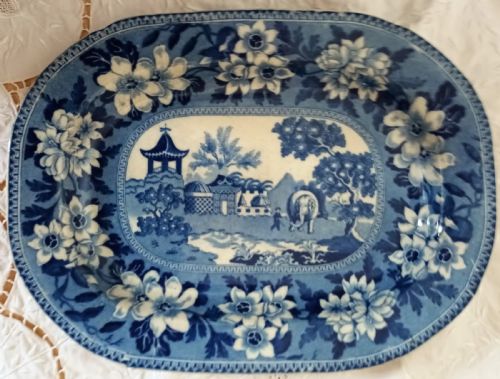
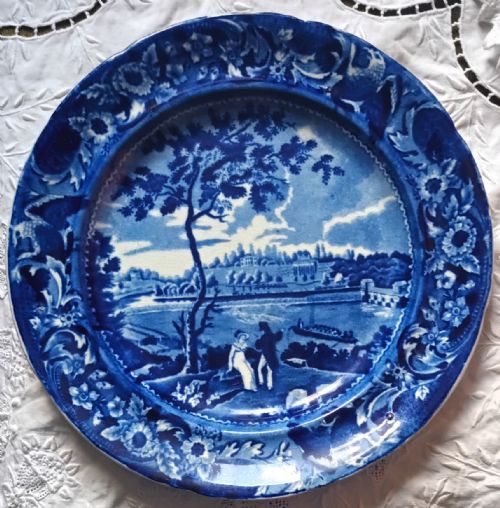
A blue transferware pottery plate encompasses flat tableware, chargers, meat plates, and serving platters produced across the nineteenth century. These objects frequently display printed topographical views, architectural ruins, and Chinoiserie subjects derived from copper engravings. Georgian and Victorian examples dominate the selection, showing both domestic English scenes and distant exotic landscapes.
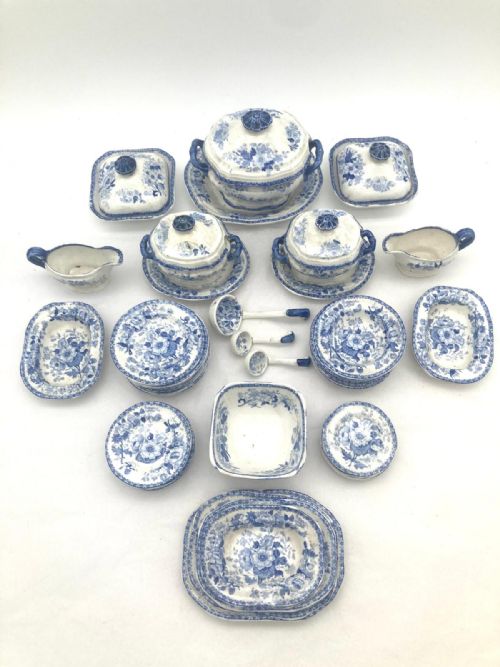
Makers ranged from major Staffordshire potteries to smaller regional works producing utilitarian dishes alongside cabinet plates. Collectors encounter various formats, from standard dinner plates to large chargers and miniature child service pieces. The patterns span floral sheets, romantic landscape series, and classical architectural compositions.
Materials and Technique
Potters formed these items using earthenware, pearlware, ironstone, and stoneware bodies covered in a clear ceramic glaze. Artisans engraved copper plates with detailed pictorial designs, applied cobalt pigment, and transferred the ink onto tissue paper before pressing it onto the fired clay body. Following the transfer process, the pieces received a transparent glaze and a high-temperature kiln firing to seal the blue print beneath the glossy surface.
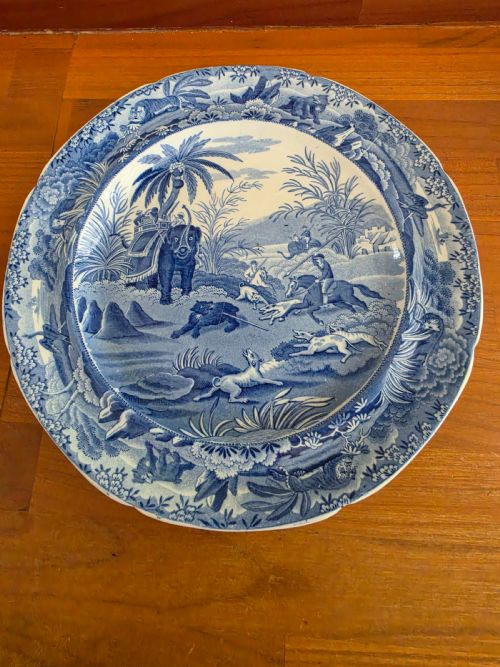
Surviving kitchen inventory includes a ceramic advertising scale plate alongside platters depicting bears and elephants.
Print Clarity and Body Weight
Quality rests primarily in the sharpness of the copperplate transfer and the richness of the cobalt hue. Finer examples exhibit crisp outlines without blurring or smudging in the intricate borders and central motifs. The refinement of the ceramic body, whether delicate pearlware or heavier ironstone, also dictates the desirability of the piece.
Davenport·Spode·Minton·John Rogers and Son·Stubbs·John Ridgway·Caughley·Wedgwood·Don Pottery·Brameld and Co·William Adams
The Blue Transferware Pottery Plate Glossary
- Transferware
- Pottery decorated by printing a design from an engraved copper plate onto paper and then transferring that ink onto the ceramic surface before glazing. This technique allowed intricate pictorial scenes to be produced rapidly for domestic markets.
- Pearlware
- A refined earthenware body developed by Josiah Wedgwood that featured a faint bluish tinge in the glaze to mimic Chinese porcelain. It served as a primary canvas for early nineteenth-century blue and white printing.
- Ironstone
- A heavy, durable type of earthenware patented in the early nineteenth century to provide a robust alternative to porcelain. It resists chipping and forms the base for many large Victorian meat plates and platters.
- Chinoiserie
- A European artistic style reflecting Chinese motifs, architectural elements, and imaginary landscapes. It appears frequently on Georgian and Regency plates alongside native British views.
- Charger
- A large ornamental or serving plate intended for display or central table use rather than individual dining. These pieces often showcase the most ambitious topographical transfer prints.
Blue Transferware Pottery Plate: Frequently Asked Questions
What is blue transferware?
Blue transferware is pottery decorated by transferring a printed copperplate design onto a ceramic body using cobalt blue pigment. The piece is then glazed and fired to seal the intricate pictorial scene beneath a glossy surface.
These wares were produced in vast quantities across the nineteenth century by English potteries. They depicted everything from classical ruins and distant landscapes to everyday rural narratives.
How do I date these plates?
Dating relies on identifying the ceramic body, the manufacturing style, and any backstamps or registry marks impressed into the clay. Pearlware bodies and specific floral border types usually point to the early nineteenth century, while heavier ironstone often indicates mid-Victorian production.
Makers' names and pattern titles incorporated into the transfer print provide further clues. Comparing the aesthetic details against known historical factory timelines narrows the production window.
Can I use them for dining?
Most antique plates of this age are collected for display and historical study rather than daily kitchen use. The underlying earthenware and lead-glazed surfaces can be sensitive to modern detergents and cutlery wear.
Gentle hand washing in warm water without abrasive sponges preserves the integrity of the glaze. Hot food should be avoided on fragile pearlware or pieces showing existing glaze crazing.
What are Chinoiserie patterns?
Chinoiserie patterns are eighteenth- and nineteenth-century European interpretations of Chinese art, featuring imaginary pagodas, rustic bridges, and exotic figures. These imaginative scenes were immensely popular among early ceramic printers.
Such designs allowed Staffordshire potters to combine whimsical architectural elements with intricate botanical borders. They remain among the most recognizable categories of antique blue and white pottery.