


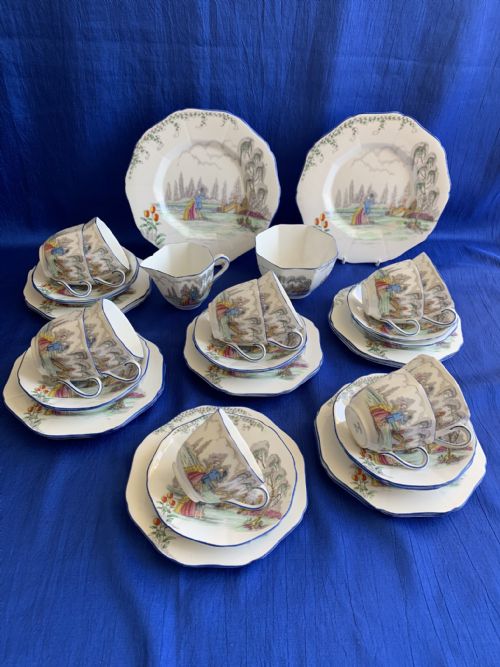


Octagonal Ceramic Plate
An octagonal ceramic plate offers a striking eight-sided geometry that brings immediate architectural sharpness to any table or wall display.
Octagonal Ceramic Plate
When you search for an octagonal ceramic plate, you encounter geometric serving vessels and display pieces spanning the eighteenth and nineteenth centuries. These items draw the eye through their distinct eight-sided borders, distinguishing them from standard circular tableware.
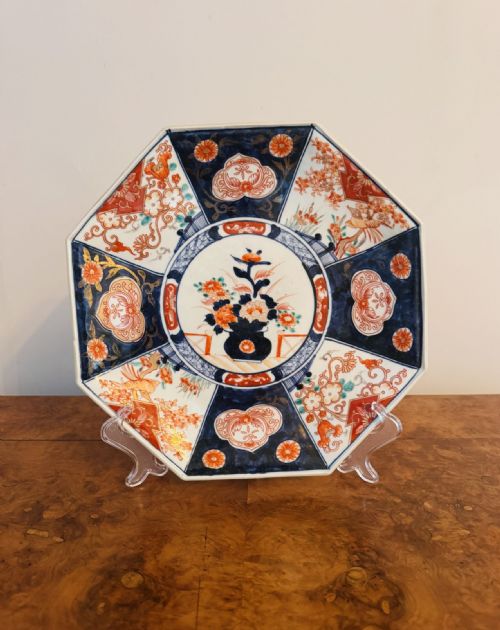
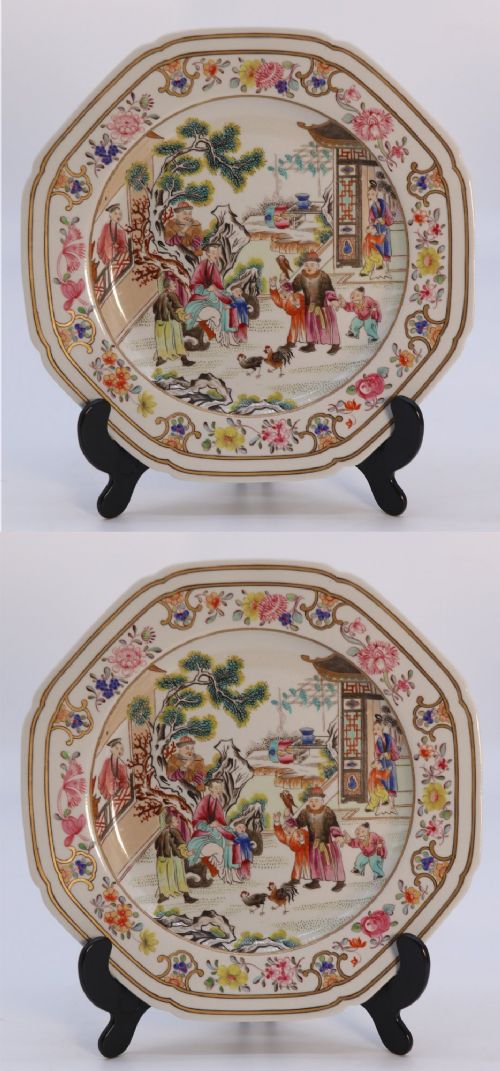
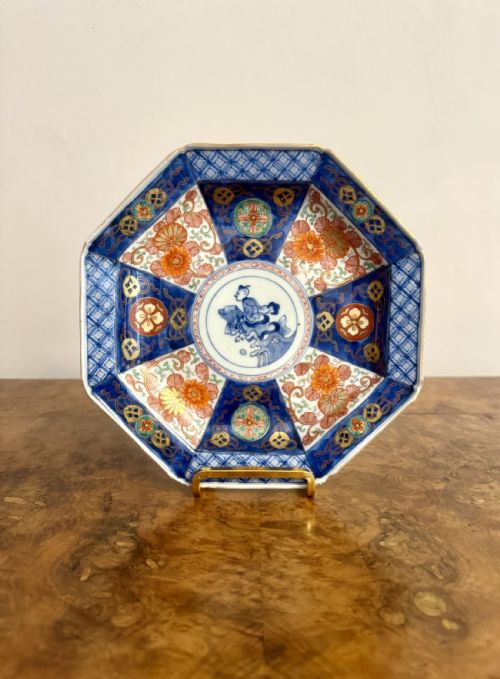
The selections available here range from early soft-paste porcelain and stone china to robust earthenware and ironstone. You will frequently find examples bearing traditional Chinese export famille rose armorial designs, Japanese imari palettes, and British blue and white transfer prints.
Originating across England, continental Europe, and East Asia, these pieces served practical dining functions or functioned as ornamental cabinet plates. Their varied depths and widths accommodate uses from soup service to meat presentation and decorative display.
How they were made
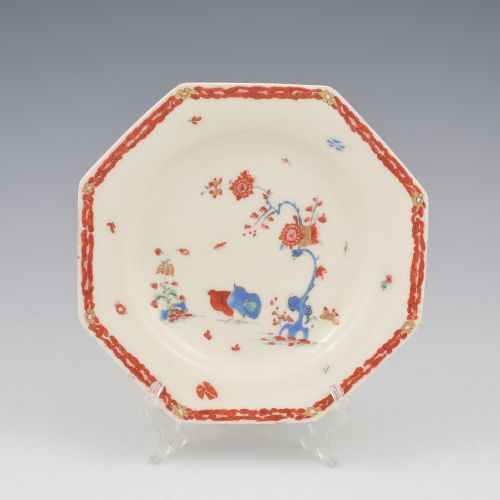
Potters shaped these vessels using earthenware, ironstone, stone china, porcelain, and soft-paste porcelain, forming the characteristic eight-sided profiles by hand or in moulds. Artisans applied glazes and pigments before firing, utilising enamel and gold leaf for heightened decorative effect.
Decoration techniques combined underglaze blue painting with meticulous overglaze enamelling and transfer printing, as seen in complex Japanese imari and English blue and white patterns. These methods required precise firing controls to fix intricate polychrome motifs onto the ceramic bodies.
Listings feature plates spanning the eighteenth and nineteenth centuries, utilising materials from soft-paste porcelain to ironstone and earthenware.
What varies in quality
The standard of an octagonal ceramic plate depends heavily on the crispness of its moulding and the precision of its eight-sided geometry. Finer examples display sharp, well-defined angles and unwarped edges that reveal superior control during the firing process.
Surface decoration similarly distinguishes the work, with hand-painted enamel and gold leaf details showing greater artisanal depth than mass-produced transfer prints. Armorial pieces and specialised patterns like Kakiemon or Chinese export famille rose demonstrate higher artistic investment.
Bow Porcelain·Spode Stone China·Masons Ironstone·Brameld and Co·Royal Vienna
The Octagonal Ceramic Plate Glossary
- Soft-paste porcelain
- A type of ceramic body composed of clay and glass frit, fired at lower temperatures than hard-paste porcelain. It produces a slightly warmer tone and a softer glaze surface.
- Stone china
- A dense, durable ceramic body developed in nineteenth-century England to rival imported Chinese porcelain. It offers high resistance to chipping while maintaining a refined white ground.
- Ironstone
- A heavy earthenware ceramic patented in the nineteenth century for its exceptional strength and durability. It serves as a sturdy base for thick glazes and bold transfer-printed decoration.
- Famille rose
- A palette of opaque enamel colours dominated by pink or rose hues, introduced to Chinese porcelain decoration in the eighteenth century. It allows for nuanced shading on floral and figurative motifs.
- Imari
- A style of Japanese export porcelain featuring deep underglaze blue, iron red, and gold highlights. It became widely emulated by European potteries during the eighteenth and nineteenth centuries.
Octagonal Ceramic Plate: Frequently Asked Questions
How do I display an octagonal plate?
These eight-sided plates suit wall mounting using specialised wire hangers that secure the angled rims without causing damage. Alternatively, deeper cabinet plates sit securely on small wooden easels for display on sideboards and mantels.
Ensure the display method distributes weight evenly across the flat base and straight edges. Keeping them away from direct sunlight preserves the hand-painted enamels and gold leaf details.
Can I use antique plates for dining?
While historic plates were designed for daily meals or grand banquets, modern dishwashers and harsh detergents can damage centuries-old glazes and enamels. Hand washing in tepid water with mild soap protects the fragile ceramic bodies and painted surfaces.
Ironstone and stone china are generally robust enough for occasional careful use with soft cutlery. Soft-paste porcelain and pieces with delicate gold leaf are better reserved for display and light handling.
How do I date an antique ceramic plate?
Dating relies on examining the ceramic body material, foot rim construction, and applied decoration styles. Eighteenth-century pieces often feature softer bodies and hand-painted motifs, while nineteenth-century items frequently employ ironstone or transfer printing.
Maker marks, impressed ciphers, and pattern names provide further chronological markers. Comparing the aesthetic traits against known periods helps narrow down the origin decade.