
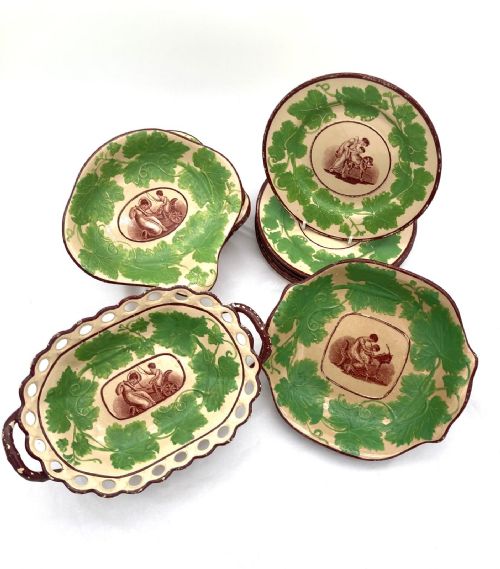
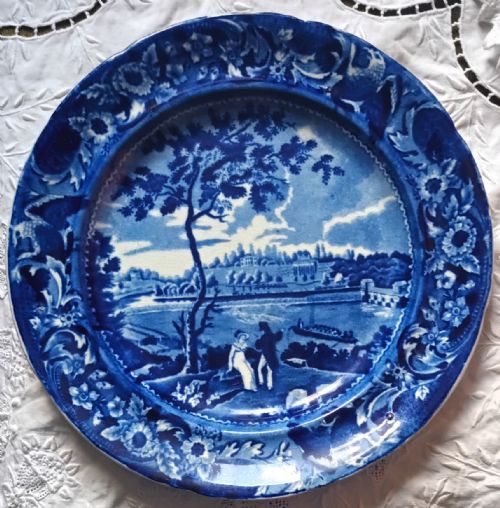


Printed Earthenware Plate
A printed earthenware plate brings transfer-printed scenes of architecture and pastoral life directly to the table.
Printed Earthenware Plate
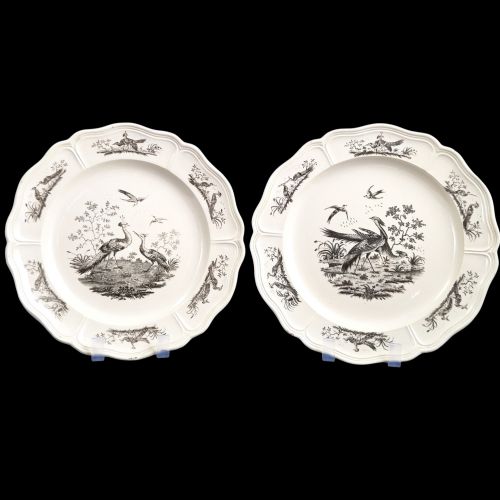
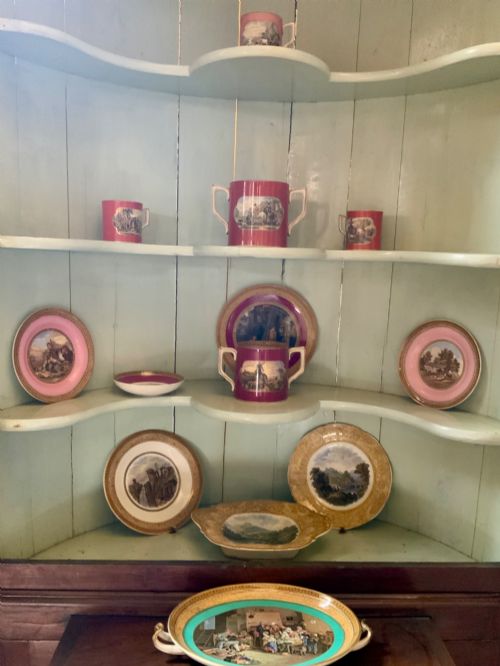
A printed earthenware plate is a domestic ceramic piece produced in forms such as decorative plates, serving platters, and dessert services. The pieces found here span the Georgian, Regency, and Victorian periods.
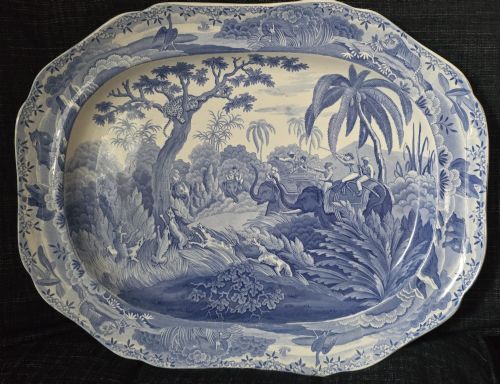
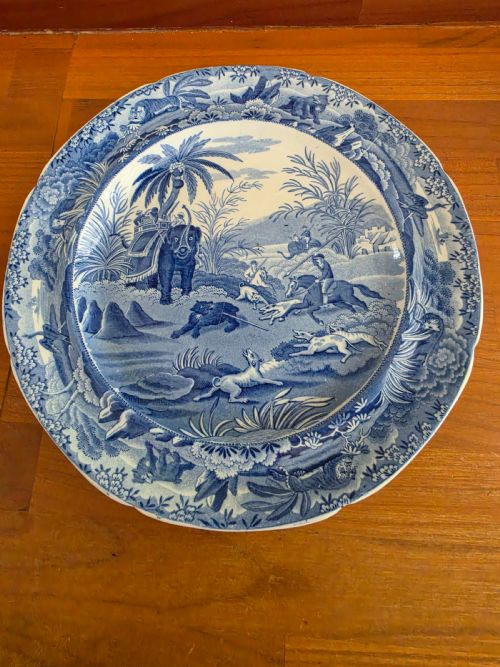
Most examples display blue and white transfer-printed designs depicting landscapes, architectural views, and figurative patterns like the Death of the Bear or the Beemaster. Common shapes range from standard circular dinner plates to large meat platters and trefoil dishes.
Originating predominantly from English potteries during the nineteenth century, these ceramics served both functional dining roles and decorative display purposes within households.
Materials and production methods
Makers utilised refined earthenware and pearlware bodies as the base for these wares, applying cobalt pigment via copper plate transfer printing to convey intricate pictorial designs onto the ceramic surface.
A protective lead glaze or ceramic glaze was then applied over the transfer-printed decoration before firing the pottery in kilns to achieve a glossy, durable finish.
Listings feature nineteenth-century earthenware and pearlware forms decorated with cobalt pigment under lead glaze.
Factors determining quality
The clarity and crispness of the transfer-printed cobalt pigment dictate visual success, distinguishing sharply rendered architectural scenes from blurred or smudged impressions.
Body preparation and glazing consistency separate standard utility wares from finer dessert services, where smooth pearlware surfaces and even lead glaze application enhance the overall appearance.
Stubbs·Thomas Lakin·Brameld and Co·John Rogers and Son
The Printed Earthenware Plate Glossary
- Earthenware
- Porous ceramic pottery fired at lower temperatures than porcelain. It requires a protective glaze to hold liquids.
- Transfer printing
- A mechanical method of applying complex engraved designs to ceramics. Paper tissue transfers the inked image from a copper plate onto the biscuit pottery before glazing.
- Cobalt pigment
- A deep blue metallic oxide used extensively for underglaze decoration. It withstands high kiln temperatures without losing its intense colour.
- Lead glaze
- A traditional glassy coating containing lead compounds applied to ceramics. It melts during firing to form a smooth, impervious surface over the clay body and printed design.
Printed Earthenware Plate: Frequently Asked Questions
What are printed earthenware plates?
These ceramic items are nineteenth-century domestic table wares decorated with blue and white transfer-printed imagery. They include flat plates, deep dishes, and large serving platters.
Potters produced them in vast quantities across English manufacturing centres for everyday dining and display. The designs typically feature topographical views, classical ruins, and pastoral narratives.
How were printed earthenware plates used?
Households utilised these vessels for serving meals, presenting meats, and organising dessert courses during formal and casual dining occasions. Smaller versions also functioned as child's plates.
Beyond the dining table, decorative examples adorned walls, dresser shelves, and mantelpieces to showcase pictorial scenes and patterns.
How do I care for antique earthenware?
Wash these ceramics gently by hand in warm water using mild soap, avoiding harsh detergents and modern dishwashers. Sudden temperature changes can stress the historical fabric.
Store them securely on stable surfaces or use padded plate hangers for wall display to protect the glazed earthenware edges from chipping.