

Georgian Blue Transferware
Georgian blue transferware comprises 18th-century and 19th-century ceramic table services and display pieces printed with cobalt designs, prized by collectors for their narrative depth and rich monochrome palette.
Georgian Blue Transferware
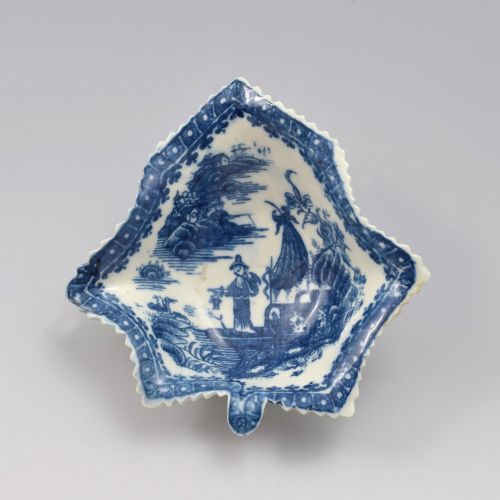
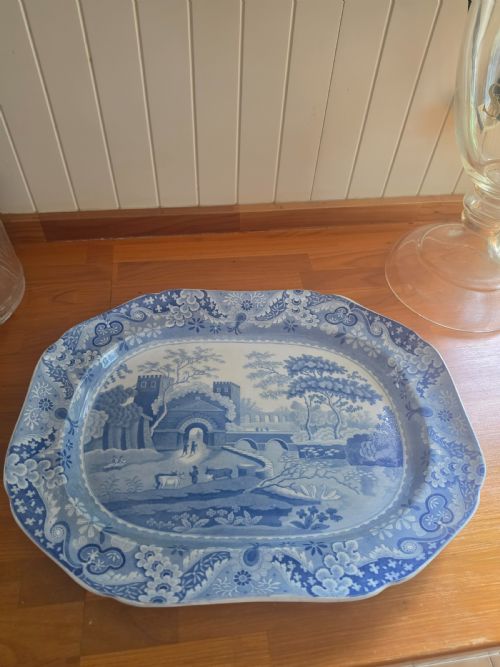
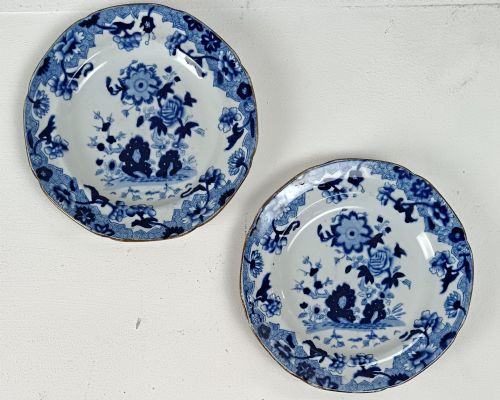
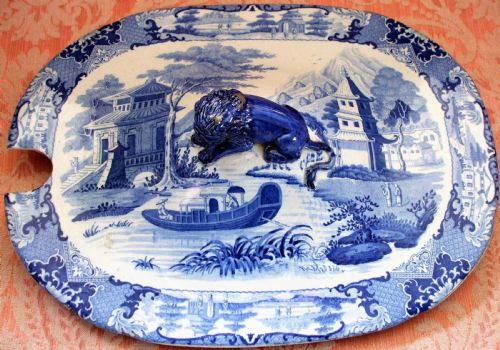
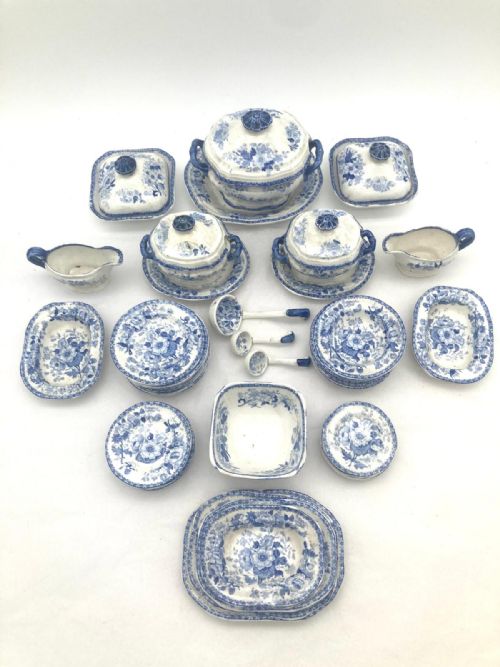
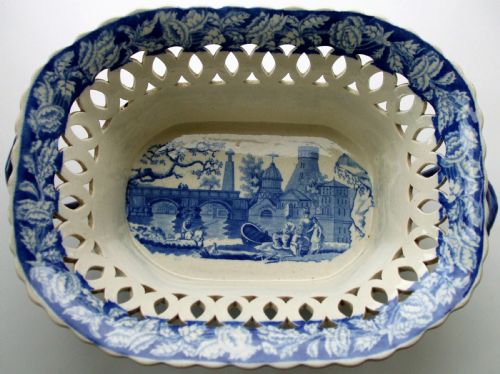
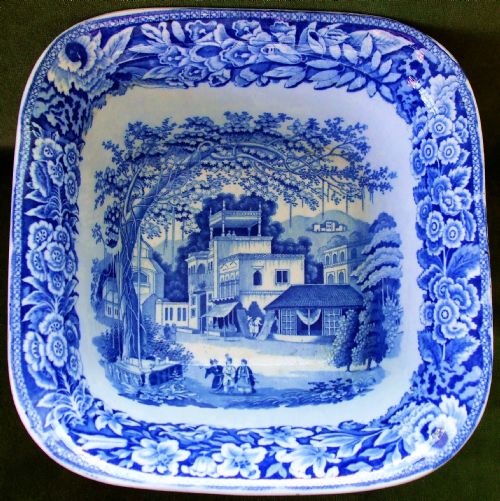
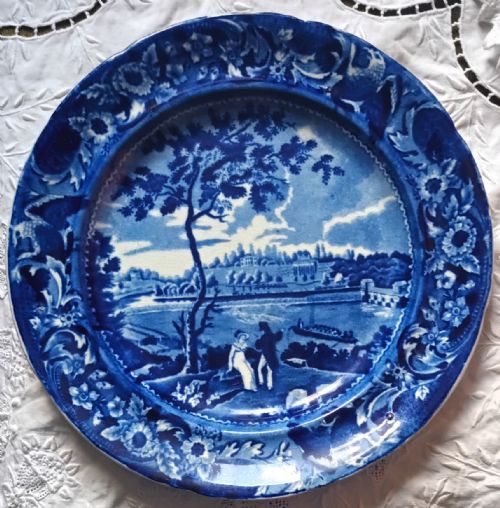
When searching for georgian blue transferware, you encounter domestic items spanning the Georgian, Regency, and early Victorian periods, originating predominantly from English potteries. The inventory ranges from serving platters and meat plates to decorative baskets, footbaths, and tureens.
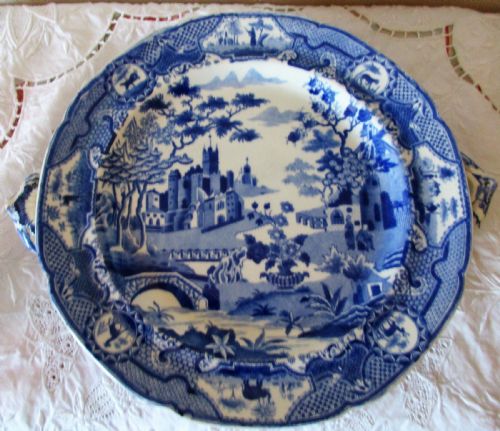
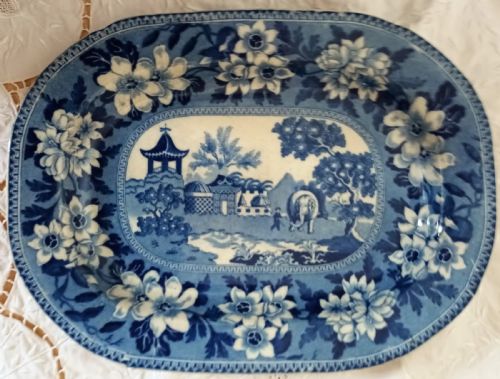
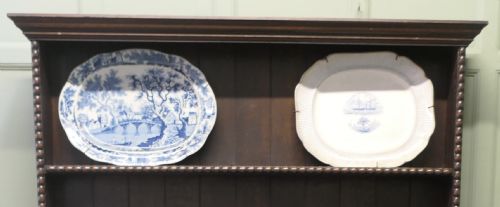
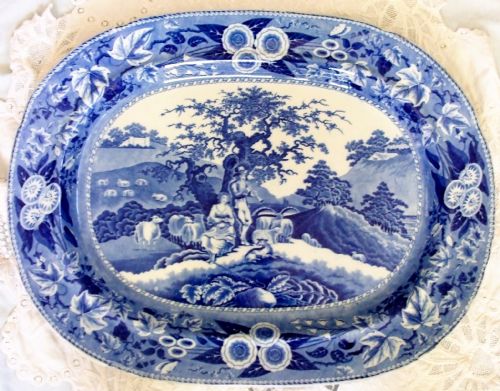
Plates and dishes appear frequently in patterns such as Long Bridge, Canton River Scene, and various pastoral views. Larger vessels like vegetable tureens and footbaths represent the more ambitious output of this ceramic tradition.
Materials and Techniques
Potters utilised earthenware, pearlware, ironstone, and soft-paste porcelain as bodies for these vessels, applying cobalt pigment through engraved copper plates to transfer intricate pictorial scenes onto the ceramic surface before glazing.
The objects then underwent high-temperature firing to fuse the metallic oxide into the glaze, producing the characteristic deep blue hue associated with English transfer printing.
Listings feature earthenware, pearlware, and ironstone bodies decorated with cobalt pigment in 18th-century and 19th-century forms.
Quality and Execution
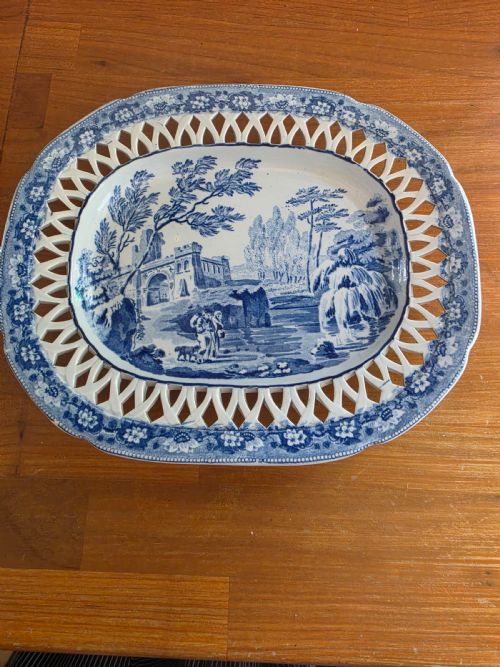
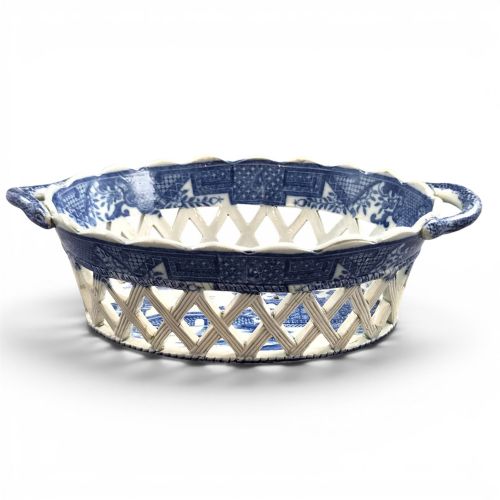
The clarity of the printed transfer dictates the visual standard, with superior examples showing crisp lines and well-registered details rather than blurred or smeared pigment. The smoothness of the glaze and the precision of moulded elements like pierced borders or reticulated basketwork also distinguish finer items.
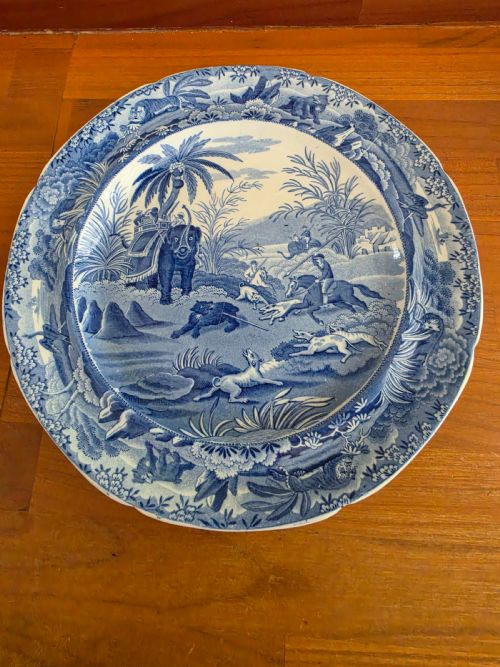
The complexity of the narrative scene, whether an extensive landscape or a figurative subject such as the Death of the Bear or the Fisherman pattern, influences the standing of an individual piece within the medium.
Spode·Davenport·Minton·John Rogers and Son·J. and R. Clews·Caughley
The Georgian Blue Transferware Glossary
- Transferware
- Earthenware or porcelain decorated by printing a design from an engraved copper plate onto tissue paper, which was then transferred onto the unglazed or biscuit ceramic body. This technique allowed factories to produce uniform pictorial patterns at scale.
- Pearlware
- A refined earthenware developed by Josiah Wedgwood in the late 18th century, featuring a thin glaze with a slight bluish tinge that pooled in crevices to whiten the overall appearance of the body.
- Ironstone
- A dense, durable type of heavy earthenware patented in the early 19th century by Charles Mason, designed to imitate Chinese porcelain while offering greater strength for heavy-use dining items.
- Reticulated
- Describes ceramic work featuring openwork geometric or basketweave patterns, often seen on chestnut baskets and serving dishes where sections were cut away prior to firing.
- Cobalt Pigment
- A metallic oxide used to achieve the deep blue coloration in transfer-printed ceramics, capable of withstanding high kiln temperatures without losing intensity.
Georgian Blue Transferware: Frequently Asked Questions
What is georgian blue transferware?
Georgian blue transferware encompasses British ceramics produced from the late 18th century through the mid-19th century decorated with cobalt blue printed scenes.
These pieces include plates, platters, bowls, and large utility vessels featuring landscapes, architectural views, and narrative subjects.
How were these pieces used originally?
Dining services formed the core usage, with large platters and tureens serving food at the table while plates accommodated individual portions.
Specialist items like meat drainers assisted with joint carving, and footbaths served utilitarian domestic functions before becoming decorative objects.
How do I care for antique transferware?
Wash these ceramics by hand using warm water and mild detergent, avoiding modern dishwashers that can craze the glaze or dull the cobalt pigment.
Display them securely on stable surfaces or use padded wall hangers for plates to prevent accidental chips.
How can I tell the period?
Examine the ceramic body, noting whether it exhibits the blue-tinted glaze of pearlware, the weight of ironstone, or the translucency of early porcelain.
Maker marks, impressed registry details, and stylistic clues within the printed border designs also help narrow down the date of manufacture.