



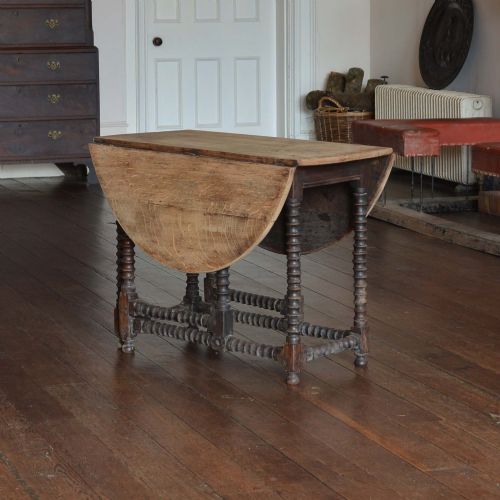


Spool Turned Side Table
Spool turned side table examples bring tactile timber turnings and rich textiles together, offering useful surfaces with strong period character.

What They Are
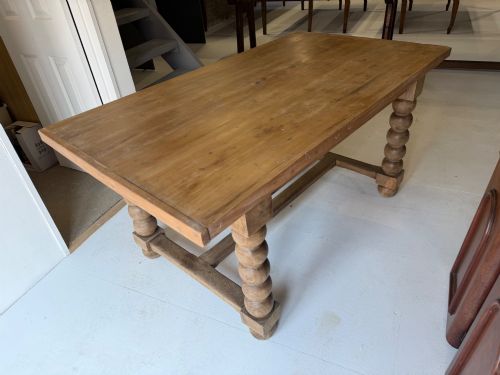
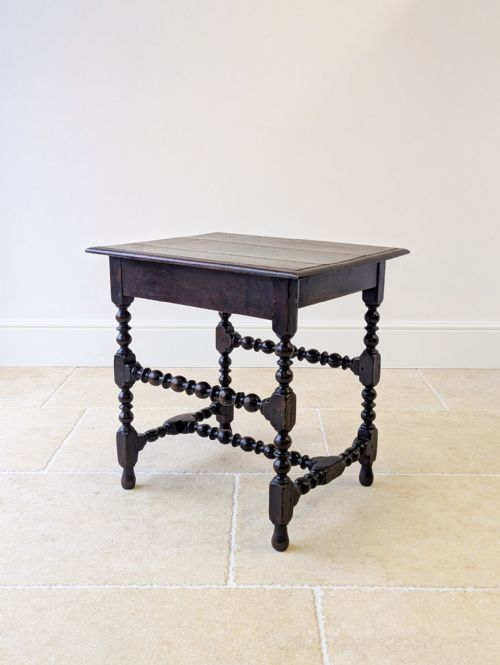
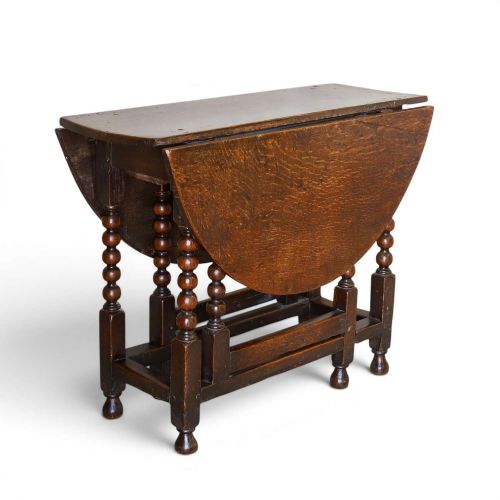
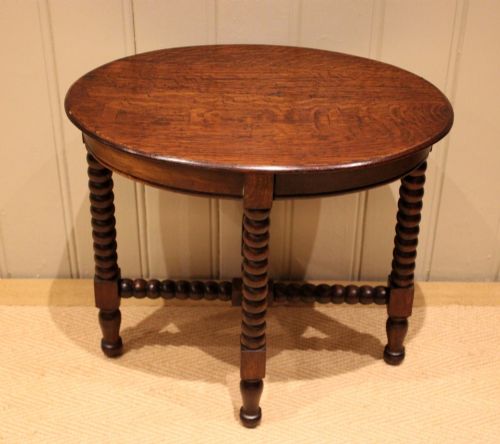
A spool turned side table provides a sturdy surface supported by distinctive, rounded timber turnings that resemble spools or bobbins. These pieces appear in forms such as small oval tops and compact side designs.
The selections on this page span the nineteenth century, nineteen hundred, and nineteen twenty, drawing on Jacobean Revival and Victorian styles. Oak and giltwood form the structural foundations of these pieces.
Buyers searching for a spool turned side table encounter variations in top shape and base detailing. Oak versions frequently highlight the natural grain, while gilded examples incorporate velvet and fabric trim.
How They Were Made
Carpenters shaped solid oak using lathe turning techniques to create the characteristic repetition of rounded bobbin or spool motifs along the legs and stretchers. Joinery techniques varied according to the period to ensure stability in small side tables.
Giltwood elements involve applying a thin layer of gold leaf over a prepared base on carved or turned timber frames. Upholstery details such as red velvet and fabric trim are integrated into specific decorative tables.
Current listings feature oak and giltwood materials across the nineteenth century, nineteen hundred, and nineteen twenty.
What Varies in Quality
Quality rests in the precision of the timber turnings and the crispness of the spool profiles along the legs. Uniformity in the repetitive bobbin shapes distinguishes finer examples from simpler workshops.
The choice of materials dictates the visual hierarchy, ranging from plain oak construction to gilded surfaces paired with velvet and fabric trim. The integration of textile elements alongside timber demonstrates the maker's decorative ambition.
The Spool Turned Side Table Glossary
- Bobbin turning
- A form of lathe work producing a series of rounded, spool-like shapes along the length of a wooden leg or stretcher. This technique defines the visual rhythm of the furniture.
- Jacobean Revival
- A nineteenth-century design movement that reinterprets seventeenth-century English furnishings. Pieces in this style utilise dark oak and traditional turnings.
- Giltwood
- Timber that has been coated with gold leaf. This finish appears on decorative furniture intended for formal interiors.
- Fabric trim
- Decorative edging applied to textile surfaces on furniture. It frames inset panels or upholstered elements.
Frequently Asked Questions
How do I date these tables?
Dating relies on examining the timber species, joinery methods, and stylistic indicators such as Jacobean Revival or Victorian design traits. Records show examples from the nineteenth century up to nineteen twenty.
Material choices like red velvet and fabric trim also help place pieces within specific late nineteenth or early twentieth-century contexts.
Where were these tables used?
These side tables functioned as movable surfaces for holding small decorative items, books, or lamps in period parlours and sitting rooms. Their compact proportions allowed them to fit easily beside seating.
Gilded versions with velvet tops typically served in more formal drawing rooms.
How do I care for giltwood?
Giltwood requires careful dusting with a soft, dry cloth to protect the delicate gold leaf application from abrasion. Moisture and chemical cleaners must be avoided to preserve the metallic surface.
Keeping the table away from direct sunlight prevents the underlying gesso and gilt from drying out.