



Solid Silver Teaspoons
Solid silver teaspoons bring everyday ritual to the table, appearing in boxed sets and single examples spanning Georgian, Victorian and modern periods.
Solid Silver Teaspoons
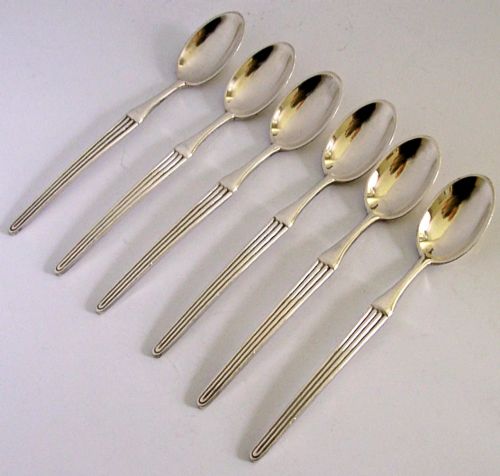
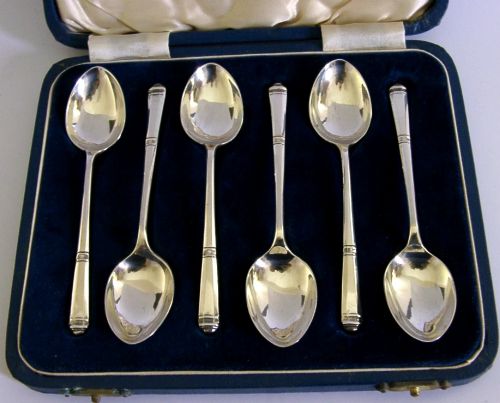
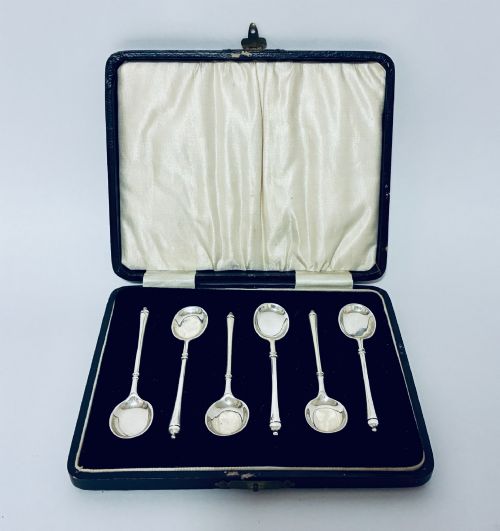
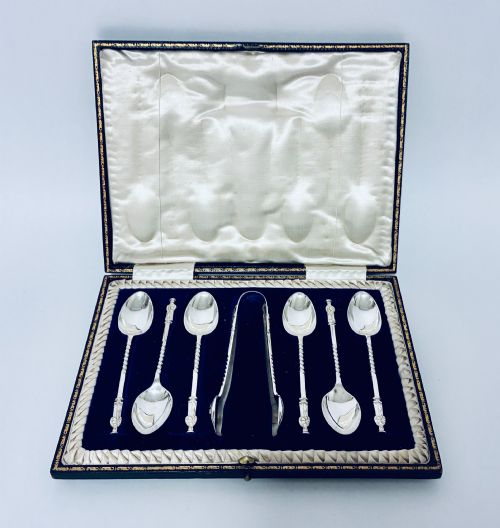
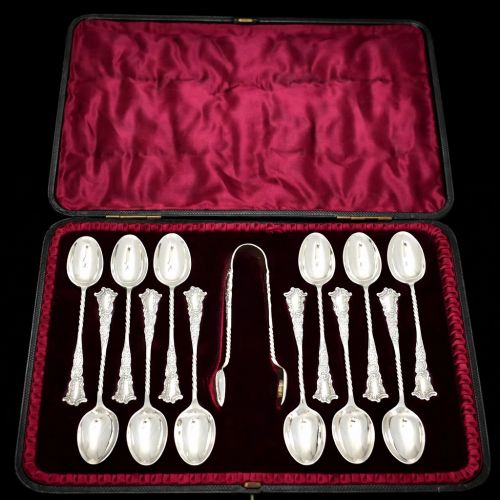
Solid silver teaspoons form a diverse category of small cutlery items, appearing frequently as matched sets housed in fitted presentation cases lined with silk, satin, or velvet. These pieces range from plain utilitarian designs to decorative forms intended for specific tasks, including coffee spoons and apostle spoons accompanied by sugar tongs.
Buyers exploring solid silver teaspoons encounter objects spanning from the late eighteenth century through the Georgian and Victorian eras into twentieth-century Art Deco and mid-century modern designs. The selection includes British provincial and London items alongside continental European pieces from makers in Denmark, France, and Russia.
How they were made
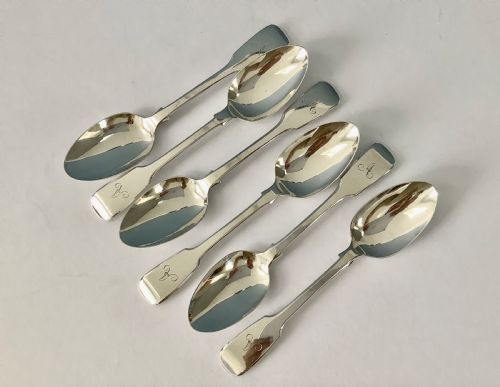
Makers fashioned these spoons from sterling silver and solid silver using traditional smithing techniques, sometimes applying silver gilt finishes to the bowl interiors or entire surfaces. Production methods involved hand-beating, casting, and die-stamping patterns such as Kings pattern, fiddle pattern, bright cut engraving, and cloisonne enamel.
Presentation sets often reside in protective leatherette outer boxes fitted with interior linings of satin, silk, velvet, and leather. These cases preserved the finish of the cutlery and kept accompanying sugar tongs secure alongside the spoons.
Solid Silver Teaspoons Retail Price Guide 2026
Typical asking prices for solid silver teaspoons among the pieces listed under this phrase on Sellingantiques today, from the lower quarter to the upper quarter. They describe what is for sale here now, not the wider market.
Some Victorian sets feature apostle figures perched atop the handles, ready to supervise your morning tea with stern ecclesiastical disapproval.
What varies in quality
Quality differentiates by the weight of the metal gauge and the crispness of applied decorative work, such as bright cut engraving or cast handle motifs. Heavier gauge silver provides a substantial feel in the hand and resists bending during daily use.
The integrity of the original fitted case and the completeness of matched sets influence the desirability of a group. Sets retaining their original velvet or satin linings and matching tongs represent a higher level of historical preservation.
Vasily Agafonov·Evald Nielsen·Walker and Hall·Robert Stebbings·Cooper Brothers and Sons·Charles Boyton·Lanson Ltd·Harrods·Samuel Neville·Pierre Queille·Hamilton and Inches·Mappin and Webb·John Lias II
The Solid Silver Teaspoons Glossary
- Sterling silver
- A silver alloy containing 92.5 percent pure silver by mass and 7.5 percent other metals, usually copper. This standard ensures durability for cutlery while maintaining the lustrous appearance of the precious metal.
- Silvergilt
- Silver objects that have been coated with a thin layer of gold on their surfaces. This technique provides the rich appearance of solid gold while utilising a silver base.
- Bright cut
- An engraving technique utilising faceted cuts made with a sharp graving tool to create sparkling geometric or floral patterns. It was popular on Georgian and Victorian flatware.
- Fiddle pattern
- A nineteenth-century flatware style featuring a shoulder or 'fiddle' shape just above the stem base. It became a standard design for British spoons and forks during the Georgian and Victorian periods.
- Apostle spoon
- A spoon featuring the figure of an apostle or saint cast or engraved on the handle end. Sets often include figures associated with specific religious iconography.
Solid Silver Teaspoons: Frequently Asked Questions
How do I clean tarnished solid silver teaspoons?
Clean tarnished silver gently using a specialised silver cloth or mild polish formulated for precious metals. Avoid harsh abrasive cleaners that can wear away fine engraving or hallmarks.
Store clean spoons in dry conditions away from direct sunlight, ideally within fitted cases lined with fabric to slow down the natural oxidation process.
Can I use antique silver spoons every day?
Antique silver spoons are durable enough for daily use provided they are washed by hand in warm soapy water rather than placed in an automatic dishwasher. Hand washing protects delicate surface details and prevents harsh detergents from damaging the metal.
Using them regularly helps prevent tarnish accumulation, as the friction of handling keeps the high points of the silver bright and clean.
What do the hallmarks on these spoons mean?
Hallmarks stamped into the metal indicate the assay office, the standard of silver purity, and the year the piece was made. British pieces commonly show a walking lion for sterling silver alongside town marks and date letters.
Maker's marks appear alongside these official stamps, showing the initials or full name of the silversmith or firm responsible for crafting the spoon.