



Solid Silver Tea Box
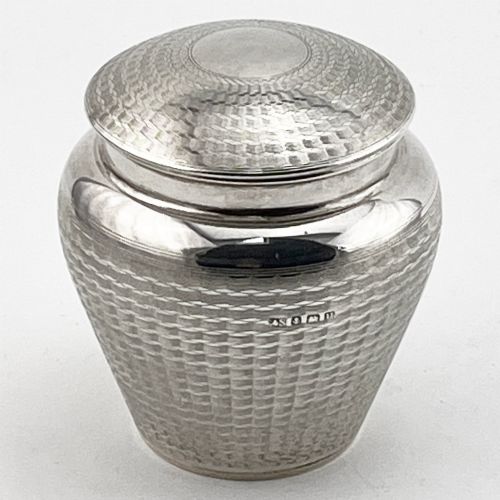
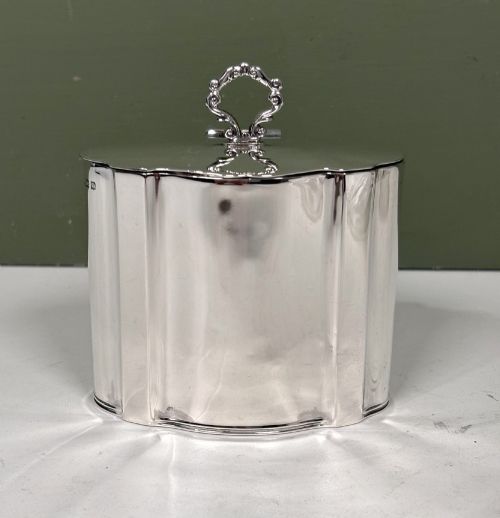
Solid silver tea box selections bring together heavy metal canisters and caddies fashioned to preserve loose leaf infusions across the Victorian, Edwardian, and Art Deco eras.
Solid Silver Tea Box
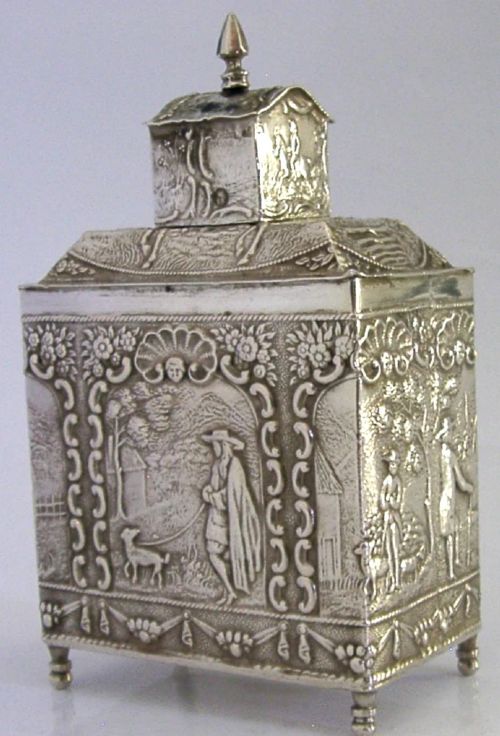
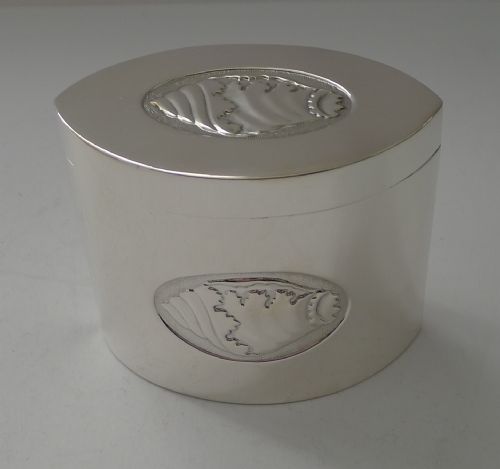
A solid silver tea box serves as a secure vessel designed originally to keep dry leaves fragrant and protected from moisture on the table. The market encounters numerous Edwardian and Victorian specimens alongside earlier Georgian examples and continental imports from Hanau, Germany.
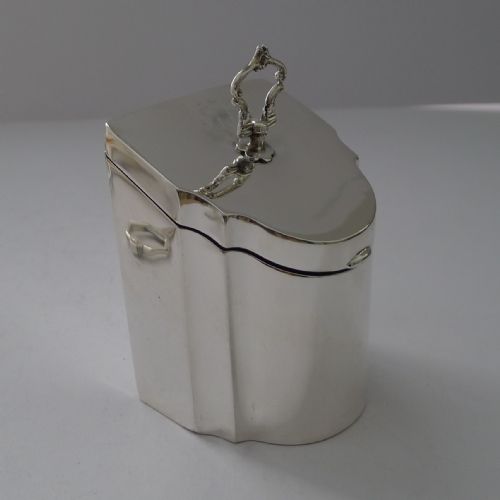
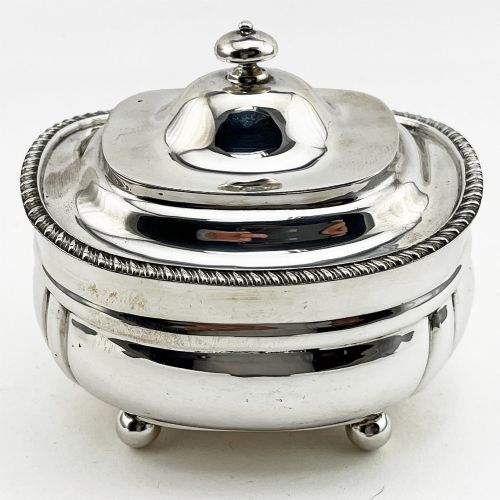
Forms range from straightforward cylindrical canisters and rectangular boxes to knife box shapes, novelty sledge designs, and footed sugar containers. Many pieces originate from London, Chester, and Sheffield assay offices, while others reflect international workshops from India, Italy, and Portugal.
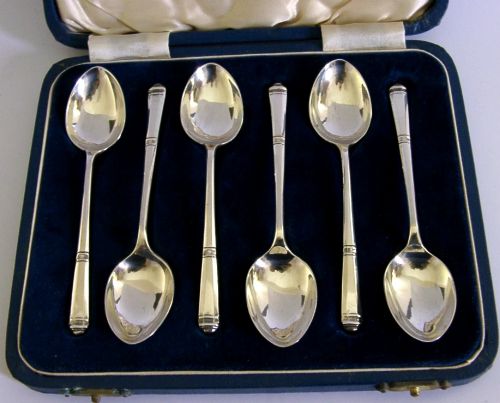
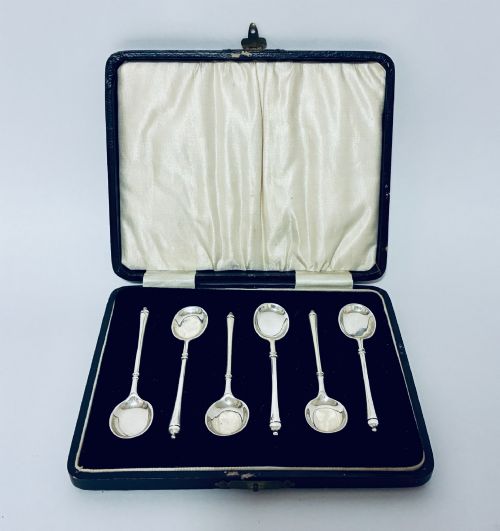
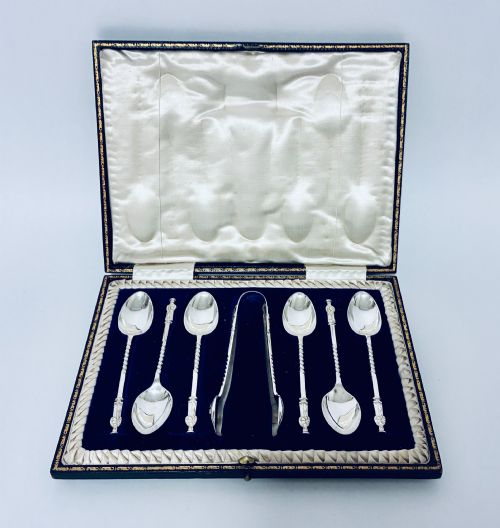
Beyond domestic English production, buyers frequently find continental European boxes displaying repoussé relief work or Dutch rococo revival motifs. These containers often share space with related dining silver such as spoon sets, biscuit boxes, and tea infusers.
Materials and Construction
Makers utilised sterling silver and various grades of solid silver, frequently combining the metalwork with internal linings of velvet, silk, satin, leatherette, or ebonised wood. Some historical sets incorporated shagreen casing alongside the primary silver containers.
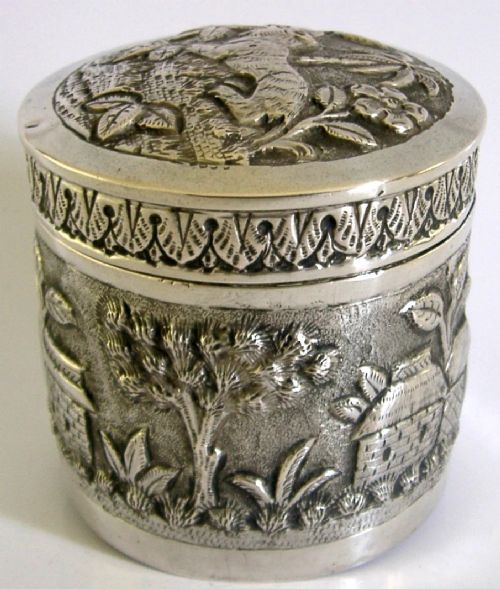
Techniques relied upon heavy gauge smithing, detailed chasing, and repoussé hammering to raise intricate surface patterns from the reverse of the metal. Other examples display planar faceting, smooth polished walls, or sliding bottom mechanisms for access.
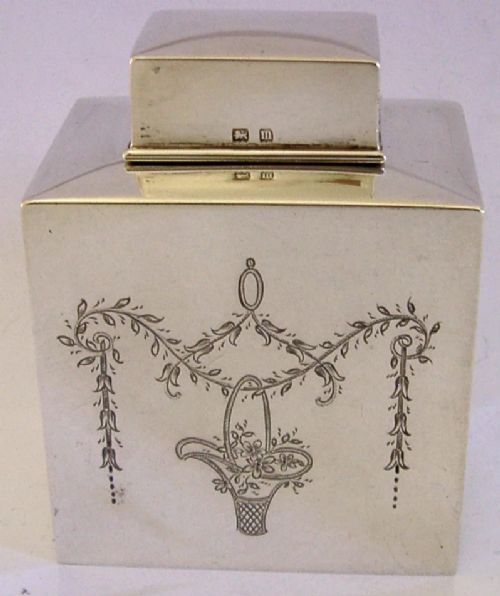
Hallmarks stamped directly into the metal provide crucial records of assay towns, reigning monarchs, and specific production years. These struck marks verify the purity standard of the silver used in each individual canister.
Listings feature solid silver tea boxes spanning the Victorian, Edwardian, and Art Deco periods, alongside continental European and Asian examples.
Factors of Quality
Evaluation rests primarily upon the thickness and overall weight of the metal used in the construction of the box. Heavier gauge silver provides a substantial feel in the hand and resists denting during everyday handling.
The clarity and legibility of assay office hallmarks and maker stamps influence desirability. Crisp, deep stamping indicates careful secondary finishing after the main body of the box was formed.
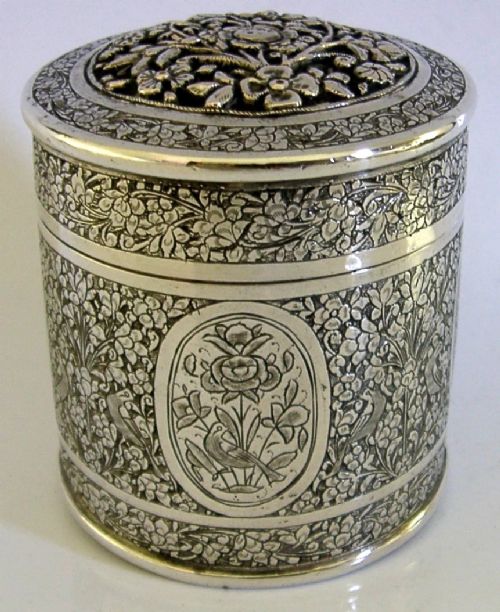
The intricacy of hand-worked surface decoration, such as embossed floral motifs or chased panels, distinguishes standard utility items from masterwork pieces. Well-fitted lids that close securely demonstrate precision in the original silversmithing process.
Zimmermann·Robert Stebbings·Adolf Mayer·Mappin & Webb·Peter Gillois
The Solid Silver Tea Box Glossary
- Hallmark
- A series of official marks stamped onto precious metal items to indicate the purity standard, the assay office, and the date of manufacture. These symbols allow collectors to trace the exact origin of a piece.
- Repoussé
- A metalworking technique where the artisan hammers the metal from the reverse side to form a raised design in relief on the front. This method creates decorative panels depicting figures, foliage, or historical scenes.
- Canister
- A rigid box or vessel traditionally utilised for storing dry goods such as tea leaves away from light and air. In silverwork, this term often describes straight-sided or slightly curved lidded containers.
- Assay Office
- An official organisation charged with testing the purity of precious metals and stamping them with statutory hallmarks. Prominent offices include London, Chester, and Sheffield.
- Gauge
- The thickness of the sheet metal employed to construct a holloware item. A heavier gauge denotes a thicker wall and a more robust container.
Solid Silver Tea Box: Frequently Asked Questions
How were silver tea boxes used?
Historically, these boxes held expensive imported tea leaves under lock or close supervision by the master of the house. Because tea was a precious commodity, the container itself reflected the status of the owner.
Over time, many of these boxes transitioned into general decorative vessels on sideboards or dressing tables. Today, owners utilise them to store small trinkets, modern tea bags, or collections of vintage spoons.
How do I clean a silver tea box?
Maintenance requires gentle cleaning with a specialised silver cloth to remove natural tarnishing without wearing away fine surface details. Abrasive polishes or harsh chemical dips should be avoided, particularly on pieces with delicate chased or repoussé decoration.
If the interior retains a velvet, silk, or satin lining, moisture must be kept entirely away from the fabric. Storing the box in a dry environment helps prevent future oxidation of the silver exterior.
How do I identify the age of a silver tea box?
Dating relies primarily upon the hallmarks stamped into the metal, which record the specific year letter and assay office. Reference charts link these stamped ciphers to exact periods such as the Victorian, Edwardian, or Georgian eras.
Stylistic indicators, such as Art Deco geometric lines or Victorian floral chasing, offer additional clues when hallmarks are rubbed or missing. Foreign imports often carry different control marks specific to countries like Germany, the Netherlands, or India.