






Solid Silver Tablespoons
Solid silver tablespoons are substantial historic dining utensils, prized by collectors for their weight, maker's marks and longevity.
Solid Silver Tablespoons
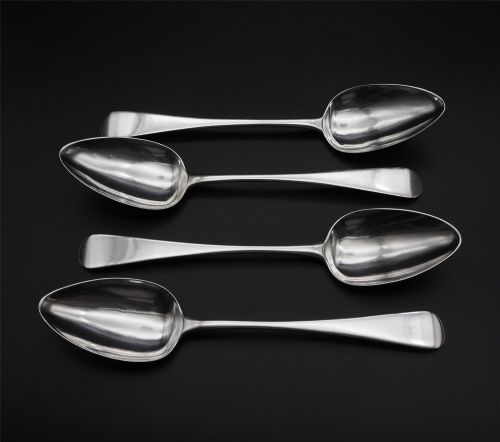
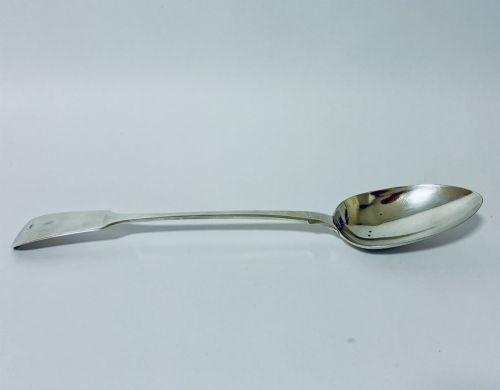
Solid silver tablespoons appear frequently in Georgian, 18th Century and 17th Century designs across this selection. Buyers find single pieces alongside matched pairs and larger sets, including serving spoons and flatware.
Early examples span Queen Anne, George I, George II and Restoration or Charles II periods. Later items reach into the 19th Century, Edwardian era and French regional styles.
Makers utilised high-grade silver across provincial British towns, London and France to produce heavy dining silver. These spoons served at table for centuries before reaching the antique market.
Making Solid Silver Tablespoons
Silversmiths hammered ingots of sterling silver or Britannia silver into thick sheets before cutting and shaping the bowls and stems. Higher-purity Britannia silver appears in pieces from the early 18th Century.
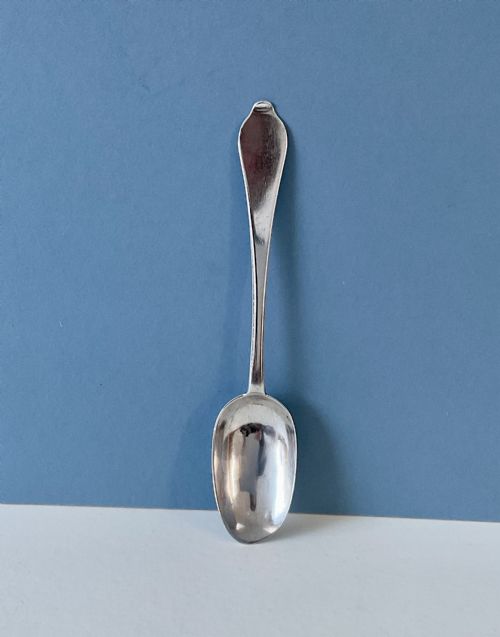
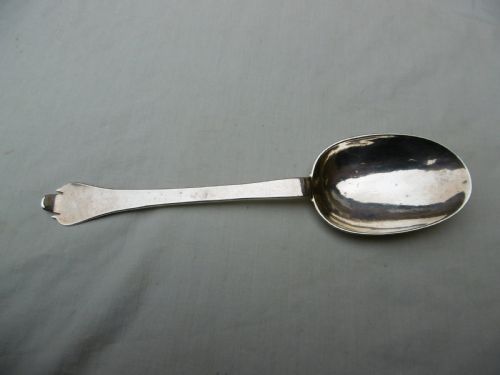
Hammers, stakes and files refined the profiles, while engraved crests, initials or hallmarks were punched directly into the metal. Workshops applied patterns such as Trefid, Dognose and Old English to the terminals.
Listings feature solid silver tablespoons spanning from 17th Century Restoration pieces through Georgian eras to 19th Century French examples.
Judging Quality
Bowl wear dictates value, as heavy daily use over generations thins the silver rim until it resembles paper. The crispness of hallmarks and engraved crests also separates standard items from superior survivals.
Original gauge thickness matters immensely, since filing during cleaning reduces the heft of the spoon. Complete sets and matched pairs command greater interest than solitary survivors.
Isaac Davenport·Benjamin Prosser·J Ladyman·R Grey for Edmonstone·Jabez Daniell·Henri Soufflot·George Adams
The Solid Silver Tablespoons Glossary
- Hallmark
- Official stamps struck into the metal to guarantee purity, origin year and maker. These marks allow historians to date pieces precisely.
- Dognose
- An early 18th Century spoon shape featuring a rounded upturned terminal with a central rib down the stem. This style bridges the gap between Trefid and Hanoverian patterns.
- Trefid
- A late 17th Century spoon design with a three-lobed terminal resembling a scalloped edge. It represents some of the earliest surviving solid silver forms.
- Britannia Silver
- A higher standard of silver purity introduced by law in England to discourage the melting of coinage. It contains more pure silver than standard sterling.
- Old English Pattern
- A classic 18th Century flatware design featuring a rounded downward-turned terminal. It became the template for countless dining spoons.
Solid Silver Tablespoons: Frequently Asked Questions
How do I date solid silver tablespoons?
Study the hallmarks stamped into the silver, which record the assay office, date letter and maker's mark. Comparing these punches against official registry records reveals the exact year of manufacture.
Stylistic cues like Trefid terminals or Britannia standard marks also narrow down the manufacturing period to specific decades.
Can I use antique tablespoons for dining?
These solid silver spoons were built for everyday dining and remain fully functional for modern use. Many owners continue to use them for serving food or as large soup spoons.
Gentle hand washing without harsh abrasives preserves the historic surface and prevents damage to the delicate silver metal.
What is the difference between sterling and Britannia silver?
Britannia silver contains a slightly higher proportion of pure silver than standard sterling metal. Parliament mandated this higher purity standard for a brief period in the late 17th and early 18th centuries.
Pieces bearing Britannia marks often feel slightly softer and display a distinct lustrous grey tone compared to later sterling items.
Why do some spoons feature engraved crests?
Gentry families commissioned silversmiths to engrave their family crests or monograms onto the terminal stems to display lineage. These heraldic engravings help trace the provenance and original ownership of the silverware.
Over centuries, handling softens these crisp lines into smooth silver silhouettes.